Unveiling: A Historic Organ’s Joyful Restoration
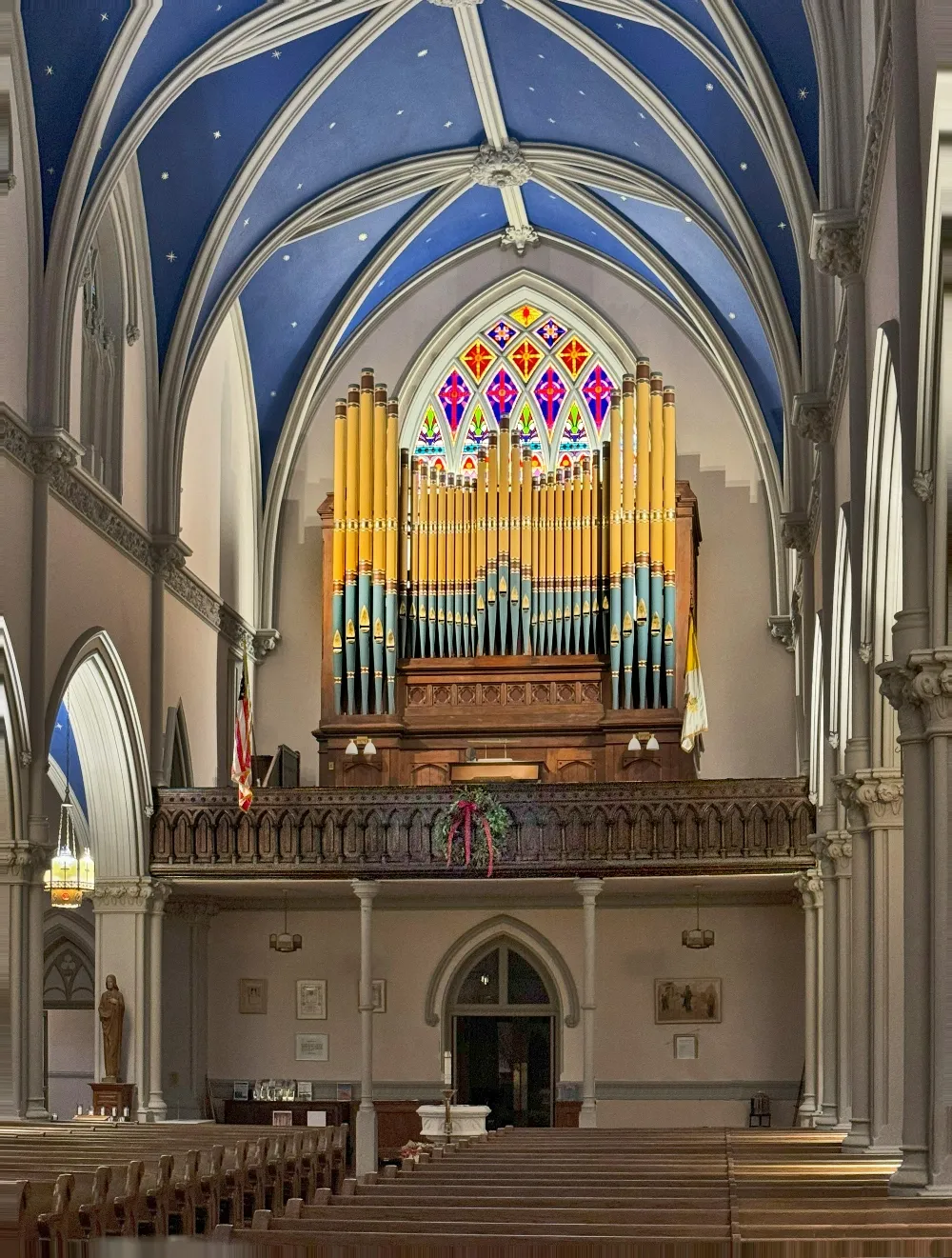
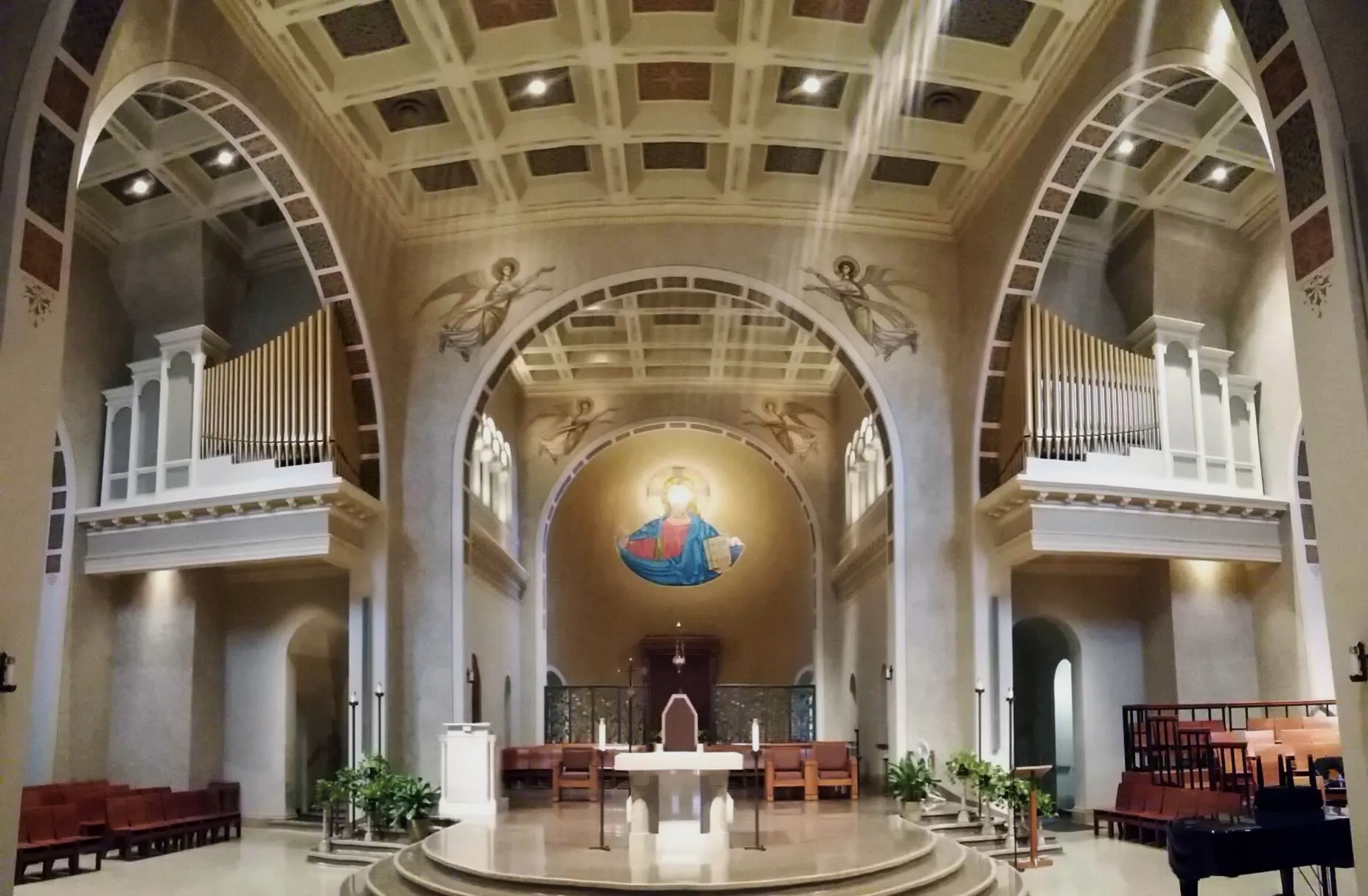
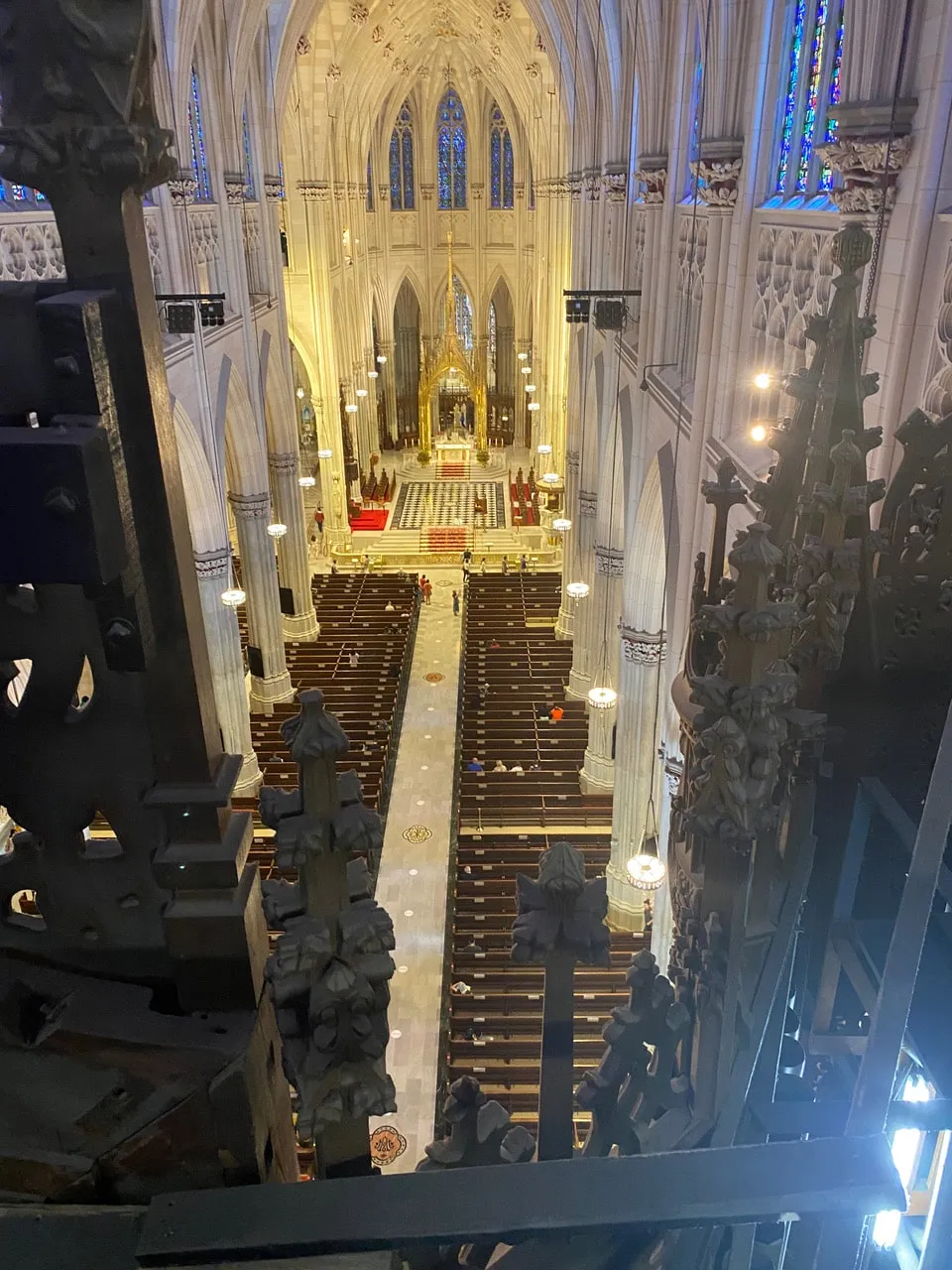
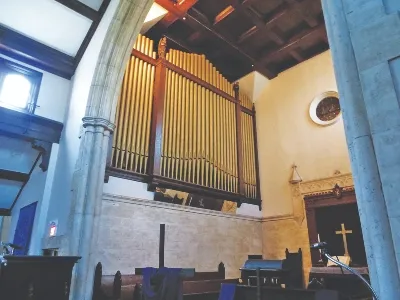
The audience, hundreds of people, paid to come on the evening of June 11 to the Basilica of Saint Patrick’s Old Cathedral, 263 Mulberry Street in lower Manhattan, to see and hear its celebrated 1868 Henry Erben pipe organ. It had served the church since he completed it, but was taken away two years ago to a workshop in Pennsylvania to be restored to its original condition after a century and a half of wear and tear. Now it was home again, high up in the choir loft in the back of the nave, but the pipes were veiled by a black cloth and silent when the pastor, the Very Reverend Daniel Ray, welcomed those present and told them they would hear “a new voice,” thanks to the restoration, their own donations and others solicited by the Friends of the Erben Organ. This group was personified this night by a founder, the church’s music director, Jared Lamenzo, a virtuoso organist who would play and conduct a small orchestra and a chorus in a celebratory concert.
That set off a spontaneous standing ovation—several minutes of fortissimo cheering and vigorous applause—for Mr. Lamenzo, who came to the edge of the balcony to acknowledge it. Most of the audience were still standing, facing not the altar but the organ, when he announced, “And now, the unveiling,” and began playing Bach’s Praeludium et Fuga in C, BWV 545. The pipes spoke out clearly, melodically, and distinctly, but still hidden by the veil.
Hidden they remained when Lamenzo played through an “Allemande” by Josef Gabriel Rheinberger for violin and organ, and then thanked all present for saluting him and for their support for the restoration. He told us what was to come, then played four more pieces by nineteenth-century composers, including two organist predecessors of himself and Felix Mendelssohn’s Sonata VI from opus 65.
What everyone had been waiting for came, finally, as the toccata section at the end of the opening movement of the Mendelssohn sonata was reaching its powerful climax. Then the veil finally began to slide down, slowly revealing the twenty-seven façade pipes from the Great 16′ Double Open Diapason in their original color-stencil décor, and letting the nearly 2,500 pipes inside the case behind them sing out beautifully and even more clearly. The audience rose again, many applauding and adding their cheers to the glorious music.
The façade pipes’ stenciled patterns had for many decades been covered over with layers of paint—gold paint, finally. For two years, the skilled workers of the Brunner & Associates Organbuilders workshop in Silver Spring, Pennsylvania, had the organ under restoration. They carefully sanded away all the overlay, and after painstakingly matching the original colors and design, repainted the façade pipes. That work alone took many weeks.
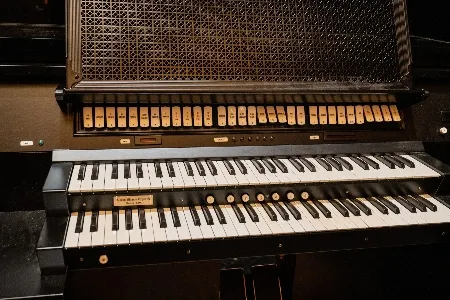
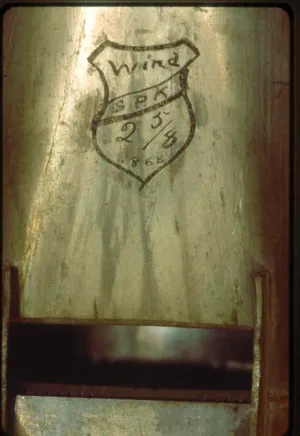
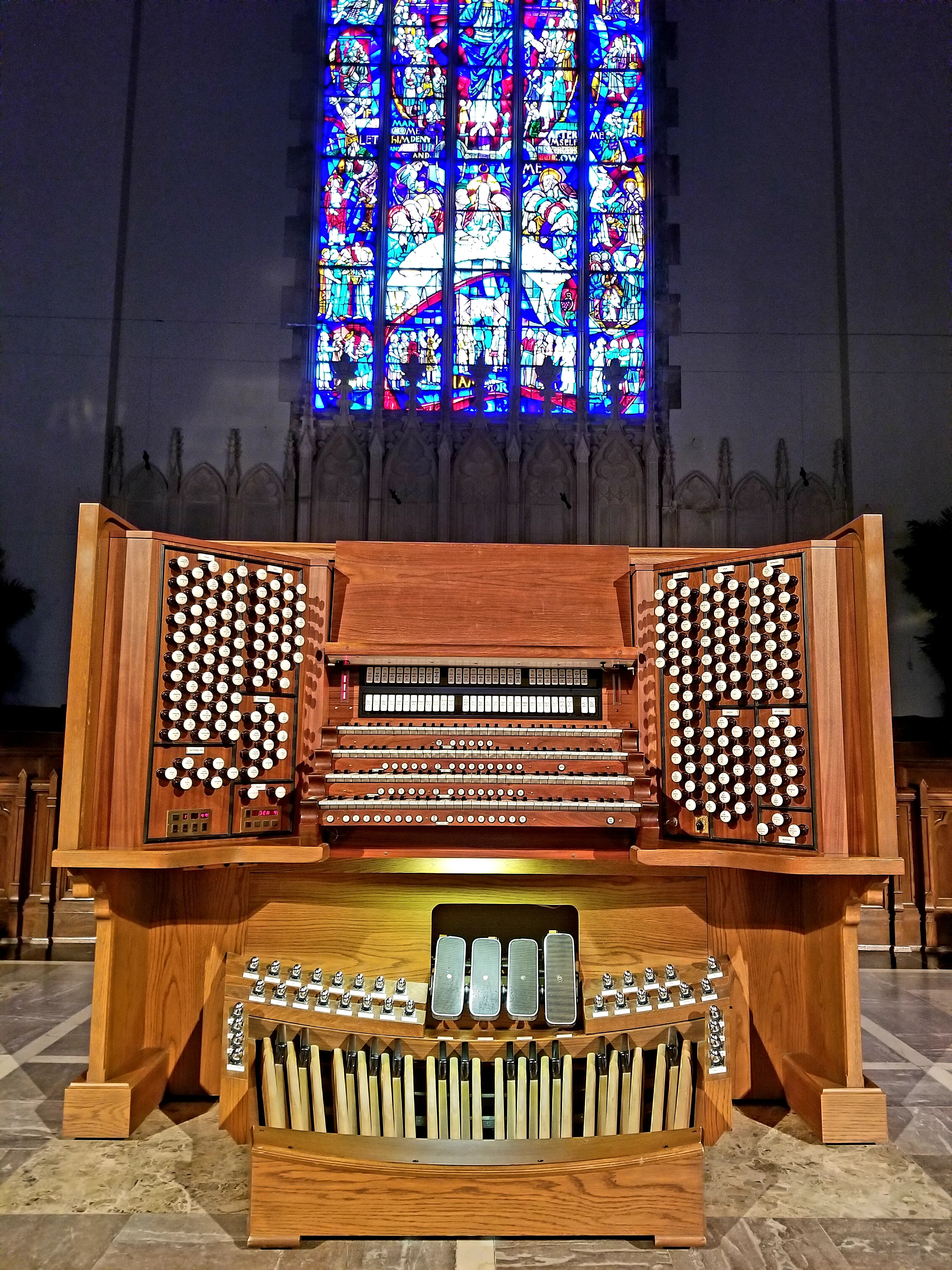
With the same care and expertise, they brought back to life the entire instrument. A few of the original pipes had been altered over the years—the shallots of the Great reeds were altered in the late twentieth century, and there were no extant examples to copy. Larry Trupiano rescued a set of shallots from a contemporaneous Erben in Baltimore in the 1960s and donated the shallots to the project. They fit into the Erben’s blocks. The original three-rank Great Mixture, removed in the nineteenth century and replaced by a new one years later, was recreated by analyzing toeholes and racking from a windchest left in the Church of Saint Agnes in Brooklyn after its remarkably similar Erben pipes had gone elsewhere decades ago. All but a few of the rest of Saint Patrick’s metal and wooden pipes are as they were in 1868, as are the tracker mechanisms connecting keyboards of the console in front of the case to the pipe chests. It is the largest intact instrument by Henry Erben, out of hundreds and hundreds that he had built over more than fifty years in his factories in nineteenth-century Manhattan. The organ came from Erben’s new workshop on Wooster Street, near his original location on Centre Street, about ten blocks south of Old Saint Patrick’s, which was the original cathedral before the seat of the archdiocese was moved uptown to the new Saint Patrick’s Cathedral on Fifth Avenue in 1879.
Now, round after round of enthusiastic applause continued as Lamenzo completed the first movement of the Mendelssohn sonata. He began the quieter final movement of the Mendelssohn, and the room grew even more quiet. When it was finished, after taking his bows he explained we would now have a chance to hear individual stops that Erben’s organs were famous for in their day—using the Versets from Cuaderno de Tonos de Maitines, Quinto Tono, by an early nineteenth-century Mexican nun, Sor María Clara del Santísimo Sacramento.
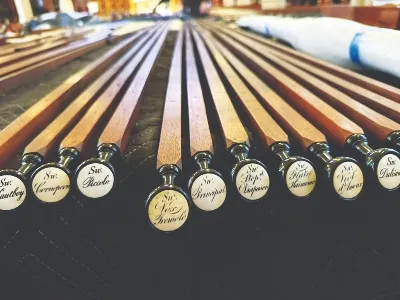
So we heard, each speaking tunefully and distinctly, the Great Open Diapason, the Melodia, the Choir Claribel Flute, Flageolet, Keraulophon, and Flute Traverse, the Swell Flute Harmonic, and finally the Great Double Open Diapason. The Flute Traverse with tremolo seemed particularly novel to my ears. (The entire stoplist and a video of Mr. Lamenzo playing the Mendelssohn on this organ is found on erbenorgan.org/1868-henry-erben-organ.)
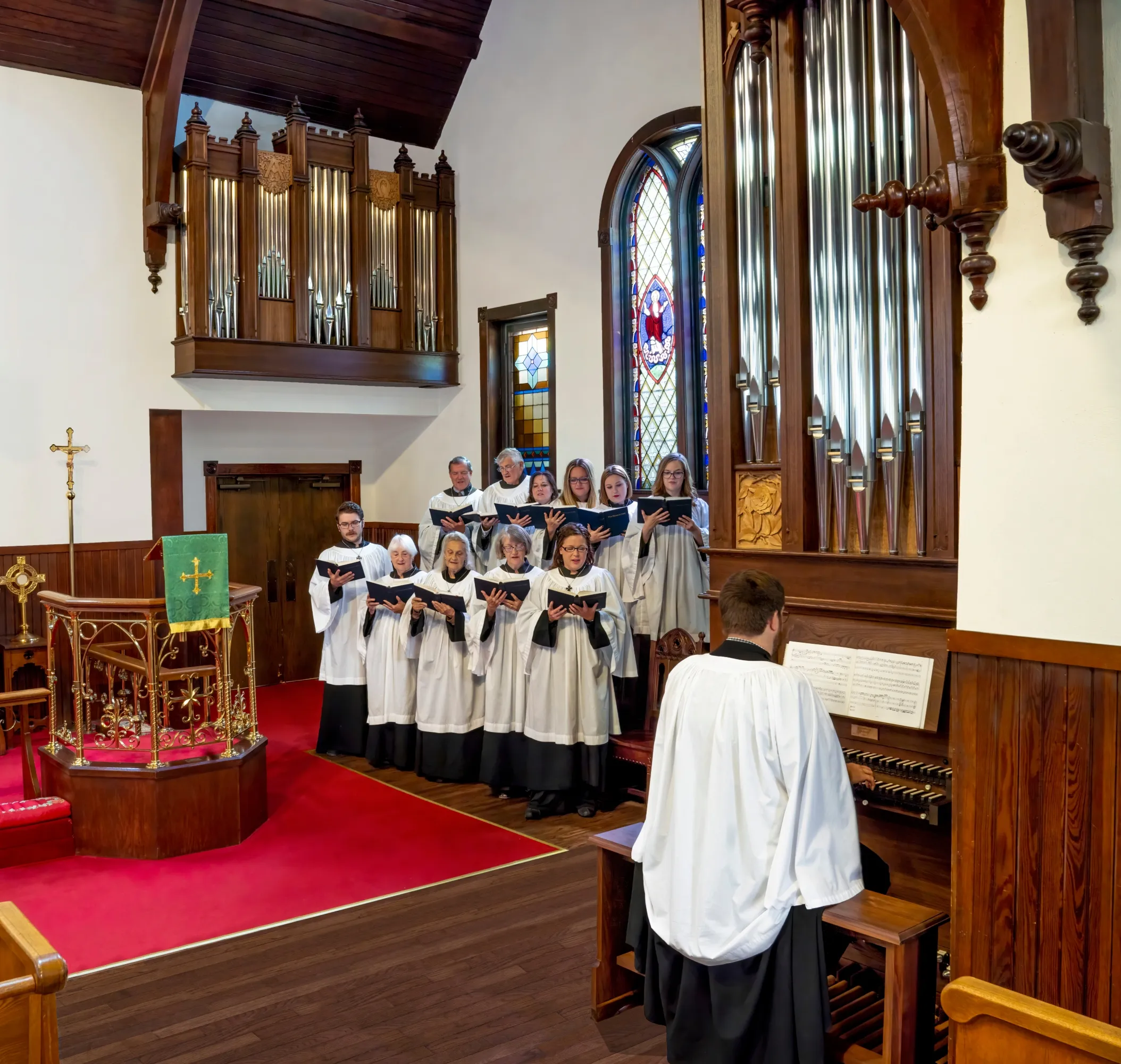
The concert concluded with two movements from Franz Joseph Haydn’s The Creation, the last “The Heavens Are Telling,” with Lamenzo conducting the two violinists, a cellist, a French horn player, and a chorus of twenty men and women who had played or sung earlier as well.
What the evening was telling us was what is important: musical and technical skill and dedication, and emotional and financial support for it from those who appreciate their work. The Friends of the Erben Organ, founded in 2017, raised funds for the restoration of the organ and choir loft; the parish took on the cost of façade restoration, for which this event and others made a big dent.
Erben, a Pennsylvania German, had nineteenth-century Romantic taste, as his stoplists show—one who voiced pipes with clarity and distinctness upheld by mechanical-action connections between manuals, pedals, and pipes. Many of his workers were immigrants. And interestingly, the Brunner organ building firm whose work made this concert possible was originally founded by another Pennsylvania German, Raymond Brunner, and one of its owners today, Hans Herr, is a descendant of a Swiss German immigrant and also the firm’s tonal director and shop foreman. “It’s a really fabulous instrument,” he told me while working inside the organ a few days before the unveiling; “I’m honored that we got to work on it.”
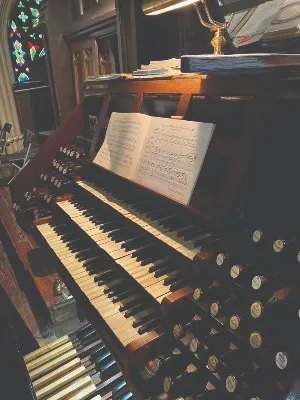
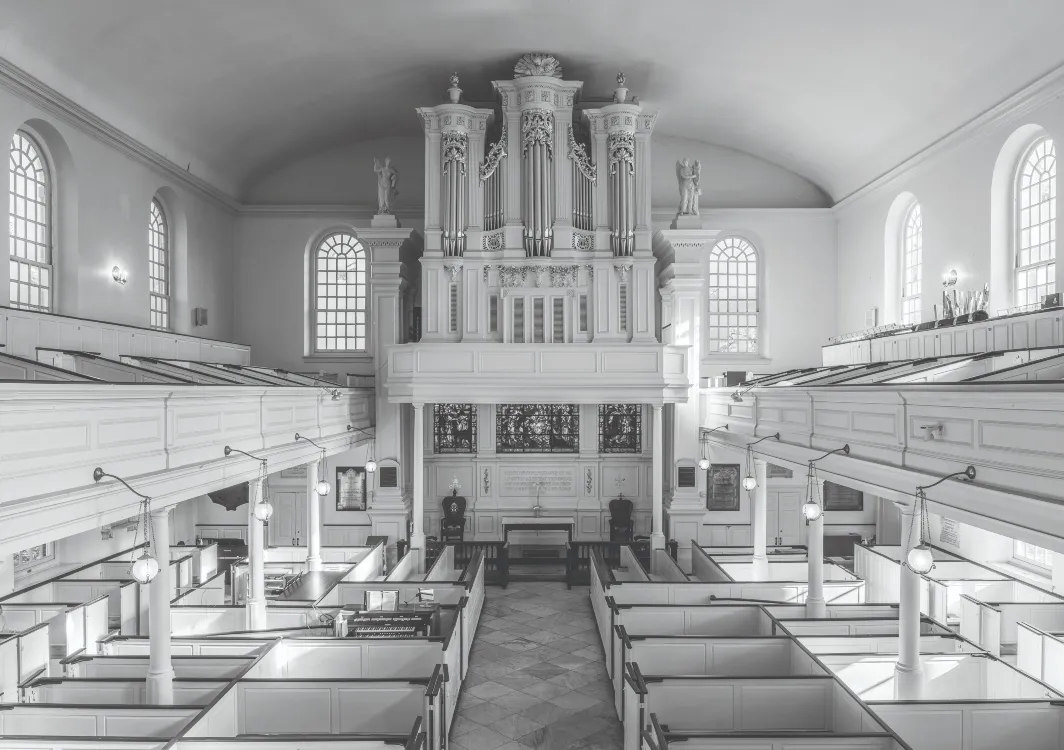
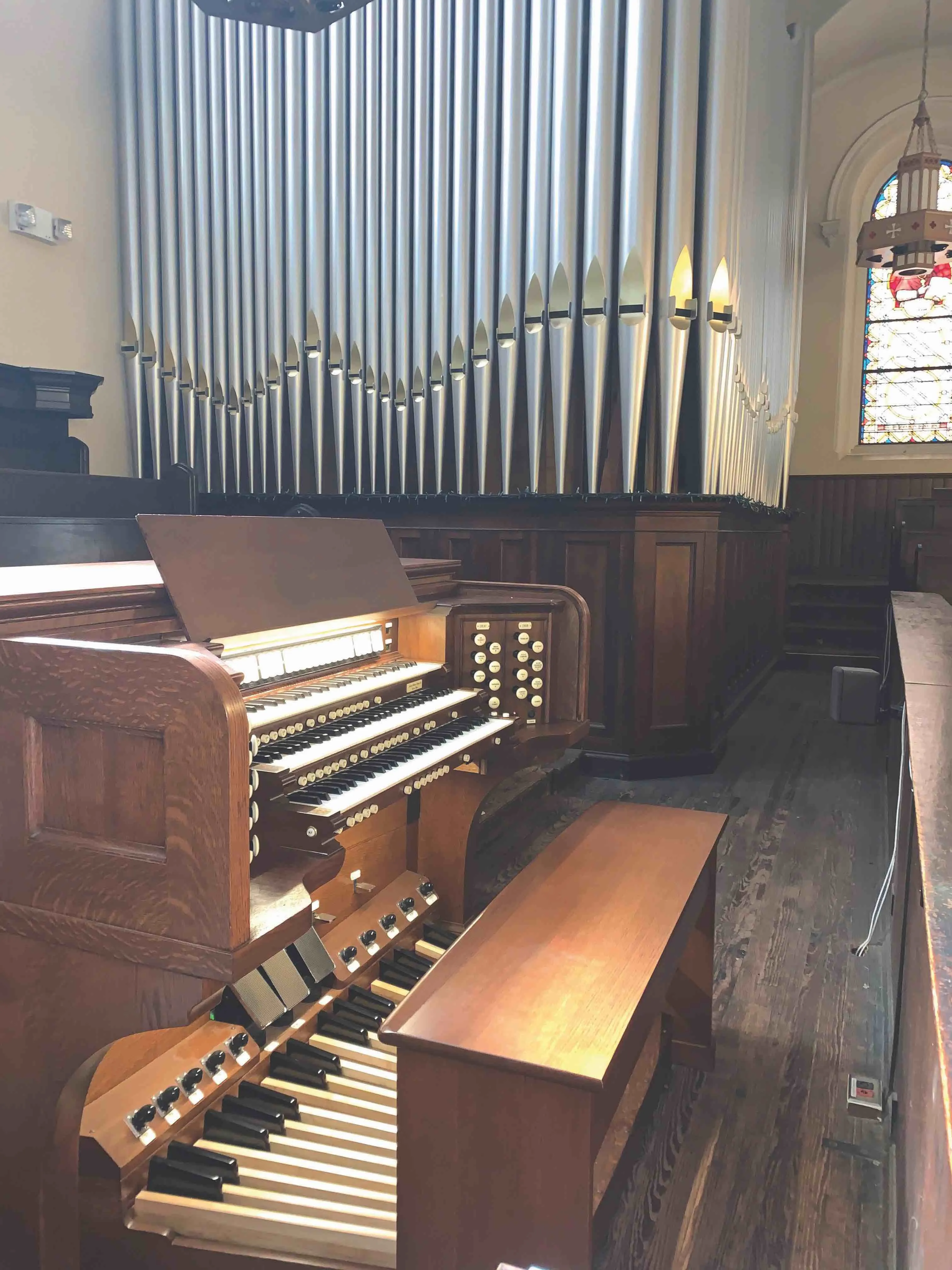
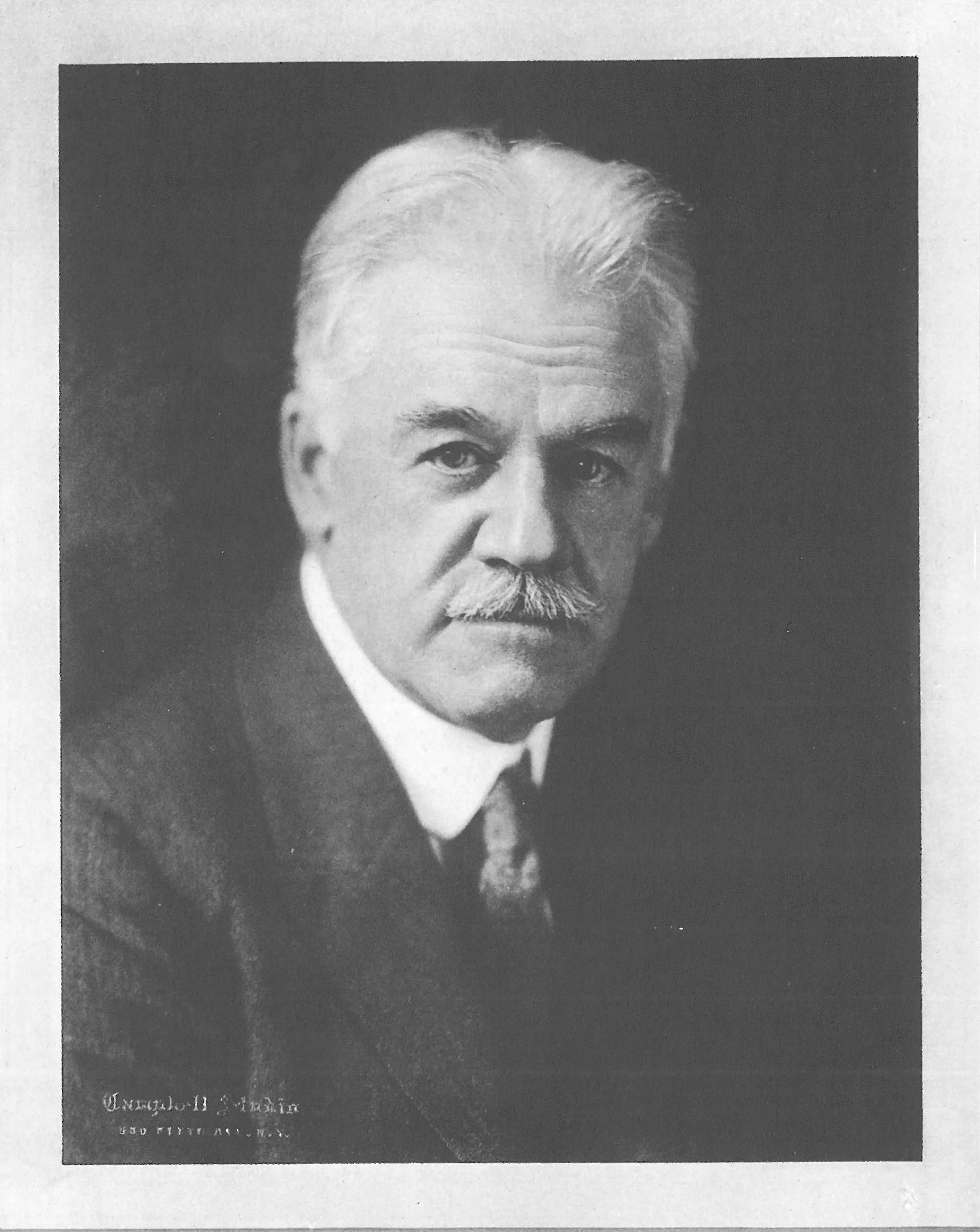
For Henry Erben back in the day, this was the third organ he had installed in Old Saint Patrick’s, which was designed by the same architect for Manhattan’s City Hall. The church was built in 1815 and became a home for the many Irish immigrants who populated the neighborhood then. It received its first organ, of three manuals, by Henry Erben and his partner at the time, in 1824, but he replaced it in 1852 with another of forty-two stops and two octaves of pedals. That instrument was destroyed with the whole interior of the cathedral in a fire in 1866. Erben installed the organ we were now hearing, with forty-six ranks of pipes up in the gallery, between 1866 and 1868, in a Gothic-style case grained to look like walnut, with the console in front of and facing the case—three manuals of fifty-eight-note compass and a pedal of thirty notes.
All of that, and the balcony in which the organ sits, has now been restored after decades of wear. Restored as well were the mechanisms that used to require men to turn a huge wheel inside the case, a “wheel bellows” to generate the flow of pressurized air that blows through the pipes for each note the organist plays. It takes considerable upper-body strength to turn it, and in any case electric blowers do the work as they have been doing for decades. But it is good to have if the power goes out—you never know!
Fires were a great peril in New York City back then, too. Erben’s factory on Centre Street burned down three times, whether by accident or by arson is unclear—first in 1835, when it was rebuilt; again in 1841, and destroyed yet again in 1849. He later moved the firm to factories first on East Twenty-Third Street and finally on East Forty-First Street. In all of them, he had the reputation of being a contentious character, particularly when negotiating the price of his instruments. He out-built and out-sold most of his nineteenth-century American competitors and boasted that his instruments were superior to any of them or their European counterparts—a big boast indeed, given how many great ones we remember better than his now.
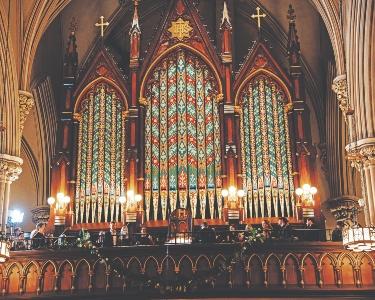
In 1843 Erben had started building what he later said was the largest organ in the country at the time, for Trinity Church at the end of Wall Street. It had been designed by the man who had succeeded Erben’s father, Peter Erben, as organist there—an Englishman, Edward Hodges. For whatever reasons, Henry did not get along with Hodges. When the Trinity instrument was finished three years later, they got into a row up in the organ loft, perhaps because Erben wanted to have a public demonstration of the instrument and the church authorities would not permit it. Hodges was pushed so brusquely out of the loft that he ended up on his rear end in the lobby, calling for help, an acquaintance recorded in his diary.
In a specifications brochure from “Henry Erben & Son’s Organ Manufactory” in 1880, four years before he died, Erben wrote:
I find it necessary to publish the following statement of FACTS, being informed by some of my old patrons that selfish and unprincipled individuals, actuated by sordid motives, have represented to them that I had retired from business, hoping, by resorting to such despicable and dastardly misrepresentations, to obtain a portion of the patronage I have so long, and, I trust, not unworthily enjoyed from an intelligent and discerning public.
Henry had taken on his son Charles as a partner, who had been working under his supervision and instruction for twenty-three years, and thus was:
NOW free from the malign influence and selfish duplicity of those in whom I had confidence, but who proved themselves utterly unworthy and ignorant of the first rudiments of the business—with the large work force of all my experienced hands, I can turn out PERFECT WORK in the shortest possible time.
He listed hundreds of organs he had built, 150 of them in New York City, 131 more all over New York State, and Brooklyn alone, and others “in every state of the Union, the Canadas, Nova Scotia, Cuba, the West India Islands, Mexico, South and Central America.” According to his obituary, there were 1,734 in total.
“Unlike others, I speak not for my Instruments,” Erben insisted.
THEY SPEAK FOR THEMSELVES after an active life of from twenty years to HALF A CENTURY! The pipes in my organs are NOT ALL WOOD, but, when requisite, the best and richest of Spotted METAL, ONE of which would contain hundreds of wooden whistles which modern organ builders set up and enumerate as PIPES!!!
After 158 years, the organ of Old Saint Patrick’s spoke magnificently for itself on June 11, and many in the audience that night went across the street afterwards and toasted Henry Erben, Jared Lamenzo, and all the donors who had saved it for generations to come. Mr. Lamenzo, a master musician and artist who graduated in 1997 from Harvard College with a Bachelor of Arts degree in applied science and engineering and later earned a master’s degree from New York University’s Tisch School of the Arts, modestly thanked each one in return.
The definitive work on Erben organs is Stephen L. Pinel’s The Work-List of Henry Erben: Organ Builder in Nineteenth-Century New York, published by OHS Press. The anecdote about the fight in the Trinity Church organ loft is from The History of the Organ in the United States by Orpha Caroline Ochse, published in 1975 by Indiana University Press, Bloomington.
1868 Henry Erben organ
GREAT (Manual II)
16′ Double Open Diapason 58 pipes
8′ Open Diapason 58 pipes
8′ Gamba 58 pipes (1–12 original, zinc)
8′ Melodia 58 pipes
8′ Stopd. Diapason 58 pipes
4′ Principal 58 pipes
4′ Wald Flute 58 pipes
2-2⁄3′ Twelfth 58 pipes
2′ Fifteenth 58 pipes
Mixture III 174 pipes
Sesquialtera III 174 pipes
8′ Trumpet 58 pipes
4′ Clarion 58 pipes
SWELL (Manual III, enclosed)
16′ Bourdon 58 pipes
8′ Open Diapason 58 pipes
8′ Stopd. Diapason 58 pipes
8′ Dulciana 58 pipes
8′ Viol d’Amour 46 pipes (1–12 from 8′ Dulciana)
4′ Principal 58 pipes
4′ Flute Harmonic 58 pipes
2′ Piccolo 58 pipes
Cornet III 174 pipes
8′ Cornopean 58 pipes
8′ Hautboy 58 pipes
CHOIR (Manual I)
8′ Pyramid Diapason 46 pipes (1–12 from 8′ Claribel Flute)
8′ Stopd. Diapason 58 pipes
8′ Claribel Flute 58 pipes
8′ Dulciana 58 pipes
8′ Keraulophon 46 pipes (1–12 from 8′ Dulciana)
4′ Principal 58 pipes
4′ Flute Traverse 58 pipes
2′ Flageolet 58 pipes
8′ Cremona (TC) 46 pipes
8′ Basson (bass) 12 pipes
PEDAL
16′ Double Open Diapason 30 pipes
16′ Bourdon 30 pipes
16′ Contra Gamba 30 pipes
8′ Violoncello 30 pipes
4′ Claribel Flute 30 pipes
16′ Trombone 30 pipes
Couplers
Great to Pedal
Swell to Pedal
Choir to Pedal
Swell to Great
Choir to Great
Swell to Choir
Pedal to Pedal 8ves
Pedal Movements
Great to Pedal Reversible
Great Piano
Great Mezzo
Great Forte
Swell Piano
Swell Forte
Swell Crescendo Lever
June 11, 2026, program
Praeludium et Fuga in C, BWV 545
Johann Sebastian Bach (1685–1750)
“Allemande,” Suite for Violin and Organ, op. 166
Josef Gabriel Rheinberger (1839–1901)
Spirit, Creator
David R. Harrison (organist of the cathedral, c. 1845–c. 1864)
Romance, op. 36
Camille Saint-Saëns (1835–1921)
The Lord’s Prayer
William Richard Bristow (1803–1867, organist of the cathedral, c. 1840s)
Sonata VI, Six Sonatas, op. 65, no. 6
Felix Mendelssohn Bartholdy (1809–1847)
Versets from Cuaderno de Tonos de Maitines, Quinto Tono
Sor María Clara del Santísimo Sacramento (c. 1750)
The Creation: With Verdure Clad, The Heavens Are Telling
Franz Joseph Haydn (1732–1809)