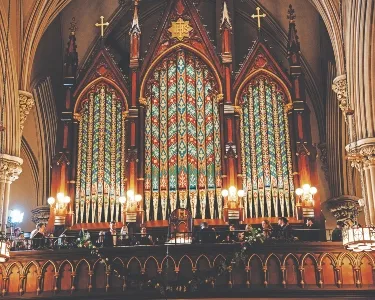
Cover Feature: Wallace & Co. restoration of Hook & Hastings Opus 1487
Wallace & Co. Pipe Organ Builders, Gorham, Maine; Saint Joseph’s on Capitol Hill, Washington, D.C.
Over nearly fifty years in operation, Wallace & Co. Pipe Organ Builders of Gorham, Maine, has had the pleasure of being involved with the restoration of dozens of organs by the Hook brothers. This includes restoring and relocating E. & G. G. Hook Opus 173 to the small town of Boom, Belgium, as well as renovating Hook & Hastings Opus 1573 for the Eastman School of Music. In recent years we have spent time getting to know the “stock model” instruments of the 1880s and 1890s, with a focus towards the documentation of pipework and mechanical systems. These smaller projects served to inform the restoration of Opus 1487 for Saint Joseph’s on Capitol Hill.
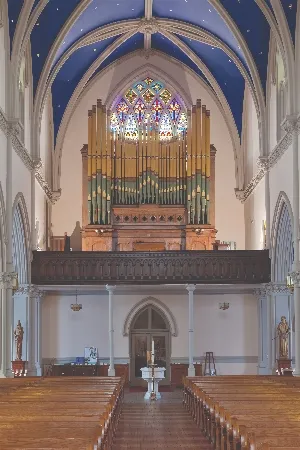
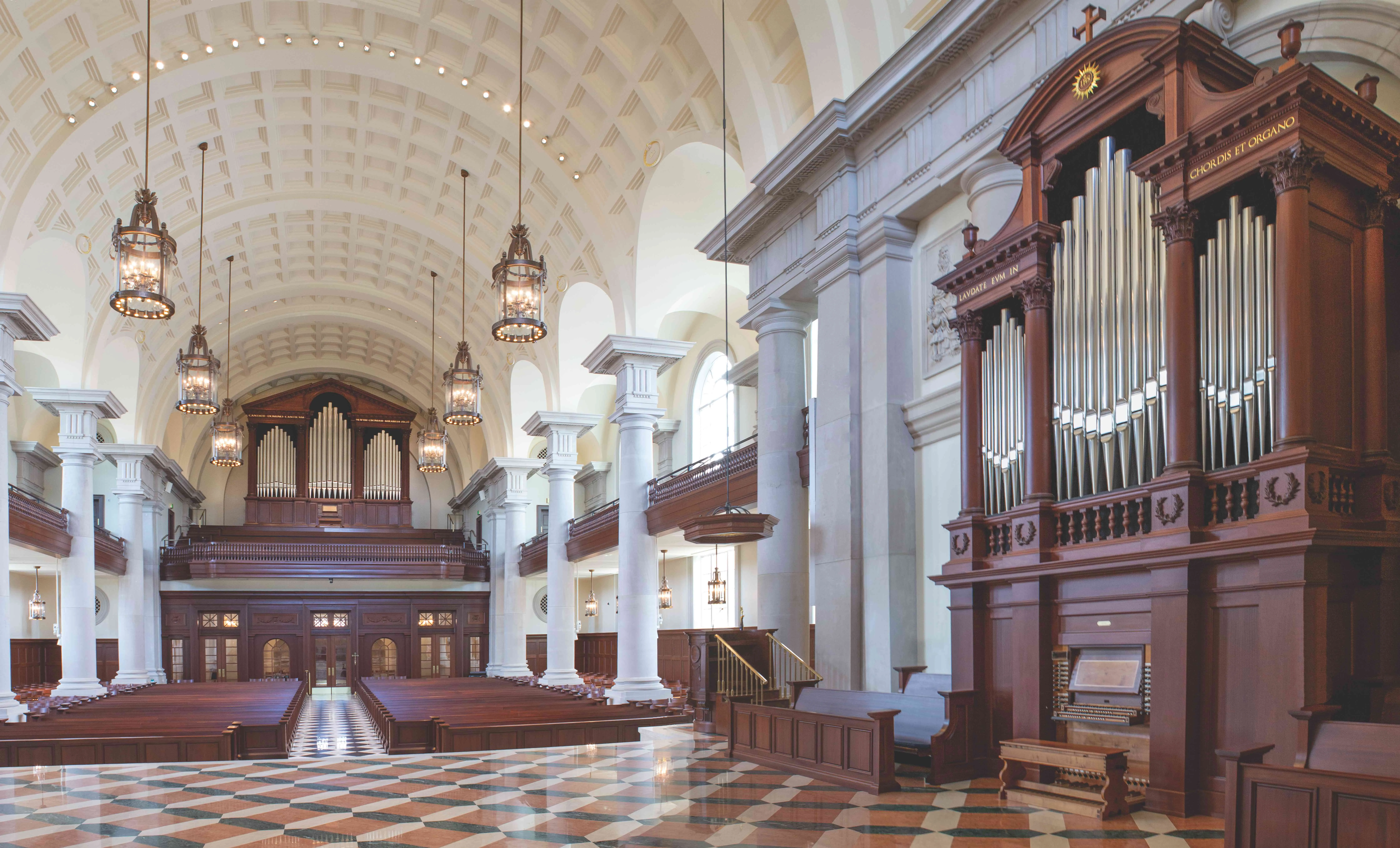
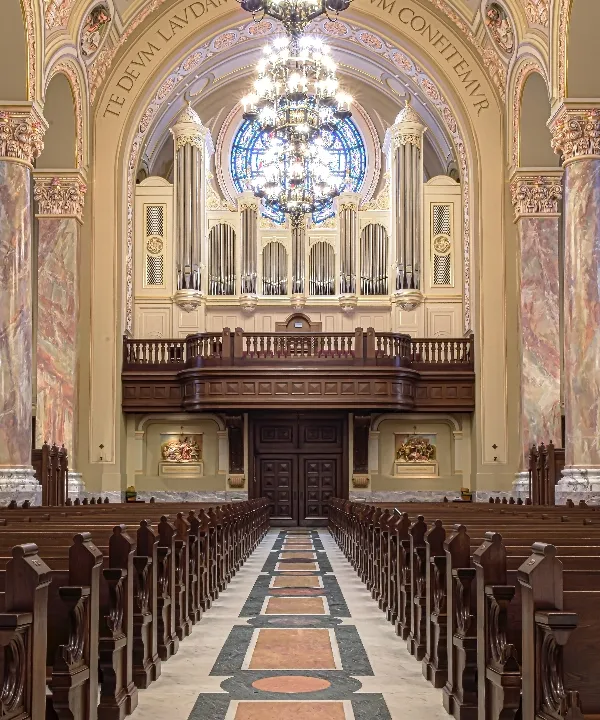
In August 2022 Wallace & Co. was delighted to be called to Saint Joseph’s on Capitol Hill in Washington, D.C., for an inspection of their 1891 three-manual Hook & Hastings organ. This significant organ has been located in the rear gallery of the church since its construction. A range of restorative work was completed by George Bozeman in the 1980s to clean and bring the organ into better playing form.
The submitted proposal included a complete restoration of the organ as well as the inclusion of a new 16′ Posaune for the Pedal division. After less than a year of deliberation, Wallace & Co. entered into a contract with Saint Joseph’s to restore the organ. During the first week in June 2024, the Organ Clearing House assisted with the disassembly over several warm and rain-free days. All those familiar with nineteenth-century organs will know the staggering size and weight of the parts in this organ. It must have been quite a sight in the 1890s to see the original team installing this organ without the help of steel scaffolding or an electric chain hoist. Several large parts required up to five people to lift after being lowered down from the gallery. Careful records were kept during the disassembly, cataloging all aspects of the organ. Opus 1487 was then transported to Gorham, Maine, for restoration.
All interior components of the organ received what has become a “standard” Wallace & Co. restoration. Every part was carefully cleaned, fixed, refinished, and adjusted. The windchests for the Swell, Great, Choir, and Bourdon/Violincello received a full renovation including new top and bottom tables. The key action received special attention. Rollerboards were renewed with new cloth bushings and replacement replica “arms” where necessary. All new replica key action squares were accompanied by new trackers for all three manual divisions and the Pedal. The pneumatic assists for the bottom twenty notes of the Swell and Great were faithfully restored. Once in place, each pneumatic was carefully adjusted for proper function.
This project also included the return of the feeder bellows and hand-pump mechanism. The original feeder bellows were still in the gallery at the time of disassembly. They had been removed from their location underneath the reservoir to make way for the previous blower windline. A new blower was provided inside of a silencing cabinet on the right-hand side of the organ. A new windline and curtain valve were designed and constructed to fit into the organ without alteration. Based on shadows and old screw holes, the new hand-pumping system mimics the original as closely as possible.
A comprehensive research effort was completed to develop the proper scaling of the new 16′ Posaune relative to the rest of Opus 1487. Similar Hook reeds were measured at Opus 288 at Saint John’s, Bangor, Maine; Opus 304, Eighth Methodist, Boston; Hammond Street Congregational, Bangor; and Opus 334, Mechanics Hall, Worcester, Massachusetts. Close attention was paid not only to the scaling of the 16′ reeds themselves, but also the manual reeds and their respective principal choruses. Once the scaling was completed, the construction of the new reed began. All of the components of this rank were constructed in the Wallace shop. To best blend the sound of the new Posaune, we reserved final voicing until all other ranks had been completed. The new pipes were voiced to balance well with the manual reeds and principal choruses. The rich, dark sound of the Wallace & Co. pipes adds an inviting new character to this organ.
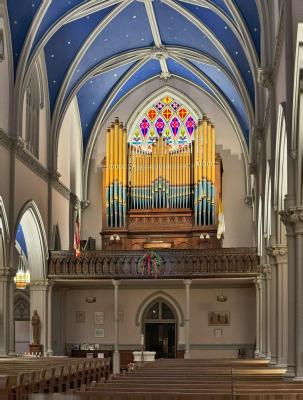
The most visible part of this project was the restoration of the thirty-five façade pipes. Historic colors expert Marylou Davis was brought in to best match the original paintwork on the pipes. Original patches of nineteenth-century color had been left visible at the back of the pipes even after the addition of several layers of paint in the twentieth century. The added paint covering the large areas of the pipes had corroded. The paint was cracked and chipped, and by the time of the restoration, the pipes looked very worn out. Under the direction of David Wallace and with help from the Wallace & Co. crew, the rehabilitation of the façade pipes began. The most recent layers of paint were removed. The remaining paint was sanded to smooth out old brush marks before being primed. The largest sections of the pipes were painted first. Work then included several sessions of taping and painting to apply all of the colored bands. Care was taken to apply the placement of the bands by using the originals as a guide. Artist Lily Scheipers joined the crew for the final detailing and gilding of the pipes. Twenty-three-karat double gold leaf was chosen for its warm and bright appearance. The results are a stunning display under the new lighting in the gallery.
In September 2025 the Organ Clearing House returned to Maine to load Bob Mead’s tractor trailer truck for the trip back to Saint Joseph’s Catholic Church. Mr. Mead navigated the narrow car-lined streets of the Capitol Hill District in Washington, D.C., and was waiting for the crew on the assigned delivery morning. The crew had all of the heavy components of the organ in place by the end of the first week. The light and repetitive small pieces and action parts consumed the majority of the remaining days of the reassembly. Lastly, the restored pipes were returned to the organ and regulated to be of the best possible voice. The final tuning and mechanical adjustments took place just ahead of the dedication blessing and recital on Sunday, January 11, 2026.
The greatest joy of any project undertaken by our shop is the people with whom we have the pleasure of working. At Saint Joseph’s on Capitol Hill the church team included Reverend Father William Gurnee, pastor; Maria Balcucci, music director and organist; and Tim Rutton, business manager. We are most appreciative of the expert help of the Organ Clearing House: John Bishop, Amory Atkins, Joshua Wood, and Terence Atkin. The crew in the Wallace & Co. shop included Nick Wallace, Rebecca Schnell, Ryan Slocum, David Wallace, and Lily Scheipers. Consultants, suppliers, and on-site assistants included Marylou Davis, A. R. Schopp’s Sons, Organ Supply Industries, Christopher Bono, and David Storey. Special thanks to Robert Mead who safely transported the organ from Maine to Washington, D.C. Thank you, all.
For all who are in the Washington, D.C., area, be sure to visit Saint Joseph’s, as a concert on the second Sunday of each month will take place throughout 2026. The series will end with the annual Lessons and Carols concert on December 13, 2026.
—Nicholas Wallace
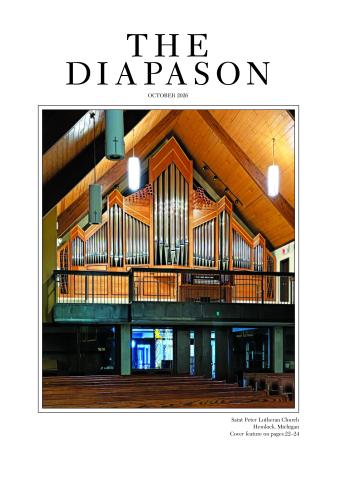
Cover photo by David Wallace, edited by William T. Van Pelt
Other photos by Nicholas Wallace
Builder’s website: wallacepipeorgans.com
Church website: stjosephsdc.org
GREAT (58 notes)
16′ Open Diapason
8′ Open Diapason
8′ Doppel Flöte
4′ Octave
3′ Twelfth
2′ Fifteenth
1-1⁄3′ Mixture III
8′ Trumpet
SWELL (58 notes, enclosed)
16′ Bourdon
16′ Bourdon Bass
8′ Open Diapason
8′ Viola
8′ Stopd Diapason
4′ Flauto Traverso
4′ Violino
1-1⁄3′ Dolce Cornet III
8′ Oboe & Bassoon
Tremolo
CHOIR (58 notes)
8′ Geigen Principal
8′ Dulciana
8′ Melodia Stopd Bass
4′ Flute d’Amour
2′ Piccolo
8′ Clarinet
PEDAL (27 notes)
16′ Double Open Diapason
16′ Bourdon
8′ Violincello
16′ Posaune *
* Added 2024–2025
Couplers and accessories
Swell to Great
Swell to Choir
Choir to Great
Swell to Pedal
Great to Pedal
Choir to Pedal
Bellows Signal
Foot Trundles
Gt Piano
Gt Forte
Great to Pedal Rev.
Mechanical key & stop action
26 stops, 30 ranks, 1,616 pipes