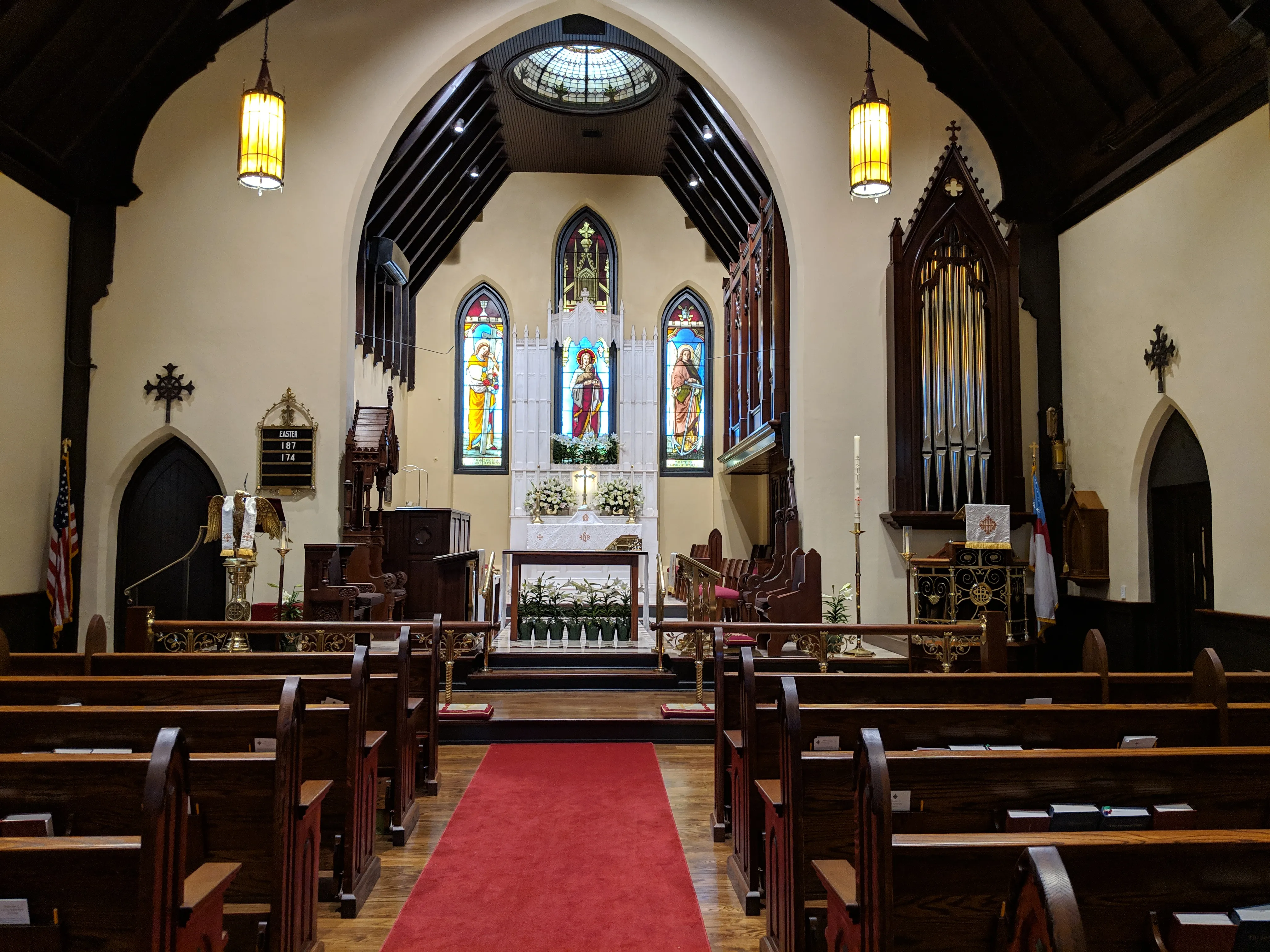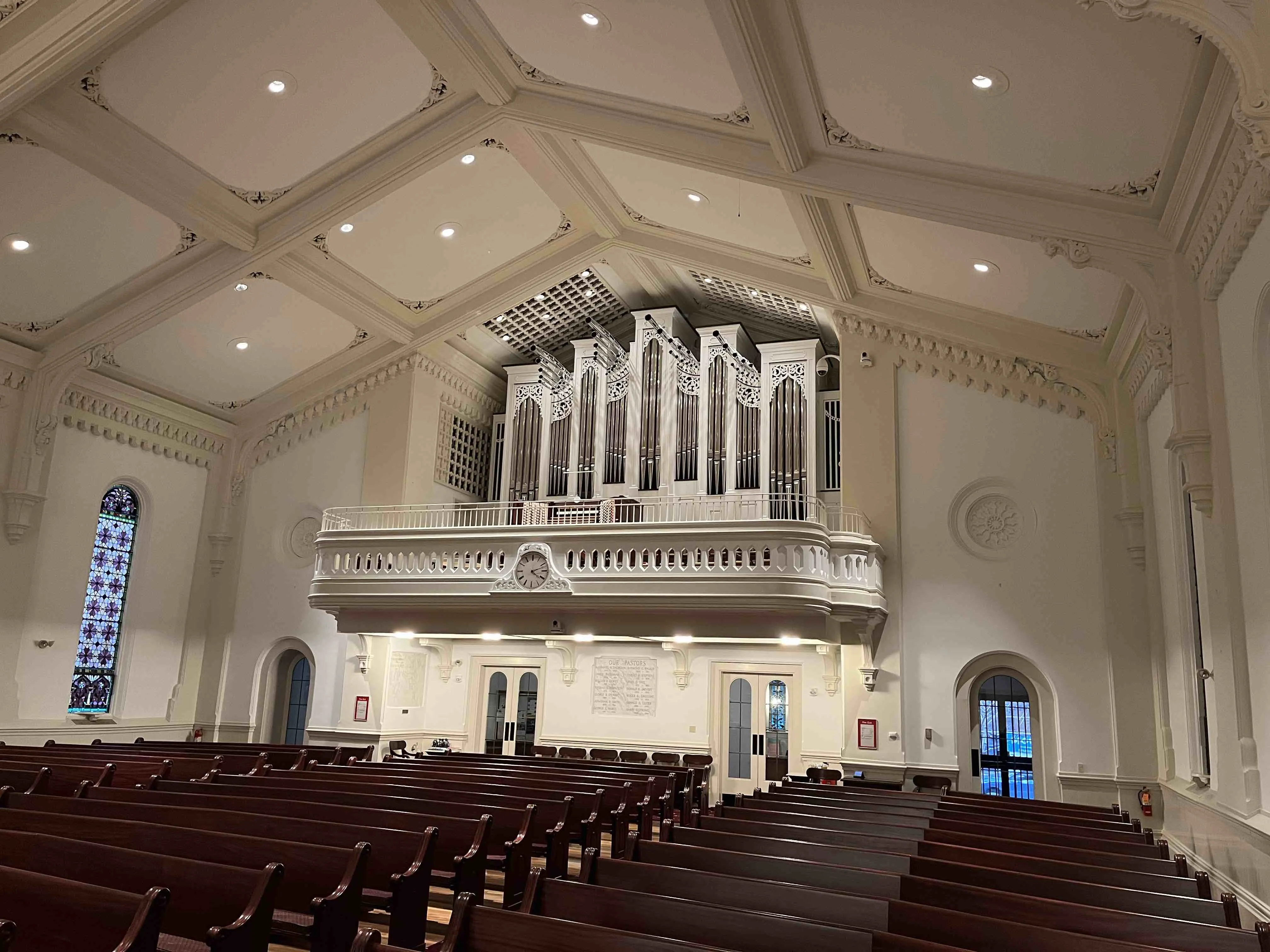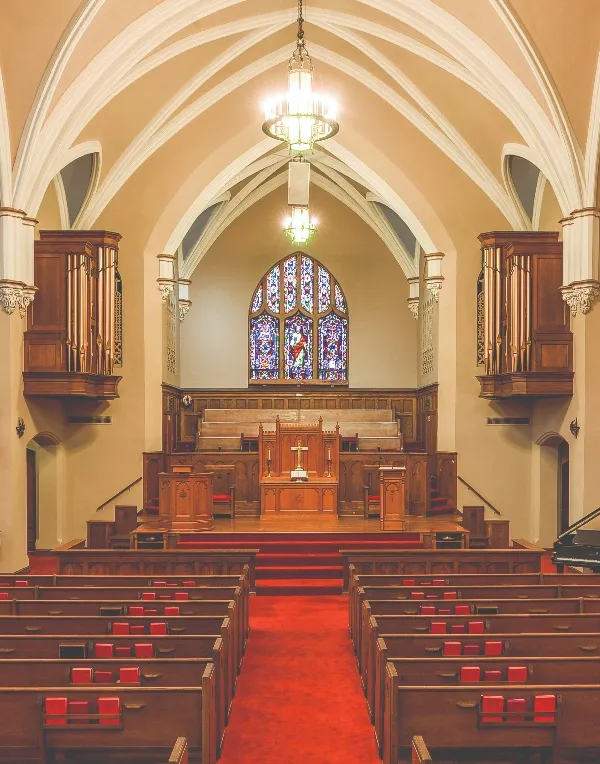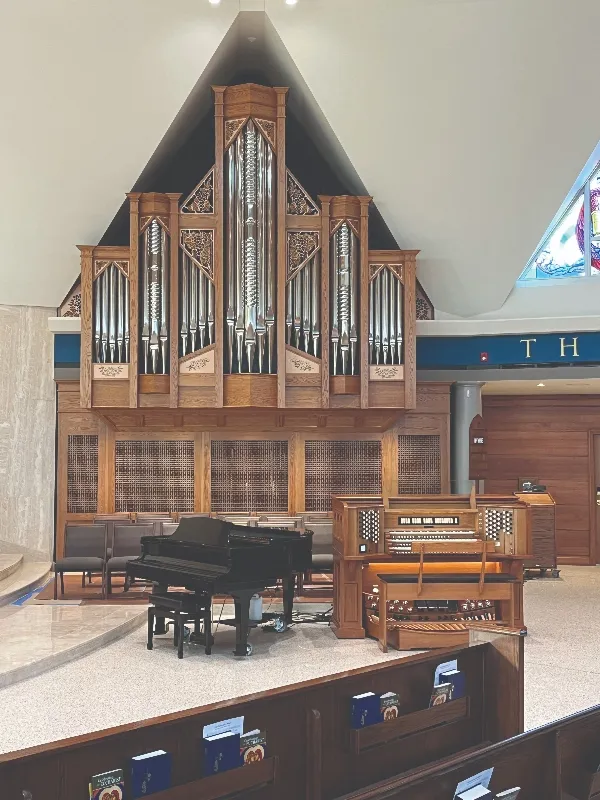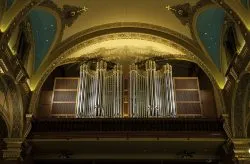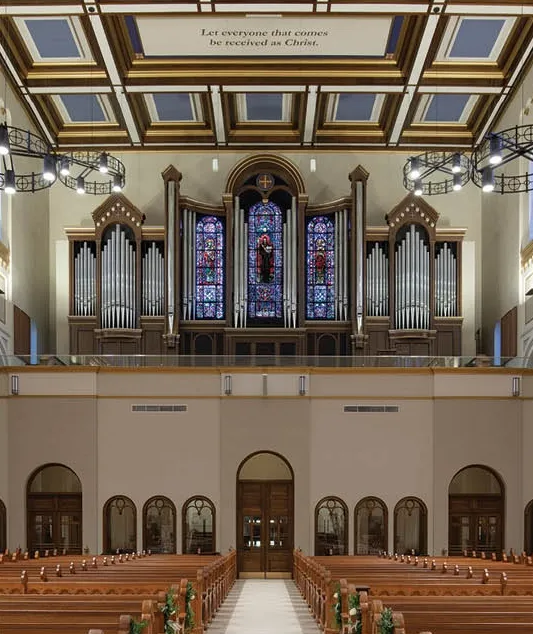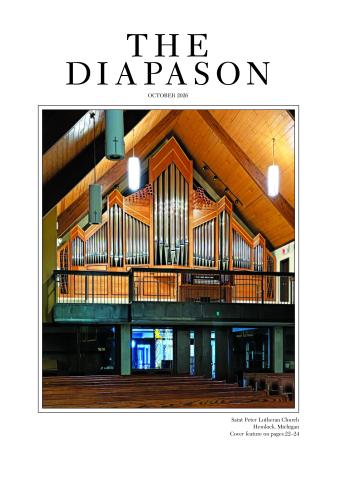
Cover Feature: Bigelow & Co. Opus 31/45
Bigelow & Co. Organ Builders, American Fork, Utah; The Church of the Blessed Sacrament, Seattle, Washington
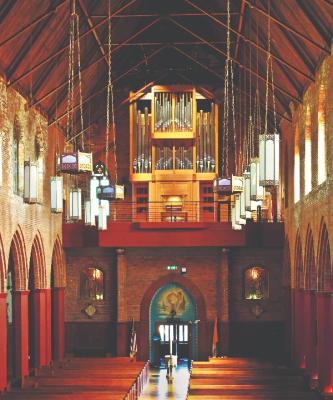
Genesis of the Bigelow Opus 45
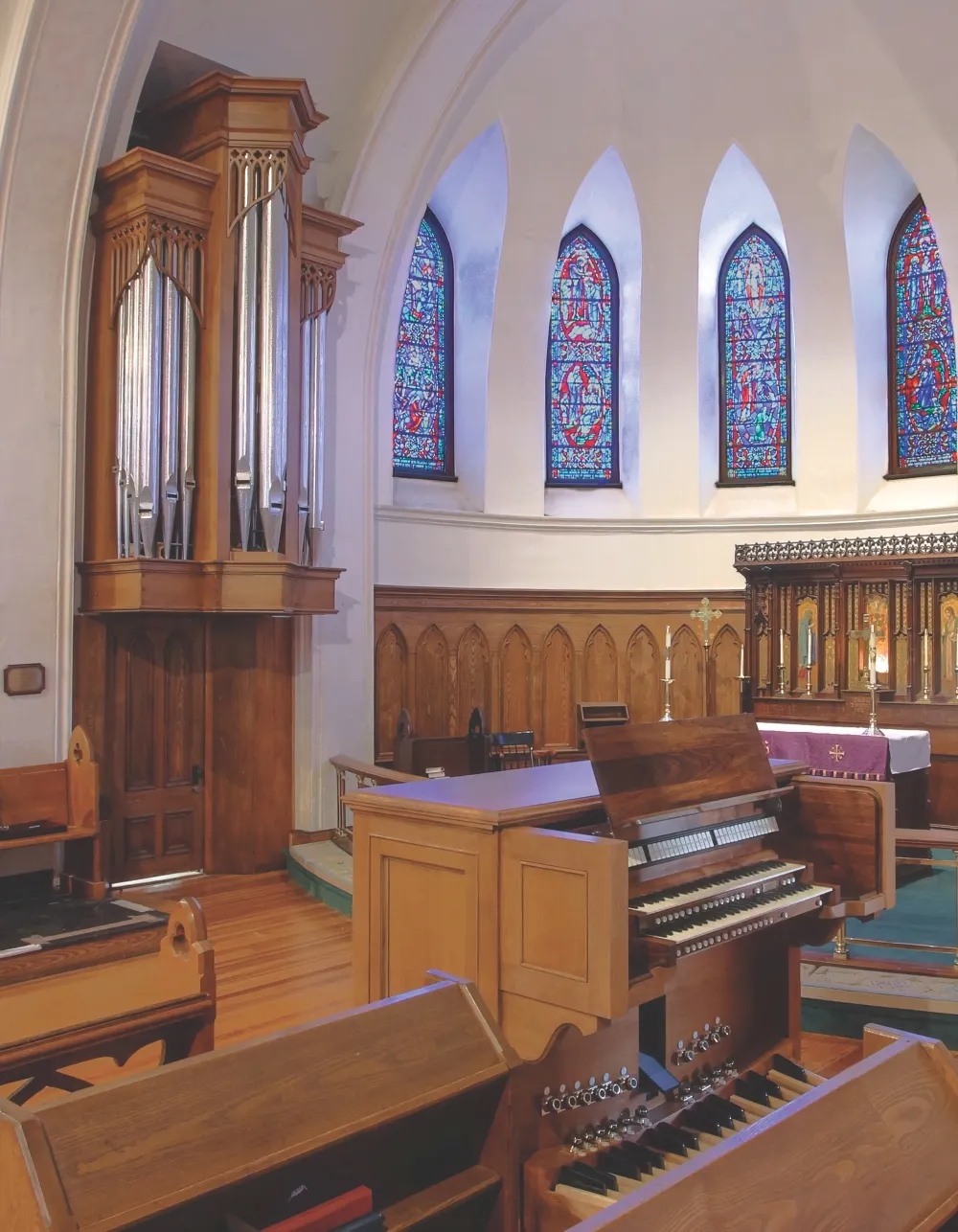
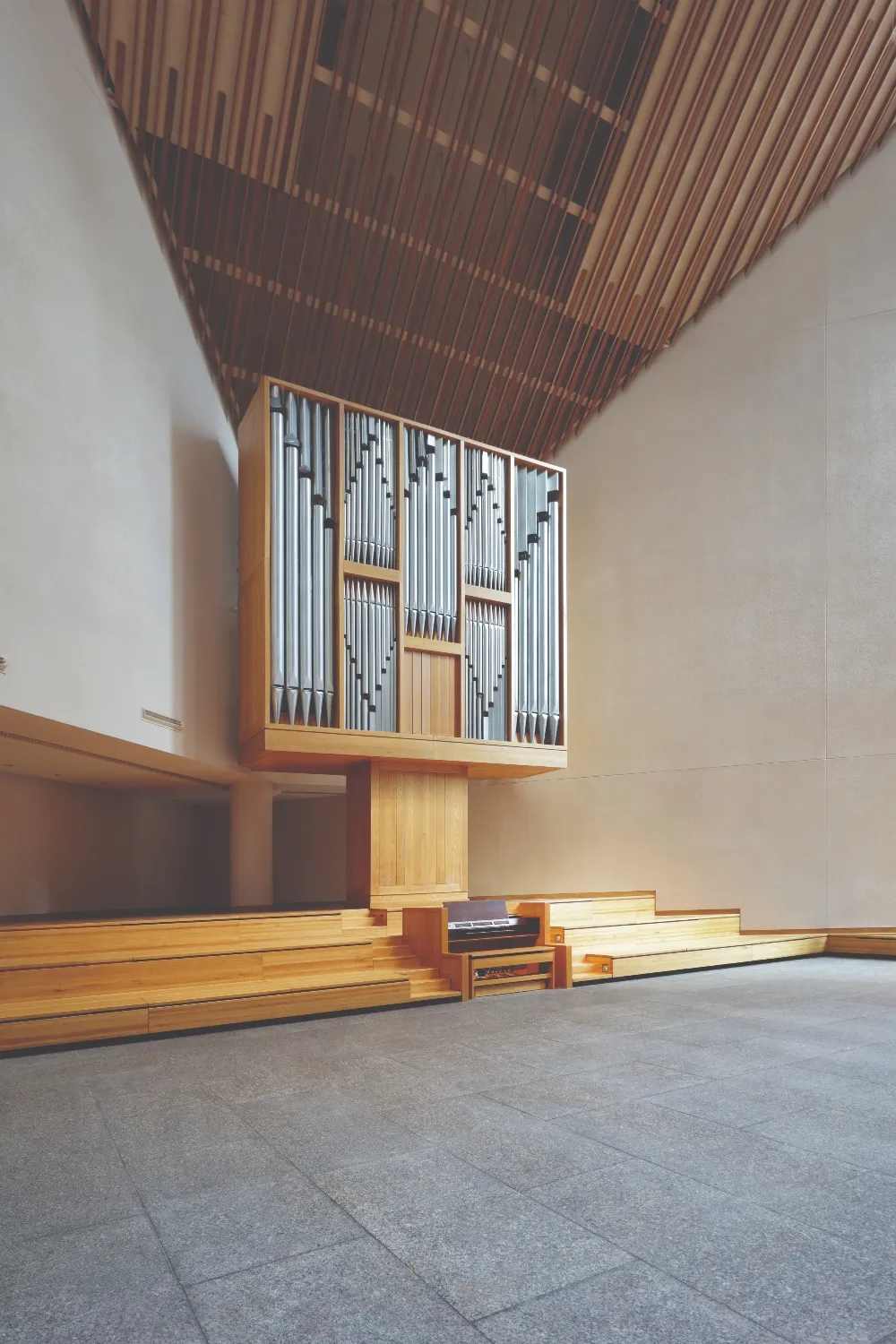
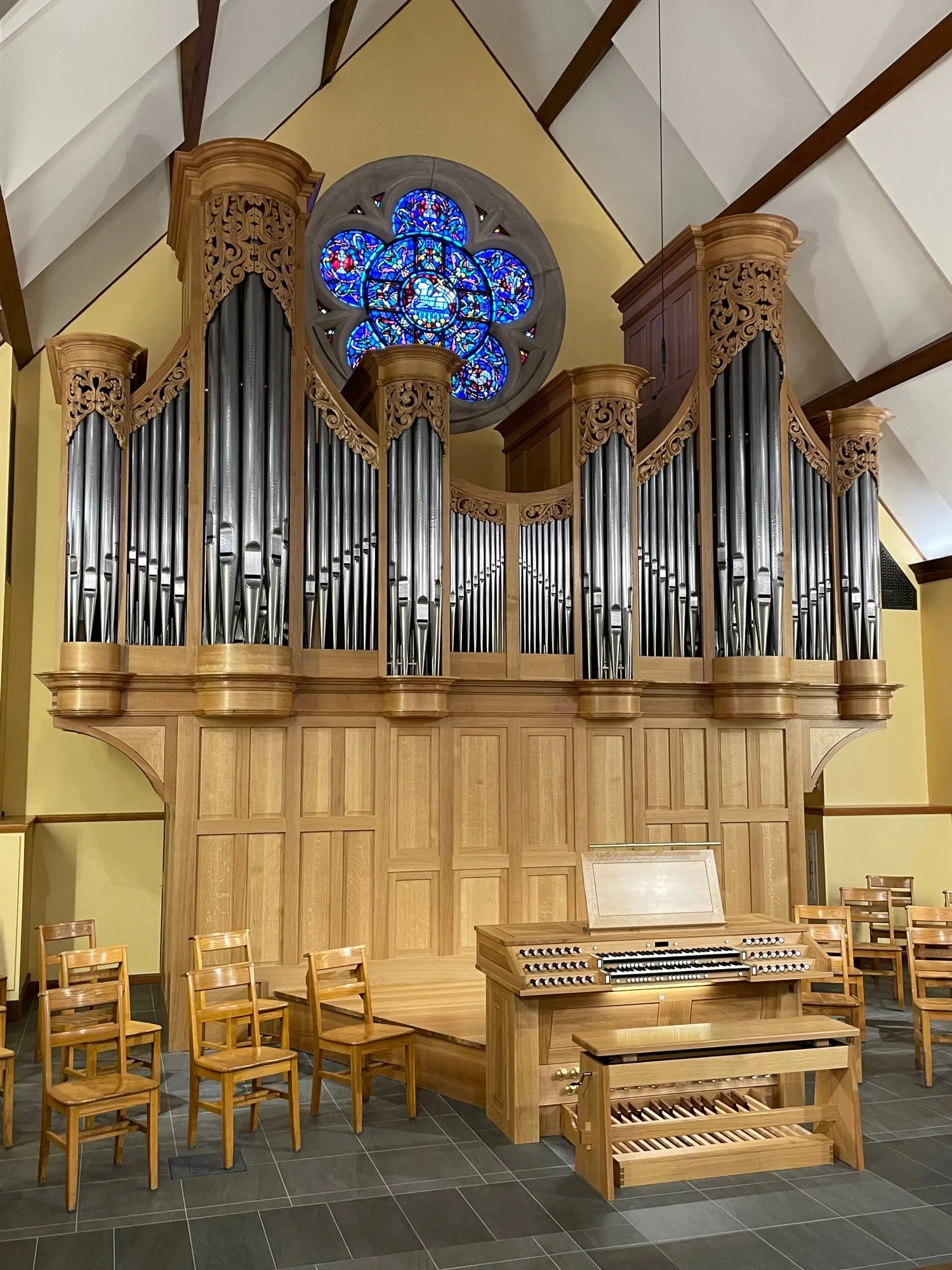
Bigelow Opus 45 was originally built as Opus 31 for Lutheran School of Theology at Chicago (LSTC). In 2001 Larry J. Long, seminary musician, and Scott Riedel, acoustical consultant, contacted Bigelow regarding a new organ for LSTC’s Augustana Chapel. Larry had recently played Bigelow’s Opus 23 at Zion Lutheran Church in Madison, Wisconsin, and was very impressed. As the chapel was the primary worship site for the seminary, Larry advised that the acoustics be supportive for congregational singing, with reverberation projected to be two or three seconds.
On November 1, 2001, Mike Bigelow traveled to Chicago. In addition to reviewing the upcoming chapel renovation, he met with the organ committee, consisting of Rev. Dr. Mark Bangert, professor of worship and music; Dr. James Echols, president; Larry Long; and Scott Riedel. The consensus was strongly in favor of LSTC commissioning a fine tracker organ.
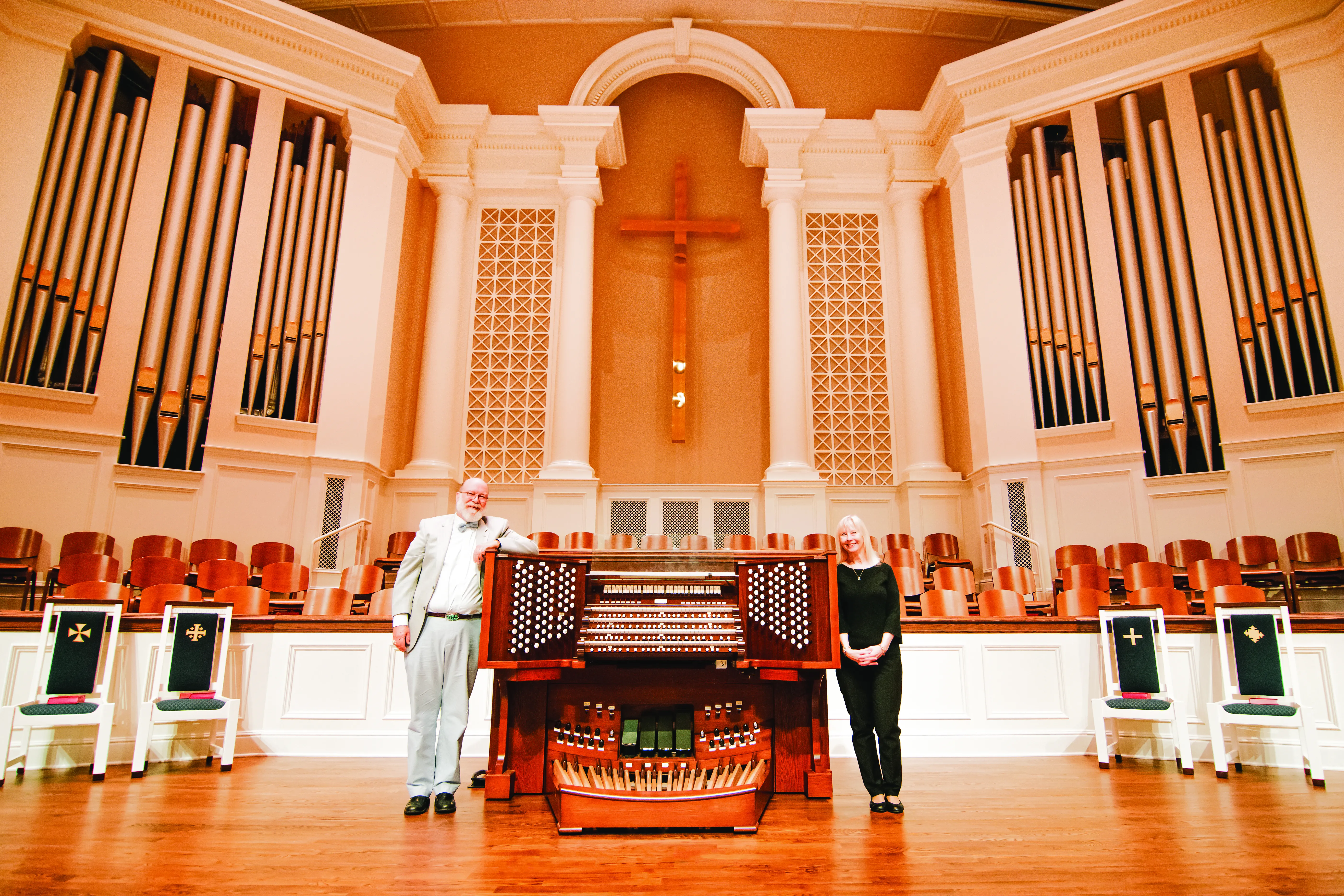
David Chamberlin, Bigelow’s vice president and tonal director, drew up a specification of 25 stops that would support the Lutheran tradition of vibrant hymn singing and address the various demands of solo literature. The post-contract upgrade of changing the 16′ Subbass to a 16′ Præstant provided additional bass support as well as visual grandeur. The contract was signed on February 7, 2002, and the organ was installed two and a half years later. In a letter to Reverend Bangert, Scott Reidel commented, “The entire Bigelow staff has done wonderful work in the construction, installation, and artistic voicing of the organ, and I am proud to be associated with this fine instrument.”
The dedicatory recital was played by LSTC’s organist, Daniel Schwandt, on November 4, 2004. LSTC named the organ the Manz Organ “. . . in gratitude for the ministry of Paul Manz, artist in residence and Christ Seminary Seminex Professor of Church Music at LSTC from 1983–92, and his wife, Ruth” (https://lstc.edu/lstc-life/chapel/manz/history). When LSTC sold their building in 2022, Bigelow brokered the sale of Opus 31 to Blessed Sacrament Church, Seattle, Washington.
—Michael Bigelow and David Chamberlin
Bigelow & Co. Organ Builders
From the director of sacred music
In October 1898—just a decade after the great Seattle fire of 1889 and little more than a year after the beginnings of the Klondike gold rush—eleven Catholic families petitioned the bishop of Vancouver, Washington, the Most Reverend Edward J. O’Dea, to send priests to their rapidly growing community around the University of Washington. In 1908 Bishop O’Dea responded by sending the Dominican Friars of the Western Province (the Province of the Most Holy Name of Jesus) to the University District, instructing them to erect a parish for the care of the surrounding community and the University of Washington students.
At the time, the University District was little more than forest wilderness, and the University of Washington was home to just 1,846 students. Since then, Blessed Sacrament has grown into one of the area’s most recognizable National Historic Landmarks, and the University of Washington has grown into one of the country’s premier public universities. Today, the church’s green spire is a staple of the Seattle skyline along I-5 and even used as a landmark by airline pilots during approach to Seattle–Tacoma International Airport.
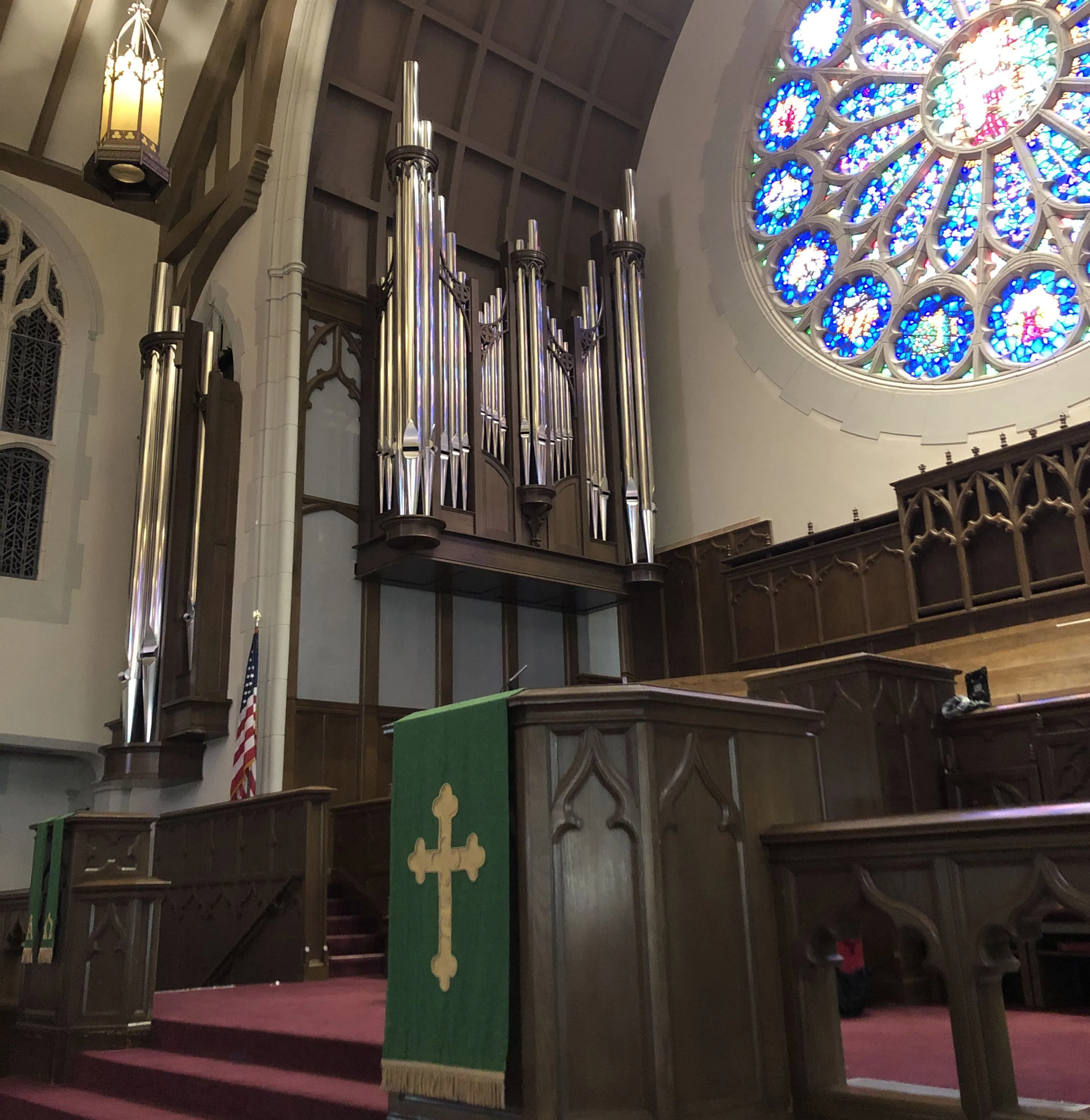
When architect Arnold Constable set about the design of the church, he intended for an organ to occupy a prominent place in its architecture. A single large organ chamber was built into the north side of the sanctuary with two substantial tone openings. Below this chamber is another smaller room with direct access to the chamber, likely intended as a mechanical or blower room, though this is not specified on
the blueprints.
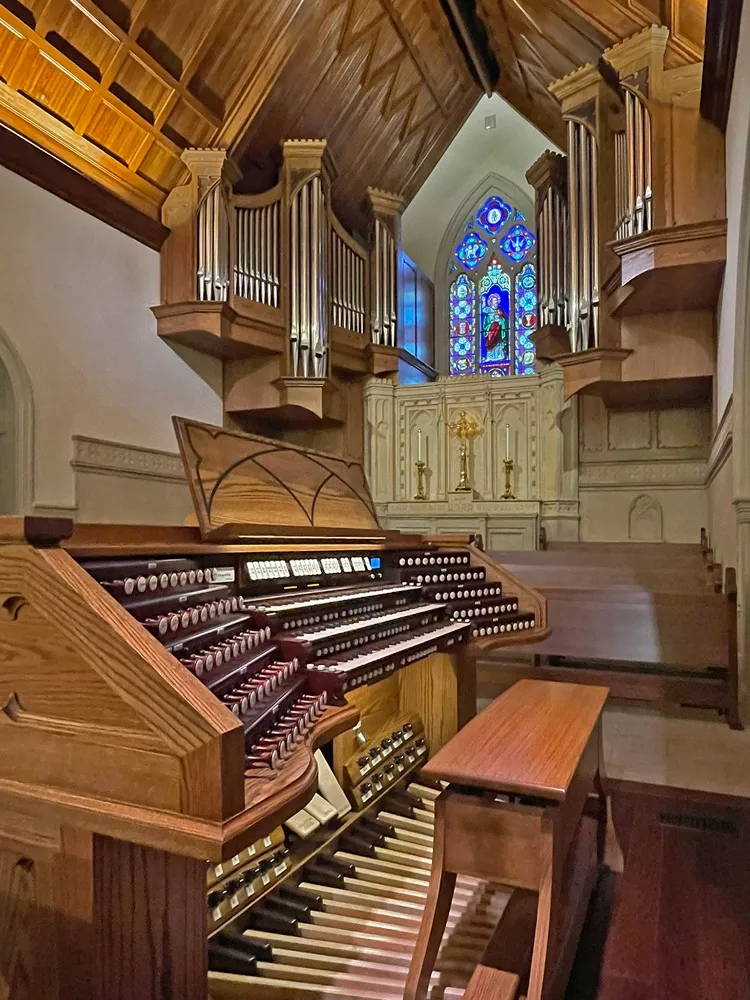
Though fortunate to have a large and dedicated congregation, many of whom helped in the construction of the church, Blessed Sacrament was not immune to the effects of the Great Depression. At its dedication in 1925 the church was far from having achieved its original design. The interior that was meant to have had ornate plasterwork and carvings was nothing but bare brick, and the large organ chamber sat empty, with no attempt having been made to fill it. This remained the status quo until a Wurlitzer Electrostatic reed organ was installed in the 1940s. This humble instrument served the church for several decades until the 1960s, when the choir purchased a one-manual, six-stop Vermeulen organ and placed it in the loft. This organ served as the only instrument in the church until 2014 when a two-manual, twelve-rank organ was purchased from Saint Dominic Church in San Francisco and was installed in the south transept of the church.
That instrument was originally built by Henry Erben but had experienced substantial renovations in its lifetime. Further, within five years of its installation, the organ was experiencing substantial mechanical and tonal issues. Not long after its installation it was determined that because of its small size and its emerging reliability issues that this instrument was not going to suffice as the church’s final organ. Bids were sought from several builders in the late 2010s, and the church ended up purchasing Aeolian-Skinner Opus 1071. For reasons of storage and structure, it was not possible to consider putting the Aeolian-Skinner in the organ chambers, and so it was proposed to put it in the gallery. Regrettably, the organ was purchased before feasibility studies were complete, and their arrival made it clear that Opus 1071 would not, in fact, fit in the loft with room left for choristers or the console. This organ remained in storage until the spring of 2024, when it was given away to a Los Angeles area organbuilder.
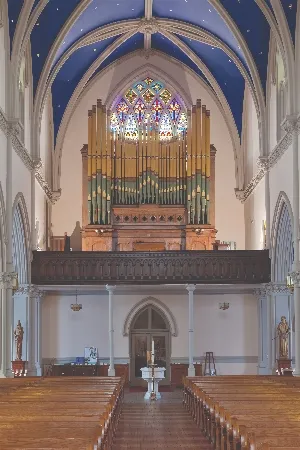
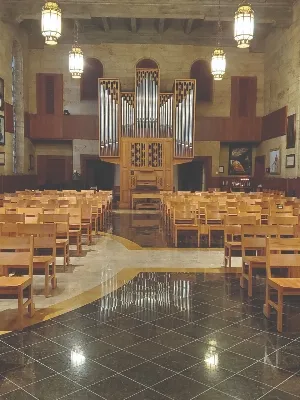
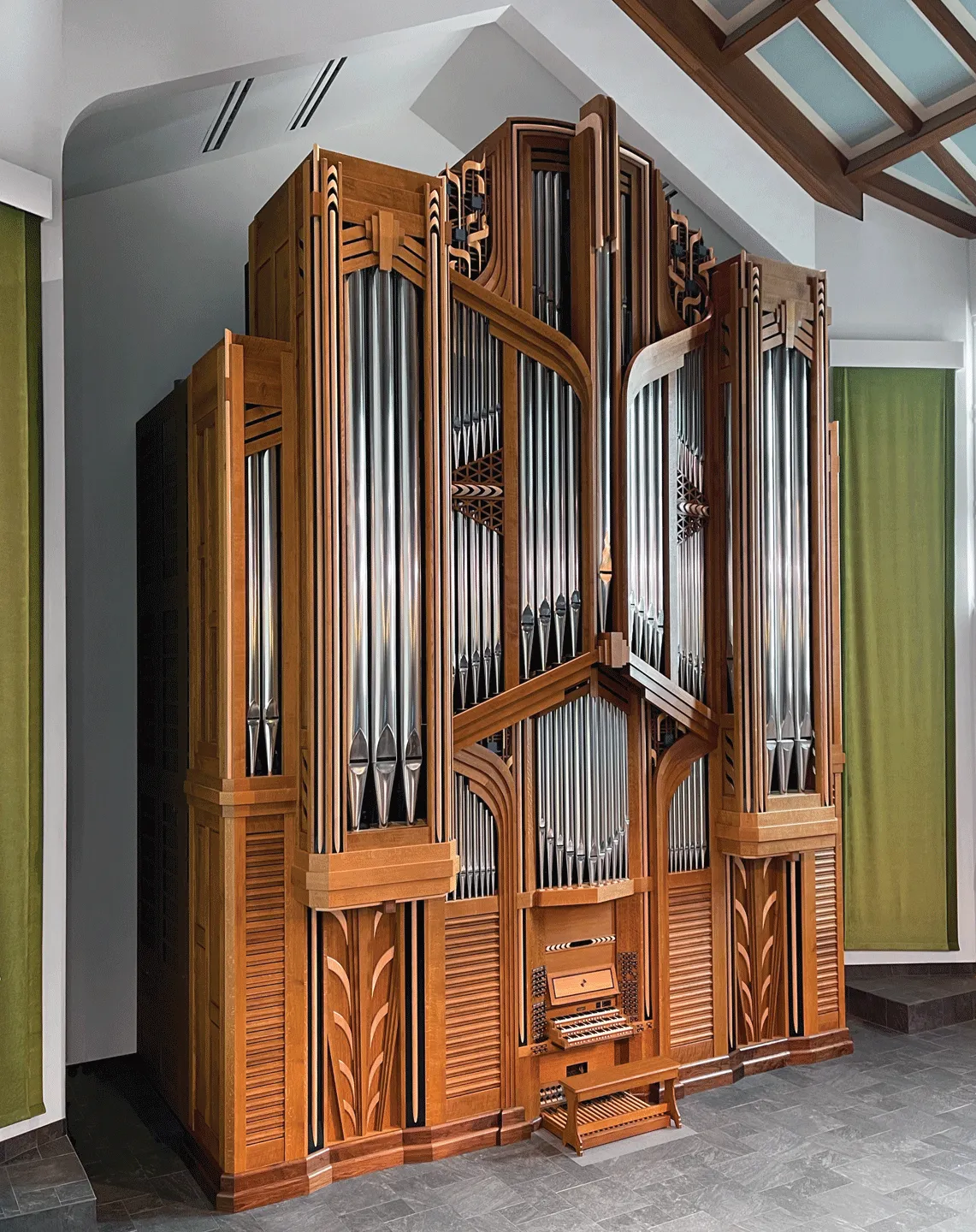
Upon my arrival in 2023 I was mandated to sort out the church’s collection of instruments and finish what various generations before had started. It quickly became evident that the purchase of an existing organ for installation in the gallery was the most cost- and time-effective solution. It was determined that to leave room for the choir the organ would have to be mechanical action and built in a vertical orientation on as small a footprint as possible. Though we were prepared to wait until a suitable organ was identified, the search took only a month to locate an appropriate instrument. Bigelow Opus 31, “The Ruth and Paul Manz Organ,” was being offered for sale by the Lutheran School of Theology at Chicago (LSTC) for an exceedingly reasonable $100,000. Some back-of-the-napkin measurements revealed that it would not only fit, but that its proportions were almost identical to those of the large window in the rear of the church. Though the physical appearance of Opus 31 is certainly not in keeping with the church’s late Gothic revival exterior, it fits very well in the sparse interior.
In December of 2023 I flew to Chicago to evaluate the organ and was impressed by its warm, resonant sound, its variety of color, and its clever disposition. Immediately upon my return to Seattle, Blessed Sacrament made an offer to purchase the organ. After considering several bids, LSTC accepted Blessed Sacrament’s offer in February 2023, with the stipulation that the organ had to be removed by the end of May of the same year, as the building had been sold to the University of Chicago, which did not want the organ and required its timely removal. Additionally, Blessed Sacrament offered to keep the name of the organ, wishing to continue to pay homage to the life and legacy of Ruth and Paul Manz, as well as to maintain the Manz Organ Recital Series. The latter would be changed from a monthly noontime recital to a quarterly evening concert.
The crew from Bigelow graciously agreed to remove the organ from LSTC and move it into storage at Blessed Sacrament in the north transept, directly under two of the tone openings of the organ chamber whose purpose, if not whose space, the Bigelow would soon fill. The instrument arrived in June 2023 and was unloaded by a large group of very excited parishioners. A temporary wall was built around the organ until Bigelow could return for its installation in the loft.
Unfortunately, on the Thursday prior to Palm Sunday of 2024, the church was flooded due to a ruptured fitting in a vestibule bathroom. Over six inches of water pooled in the front of the church, submerging all of the components of the Manz organ that were sitting on the floor. Thankfully, the choir was in rehearsal at the time of the incident and immediately tore an opening in the temporary wall and began moving organ pieces onto the pews and out of harm’s way. More parishioners and the Seattle Fire Department quickly arrived, and within one and a half hours the entire nine-ton instrument was sitting high and dry, covering all of the church’s seating, less than forty-eight hours before Palm Sunday liturgies were set to begin. On Friday morning, parishioners helped to unwrap all the components that had been submerged, thoroughly dry them, place them in new boxes with new padding, and return them to the enclosure. Within two hours, the entire organ was returned to its “cage,” as the congregants had come to call it. Thanks to the efforts of the fire department, all the parishioners, the choirs, and the music staff, not one single component of the organ sustained any damage.
Meanwhile, substantial renovations had to be done to the loft to distribute the organ’s weight into two large masonry arches whose columns extend to the ground. An enormous scaffold was erected all the way to the sixty-eight-foot peak of the ceiling. A set of steel girders were erected around the window to secure it against future earthquakes, and a steel subfloor was built in the footprint of the organ to support its weight. The entire gallery floor, which was originally a set of wide concrete steps, was then made level with the steel framework. Two layers of three-quarter-inch plywood were used on the wall behind the organ and on the floor to both eliminate any possible resonance from walking on the floors and to create a sufficiently reflective surface to push the organ’s sound into the room.
In June of 2024, the installation crew from Bigelow arrived and began to move the organ into the thirty-five-foot-high gallery. Work was paused in August for the American Institute of Organbuilders convention but resumed after two weeks to reach completion in September. The organ was originally winded from a second story room behind the instrument, so a new winding system was devised. The original bellows tower was raised so that the blower would fit within its base, and a new set of wind trunks were made that climb to the second story level of the original wind inlet for the manual divisions. The pedal is winded through a new line that runs a short distance horizontally from the bellows into the chest. Very little voicing was needed to make the instrument suit its new, much larger home. The pedal wind pressure was raised from 3.5 to 3.9 inches, and all else was left essentially as it was.
The resulting organ is beyond anything that could have been hoped for. Not only does its appearance find an easy fit in the church, but the sound of the organ is still more impressive. Though the interior brick is unsealed and the room thus not terribly reverberant, the organ fills the space completely, giving the effect of being enveloped. Soft registrations are clearly audible, and the full organ is grand and commanding but never uncomfortable. One of the more interesting effects of the organ’s placement is that the crescendo created by opening the swell box is almost completely linear; with the box half open the division sounds at roughly half volume. We have theorized that because the box initially opens to the side and speaks into the rough-hewn unsealed wooden boards of the ceiling, the initial large crescendo is mitigated, allowing for that linear progression in volume. Whatever the reason, it makes the Swell exceptionally effective.
The organ was dedicated on September 21, 2024, by Dr. Paul Tegels, Professor Emeritus of Organ at Pacific Lutheran University. After speeches by leadership from both the Lutheran School of Theology and Blessed Sacrament, the organ’s sound was finally revealed to a crowd of over six hundred attendees with repertoire by Bach, Vaughan Williams, Matter, and Guilmant.
The organ convincingly plays repertoire from more genres than one might expect, given its somewhat central-German eighteenth-century inspired stoplist. The strategic inclusion of stops like the 16′ Clarinet and the 8′ Harmonic Flute, along with the generous voicing of the eight-foots in general, make possible the playing of music from the nineteenth and twentieth centuries. Preparations were made in the installation of Opus 45 (its new designation) for the placement of an electrically keyed chamade to be placed on the gallery rail. That placement was decided due to a lack of space behind the impost for the installation of another windchest. This rank will be identically scaled to the 8′ Great Trumpet, a practice used by Bigelow in several of their organs. This gives the organ both a substantial solo reed as well as a final, brighter, and louder reed to add to the full organ. Additionally, the 16′ Bourdon will be used to create a 32′ Resultant, utilizing the existing electric pulldowns needed for the transmission of the lower two octaves to the Great. These additions and the replacement of the organ’s combination action system will take place sometime in 2026.
We at Blessed Sacrament could not be happier with this instrument. It has tremendously enhanced our music program already, and all three of the organists currently on staff are thrilled with its capabilities. Further, we cannot speak highly enough of the team at Bigelow & Co. Organ Builders. Mike Bigelow, David Chamberlin, and the entire crew of dedicated craftspeople were both expert and timely in their communication and production as well as being enjoyable company during the project. I was fortunate to be substantially involved in the installation and will treasure my time working with this wonderful group of artisans. Countless generations of Seattleites will enjoy the work of the Bigelow team as this organ comforts, uplifts, and inspires its listeners in this historic space.
—Michael Plagerman, DMA, ChM
Director of Sacred Music
The Church of the Blessed Sacrament, Seattle
Builder’s website: www.bigeloworgans.com
Church’s website: www.blessed-sacrament.org
Photo credit: Michael Plagerman, unless otherwise indicated
GREAT
16′ Bourdon (1–24 Ped) 34 pipes
8′ Præstant 58 pipes
8′ Chimney Flute 58 pipes
8′ Harmonic Flute 34 pipes (1–24 Chimney Flute)
4′ Octave 58 pipes
4′ Dolce Flute 58 pipes
2′ Octave 58 pipes
2 2⁄3′ Sesquialtera II 116 pipes
1 1⁄3′ Mixture IV 232 pipes
8′ Trumpet 58 pipes
8′ Trumpet en Chamade (Sw)*
SWELL
8′ Oak Gedackt 58 pipes
8′ Viola da Gamba 58 pipes
8′ Voix Celeste (TC) 46 pipes
4′ Viol-Principal 58 pipes
4′ Open Flute 58 pipes
2 2⁄3′ Nasard 58 pipes
2′ Conical Flute 58 pipes
1 3⁄5′ Tierce 58 pipes
2′ Plein Jeu III 174 pipes
16′ Bass Clarinet 58 pipes
8′ Oboe 58 pipes
8′ Trumpet en Chamade* 58 pipes
PEDAL
32′ Resultant (from Bourdon)
16′ Præstant 30 pipes
16′ Bourdon 30 pipes
8′ Octave 30 pipes
8′ Bourdon (ext) 12 pipes
4′ Octave (ext) 12 pipes
16′ Posaune 30 pipes
8′ Posaune (ext) 12 pipes
8′ Trumpet en Chamade*
* The Trumpet en Chamade is on an offset chest on the gallery rail. It does couple between divisions.
Bell Star
Great-to-Pedal
Swell-to-Pedal
Swell-to-Great
Tremulant
Flexible Wind
Combination action with 60 memory levels, eight generals (all duplicated on toe studs), six divisionals per manual and pedal, and piston sequencer.
Manual/Pedal compass 58/30
32 stops, 32 ranks, 1,720 pipes