In the Wind: beautiful small organs
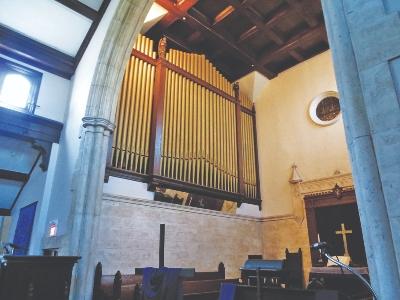
Beauty in small packages
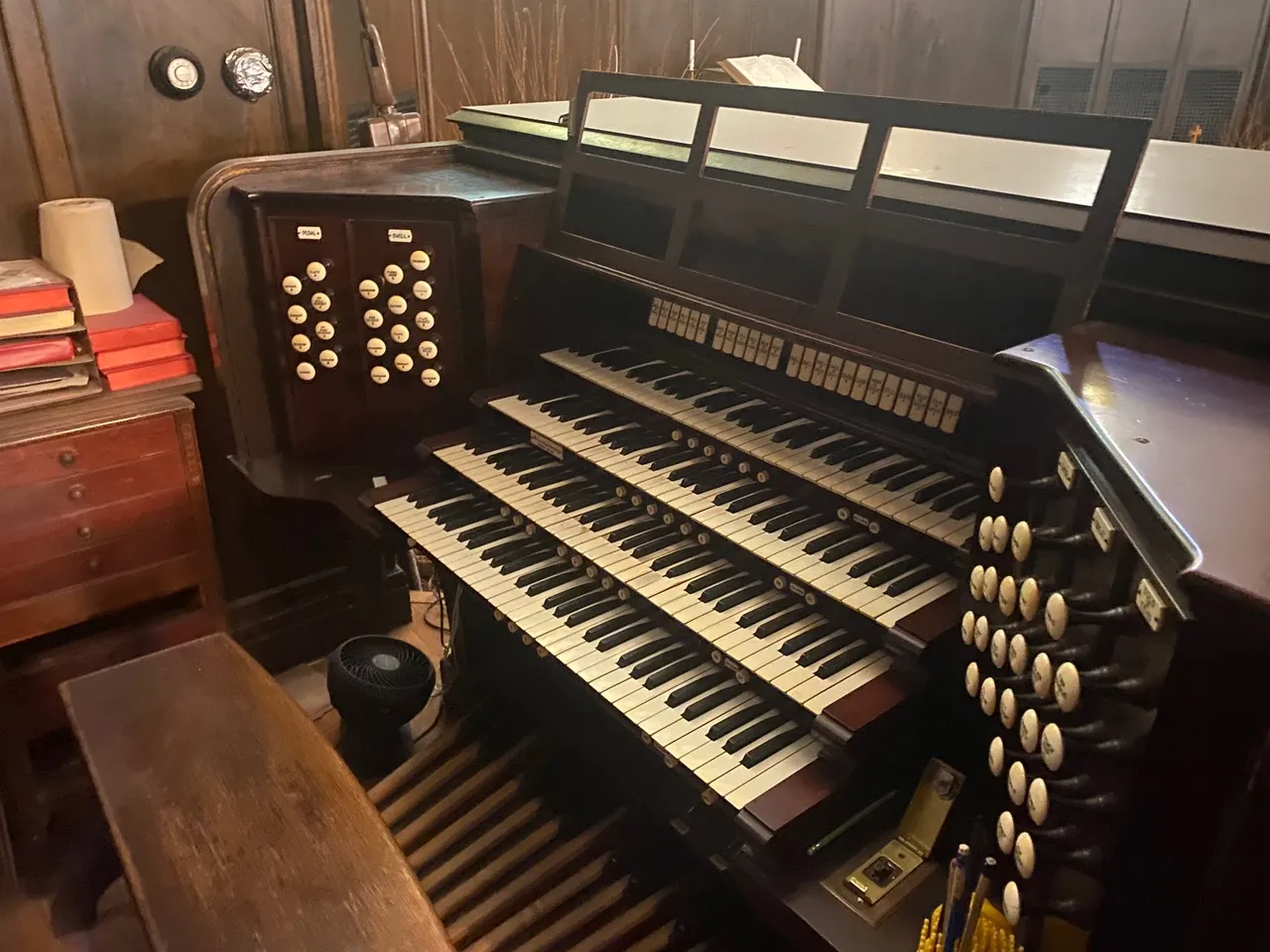
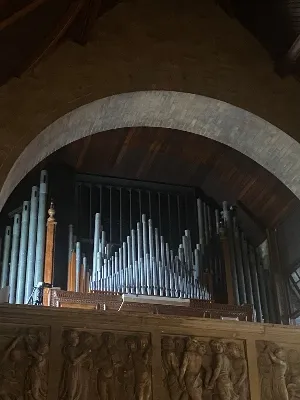
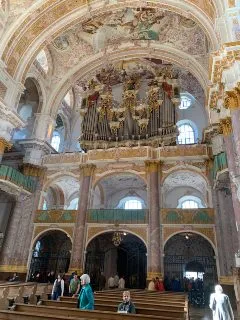
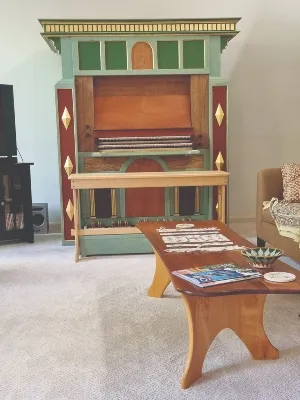
To the untrained eye, all flutes in an orchestra look alike. The weight of violins varies by just a few grams from one to another, and their complex shape is ubiquitous. Clarinets come in a few different sizes, especially when you include cousin basset horn, but unless you are an expert player who could spot tiny differences instantly, they all look pretty much alike. I may be treading on soft ground here, and I certainly am not implying that there is not a wide variety in tone color, responsiveness, and nimbleness. If there are wonderful clarinets, there must be bad ones as well. There is a bigger variety of forms of pianos such as spinets, uprights, square grands, and different sizes of grand pianos, all with a broad range of timbres. But consider the pipe organ. It can be five feet tall weighing a couple hundred pounds or fifty-feet tall weighing twenty tons or more and filling multiple rooms. You can judge the size of a large organ by counting semi-trailer loads. The visual effect of an organ can be a simple fence of painted zinc pipes or a towering ornate castle with moldings, towers, carvings, and statues. As I go from one organ to another, I marvel at the variety of shapes, forms, and sizes that can be called pipe organs.
I have been fortunate to have opportunities to work in, on, and around plenty of iconic, enormous organs. It is humbling to think of the creativity, knowledge, and hard work involved in creating such a thing, and thrilling to hear their powerful sounds filling a vast sanctuary. It is easy to focus on the monumental instrument while overlooking organs of more usual size.
During my career, there has been a sea change in the world of the smaller pipe organ. Electronic organs first entered the marketplace in the 1960s and 1970s with obviously artificial sounds. I owned a promotional LP produced in the 1960s by the Baldwin Piano & Organ Company with Virgil Fox playing Boëllmann’s Suite Gothique and Schumann’s Sketch in F Minor. The people at Baldwin must have been proud of that instrument, but even to my teenage ears it hardly resembled a pipe organ.
There was a time when most small rural churches had some kind of a pipe organ. Schantz, Reuter, Möller, and Wicks, among others, produced thousands of organs with fewer than ten ranks, many of them with unit actions allowing for large stoplists. They were solid, reliable, and easy to service, and parishioners loved and admired them. As digital organs became more sophisticated, they ate into the market of the small pipe organ. Also, many churches abandoned organ music altogether, either because it was increasingly difficult to find organists or because they moved into new styles of worship with instrumental bands leading congregations in contemporary song.
A few old friends
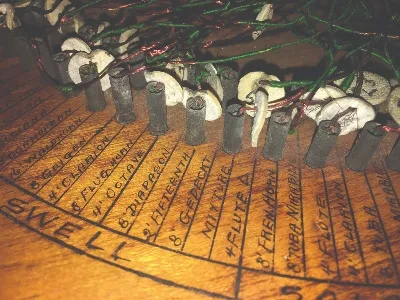
I thought it would be fun to share my experiences with a few smaller organs. I met Jason McKown in 1987 when I was hired to follow him as curator of the organs at Trinity Episcopal Church and The First Church of Christ, Scientist, both in Boston, Massachusetts. He was eighty-one years old and had worked for the Skinner Organ Company when he was young. We worked together for about six months so I could learn the ropes in those large and complicated organs. As Jason was eager to retire, he introduced me to another dozen or so of his clients, which gave me a great start for the nascent Bishop Organ Company. One of those was a twelve-stop organ by the Skinner Organ Company, built in 1928 for the West Medford Congregational Church, West Medford, Massachusetts, Opus 692. (In the often-imitated Boston accent, the correct pronunciation of Medford is “Meffah.”) Mr. Skinner was sixty-two years old at the time and was present during the installation of the West Medford organ. Jason was working next to him and had maintained the organ since it was completed fifty-nine years earlier. I then maintained the organ until 2015; together we spanned eighty-seven years. You can see the specifications of the organ at pipeorgandatabase.org/instruments/23401.
The twelve stops included a three-rank Mixture, so there were fourteen ranks. There were three independent stops on the Great (8′ Diapason, 8′ Clarabella, 4′ Octave). Three Swell stops were borrowed to the Great. There were two reeds (8′ Trumpet, 8′ Vox Humana); eight 8′ flue voices included two 8′ Diapasons, Salicional, and Voix Celeste, and a 16′ Contra Bass. The Great Clarabella was borrowed to the Pedal with a 16′ extension. What else do you need?
The Trumpet and Mixture in the Swell gave the organ brilliance and power, and the heavy-duty Swell box allowed exceptional expressive range. The Swell was on two windchests, one above the other, so the chamber was barely six feet deep, and the organ spoke easily into the nave from its position on the chancel wall. I grew to love that organ for its beauty and clarity, especially for the great effect and variety of tone given the small number of stops.
I confess that when I first knew the instrument, I wondered why the Mixture and Trumpet were enclosed. After all, the Fisk and Hook organs I grew up on and the Flentrop at Oberlin had all that on the Great. Dawn breaks over Marblehead. I got it. It seems so obvious. Mr. Skinner wanted to maximize the expressive range of his organs so in instruments not large enough to have two trumpets, he put them in a swell box. What a great tool for accompanying a choir.
A Hook by any other name. . . .
What might be colloquially called Hook organs were actually built under three different names. E. & G. G. Hook (Elias & George Greenleaf) built their first organ in 1827 in Salem, Massachusetts, and moved their workshop to Boston in 1831. When they were nearing retirement, they made the brilliant young Frank Hastings a partner and changed the name to E. & G. G. Hook & Hastings in 1871. When Elias and George retired in 1881, the name was changed to Hook & Hastings. Organs built under all three names were something of a gold standard in the United States, and hundreds of instruments with ten to fifteen stops were built as “factory models” as described in contemporary sales brochures.
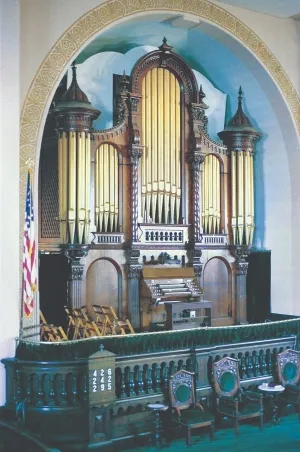
Growing up and working on organs in the Boston area, I have known many Hook organs. When I was in high school, I played for a church that had a three-manual Hook built in 1860. I had no idea how fortunate I was. The Hook organ I am closest to is Opus 466, built in 1866 for the Unitarian Church of Stoneham, Massachusetts. When that church closed around 1994, the organ was removed, placed in storage, and offered “free to a good home” to a Unitarian Universalist Church. The late Barbara Owen was steward of the organ and oversaw its relocation to the Follen Community Church in Lexington, Massachusetts. The Bishop Organ Company restored and installed the organ in 1996. You can see the specifications and photos at pipeorgandatabase.org/instruments/8568.
What a beauty. It has fourteen stops on two manuals, including a large-scale independent open 8′ Flute in the Pedal. This elegant and spirited little organ formed another important part of my education when I started experimenting with various combinations up and down octaves. It made the organ seem twice as big. The 16′ Bourdon and 8′ Dulciana up an octave is a perfect foil for the 8′ Stopped Diapason and 4′ Violina of the Swell. The 16′ Bourdon and 8′ Melodia of the Great balances the 8′ Stopped Diapason and 4′ Flute Harmonique of the Swell. The blends and comparisons are so perfect you can be sure it was intentional.
After getting to know the Follen Church organ so well, I once sat with a colleague at the choir organ in Sainte-Trinité in Paris, France, Olivier Messiaen’s church. It was built by Aristide Cavaillé-Coll in 1867, just one year later than the Follen Church organ. It has twelve stops, three of which are transmitted to the Pedal, but the stoplist reflects the fact that it was built as a secondary organ in a very large church with a larger Mixture, 8′ Trompette, and 16′ Basson. We did the same experimenting that I did at Follen in Lexington, finding similar registrations by going up and down octaves. It was fun and enlightening to compare organs built by Hook and Cavaillé-Coll so closely. You can see the specifications of the choir organ at Ste.-Trinité here (click through to “Composition”): organsparisaz4.organsofparis.eu/Ste%20Trinite-a.htm.
An island beauty
Squirrel Island is a 130-acre island off Boothbay Harbor, Maine, ten miles as the crow flies from where I am writing in our house in Newcastle. Bozeman-Gibson built a one-manual organ for the Community Chapel there in 1976, the second of the two summers I worked for them while I was a student at Oberlin. Before we took the organ to Maine, my co-worker John Farmer (who has run J. Allen Farmer Pipe Organ Builders in Winston-Salem, North Carolina, for decades) and I set the organ up in the crossing of the Cathedral of the Holy Cross in Boston where Barbara Bruns played Handel organ concertos with the Handel & Haydn Society Orchestra during the 1976 convention of the American Guild of Organists.
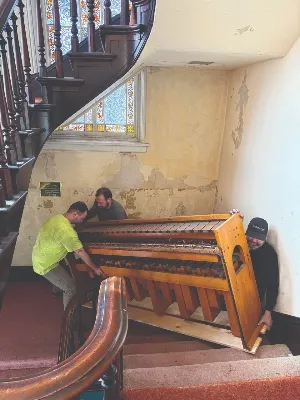
The day after the concert, we dismantled the organ and took it to Squirrel Island, loading it onto the Squirrel Island Ferry, which is something like a forty-foot lobster boat. It took four trips with ferry passengers squeezed among the organ parts. The only vehicle on the island was a beat-up relic of a pickup truck that we used to carry the organ up the hill from the dock to the chapel. We stayed in the home of the island’s superintendent and ate plenty of lobsters taken from his traps along the shore. For a twenty-year-old newbie organbuilder, it was an exotic adventure.
The organ has one manual, eight stops, and eleven ranks. Four of the manual stops are divided at b°/c′ allowing lots of flexibility of registration. There is a 16′ Bourdon in a separate case at 90 degrees to the main case—the organ occupies a cute corner in the tiny chapel. We got to know it very well as we dismantled and installed it twice in two weeks.
During Barbara’s recital in Boston in the vast puddingstone Gothic cathedral, the organ was a sprightly dancer along with the virtuoso orchestra. A couple weeks later it was playing in a tiny wood chapel with fifty or sixty seats. It was still a sprightly dancer, lovely in the intimate room. I visited Squirrel Island eight years ago as they had asked me for an updated assessment for their insurance policy. The organ was forty-one years old and fresh as a daisy. I so enjoyed playing it, reliving the memories from so long ago. It will be fifty years old next year—I’ll be sure to get out there again soon. You can see the specifications of the organ here: pipeorgandatabase.org/instruments/5070.
That new organ smell
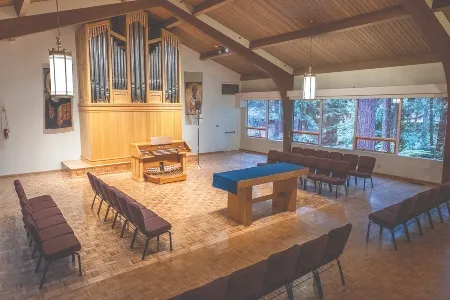
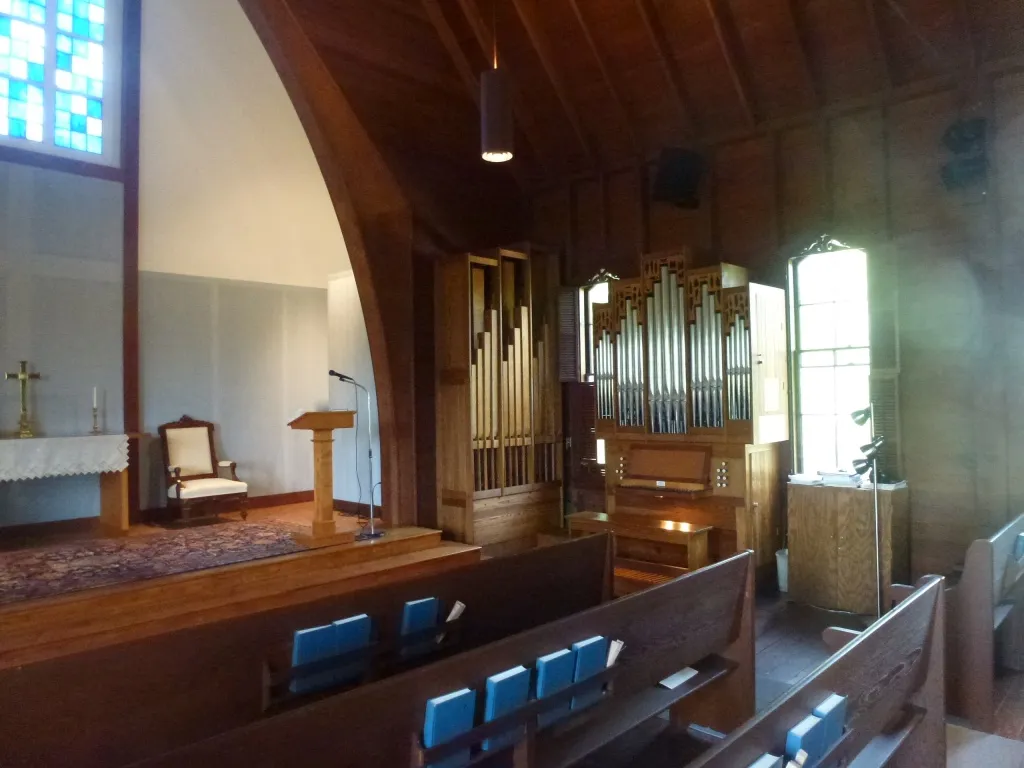
I was inspired to write about these lovely small organs when Wendy and I attended the dedication of Ortloff Organ Company’s Opus 4 at Saint John’s Episcopal Church in Williamstown, Massachusetts. The event was on November 2, 2025; the organ is brand new. It has thirteen stops plus some transmissions and extensions and is fit into a compact chamber on the left wall of the chancel. It is nicely balanced for the crisp acoustic of the church, presents a lovely variety of tone colors, and fills the church just right.
The program included the first movement of Mendelssohn’s Sonata III, Calvin Hampton’s Lullaby, Herbert Howells’s Master Tallis’s Testament, and Bach’s Prelude and Fugue in C Major (the “9/8”). The church’s fine volunteer choir sang Harold Darke’s “Sanctus & Benedictus” from Service in F, and Charles Stanford’s Jubilate Deo in E-flat, and we sang two hymns. The modest sanctuary was packed with enthusiastic listeners who proved to be even more enthusiastic singers. Those standards from the British cathedral repertory showcased the impressive expressive capabilities of the organ. I imagined we heard something like maximum hymn singing for the place, and the organ led the throng proudly and effectively.
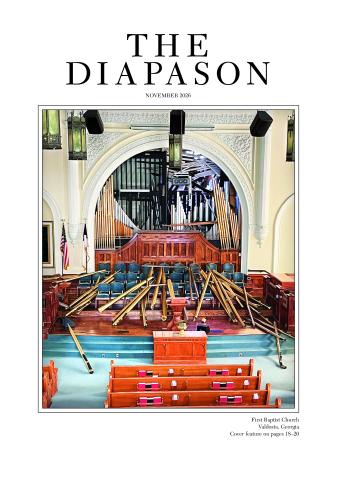
The dedication of a new organ is a wonderful occasion for a church, the culmination of years of imagining, studying, and planning. There was an engaging spirit in the room and lots of smiles. One woman sitting in the overflow chancel seats wore a huge smile through the entire concert—how wonderful for a new organ to bring people so much pleasure. You can read much about the Ortloff organ including its full specification in the cover feature of the June 2025 issue.
That this modest organ is so well able to support such a wide variety of literature and musical experiences is a testament to the skill and creativity of my friends at Ortloff Organ Company. I congratulate the people of Saint John’s and the Ortloff Organ Company for commissioning and creating such a lovely parish organ. Dr. Tim Pyper, the church’s organist and choir director, also serves as lecturer in music and college organist at Williams College whose campus surrounds Saint John’s. His creative programming and fine playing contributed much to the pleasure of the afternoon.
§
We have visited five small organs, the largest being the Hook in Lexington, Massachusetts, at fifteen ranks. Each has a unique character, each is wonderfully matched to its home, and each is a joy to play. It is a common mistake to try to squeeze too much organ into a modest room, a mistake often driven by ambitious organists who “must have” more ranks than will reasonably fit. Not every church can or should have horizontal reeds. I love each of these organs for their beauty, honesty, and integrity. Of course you would like to have a Trumpet on the Great, a 16′ reed, a second or third pair of celestes, but if they won’t fit, don’t add them.
Reasonable maintenance access is essential to the long reliable life of a pipe organ. If a technician cannot get inside and cannot reach the pipes and mechanical components, he cannot make repairs. I have retired from performing maintenance visits on organs, but when I was active, there were always a couple on my list that I did not look forward to visiting. One instrument that was uncomfortably tight inside was sitting on an open floor, and I could picture a priest or altar guild insisting that the new organ could not go past a certain point. I admit that I am a larger guy, but if there was even one additional inch of space between the front (Great) and back (Swell and Pedal) cases, it would have been less of an ordeal to slip onto the walkboard between them. You do not want your new organ to be on the “don’t like it” list of your organ technician, and it does not make any sense to spend too much money on an organ that cannot be serviced.
If you work for a smaller church that is thinking about replacing its organ, spend some effort to seek out and experience excellent organs of smaller size in your area. Consider the beauty of air-driven tones and remember that the organ uses the same air in the room with your singing choir and congregation to produce its sounds. Realize the exceptional durability of a fine pipe organ; accept no substitutes. The following generations will be grateful.