SONORA: a Unique Database of Sweden’s Rich Organ Heritage
A creative new research platform was launched in October 2025 at the Gothenburg International Organ Academy. The Swedish ONline ORgan Archive (acronym SONORA) is a vast database containing information about Sweden’s classical organs. The country has at least 436 documented instruments built between 1600 and 1860. The SONORA project makes available to users online an exploration of the digitized source material (written documents, drawings, and photographs), along with biographical information on organ builders and technical information about the organs.
The database brings together for the first time digitized access to the work of five important organ experts and scholars: Einar Erici (1885–1965), author of Inventory of preserved older church organs in Sweden (1965); Axel Unnerbäck (born in 1938), organ expert who published a second edition of Erici’s Inventarium (1988); Harry (1915–1992) and Valter (1915–2006) Moberg, twin brothers who had their own firm and specialized in restoring historical instruments; Carl-Gustaf Lewenhaupt (1949–2000), organ consultant who worked from 1970 for the Swedish National Heritage Board and pioneered the construction of new organs according to historical principles; and Bertil Wester (1902–1976), art historian and museum curator who in 1936 published his dissertation about Medieval organs, Gothic Revival in Swedish Organs.
Over 3,600 documents, 187,000 images (facsimiles), and almost 8,000 photos of historical organs are included in the SONORA database, which provides user-friendly access to them. Each item (written document, photo, or drawing) is related to a specific organ and is further contextualized with historical information. In this way, the SONORA database pulls the reader into Sweden’s rich organ culture through many channels.
Pursuing an organ crawl through SONORA
The database is available to anyone who visits the site: https://sonora.dh.gu.se/. The homepage gives a general background and acknowledges the collaboration of many groups in its creation. But the reader is immediately drawn to the “Explore” button at the bottom of the page, inviting one into this vast realm of organ documentation spanning six centuries. Be sure you have chosen English as the language (unless you know Swedish, of course). Then you can choose to start with a map, a gallery of organ façades, or an archival search to chart your course through this fascinating culture.
For example, I am passionate about the Medieval organ, and I knew that some fourteenth-century organ parts had been found on the island of Gotland in the Baltic Sea off the southeastern coast of Sweden. These had been moved to Stockholm’s National History Museum long ago, but I thought it would be interesting to learn about more recent organs on Gotland. I went to the map and clicked to enlarge the scale, exactly as one does on Google maps, going from a large overview to a detailed close-up. I found that there was an organ in Sundre, Gotland, that had been built in 1843 by the influential Swedish builder Pehr Zacharias Strand. I wonder if he knew that a certain Master Verner from Brandenburg had built an organ in Sundre in 1370, almost five hundred years before he did. . . .
But then I reviewed the organ’s history and learned that it was not originally built for Sundre’s church but for the Royal Opera Theater in Stockholm. In 1857 it was sold to Stenkumla, a village about fifty miles north, where it was mounted two years later in the village church. In 1910 the same instrument was moved within the church by another great Swedish builder, Eskil Lundén; it was rebuilt and enlarged in 1964; then stored in the church around 1985, before being moved to Sundre in 2007. The organ’s specification is given, with dates to show what is original and what has been added or replaced.
In addition, by hovering the cursor over any of the stop names, one gains details about that stop in a pop-up screen. For example, I was curious about the 4′ Rörflöjt, which was listed as 1843/2007 in the stoplist. Had some of Pehr Zacharias Strand’s original pipes been saved and new ones built to complete the rank? This was confirmed in the pop-up screen, which indicated that Strand’s original pipes covered the range C–F2, and that the organbuilder Thomas Svenske had built new pipes for the range F-sharp2–F3 when he installed the organ in Sundre in 2007. Other ranks, such as the 4′ Oktava, were entirely new, built using Strand’s other pipes as models.
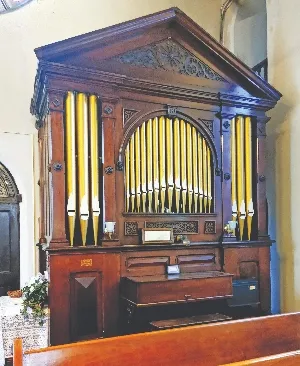
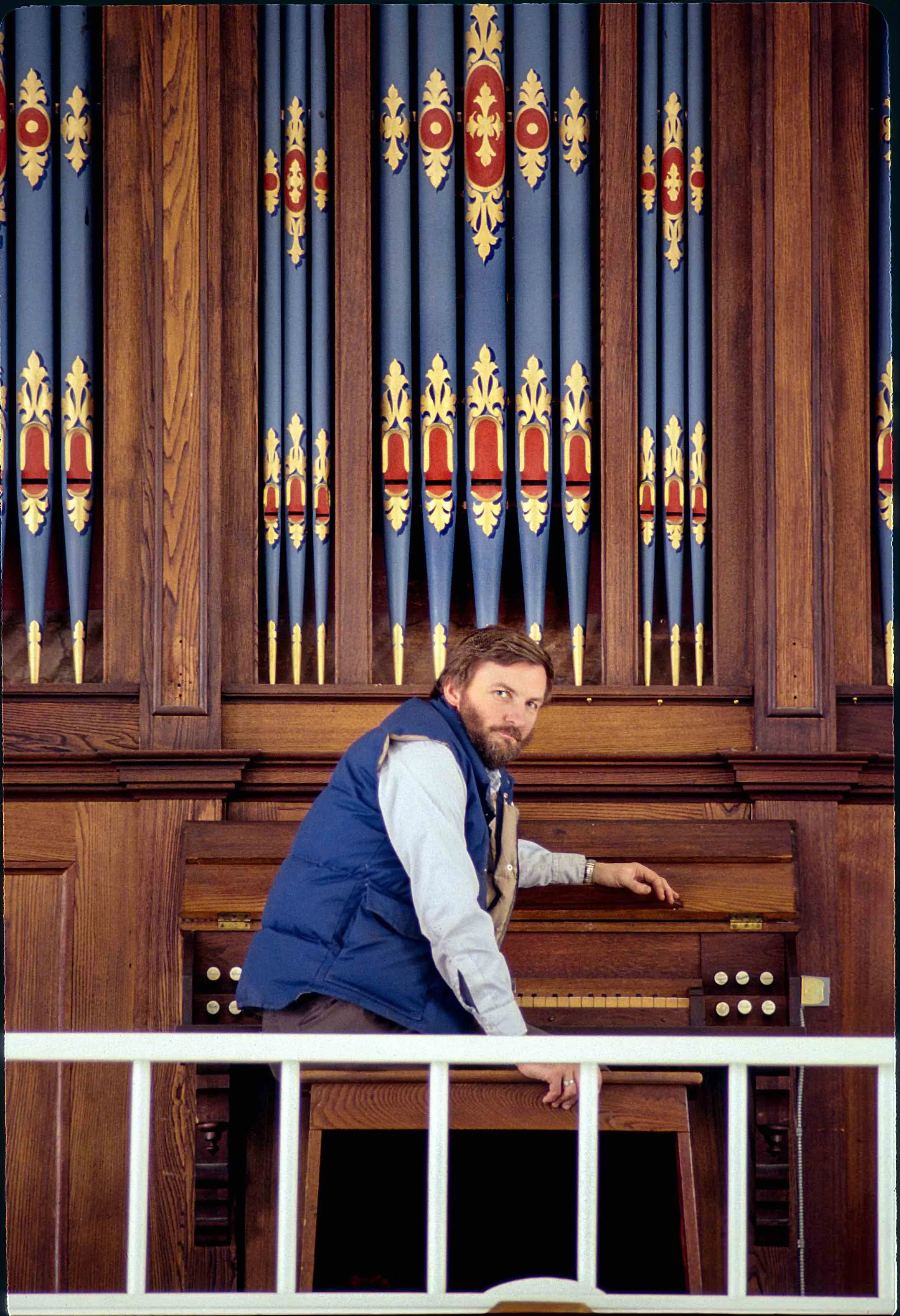
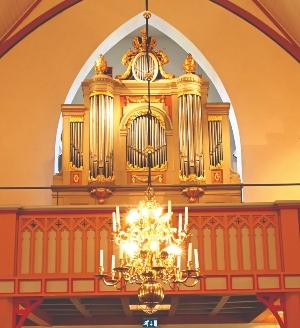
All this information about the instrument’s history made me want to see a photograph, so I clicked on the gallery option, but alas, there was no image of the 1843 Sundre organ there. But there were so many others that I became enthralled by the beautiful painted cases. Scrolling through, I found a photograph of the organ at Jonsered, near Gothenburg, where I had performed several times. Like the Sundre organ, it was not originally built for its final destination, but rather for the English congregation in Gothenburg, which probably never even installed it. And like the Sundre organ, it was built by a famous Swedish builder, in this case Pehr Schiörlin, the main representative of the Linköping school of organbuilding. It was built in 1783, then moved in 1789 to Örgryte Old Church, where it was erected and served the congregation until it was sold to Jonsered in 1868. By 1927 it was no longer in use, but it was renovated in 1950 and restored in both 1992 and 2012. It is a musical gem, heard every year during the Gothenburg International Organ Academy.
This instrument has been documented in three of the five main archives included in the SONORA database: those of Einar Erici, Axel Unnerbäck, and the Moberg brothers. For those who wish to go further than the instrument’s history and specification, it is possible to click on each of the archival documents to see the scans of printed and handwritten materials related to the organ.
In opening these, one has the impression of being with the researchers as they examined the organ or as they listened to it in concert. Of course, these have not all been transcribed, let alone translated into English, so this is the most inaccessible part of the database for the average American organist.
Nevertheless, there are many rabbit holes in which to lose oneself, and the attractive interface really pulls you in, whether you are an organ scholar or enthusiast. Instead of binging on Netflix or doom scrolling, why not take a journey to Scandinavia? The SONORA team would love to hear about your adventures!