Hampus Lindwall: Brace for Impact
Introduction
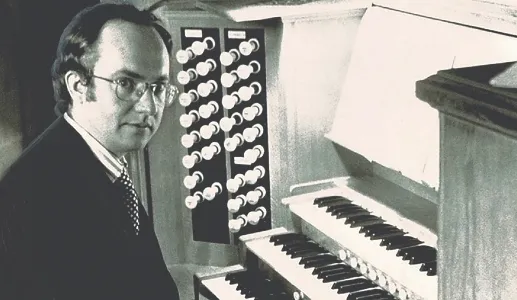
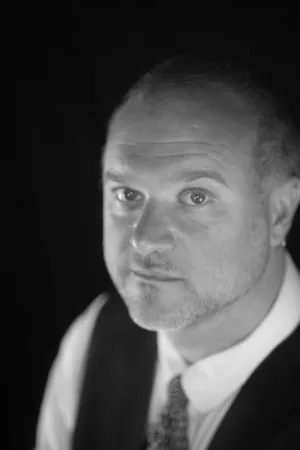
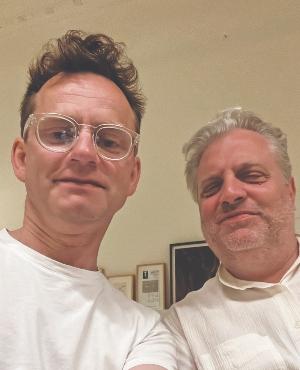
For the past two decades, Swedish-born organist and composer Hampus Lindwall has been expanding the expressive possibilities of the pipe organ from his post as organiste titulaire at the Church of Saint-Esprit in Paris, France. Rooted in the French tradition yet driven by curiosity and experimentation, Lindwall has become one of Europe’s most adventurous voices on the instrument. His work ranges from masterful interpretations of twentieth-century repertoire to radical projects at the intersection of algorithmic composition, electronic sound, and performance art.
Lindwall’s influence in Europe’s avant-garde and electronic music scenes is considerable. Collaborations with artists such as Stephen O’Malley (Sunn O)))), Ellen Arkbro, Cory Arcangel, and voice artist Hanne Lippard have brought the organ into unexpected company, from drone metal to contemporary art installations. At Saint-Esprit, he curates Les Inspirations Visibles, a concert series dedicated to unconventional approaches to the organ, drawing audiences far beyond the usual liturgical or classical circles.
Now with the release of his new album Brace for Impact, a collection of original works written over the last decade, Lindwall presents his most personal statement to date. Merging influences as diverse as Iannis Xenakis (1922–2001), Marcel Duchamp (1887–1968), Meshuggah, and early internet art, the record invites American listeners into a sonic universe where the pipe organ is both an ancient machine and a futuristic engine.
Let’s jump right into it and talk about Brace for Impact. What kind of musical journey are you offering with this album?
It was about time that I did a solo organ record with my own music! The compositions are from the last ten years, and I thought it would give a good panorama of what I’ve been working on. The compositional processes are using different techniques. The title track, for example, Brace for Impact, is for organ and electric guitar and has two notable influences/citations: the glissandi from Xenakis’s Metastaseis (1953–1954), and the intercepting riffs from Meshuggah’s Bleed (2008). The composition model on the other hand is very traditional, a long crescendo that intensifies by increasing speed and number of voices.
Swerve, on the other hand, is a piece that has sprung out of years of improvisation on the organ and iPad. All the sounds in the piece come from the organ, but I manipulate some of them with different software, like granular samplers.
À bruit secret (With Hidden Noise) got its name from Marcel Duchamp’s 1916 piece where his friend Walter Arensberg inserted an unknown object into a ball of twine before Duchamp sealed it with two brass plates. No one except Arensberg knows what rattles inside, not even Duchamp. I had a bit of the same thing with my piece when a friend helped me program the algorithm for the chord section. I got the effect I wanted without really knowing what was behind it!
AFK is maybe the most obvious example of my obsession with the visual noise and punk aesthetics of the radical net.art collective JODI. Like flickering graphics or disrupted algorithms, the repeated rhythms get increasingly distorted over each section.
It seems you refer to a lot of visual arts and contemporary culture in your influences?
People have already debated it as “internet-propelled” music. But I’m not an internet native. I didn’t have access until my twenties. Some of my most important influences are from the early internet culture of the 1990s—artists like wwwwwwwww.jodi.org, Alexei Shulgin, Eva and Franco Mattes, and later Cory Arcangel and Petra Cortright.
Also the music of the 1980s and 1990s was incredible—everything going on at MTV between Van Halen, Metallica, Nirvana, plus all the hip-hop and the rise of house and techno in Detroit, Chicago, and Berlin. Later I got really into experimental electronic music like EVOL or Mark Fell.
I saw an interview with the drummer JD Beck (born 2003!) who said the YouTube algorithm basically taught him his whole style. He’d learn one video, then move to the next suggested one. For me it was different. YouTube didn’t come around until much later. It was more this early chaotic internet culture colliding with my background in classical music.
Tell me about your collaboration with Cory Arcangel, as his name comes up from time to time.
Sure! It started in 2014 when I gave the European premiere of his 24 Dances for the Electric Piano in the Berlin Philharmonie, and later in the Espace Louis Vuitton in Munich and the Mumok in Vienna (Museum moderner Kunst Stiftung Ludwig Wien). Cory later wrote a piece for the organ that I premiered in Paris during an art event, and through this we got invited to make a large-scale concert in London for their Art Night in 2019. We got a budget to commission music, and we invited artists and musicians who wouldn’t necessarily write for the organ otherwise. Like sculptor Haroon Mirza, who built and brought an organ playing robot to the church! Or conceptual artist Pierre Bismuth, famous for having won an Oscar for the synopsis of The Eternal Sunshine of the Spotless Mind, who transcribed musical scores from wall papers! The whole idea was just to generate new and improbable music for the instrument.
Then came Remind Me Tomorrow in 2021; due to Covid, our concert turned into a performance via texting on iPhones. Live presentations by SMS! It was chaotic but thrilling!
Most recently, in 2024 we did Terms and Conditions in Düsseldorf with the Julia Stoschek Foundation. Cory premiered a full-scale version of Chord Memory, which we recorded, and the album will soon hit the shelves!
With your beginnings in Sweden, how did you end up in Paris?
I grew up in Stockholm. My brothers were playing instruments and had bands, so I picked up the guitar mostly because I wanted to hang out with the older, cooler kids. I only started playing the organ as a teenager, almost on a whim, but guitar was still my main instrument, and I went to a special high school for people who were gifted in music or mathematics.
When it was time to apply for the Royal College of Music, I applied for both the jazz/pop guitar program and the church musician program. I thought I was too fresh at the organ to get in, since I’d only played for a few years—but funnily enough, I was rejected on guitar and accepted on organ! So I went with the flow and became an organist.
I had great teachers in Stockholm: Torvald Torén in interpretation and Anders Bondeman in improvisation. At some point I had questions about a Dupré piece, so I wrote a letter to Rolande Falcinelli. A few days later I got a reply! She loved to have correspondence and eventually invited me to visit her in the south of France. I went the first time in 1998, and it became a habit to visit her a few times a year. At first we spoke about organ and music, but over time our conversations shifted; by the end we mostly talked about literature and cinema.
Falcinelli recommended that I study improvisation with her student Pierre Pincemaille in Paris, which I did starting in 2002. One thing led to another—and I’m still here today!
You have been titular organist at Saint-Esprit in Paris since 2005. What is the instrument like, and how has it shaped your approach?
The Church of Saint-Esprit was built in the 1930s, and it’s huge. In fact, it’s one of the biggest in Paris! But only the choir organ was ever built. It’s located in the south triforium, an elevated gallery on the right-hand side as you enter. Designed by Albert Alain and built by Gloton-Debierre, it was inaugurated in 1934 by Jehan Alain. Jeanne Demessieux lived around the corner and became organiste titulaire here, serving three decades.
When I arrived, some older parishioners still remembered Demessieux and described the Parisian elite gathering at the loft during her Masses—Messiaen, Duruflé, Dupré.
The organ has only fifteen stops, far too small for the room, but it’s strong and versatile. At first I found it frustrating, but in hindsight it was a gift. I began experimenting, using electronics, amps, other instruments, basically anything I could get my hands on to make it sound bigger and different. That experimentation fed directly into my style of improvisation and composition.
What about the main organ?
Albert Alain drew plans for a large main organ above the entrance, but it was never realized. Demessieux even mentions in her diary a discussion with Dupré about an organ of twenty-one ranks but two-hundred registers through extensions, divided into three sections symbolizing the Trinity and the seven gifts of the Holy Spirit. It’s a fascinating “what if.”
In 2015 I learned that Saint-Nicaise in Rouen was being desacralized, and its organ, considered one of the finest neo-Classical instruments in France, was in limbo. I reached out, and eventually the cities of Rouen and Paris signed an agreement for its transfer to Saint-Esprit. I can hopefully share some news about this soon!
So this is your first organ solo album? Tell me about your other discography journeys.
Yeah, my discography seems a bit chaotic. That is due to my wide variety of interests.
So my first album came out in 2011 and is called A Tribute to Jeanne Demessieux. It’s some kind of “best of” in terms of her work and recorded both in La Madeleine and in Saint-Esprit to document her music on both instruments where she was active. Then I had a similar project with music by Falcinelli whom I also wanted to pay tribute to, but it fell through for various reasons. So when this stalled I chilled for a while and ended up doing a trio album with trumpet player Susana Santos Silva and bass player Torbjörn Zetterberg. It was somewhere between compositions and improvisation, and we also did a second album in 2019 (Hi! Who are you?) where I also used live electronics to work with the sound of the instruments. In between I was approached by a German radio festival, Werkleitz, that wanted me to do something for them in Halle. The only thing I knew about Halle was that Handel lived there and that Bach repeatedly tried to meet with him without success, so I contacted Leif Elggren, a Swedish conceptual artist who has been working with E.V.P. aka Electronic Voice Phenomena. It’s a type of modified radio invented by Christenssen that catches bits of words or phrases from ghosts or dead people by some special frequency. We wanted to get Bach and Handel to finally meet! This became another album called Attempt Nr 6 where I play music by both composers and improvise together with Leif Elggrens’s electronics.
Next, I worked with Phill Niblock, and he wrote a massive twenty-four-minute piece for me called Unmounted/Muted Noun (2019) that I premiered in Musica Strasbourg. It also became a record with his earlier Nagro/Organ as B-side. I just recently released another trio album called How do I know if my cat likes me? together with voice artist Hanne Lippard and fellow composer Ellen Arkbro. It’s a music that is difficult to describe since its center is the narrative through the voice. Obviously inspired by Robert Ashley, one of our favorite composers, it’s released by the excellent Blank Forms in New York City as well.
How do you position yourself as a composer-organist in the context of the Parisian tradition?
There have always been amazing organ players in Paris, and it’s still the case today. Wherever you go, you find extremely competent musicians! And throughout history there have been incredible composers, also! It’s obviously an honor to be part of it and to contribute to the musical landscape here.
I think the organists who were composing are pretty anachronistic. Except for people like César Franck, Olivier Messiaen, and Jehan Alain who were visionary creators, organ music tends to have thirty to fifty years of delay in comparison to other music. If you compare Maurice Duruflé with Edgard Varèse, who was born almost twenty years earlier, it’s kind of crazy! He wrote his Prélude et fugue sur le nom d’Alain ten years after Ionisation! It’s hard to understand this lag.
But let me tell you about some of the improvisers that I really like! In the top ten French improvisers from all time, you would have César Franck (even though I never heard him, I’m pretty sure about that; there are so many legit testimonies), Marcel Dupré, Charles Tournemire, Olivier Messiaen, Rolande Falcinelli, Pierre Cochereau, Xavier Darasse, Jean Guillou, André Isoir, Jean-Pierre Leguay, and Louis Robilliard.
Today however, the improvisation style has really gotten stuck though; the straitjacket from Cochereau is still full on! And it is understandable, his style is so seductive and symbiotic with the French Romantic instruments. But it doesn’t mean it should stop there. Elon Musk said similarly about technology, that it is driven by human invention. It doesn’t automatically progress. So if we don’t do it, nothing happens.
The most unique and visionary improviser in France today is, without doubt, Thomas Lacôte. He is one of the organists in La Trinité and also a teacher at the Paris Conservatory. I also try my best, and I improvise a lot during the service, always experimenting and trying to push the boundaries, sometimes with electronics.
Can you tell us about the concert series at Saint-Esprit?
Saint-Esprit wasn’t really known for organ concerts. The organ is modest, and the church is in a residential neighborhood. But a few years ago I was talking with Stephen O’Malley (for those who don’t know about him, he’s one of the founding members of Sunn O)))), a renowned composer of contemporary and experimental music, and a longtime Paris resident), and we felt there was a gap in the music scene: on one side, the “official” contemporary music at national venues; on the other, super-niche experimental stuff like concerts for vacuum cleaners in garages. Nothing in between!
So we started Les Inspirations Visibles. At our first concert, with Berlin-based collective Gamut Inc., we were really surprised to host almost two hundred people! Then Charlemagne Palestine drew over 350. Ellen Arkbro, 500 tickets. For Kali Malone we had to add a second night, 1,100 total! Clearly, there was an audience hungry for this kind of thing.
Finally, what do you hope Brace for Impact communicates to American listeners who may be encountering your work for the first time?
I see myself as a contemporary organist, in the sense that I play the organ and use all the available contemporary tools that I can lay my hands on, like computers, wind blockers, MIDI, iPad, algos, etc., and I think my music is a pretty good time capsule from the 2020s. It couldn’t have been made ten or twenty years ago, and I think it will be like a sonic time stamp when we listen to it in the future.
With Brace for Impact, I wanted to show that the instrument can live in dialogue with contemporary culture—with Xenakis, with punk, with the internet, with drone metal—and still be completely itself. If it sparks curiosity in people who never thought of the organ as “their” instrument, then that’s the best outcome I could imagine.
Hampus Lindwall, born in 1976, is a musical artist active across contemporary, experimental, and electronic music and sound. He has released numerous solo and collaborative albums and has been organiste titulaire at the Church of Saint-Esprit in Paris since 2005.
Hampus Lindwall’s website: hampuslindwall.com
Concert series with Cory Arcangel: hiddennoise.org
Concert series in Saint-Esprit: liv.paris