From Pen Pal to President: A Conversation with Bryan Dunnewald
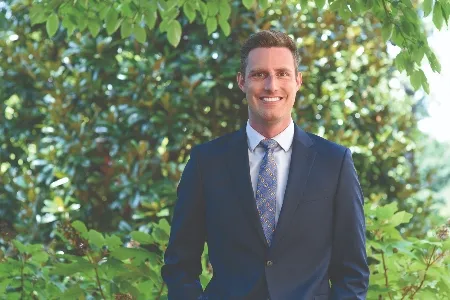
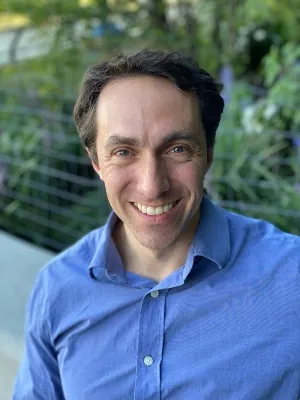
Bryan Dunnewald was chosen as one of The Diapason’s 20 under 30 Class of 2019. His achievements at that point included work as an organist (holding positions at Saint Mark’s Church, Philadelphia, Marble Collegiate Church, New York City, and the Wanamaker Organ, Philadelphia, along with working with orchestras and chamber ensembles), as a conductor (both choral and orchestral, including the Buffalo Philharmonic Orchestra), and as a composer. Bryan studied at the Curtis Institute of Music, the Mannes School of Music, and Interlochen Arts Academy, earning degrees in orchestral conducting, organ, and harpsichord. His teachers and mentors include David Hayes, Alan Morrison, Thomas Bara, Jack Bethards, Robert McCormick, Jonathan Coopersmith, Steve Larson, Joseph Galema, Martha Sandford-Heyns, and Leon Schelhase.
Undergirding it all was his love of organ building, which began in his childhood and led him in 2018 to working as an apprentice with Schoenstein & Co. Since then, it has become his full-time occupation, now as president and tonal director of Schoenstein & Co., Benicia, California, where his focus is on musical direction and business management. He continues working with Bethards to execute the company’s musical vision—quite an impressive path for someone who just completed their third decade.
In addition to his work at Schoenstein, Bryan continues to perform and compose and was most recently director of music for Lafayette-Orinda Presbyterian Church. Bryan’s recordings and compositions can be found on his website, BryanDunnewald.com.
We were able to speak with Bryan in February 2026, catching him prior to his heading out of town for tonal finishing in Florida.
Tell us about the environment you grew up in, and how you got started in music.
My parents are not musicians, but they were always supportive of music. So I started taking class piano when I was young. Eventually I transitioned to a private teacher, and in her solarium was an electronic organ—a Baldwin electronic organ, I think. At that time I was seven or eight. I really just liked all the buttons—the toy side of the organ. But that kind of engineering and mechanical interest was what initially got me interested in the organ, and of course, I now get to use that at Schoenstein. Anyway, I started there and eventually discovered the musical potential of the organ by going to my grandparents’ church, which later became my family’s church in Denver, Trinity United Methodist Church, home to a beautiful Roosevelt organ. There was a supportive organist there, Jim Ruth, who let me try out the organ when I was young and showed me the basics of how it worked. That really sank the hook. I was never any child prodigy pianist or organist, truly. It took time and some great teachers to teach me how to practice well and really get good.
My parents were always interested in supporting my interests and making sure that I got some diversity in my extracurriculars, so I went through all the sports programs. I had average coordination and everything, I just wasn’t into sports. But I think the exposure was ultimately to my benefit. My parents never sent me way down the rabbit hole in an extreme way. I guess my own bias is towards variety being a good thing.
You attained the rank of Eagle Scout. What was your project?
My Eagle Scout project was to design and lead a team to build wooden recycling receptacles at Trinity United Methodist Church, Denver. This is the same church where I first heard the inspiring Roosevelt organ and got my start. The project was an important milestone and lesson in follow-through since I was living in Michigan by the time the work took place. It was also, of course, a great leadership exercise and a pleasure to help my childhood church. As far as I know, the receptacles are still in use today!
You possess many foundational skills and habits that have led to your success. It sounds like you were good at practicing, but it wasn’t an obsession.
Right. It wasn’t until high school that I learned how to really practice well. And a lot of that credit goes to Tom Bara from Interlochen, my teacher there. He had tremendous gifts. He was certainly one of the most influential teachers and mentors I’ve had. One of the big things he was good at teaching me (and all his students) was what it takes to really practice well—efficiently, musically—and get a result. I was never one of those kids who was spending 6:00 p.m. to midnight everyday practicing. It just wasn’t me. I always wanted to find ways to practice toward a goal and get there.
My folks were really big on follow-through, and I think that is one of the best things that they imparted to me. It helps with practicing, right? You can’t just practice and then say, “Well, I guess we’re set.” Same thing with the sports, Eagle Scout, whatever it is—if you make the commitment, or you dive into it, you have to see it through and judge the result on merit.
Even though they weren’t musicians, my parents gave me tremendous skills. Follow-through is one example, and so is writing—my mom was an editor. As you know, you can’t get very far without being a good writer. I’m so grateful that both of them are really good writers, so they were able to instill those values or skills from an early age. I’m so glad, because I use them all the time now. Classic story, right? The kid says, “Oh, when am I going to use this?” Well, daily.
How did you acquire your business management skills?
That came from my father. He was in business—corporate management, investor relations, things like that. I’ve always loved that side of things. I truly enjoy the business part of my job, just as much as the organbuilding. My father and I mostly discussed business over dinner and, later, happy hour. I enjoyed hearing about business news, general finance, and things like that. Jack and I also talked (and continue to talk) a lot about business, of course. Most of his instruction was particular to accounting and its Venetian origins, as well as particulars of organbuilding and Schoenstein. It’s still fun for me, and a frequent event, to talk with both men about these topics!
The first major mention of you in The Diapason was your winning the Albert Schweitzer Competition in the high school division. You didn’t follow the competition path after that. Why did you decide not to pursue further competition?
Well, at the time it wasn’t as intentional as it seems in hindsight. Schweitzer was a great experience, but I’ve never been that driven by competitions. I loved playing for audiences, and congregations, and that kind of thing, and I just felt I was more interested in what the average listener is responding to musically or emotionally than what a judge is. I do remember thinking this, intentionally: if I’m going to work toward a goal, I want to choose the music, set my own program, practice, and perform it. So instead of doing competitions, I would set up recitals in the summer. I was happier doing it that way.
At the time of being selected for 20 Under 30 in 2019, you had achieved much in various musical directions: you’re also a conductor, a composer, you have an interest in organbuilding that has certainly grown, you’ve done some teaching, and even improvised dance accompaniment. How are you balancing your interests in multiple areas?
They’re all related in a way, and if I’m going to do something, I like to see it through and explore what’s really possible—how can I get to be really good at it? That’s one of the things I love about organbuilding, that that never really stops. Jack Bethards will tell you that he’s still learning things, and is perplexed, and faces challenges—exciting challenges—even now, five decades later.
We had a great dance program at Interlochen. My piano teacher, Steve Larson, was the dance accompanist and a great improviser. He did all the dance accompaniment, improvised, and it was fantastic; you’d think he was playing a composed piece. I wanted to be an improviser, so Tom Bara encouraged me to study with Steve.
I took dance myself, and then I also learned to play for dance class, which was great for both composing and later for improvisation. While the dancers will dance to whatever you play, they will be much happier if you match your phrase structure to theirs, which is usually eight by eight. It was so good for internalizing where phrases go, and also a really grounded sense of rhythm. Because if your rhythm is not very grounded with a dancer, they’ll actually perform differently. They might not be able to verbalize it, but you’ll see them get a little tripped up, and they’ll get frustrated. That was really an important part of my training.
Unfortunately, I don’t have the time or an occasion to continue that now, but it’s always been a fond memory, and really formative. Same thing with some jazz piano classes I took. That was the beauty of Interlochen and then Curtis, too. In their own ways, they didn’t just expose me to other disciplines, but I was eating dinner with my dance colleagues, orchestra colleagues, and then there were opportunities for a lowly organist to explore those areas to a high professional standard, not just try it out for a couple weeks.
You are now the president and tonal director of Schoenstein & Co. How did it all start?
I’ve always been interested in organbuilding from the beginning. In middle school I started drawing organ façades and things, none of which could ever be built, realistically. Eventually I started communicating with organbuilders. I did not communicate with Schoenstein until high school. As part of our annual Interlochen organ studio tour recital, we went one year to Grace Cathedral, San Francisco—a fantastic organ. And as part of that trip, Tom organized a visit to Schoenstein. And that’s where I first met Jack and the company. I instantly knew that these were my people. I’d been to other organbuilding shops, but I was struck by the way that the whole company seemed to care about what they do—right down to one of the foremen’s sons sweeping the shop—meticulous, musically driven.
At the time I thought organbuilding would just be a side interest. But I kept in touch with Jack since that first visit. We were pen pals across the coasts, across the United States. I would share recordings with him, and organbuilding ideas, and he did likewise. And we became closer that way, and then toward the end of my time in college, I started coming out to Benicia in the summer to work on the organs, to be an apprentice. I worked anywhere they told me. I think I’ve worked everywhere in the shop, at least a little bit. And over those summers I got to know the staff, got to know what it really takes to build an organ, not just the flashy stuff. A lot of it is grueling, repetitive work.
All the while Jack and I would do these projects where I would go to some church or school in Philadelphia that I thought needed a new organ—unbeknownst to them. And you know, when you’re a student, you can get away with just about anything, so I would write them and ask, “Could I come take pictures and measurements of the organ space?” Then I’d work with Jack to develop an organ design and proposal. What was important to me was that it not just be a stoplist; anyone can come up with a stoplist. The fun part was making it real with layouts, the scaling, how to write the proposal letter, even down to pricing toward the end. So these were really valuable things I did even before I moved to California.
As time went on, Jack and I started talking about what I really wanted to do long-term. At that time, I’d just finished my orchestral conducting degree; I was playing and working at churches. So I spent about a year with my now-wife, Maja, thinking about where we wanted to live, what kind of career I wanted, and what kind of career she wanted. I talked to other organists and organbuilders, people who have gone into the field, changed careers, anything I could find that could point me in this direction or that. And we decided on Schoenstein for lots of reasons. We like living here, it’s a nice part of the country, there’s great opportunities for Maja. There’s a long road of artistic stimulation for me in this job, and I really like the company—I could go on and on about that. And of course, at the end of the day you have to trust your gut instinct and go for it. That’s what led me here. It began as a high school pen pal, and then through apprentice to today.
Covid resulted in permanent changes, even after the crisis was over. Many music programs in churches never recovered. How did covid affect you?
It had a big impact. I was lucky; during covid I was working at Saint Mark’s in Philadelphia where Robert McCormick and I, the rector, everyone, worked really hard to keep things going through covid, and they’ve come out the other side in a strong position. We even founded a new choir toward the end of covid. So I was fortunate that in my little microcosm things were challenging and really difficult, especially on the choristers, but ultimately positive. I’m not sure that it influenced my career decision too much, but the overall volatility of a career in church music did influence me some. I knew I didn’t want to have to move every eight to ten years, possibly, depending on the way the winds changed in the church.
I’m happy to work in a place where what I’m doing is the central mission of the institution, rather than a subset of a larger mission. That sounds like a value judgment—it’s really not. I really just don’t like moving, and I really didn’t want our family to have to move, so we thought that was an important part of the decision. I also thought that the never-ending challenge and variety in organbuilding would keep me most interested over the long haul, and it certainly has.
How is your life balanced now? Besides your organbuilding career, how do you handle organ playing as well as designing?
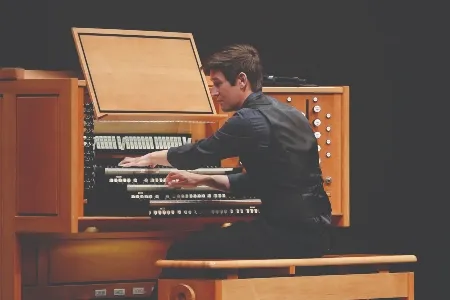
It’s a good question. Time is short. We have a one-year-old now, and I still keep playing. I wasn’t planning to, but when I moved to California, I fell into a church job at a big church, Lafayette-Orinda Presbyterian. They had about two thousand members, and I worked for a fantastic pastor, so it was a lot of fun. I primarily conducted in that job. I also played and did some accompanying, so it was again some neat variety. They even had a professional praise band that I loved playing with—they’re all pro jazz players from Oakland. I continue to substitute as organist and conductor when needed, and I get to compose more now. All this keeps me going, and it’s fun to be able to relate to organbuilding clients as a practicing musician, too. It keeps me grounded in what they really need.
And then I’ve been actually enjoying more of the normal domestic, non-musical things too. I’ve really gotten into cooking, and of course, this is California, so we like to hike and run and things like that. I’m sure every interviewee says that, but it’s true. All those clichés are right.
If there’s one thing that I really love about my mentors and friends who are musicians, organbuilders, whoever they are, it’s that generally they are interested in more than one thing. I just think that makes performing so much richer and life more fun.
I was recently noticing that I’ve surrounded myself with people like that—from Jack, to Tom Bara and Robert McCormick, to friends here. I think that curiosity and diverse interests are a really wonderful thing. They make for engaging, great people!
Your compositional output includes a set of songs called Old Hollywood. I sense the presence of Jack Bethards. He must have had something to do with that.
I don’t know if I loved Old Hollywood (1920s–1940s) music before or after I got to know Jack. Either way, we both had loved it for as long as I had known about him, and he forever. He didn’t know about the project because I wanted to surprise him; one of those pieces is dedicated to him. Especially during covid, but even before that, I got really into the old Hollywood orchestrators, learning their techniques and also just enjoying the music. There are so many beautiful, well-conceived pieces, and the playing is absolutely phenomenal, as you know.
There was a neat connection to Curtis, too. A lot of our alums, back in the day, would go from Curtis, Philadelphia—that rich, velvet sound—over to the Hollywood studios. I was talking with Jack about that ad nauseam, and so I couldn’t resist letting go of my pent-up Hollywood side. We actually played the songs at Saint Mark’s—we performed them in the rector’s parlor, during a get-together. The whole thing was a fun way to explore that side of composition. I still have the same big interest and respect for those Hollywood orchestrators from about 1950 and earlier. Not that there’s anything wrong with later work, but before that is, to me, when you get to the most fantastic, thrilling sound.
I really want organs to be as versatile, nimble, and expressive as those Hollywood orchestras and their orchestrators. You should have that kind of true creative power on an organ, I think. Otherwise the instrument just gets in the way. I’d much rather an organ propel you to something. I’m always seeking that.
You’ve certainly accomplished a great deal since being named to 20 Under 30 in 2019. What do you hope to accomplish in the next several years?
I’d like to grow as a parent, spouse, organbuilder, musician! Easier said than done, so I’m hoping I have some time to work on these items!
Thank you, Bryan.