The German Organ Reform Movement and Its American Adaptation
Introduction
The organ has stood at the center of Christian worship for centuries. Yet its role has never been static; it has continually shifted under the influence of liturgical, theological, and aesthetic currents. The twentieth century brought profound changes that placed the organ and its role under growing scrutiny. Out of this tension emerged the so-called Orgelbewegung (Organ Reform Movement),1 first in Germany and later—after several decades—across the Atlantic Ocean
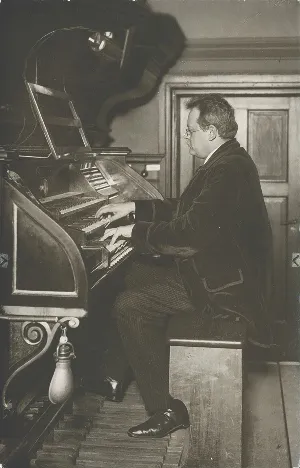
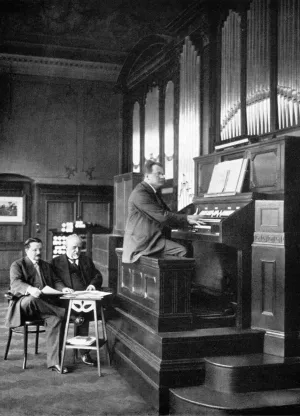
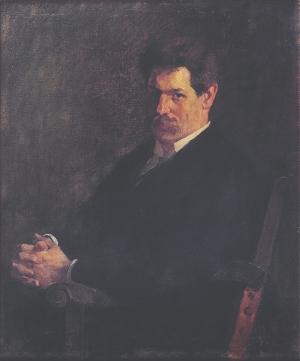
Albert Schweitzer (1875–1965) is often described as the intellectual father or founding figure of this movement.2 His 1906 pamphlet Deutsche und französische Orgelbaukunst und Orgelkunst (German and French Organ Building and Organ Art) has become a sort of seminal document for the Organ Reform Movement.3 Yet the roots of reform run deeper; already in the 1870s, critical voices had called attention to the shortcomings of late-Romantic organbuilding and demanded a return to historically informed principles. These early impulses can be traced in the historicist tendencies (the conscious striving to revive older, often Baroque-era artistic and construction principles) of the 1870s, including the Walcker–Sauer debates, the criticism articulated by Philipp Spitta (1841–1894) and Hugo Riemann (1849–1919), and parallel developments such as the Catholic Cecilian movement. Schweitzer’s achievement lies less in the initiation of reform than in its popularization and in his ability to connect technical, musical, and theological arguments.
Rather than examining the development of the two movements, this essay argues that the American adaptation was not a simple replication or a delayed adoption of the German model. Instead, a pragmatic, independent synthesis emerged, based primarily on Albert Schweitzer’s direct but less critically questioned aesthetic ideals.4 In this study, particular attention is given to Schweitzer’s concepts of clear articulation, his understanding of Werkprinzip,5 and his widely influential statements on Bach interpretation as formulated in the preface to the edition of Bach’s organ works he edited with Charles-Marie Widor. This is all the more remarkable given that this work shows how the movement’s later developments deviated significantly from his own ideals.
The aim of this study is to trace the development of the Organ Reform Movement from its early nineteenth-century precursors through its codification in Germany and its subsequent reception in the United States after 1945. Central to this investigation is a critical examination of Albert Schweitzer’s influence on the movement—to what extent did the German Organ Reform remain faithful to Schweitzer’s ideals, and where did it diverge under the pressure of cultural, political, and theological forces? The second part of the study focuses on the American adaptation of these ideas. Rather than simply replicating the German model, the American Organ Reform Movement absorbed, reinterpreted, and at times fundamentally transformed its principles.
The organ sound around 1900: starting points of reform
The nineteenth century marks a high point in the history of organ building. The Romantic era demanded orchestral richness of sound and dramatic possibilities of expression, which were made possible through numerous technical innovations, for until then the organ had traditionally been a static instrument. A change in the volume of a single tone was not possible.6 Through the introduction of many finely graded families of stops and the development of enclosed divisions, the Romantic organ disposition created the illusion of continuous dynamic flexibility.7
In many cases, these imitative stops were voiced with an explicitly orchestral ideal in mind, emphasizing attack, color, and soloistic projection rather than the blended polyphonic sonority associated with earlier organbuilding. German firms such as Walcker, Sauer, and Steinmeyer were at the forefront of these developments, each contributing distinctive solutions to pneumatic and electro-pneumatic key action, wind regulation, and expressive control.
Unlike church organs, concert-hall instruments were designed to compete directly with orchestras, requiring greater dynamic power, broader tonal palettes, and often more assertive reed choruses capable of projecting across large symphonic spaces.8 Their tonal designs also had to respond to the relatively dry and immediate acoustics of concert halls, requiring greater clarity of attack, more pungent voicing, and a tonal projection capable of carrying through densely orchestrated textures. Around 1900, organbuilding experienced a true golden age. The rapid growth of cities and the construction of new churches generated enormous demand for instruments—but this boom was by no means limited to sacred spaces. Equally significant was the rise of the concert hall organ, which became an essential feature of prestigious venues such as the Leipzig Gewandhaus and the Boston Symphony Hall. These instruments became emblems of civic identity and cultural ambition, positioned not merely as liturgical tools but as central components of a city’s musical infrastructure alongside the resident orchestra. For organbuilders, these concert instruments represented not only technical challenges but also highly lucrative commissions, rivaling church contracts in both scale and prestige.9
The demand would plateau, markets consolidated, and factory production began to eclipse the older artisan workshops that had defined nineteenth-century craftsmanship.10 These very achievements, however, would soon come under criticism from reform-minded musicians who regarded the Romantic organ as insufficiently clear, structurally overloaded, and increasingly detached from the polyphonic ideals of earlier organ music—criticisms that would help spark the Organ Reform Movement. To illustrate these national tendencies in greater detail and to show the concrete tonal ideals that would later become targets of reform, the following section examines three representative instruments.
The Organ Reform Movement: Schweitzer and the Alsace
Although Albert Schweitzer is frequently credited as the “grand old man” of the Organ Reform Movement, the foundational criticism of the late-Romantic organ did not begin with him.11 Already in the mid-nineteenth century, isolated voices had begun to articulate concerns about the direction of contemporary organbuilding and performance practice.
More systematic criticism emerged around 1900, especially through the work of Émile Rupp (1872–1948), organist in Strasbourg. His 1899 article “Hochdruck!” sharply opposed the increasingly popular high-pressure voicing12 of late-nineteenth-century organs.13 Rupp argued that strong wind pressure, particularly in reeds and tubas, sacrificed clarity of speech, precision of intonation, and transparency of polyphonic texture. He suggested a return to moderate wind pressures, brighter plena with mixtures and aliquots, and aesthetics grounded in the organ’s own historical identity rather than in orchestral imitation. Yet, like Moritz Hauptmann (1792–1868), Rupp spoke from personal conviction rather than from within an organized reform movement.
This context explains why the early reform impulse is often referred to as the Alsatian Organ Reform. Alsace—politically part of the German Empire yet culturally and musically deeply connected to France—formed a borderland where two distinct organ traditions met directly. Nowhere else in Europe could organists compare on a daily basis the characteristics of German late-Romantic organs,14 often high-pressure, pneumatic, and orchestral in effect, with the refined, expressive, and structurally coherent instruments of the French symphonic tradition,15 especially those of Aristide Cavaillé-Coll (1811–1899). Moreover, several Silbermann organs can also be found here.16 The region’s bicultural environment sharpened aesthetic awareness and created a critical climate in which the weaknesses of contemporary German organbuilding became particularly evident. It is no coincidence that two of the leading early critics, Albert Schweitzer and Émile Rupp, were themselves based in Alsace. However, their role was that of influential initiators rather than leaders of a unified movement. For this reason, it is difficult to speak of a cohesive “movement” at this stage; rather, the Alsatian reform consisted of a set of impulses arising from the region’s unique ability to hold two powerful organ cultures in direct and sometimes uncomfortable tension.
Within this environment, Albert Schweitzer emerged as the central intellectual figure. While Rupp articulated pointed technical objections, it was Schweitzer who provided the conceptual depth, historical grounding, and persuasive clarity needed to transform scattered criticisms into a coherent reform impulse.
Schweitzer’s critique of German organbuilding centered on three main areas.17 First, he rejected pneumatic action as a fundamentally flawed mechanism that severed the physical connection between organist and pipe. Pneumatics, he argued, lacked responsiveness, precision, and artistic vitality; they reduced the organist’s touch to what he famously called “dead precision,”18 comparable to communication “by telegraph.” While pneumatics allowed lighter key action, Schweitzer believed they did so at the expense of expressive control and mechanical reliability. He contrasted this sharply with French practice, where mechanical action remained standard and the Barker machine served merely as an assist rather than a substitute.
Second, Schweitzer launched one of the earliest and most influential critiques of the Walze,19 the mechanical crescendo device dominant in German organs. He objected that the roller predetermined every dynamic development, forcing organists into an inflexible sequence of registrations dictated by the builder. This eliminated artistic freedom, produced monotonous crescendi, and prevented the subtle, musically intentional shaping of dynamic arcs. In contrast, Schweitzer praised the French crescendo system based on manual couplers, toe levers, and the swell pedal. He admired the French Récit not as a soft-effect division but as a full, richly equipped expressive department allowing finely graded dynamic shading without altering the registration—an essential artistic advantage in his view.
Third, Schweitzer objected to several aesthetic tendencies in German organs around 1900. He criticized aggressively voiced mixtures and overpowering reeds, which he felt distorted the beauty of the plenum. He lamented the absence of structurally necessary 4′ pedal stops, which left pedal lines sonically unsupported.20 More broadly, he decried the trend toward “factory organs”—mass-produced instruments driven by commercial rather than artistic priorities.21 In Schweitzer’s eyes, true organ art required individualized voicing, differentiated wind systems, and careful tonal balance, none of which could be achieved through industrial standardization.
Schweitzer’s organ ideal was, at its core, a synthesis rather than a pure restoration. He envisioned an instrument that combined a mechanically responsive action with a well-developed enclosed division, a disposition grounded in principal choruses and clear mixtures yet enriched by expressive reeds, and a tonal structure capable of supporting both polyphonic transparency and modern dynamic nuance. Contrary to later interpretations that cast him as a Baroque purist, Schweitzer deeply admired French expressivity and regarded dynamic flexibility as essential; his goal was therefore not an antiquarian reconstruction but a renewed, artistically versatile organ aesthetic. Although he shared several convictions with Émile Rupp—such as opposition to high-pressure organs, criticism of orchestral imitation, and the call for clearer plena—their reform ideals were far from identical. Rupp, in his programmatic writings, insisted that the organ must remain a work of craftsmanship rather than a product of industrial mass production, and he advocated brightening the overall tone through mixtures and aliquots while categorically rejecting high-pressure reeds.22 Schweitzer, by contrast, favored differentiated “soft” mixtures and considered the French-style swell division indispensable for attaining expressive elasticity and refined tone color. While both men criticized the excesses of the late-Romantic instrument, their differing visions for the future organ reveal that early reform thinking in Alsace was not a unified program, but a diverse spectrum of ideas shaped by the region’s unique cultural and musical position. For that reason, the term “Alsace Reform” only partially describes what was actually happening.
The Organ Reform Movement in Germany
Albert Schweitzer’s 1906 essay Deutsche und französische Orgelbaukunst und Orgelkunst marks in retrospect the starting point of what would later be called the Organ Reform Movement. Yet its immediate effect was not to found a movement in the strict sense, but rather to place a set of technical and aesthetic questions on the agenda. The first visible sign of this shift came three years later at the Third Congress of the International Musical Society in Vienna in 1909. For the first time, an international musicological congress dedicated a section to organbuilding. What had previously been the domain of organbuilders, practical church musicians, and a few reform-minded critics now entered the sphere of academic and professional deliberation. The most tangible outcome of this section was the Internationales Regulativ für den Orgelbau (International Regulations for Organbuilding). Based on questionnaires sent to leading organists and organbuilders, the Regulativ sought to codify minimum technical and dispositional standards.23
Many points were already articulated by Schweitzer: the call for clear and logical dispositions, the criticism of unnecessary technical gadgets and effect devices, and the desire for structurally coherent organ layouts (Werkprinzip).24 At the same time, the focus of the Vienna document remained largely on technical and dimensional standardization rather than on the deeper aesthetic and liturgical issues that were central to Schweitzer’s thinking. Vienna 1909 demonstrated that Schweitzer’s concerns had reached the international stage, even though they were translated largely into technical rather than aesthetic norms. However, the implementation of the demands fell far short of expectations.25 The First World War prevented a swift implementation of the Regulativ’s recommendations. Schweitzer’s role in this development is ambivalent. On the one hand, the Regulativ confirms his influence—Rudolf Quoika (1897–1972) later spoke of the “victory of Schweitzer’s idea.”26 On the other hand, the way his concerns were translated into regulations already hints at a pattern that will recur throughout the movement’s history—what begins as a richly textured, integrative aesthetic program is gradually reduced to a set of technical norms.
It is also worth considering Albert Schweitzer’s preface to the Regulativ.27 His introductory remarks make clear that the document is not intended to establish new prescriptions, but rather to assemble those principles and practices that had already proven effective in various organbuilding traditions. A brief reading of the preface reveals, however, that this modest characterization was at least partly a strategic gesture. Schweitzer clearly had a more far-reaching reform in mind, yet by presenting the Regulativ as a neutral compilation rather than a prescriptive manifesto, he positioned himself politically and rhetorically in a way that avoided direct confrontation with the dominant late-Romantic organbuilding establishment.
After the war, the center of gravity shifted from international congresses to specific experimental instruments. A crucial early milestone was the construction of the so-called Praetorius Organ at the University of Freiburg in 1921, commissioned by musicologist Wilibald Gurlitt (1889–1963), whose scholarly work focused on early German music and particularly on Michael Praetorius (1571–1621).28
Gurlitt’s idea was not to create a liturgical parish organ but a didactic research instrument. Drawing on Praetorius’s Syntagma musicum II: De Organographia (1619), he aimed to demonstrate in sound the principles of early Baroque organbuilding, Werkprinzip, the structural principle in which each manual and the pedal are conceived as independent tonal units (Werke), each with its own clearly defined function, scaling, and tonal profile.29 This results in sharply differentiated divisions that together create a transparent, architecturally ordered overall design. The Freiburg organ followed these historical principles, with Hauptwerk, Rückpositiv, and Oberwerk clearly distinguished and structurally ordered. The organ was built by the renowned German organbuilding firm E. F. Walcker.30 Technically, however, Gurlitt opted for electro-pneumatic action, a deliberate modern compromise. For him, the primary goal was the tonal experiment: to make audible a historically informed plenum and register palette for teaching and research. The organ was not intended as a model for general parish practice but as an “acoustic laboratory” for musicology. The Freiburg project aligned with Schweitzer’s emphasis on clear plena and historically informed structures, but it set aside his insistence on mechanical action. The experiment showed that the reform’s tonal goals could be pursued without strictly following Schweitzer’s full aesthetic program. The organ no longer exists, and it is difficult to find information about the instrument.31
The movement entered a new and more confrontational phase with the Hamburg–Lübeck Organists’ Conference of 1925, closely associated with the writer, playwright, and organ visionary Hans Henny Jahnn (1894–1959). Although Jahnn was not a trained organbuilder, his deep fascination with the instrument and his uncompromising aesthetic convictions gave him an outsized influence. His programmatic essay Die Orgel (1925) offered not only a critique of the late-Romantic organ but also an ambitious—and ultimately polarizing—blueprint for reform.32 In several respects, Jahnn intensified concerns that had already appeared in Albert Schweitzer’s writings.
Both men rejected the late-Romantic organ’s tendency toward orchestral imitation, which they saw as producing a blurred, overloaded, and structurally incoherent sound. They condemned the growing dominance of industrialized, factory-style organbuilding that prioritized technical spectacle and quantity of stops over artistic integrity. They argued for a reorientation toward clear plena, brighter and structurally coherent mixtures, and dispositions informed by historical organbuilding principles. However, Jahnn carried these critiques far beyond Schweitzer’s intentions. He grounded his organ ideal in a metaphysical doctrine of the “sacred number,” arguing that musical proportions, pipe scalings, and tonal relationships were manifestations of a primordial cosmic order.33 According to this view, the decline of the Romantic organ was not an aesthetic misstep but a violation of the eternal numerical laws that should govern the instrument. This metaphysical foundation led him to demand an uncompromising rebuilding of the organ based on strict mechanical key action, the exclusive use of slider chests, low wind pressures, sharply differentiated manual divisions, and a categorical rejection of swell boxes and all Romantic dynamic apparatus. Schweitzer had imagined a synthesis of German structural clarity and French expressive nuance; but Jahnn envisioned a pre-Bachian organ ideal, shaped by numerical mysticism and aesthetic absolutes.
A crucial backdrop to the 1925 conference was Jahnn’s involvement in the restoration of a major historic organ at Saint Jacobi Church in Hamburg,34 which he held up as an acoustic revelation. The restored instrument served as an audible manifesto of his principles: its clear principal choruses, sharp articulation, low wind pressure, and uncompromising Werkprinzip construction were presented as definitive proof that the “true” organ sound still existed in the North German Baroque tradition. During the debates, this Hamburg organ became the focal point around which Jahnn’s radical program crystallized, giving his positions a tangible sonic authority that deeply impressed many younger participants.
Jahnn called for the abolition of all pneumatic and electro-pneumatic mechanisms, insisting that only mechanical action ensured true expressiveness through immediate attack and release. He demanded the elimination of string stops, Rollschweller devices, and high-pressure reeds, arguing that they distorted the organ’s structural clarity. He insisted on a strict Werkprinzip layout even for smaller instruments, emphasizing 4′ and 2′ stops, bright mixtures, and narrow-scaled principals. The Rollschweller, which Schweitzer had criticized primarily as an artistic limitation imposed by the builder, became in Jahnn’s rhetoric a symbol of spiritual and aesthetic degeneration—an emblem of the modern organ’s alienation from its true nature.
The reception of these ideas was sharply divided. A younger generation of reform-oriented musicians embraced Jahnn’s uncompromising clarity and saw in his program a necessary corrective to the excesses of late-Romantic opulence. Others, however, responded with open skepticism. Rudolf Volkmann famously mocked the “screaming tutti” of certain historic instruments and argued that returning “three or four centuries” in organ history was neither feasible nor desirable for modern ears accustomed to Beethoven, Brahms, and Wagner.35 Reports from the conference note that many regarded Jahnn’s numerological theories as speculative and his tone as intolerant. It becomes clear how divergent the views on the organ are and that there is no single, unified conception of it.36
Hamburg–Lübeck adopted several of Schweitzer’s early criticisms—above all clarity and structural coherence—but pushed them far beyond his intentions. Jahnn transformed reform from an integrative critique into a dogmatic program centered on a rigid Baroque ideal. This marked the moment when the movement began to diverge significantly from Schweitzer’s synthetic aesthetic.
The Freiburg Conference on German Organ Art (1926) can be understood as a deliberate response to the radicalism of Hamburg–Lübeck. Organized by Gurlitt with the support of builder Oscar Walcker, it centered on the Praetorius Organ as a practical test case.37 Freiburg offered a different model of reform: historically oriented, academically grounded, and technically pragmatic. On the surface, the Freiburg instrument seemed to realize many goals shared by Schweitzer and the reformers—Werkprinzip disposition, clear polyphonic plenum, and a tonal design tailored to early music.
But the choice of electro-pneumatic action sparked controversy. To Jahnn and his followers, it represented an unacceptable compromise; to Walcker, it was a necessary adaptation to modern functional requirements. At stake was not just a technical mechanism but the definition of reform itself—was the Organ Reform Movement primarily about sound, about action, or about a metaphysical “purity” of principle? A genuine resolution of the issue does not emerge. Klaus Michael Fruth spoke in 1964 of a profound sense of uncertainty and confusion.38 The Freiberg Tagung für deutsche Orgelkunst (1927) shifted the focus once more, this time from individual instruments and personalities to institutional structures. The debates of Hamburg–Lübeck and Freiburg revealed deep fissures: between North German purists and more pragmatic voices; between advocates of Romantic repertoire and those who saw the future exclusively in pre-1800 music; between technical radicalism and moderate reform.
Amid this tension, the most important outcome of the Freiberg meeting was the establishment of an Organ Council (Orgelrat) under the presidency of Karl Straube (1873–1950).39 Divided into four sections—performance/composition (Günther Ramin, 1898–1956), liturgics (Christhard Mahrenholz), historical research (Wilibald Gurlitt), and organbuilding (Wolfgang Reimann, 1887–1971)—the council aimed to move from scattered debates to “detailed, disciplined work” on the organ question, with the long-term goal of producing a comprehensive Handbuch der Orgelkunst and influencing official church policy.40
The establishment of the Organ Council shows how far the discourse had moved beyond Schweitzer’s initial essay. Yet its increasingly narrow Baroque-centered ideals stood at odds with Schweitzer’s more integrative conception of a modern Bach organ.
Even here it becomes clear that no precise consensus existed about what was actually desired. This is exactly where a fundamental problem underlying the “great uncertainty” emerges. For decades, the German Romantic organ had served as the ideal model for both organbuilders and musicians—was this achievement now to be summarily rejected and deemed no longer worthy?41 The German musicologist Herbert Birtner goes so far as to speak, already at this early stage, of a division within the Organ Reform Movement.42
In the same year as the Freiberg conference, a crucial textual event took place: the publication of the second edition (1927) of Schweitzer’s Deutsche und französische Orgelbaukunst und Orgelkunst, now supplemented by the substantial afterword “Über den gegenwärtigen Stand der Orgel-Frage”43 (On the Current State of the Organ-Question). This afterword is essential for understanding the relationship between Schweitzer and the later Organ Reform Movement, because it represents a kind of self-correction and clarification of his position in light of developments he already regarded as problematic. In this new text, Schweitzer explicitly relativizes his Baroque ideal. Whereas the younger generation tended to elevate the Bach-era organ to the sole normative model, he reminds readers that many organs from roughly 1850 to 1880 belonged—despite their later dismissal—to the finest instruments ever built. The Bach organ, in his view, was not simply the “true organ” in an absolute or exclusive sense. He also defends the swell box, insisting on its indispensable role for dynamic shading and expressive nuance, particularly in polyphonic repertoire. This stance directly contradicted the emerging neo-Baroque wing of the reform, which increasingly treated the swell as a Romantic intrusion to be eliminated. This can be understood as a critical side swipe at Jahnn’s ideas. Even though his name is not mentioned, Schweitzer clearly distances himself through these remarks.
Finally, Schweitzer’s afterword formulates a positive aesthetic vision. He calls for a universal Bach organ that draws together the strengths of both German and French traditions—structural clarity, articulate plena, and expressive elasticity—rather than endorsing a dogmatic return to a single historical type. There are, however, still clear, outspoken, and critical voices that argue along the lines of Willi Strube (1896–1968), emphasizing that the modern organ must not be conceived as a mere archaeological reconstruction of historical models, but should instead embody a living synthesis of historical principles, contemporary technical possibilities, and present-day musical demands.44 Taken together, these arguments show Schweitzer attempting to steer the reform away from one-sided historicism and toward an integrative, transhistorical ideal. Although he accepted many of the movement’s basic criticisms of the late-Romantic organ—factory production, excessive wind pressures, and overblown reed choruses—he resisted the notion that “reform” should be equated with a rigid Baroque template or with a total rejection of nineteenth-century achievements. From his own perspective, the movement was already in danger of misreading and oversimplifying his original impulse.45
The subsequent reception history, however, largely ignored this corrective. In the decades that followed, Schweitzer’s name continued to be invoked as the spiritual “father” of the movement, but the actual substance of his aesthetic and theological program gradually receded behind a simplified and increasingly polemical image—Schweitzer as the champion of a narrowly defined “Bach organ,” associated with bright mixtures, tight scaling, and purely mechanical action. The complexity of his thought—his appreciation for high-quality Romantic instruments, his insistence on the expressive necessity of the swell box, and his admiration for French tonal aesthetics—rarely found concrete realization in German organbuilding after 1930.
The early 1930s marked a decisive transition of the Organ Reform Movement from discursive reform toward institutional consolidation and administrative enforcement. What had previously functioned as an aesthetic and intellectual critique increasingly assumed the character of binding normativity. A key figure in this transformation was Christhard Mahrenholz (1900–1980), theologian and musicologist, whose dual expertise enabled the movement to anchor its ideals simultaneously in scholarly discourse and ecclesiastical authority. Under his influence, reform principles were no longer merely debated but began to inform concrete regulatory practice within Protestant church structures. This development coincided with a broader political realignment after 1933, in which the movement’s emphasis on objectivity, community orientation, historical “German” models, and resistance to perceived individualism and modernism proved highly compatible with the cultural policies of the National Socialist state.46 As a result, the Organ Reform Movement did not encounter fundamental opposition but rather found its technical and tonal ideals increasingly reinforced by institutional authority. Central to this codified reform were preferences for mechanical key action and slider chests, Werkprinzip-based dispositions with clearly differentiated manual functions, and a decisive rejection of orchestral late-Romantic tonal concepts in favor of structurally ordered, text-oriented sound ideals. Many of these positions clearly echo Albert Schweitzer’s earlier critiques.
At the same time, however, the process of institutionalization entailed a selective reception of Schweitzer’s thought—his appreciation of high-quality late-Romantic instruments, his nuanced defense of expressive resources, and his openness toward French symphonic clarity were largely set aside. What emerged as binding practice was therefore not the full breadth of Schweitzer’s aesthetic vision, but a streamlined and ideologically sharpened version that privileged restriction over synthesis and normativity over plurality.
After 1945, German organbuilding did not undergo a complete rupture. Instead, many of the technical and tonal ideals formulated in the 1930s continued to shape practice, now de-politicized and reinterpreted as purely musical or technical reforms. The vocabulary changed, but the underlying aesthetic grammar remained largely intact. During the 1950s, the profile that would later be termed neo-Baroque began to crystallize, particularly through the work of builders such as Rudolf von Beckerath (1907–1976) and Paul Ott (1903–1991). Their instruments adopted narrower scaling and lower wind pressures, emphasized highly articulated speech and bright mixture choruses according to a clear Werkprinzip layout. Mechanical action was treated as an almost unquestioned ideal.
These organs offered striking clarity for early music and aligned closely with renewed scholarly interest in Bach and pre-Bach repertoire. At the same time, they embodied a far more dogmatic interpretation of “reform” than Schweitzer had ever intended. Enclosed divisions were frequently reduced or omitted, expressive reeds and Romantic colors were avoided, and numerous late-Romantic instruments were “reformed” or “re-Baroquized,” often at considerable expense to their historical integrity. Postwar neo-Baroque organbuilding continued many reform ideals but left little room for Schweitzer’s expressive flexibility. In this sense, Schweitzer’s legacy in Germany was both canonized and truncated. The movement adopted his critique of pneumatics, his call for clearer plena, and his preference for historically grounded organ types, but largely abandoned his integrative ideal—the aspiration to unite the finest achievements of German and French traditions into a versatile and musically elastic Bach organ.
Although Albert Schweitzer stands at the head of the reform discourse, his influence on the subsequent German Organ Reform Movement was both decisive and fragmentary. His themes were eagerly taken up by reformers, amplified in the early conferences, and eventually codified into institutional norms through the Merseburg Guidelines of 1931.
Schweitzer’s role is best described as a partial and contested lineage—indispensable as origin, yet increasingly marginalized as the movement hardened into orthodoxy. Despite this selective reception, Schweitzer’s ideas did not simply disappear. Instead, they underwent a geographical displacement. While German organbuilding after 1930 tended toward a narrowly defined neo-Baroque ideal, the United States began to receive and reinterpret both the reform’s tonal goals and Schweitzer’s own writings—particularly through the widely read Widor–Schweitzer edition of Bach’s organ works.47 American builders and organists did not adopt the movement’s ideological rigidity but instead drew selectively from the German debate; transparent plena, differentiated mixtures, and structurally clear dispositions were combined with a pragmatic acceptance of electric action, larger acoustic spaces, and the needs of congregational singing. In many American contexts, Schweitzer’s concern for articulation, clarity, and expressive nuance was taken more seriously than in contemporary Germany, where expressive devices such as the swell box had often been dismissed as “Romantic” and therefore obsolete. What had crystallized into doctrinal norms in Germany became in the United States more of a flexible tonal choice. The organbuilder did not follow any specific rules by an organization.
The result was a distinct American synthesis—historically informed but not purist, structurally clear but dynamically versatile, and capable of supporting a far broader range of repertoire and liturgical contexts than the standardized neo-Baroque instruments of mid-century Germany. Ironically, this transatlantic adaptation came closer to realizing Schweitzer’s integrative intentions than the German movement that claimed him as its founder. The following section will therefore examine this American reception in detail, tracing how German reform ideals—filtered through both Schweitzer’s writings and the material reality of neo-Baroque designs—were reinterpreted on American soil and ultimately reshaped the tonal and liturgical conception of the organ in ways that extended far beyond their origins in early twentieth-century Europe.
The American adaptation of the German Organ Reform Movement
The transfer of organ reform ideas from Europe to the United States did not begin as a coordinated movement, nor did it emerge from any programmatic intent. Much like the earliest phase of the German reform—where isolated figures such as Albert Schweitzer and Émile Rupp articulated critiques long before anything resembling a “movement” existed—the American transformation first grew from the scattered, highly individual experiments of a few builders, performers, and scholars. These early pioneers did not see themselves as founders of an American Organ Reform Movement; rather, they pursued musical and technical solutions to problems that, in their view, the American symphonic organ tradition could no longer solve. Only retrospectively does it become clear that their work—fragmented, pragmatic, non-ideological, and at times contradictory—laid the groundwork for a profound cultural and technical reorientation.48
A decisive catalyst arrived in 1913 with the English translation of the Widor–Schweitzer edition of Bach’s organ works. Although later scholarship has shown that Schweitzer’s tonal assumptions were based primarily on Silbermann organs—rather than the central German instruments Bach played—American readers accepted the edition as authoritative. For an American audience, Schweitzer appeared uniquely qualified: he had studied historical European organs firsthand and offered concrete, detailed interpretive guidance at a time when no comparable American scholarship existed.49 American musicians valued the edition not primarily for its technical prescriptions—which many found difficult to apply to the large symphonic organs common in America—but for its conceptual vocabulary. Schweitzer emphasized clarity, articulation, contrapuntal transparency, and structural logic, principles that resonated deeply in American academic contexts long before they found expression in American organbuilding.
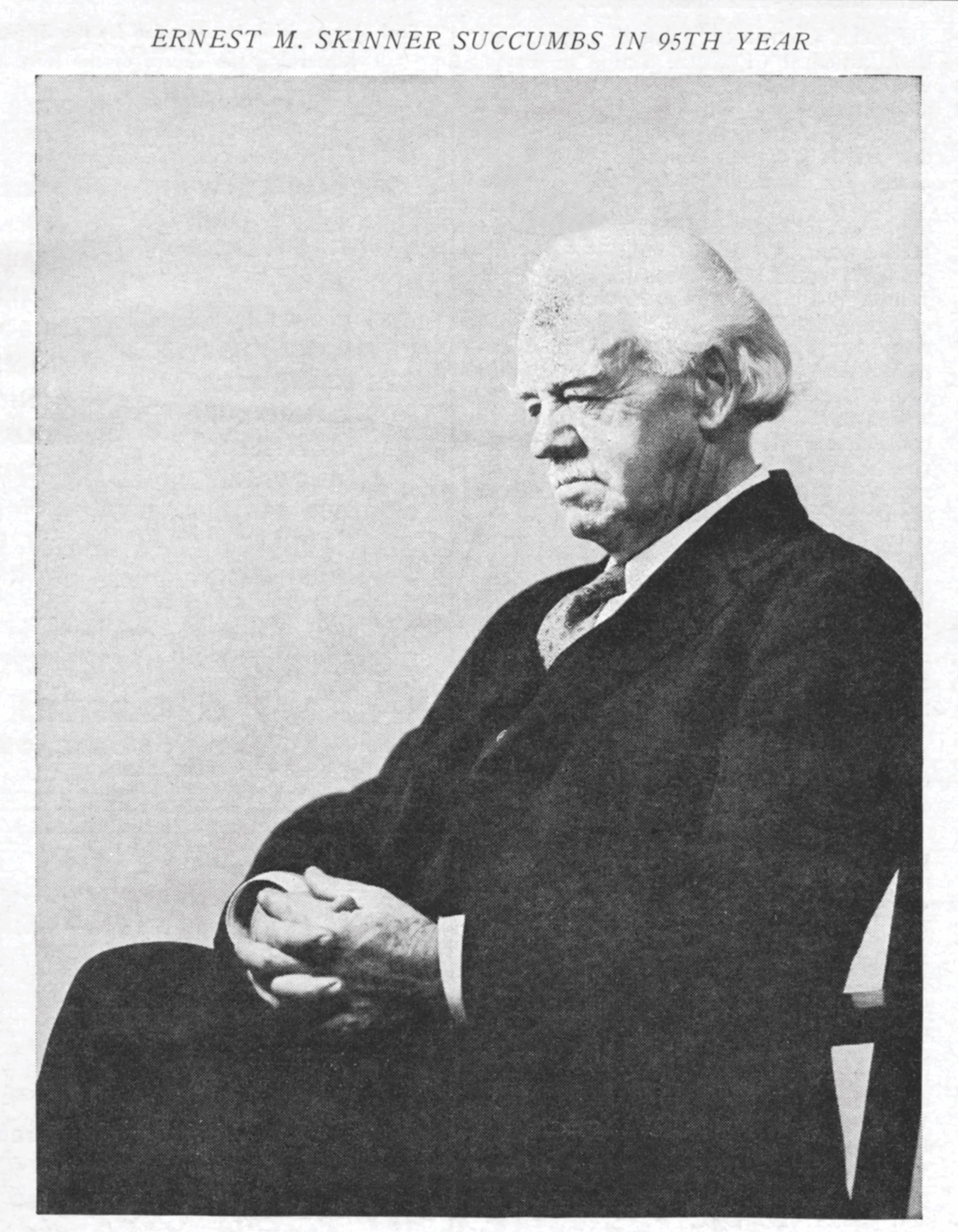
Despite this growing aesthetic sensitivity, American organ construction in the early twentieth century remained dominated by large symphonic instruments built by Ernest M. Skinner (1866–1960) and his contemporaries.50 These organs embodied the late-Romantic ideal—lush string stops, orchestral reeds, high-pressure solo flutes, multiple expressive divisions, and extensive electro-pneumatic playing aids. They were extraordinary machines—capable of mimicking orchestral colors with unprecedented smoothness and power. One of his masterpieces was considered to be the organ of the Cathedral Saint John the Divine in New York City.51 Yet they were fundamentally ill-suited to the emerging pedagogical focus on polyphonic clarity and historically informed performance. Increasingly, teachers and performers found that Bach, Buxtehude, Sweelinck, and even Mendelssohn lacked the necessary articulation on these vast symphonic instruments. What Germany experienced as “orchestral overload,” the United States experienced as the inherent limitation of an aesthetic not built for contrapuntal repertoire.
The first signs of dissatisfaction did not come from institutional committees or musicologists but from two innovative builders whose ideas marked the first major American steps toward reform, Walter Holtkamp, Sr. (1894–1962), and G. Donald Harrison (1889–1956). Their work in the 1920s and 1930s constitutes the true beginning of reform impulses on American soil.
Holtkamp, fluent in German and well-read in European organ publications, was the earliest American builder to pay sustained attention to the discussions surrounding the European Organ Reform Movement.52 Unlike his German contemporaries—many of whom embraced historical ideology, metaphysics, or dogmatic prescriptions—Holtkamp approached reform as an engineer and musical pragmatist. Exposed pipework, unusual scaling, open-toe voicing, and new layout solutions were not for him ideological symbols but practical means to achieve sonic transparency. His expansion of the Cleveland Museum of Art organ in 1933, particularly through the addition of the copper 4′ Prestant, represented a bold departure from American norms.53 The sound was initially controversial—too bright, too direct, even harsh to some ears—but Holtkamp’s willingness to adjust his voicing showed that American reform would be adaptive rather than dogmatic. His guiding principle, often quoted by students, was that “the pipe must speak naturally.”54
G. Donald Harrison, by contrast, worked from within the powerful Aeolian-Skinner firm. His training in England and admiration for Cavaillé-Coll allowed him to bring a broader European tonal sensibility to American organs. Harrison did not reject the Romantic organ; instead, he sought to refine it. His instruments—at Harvard University (1936), Grace Cathedral in San Francisco, Church of the Advent in Boston, and the Groton School—introduced greater independence of divisions, clearer principal choruses, and more disciplined voicing.55 His reforms were evolutionary, not revolutionary.
The event that brought reform ideals to the attention of the entire nation came not from organbuilding, but from radio. Beginning in the early 1940s, CBS broadcast weekly organ recitals performed by E. Power Biggs (1906–1977) on Harrison’s experimental “Baroque Organ” at Harvard University’s Germanic Museum,56 1936 Aeolian-Skinner Opus 951. The regularity of these programs was crucial: by appearing on the air every week, Biggs was able not only to introduce unfamiliar Baroque repertoire and neo-Classical sonorities, but to normalize them. Over time, these broadcasts decisively reshaped American expectations of organ sound, articulation, and clarity, exerting an influence far beyond the academic or ecclesiastical sphere.57
This modest instrument—only thirty ranks, fully exposed, mechanically articulate despite its electro-pneumatic action—introduced millions of Americans to a clarity and immediacy they had never heard before. Biggs’s programming, which emphasized early music and newly edited classical repertoire, effectively became the “public pedagogy” of American organ reform. For the first time, a broad audience learned to listen for individual contrapuntal lines, tonal contrast, and the crisp articulation that large symphonic organs could not provide. These broadcasts created an audience receptive to reform, but they did not yet establish a unified reform aesthetic. Instead, they motivated a younger generation of organists and scholars to investigate European organs firsthand.
Among the most influential was Robert Noehren (1910–2002), who spent extended periods in the Netherlands and northern Germany during the late 1940s.58 There he encountered historic mechanical-action organs by Schnitger, Bätz, Müller, and Hinsz—organs whose clarity, tactile responsiveness, and tonal stability differed radically from anything in the United States. Noehren became convinced that electric action, no matter how refined, could not replicate the musical advantages of mechanical key action. This represented a conceptual break—for the first time, American organ reformers began to tie musical outcomes directly to mechanical means, echoing the earliest writings of Schweitzer. At the same time, scholarly work by Paul Bunjes (1914–1998) placed American reform on firmer intellectual footing.59 Bunjes examined Michael Praetorius’s De Organographia and demonstrated that historical organ design was not a matter of arbitrary antiquarian reconstruction but a coherent system with acoustical and musical logic.
The craftsman capable of translating these insights into practical organbuilding was Herman Schlicker (1902–1974) of Buffalo, New York. Beginning with his collaboration with Noehren at Grace Episcopal Church in Sandusky, Ohio, Schlicker integrated mechanical action, classical scaling, and balanced mixtures into modern American practice. Many of his early instruments were modest, but their clarity and durability—particularly in the demanding climates of the American Midwest—demonstrated that classical principles could be adapted successfully to American conditions.60
Meanwhile, American institutions, eager to explore new sonorities, began importing mechanical-action organs from European builders such as Rieger from Austria or Flentrop from the Netherlands.61 These instruments introduced low-pressure voicing and historical tonal concepts to North America long before American builders could replicate them. Yet they also revealed the limitations of transplanting European craft into American environments. Extreme temperature shifts, rapid humidity changes, and diverse architectural acoustics caused problems for imported pipework and construction methods. Ironically, the failure of some early imports strengthened domestic reform efforts.
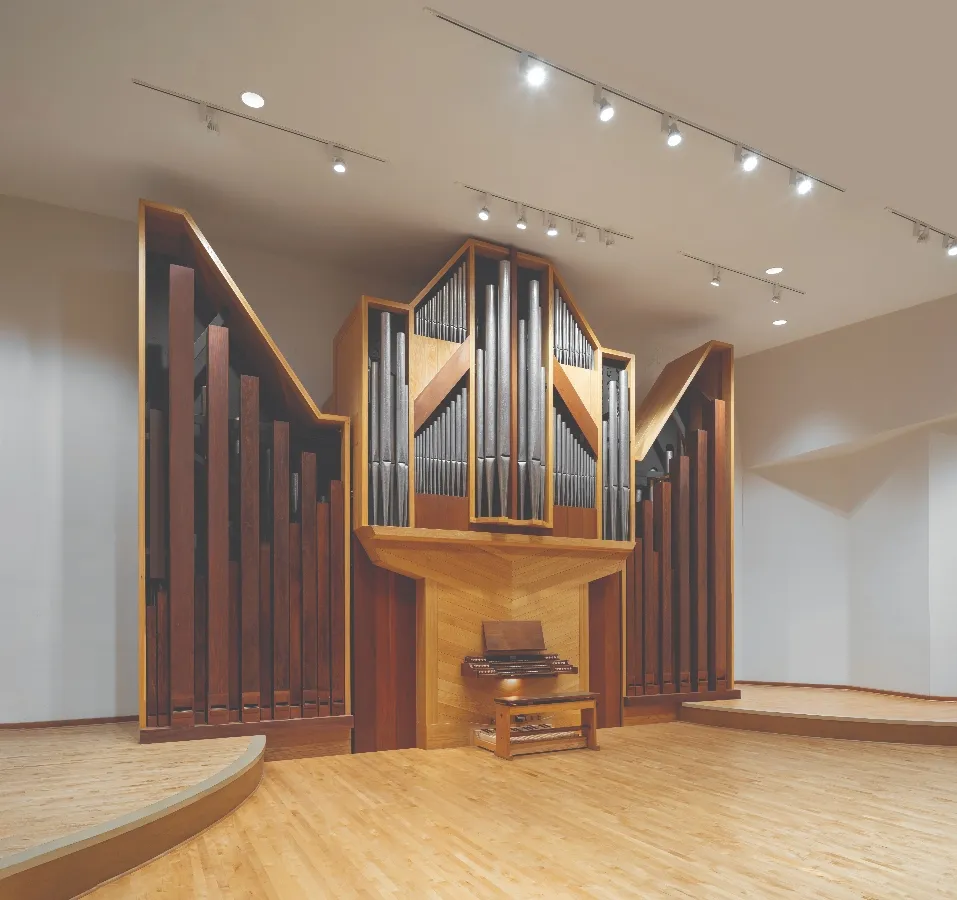
The decisive turning point came in 1957, when Rudolf von Beckerath’s organ at Trinity Lutheran Church in Cleveland, Ohio, was completed.62 One of the leading German organbuilders of the postwar era and a central figure in the Hamburg school of classical organ construction, Beckerath had been invited to build the instrument at a time when American organbuilding was still largely defined by domestic Romantic traditions, going beyond the emerging advances of Walter Holtkamp and Herman Schlicker. His Cleveland organ, imported from Germany and assembled on site, represented the first large-scale modern mechanical-action organ in North America built fully according to contemporary European classical principles. With four manuals, strict Werkprinzip structure, fully exposed pipework, uncompromising tracker action, and voicing rooted in the North German Baroque tradition, it was the first foreign-built American installation to achieve the tonal balance, mechanical precision, and structural coherence of a true classical instrument.
The influence of this Cleveland organ was immediate and far-reaching. Its success inspired a wave of commissions in Montréal, Winnipeg, and Pittsburgh. In Canada, Beckerath’s instruments became particularly influential; Kenneth Gilbert, Raymond Daveluy, and Gaston Arel used them as pedagogical models, creating a generation of organists who absorbed classical principles through daily contact with instruments of uncompromising quality.63 These organs also offered something crucial—stability. Where earlier imports had suffered from climatic difficulties, Beckerath’s construction methods proved resilient in North American conditions. This durability allowed the Cleveland instrument and its successors to serve not merely as models but as long-term foundations for organ pedagogy and musical practice.
It was in this transformed environment that Charles Fisk (1925–1983) emerged as one of the leading American builders of the post-Beckerath generation. Inspired by the Cleveland organ, Fisk committed himself entirely to mechanical action. His approach was distinctively American, combining acoustical science, drawing on his background in nuclear physics, with deep musical sensitivity and strong architectural intuition. Fisk insisted that organs must be designed for the acoustics of their specific rooms, a principle he applied rigorously at Mount Calvary Church in Baltimore, Maryland; King’s Chapel in Boston, Massachusetts; Christ Church in Westerly, Rhode Island; and ultimately in the monumental organ for Harvard University’s Memorial Church. These organs demonstrated that American builders could match and even surpass European examples in musical, technical, and architectural integration.
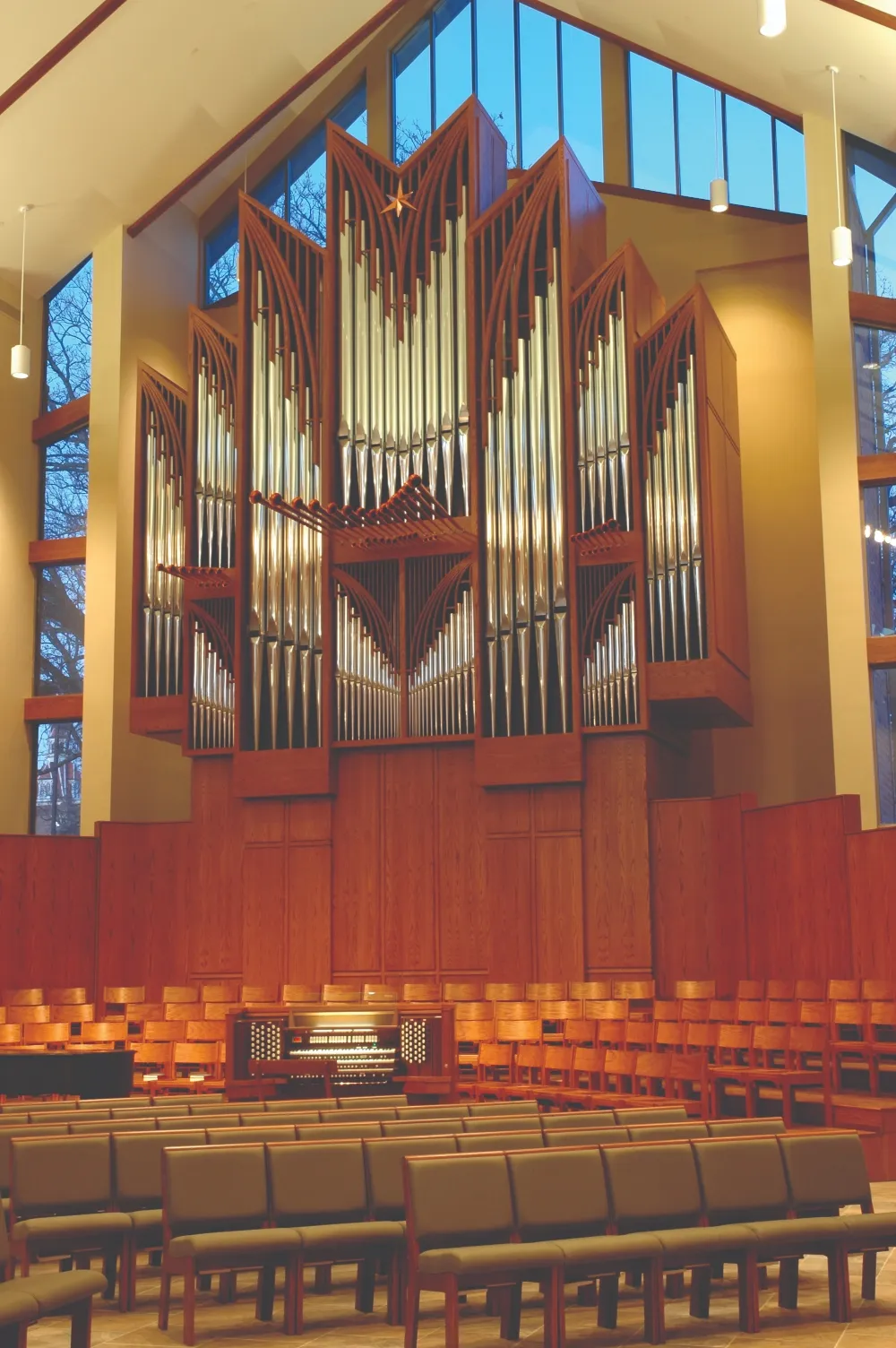
By the 1970s, American organbuilding had entered a new classical era. Builders such as Fisk, Noack, Schlicker, Phelps, Rosales, and later Taylor & Boody and Richards, Fowkes & Co. internalized the lessons of the German Organ Reform Movement but transformed them fundamentally.64 American acoustics—larger, drier, more varied—required more projection and structural strength than European churches. American liturgical diversity required instruments capable of supporting Lutheran chorales, Anglican chant, Reformed psalmody, and concert repertoire in equal measure. American institutions provided financial and structural stability for large-scale organ projects. This convergence of factors produced an American classical organ aesthetic that was not derivative but independent. In this sense, American organ reform achieved what the German Organ Reform Movement, constrained by ideology and later by political entanglements, could not—a balanced synthesis of clarity and expressivity, history and innovation, mechanical action and modern craft.
Conclusion
The historical arc traced in this study reveals a landscape far more complex, discontinuous, and internally contradictory than the conventional narrative of the Organ Reform Movement suggests. Far from being a unified, forward-moving development with clear founders and coherent aims, the history of organ reform in Germany and the United States emerges as a mosaic of disparate impulses: some visionary, some misguided, some deeply rooted in historical study, others propelled by ideology, circumstance, or aesthetic fashion. If the overarching purpose of this study has been to evaluate the lasting impact of these impulses and to contextualize the differences between their German origins and American adaptations, then the final conclusion must necessarily resist simplification and return to the fundamental question posed at the beginning of this essay—what remains of Schweitzer’s influence, and why did the United States, rather than Germany, become the more fertile ground for the realization of his integrative ideal?
At first glance, Albert Schweitzer appears as a central, even indispensable figure. His 1906 essay, with its critique of the orchestral late-Romantic organ and its call for a renewed polyphonic clarity, seems to anticipate many programmatic aims of the Organ Reform Movement. Yet the deeper one delves into his writings, the more apparent it becomes that Schweitzer himself neither intended nor inaugurated anything resembling a cohesive movement. His ideas were retrospectively assembled into a mythic origin story—an origin narrative partly shaped by later reformers who needed an authoritative figurehead, and partly by postwar scholarship eager to locate a single point of departure for a complicated set of developments.
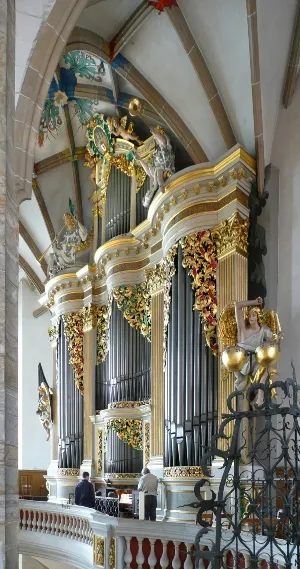
What Schweitzer actually provided was not a reform program but a hermeneutic framework: an interpretive vocabulary for Bach’s organ works, informed by his personal aesthetic synthesis of Alsatian Silbermann organs, French Romantic color, and theological conceptions of musical expression. This aesthetic was internally coherent, but it bore only partial—and sometimes tenuous—relation to the organs Bach himself knew. Modern organology has shown that vastly different tonal and technical principles marked the worlds of Gottfried Silbermann (1683–1753) in Saxony and Johann Andreas Silbermann (1712–1783) in Alsace. Schweitzer, whose experience was limited to the latter, generalized his Alsatian impressions into a universalized “Silbermann ideal,” assuming a stylistic unity that simply did not exist.65 His repeated references to Vox Humana or Salicional timbres, expressive reeds, and elastic principal choruses reflect not the historical Bach organ but Schweitzer’s own aesthetic imagination, structured by his theological worldview and by contemporaneous French instruments.66 This disjunction is not evidence of scholarly failure but of historical distance. Schweitzer worked within the limits of the knowledge available to him. The true historical Bach organ was not yet systematically studied; the Saxon instruments were not widely accessible; their wind systems, voicing, and action were not fully understood.67 Its approach was largely normative and selective, favoring certain instruments that supported preconceived aesthetic ideals.68 Comprehensive documentation, standardized measurement, and source-critical analysis of historic organs only emerged from the late 1970s onward, particularly within the framework of monument conservation and academic organology.69 Schweitzer’s conclusions reflect his milieu rather than historical reality. But this makes the later German reception of his work all the more paradoxical. It was not ignorance that caused German reformers to diverge from Schweitzer’s ideals—it was a conscious choice. By the 1920s, German reform was increasingly shaped by the pursuit of a strictly defined North German tonal model, influenced by the research of Jahnn, Gurlitt, Johannes (1852–1925) and Hans Klais (1890–1965), Mahrenholz, and others. Historical organs in Saxony, Thuringia, Brandenburg, and northern Germany—often very different from Alsatian Silbermann instruments—became the reference point. Consequently, many of the elements central to Schweitzer’s aesthetic—the expressive swell, the French-inspired reeds, the preference for warm fundamental tone—were marginalized or openly rejected.
This was further accelerated during the politically fraught 1930s, when cultural policies encouraged the construction of simplified genealogies; artistic developments were presented as culminating in idealized ancestors, and the desire to root modern aesthetics in “authentic,” “pure,” or “national” traditions strengthened the tendency to mythologize figures like Schweitzer.70 Although Schweitzer himself was not aligned with nationalist ideology—and indeed, his marriage to a Jewish woman and his humanitarian reputation placed him at odds with certain aspects of contemporary politics—his work nonetheless provided later reformers with a symbolic authority.71 It became convenient to invoke Schweitzer’s name as the noble progenitor of a movement that, in reality, had evolved far beyond the scope of his ideas.
It is in this context that the German Organ Reform Movement reveals its deepest contradictions. Despite its rhetoric of historical fidelity, the reforms of the 1920s and 1930s often blurred the line between restoration and reconstruction, between historical research and ideological projection. The heavy re-voicing, scaling changes, and structural modifications imposed on Romantic organs in the name of reform were frequently non-reversible interventions—actions that, far from restoring historical integrity, imposed an imagined past upon the physical substance of nineteenth-century instruments. The movement spoke the language of antiquity but acted with the zeal of modernism, reshaping organs into abstract ideals of “clarity,” “purity,” and “transparency,” which at times owed as much to twentieth-century aesthetic theory as to eighteenth-century precedent.
These tensions did not abate after 1945. The German postwar organ culture inherited both the ideals and the fractures of the interwar reform discourse. Although the political context had changed, the trajectory of neo-Baroque organbuilding continued with renewed energy, reaching its apex in the 1950s and 1960s. The gap between rhetoric and reality persisted: historical rhetoric was paired with technical interventions that would have been foreign to the very traditions reformers claimed to restore. The long-term effect was the creation of an aesthetic orthodoxy that shaped German organbuilding for decades, influencing pedagogy, repertoire, and liturgical practice in ways that both enriched and constrained the field.
In striking contrast, the American trajectory evolved along fundamentally different lines. The American context was free from the ideological currents that shaped the German movement, and its aesthetic priorities diverged accordingly. There were no regulations imposed by committees, conferences, or churches. Large church buildings, expansive liturgical spaces, and a strong tradition of congregational singing created demands that differed from those of European churches. Moreover, American organ culture developed in constant dialogue with university programs, civic concert series, and radio broadcasts—factors that fostered pluralism rather than uniformity.
Crucially, American familiarity with Schweitzer’s ideas was shaped almost entirely by the English-language introduction to the Widor–Schweitzer Bach edition. Because this edition was widely read by musicians who lacked access to the broader German discourse, Schweitzer’s interpretive vocabulary—clarity, registration discipline, rhetorical phrasing—achieved greater influence in the United States than in Germany. Other perspectives such as those articulated by Christhard Mahrenholz or Hans Henny Jahnn were largely unknown in the United States at the time.
Yet, Americans adopted Schweitzer’s ideas not as dogma but as tools for artistic improvement. They did not inherit his Alsatian aesthetic assumptions; they adopted his principles, not his tonal prescriptions. Consequently, the American reception of Schweitzer was paradoxically truer to his method than the German one. Whereas Germany gradually departed from Schweitzer’s integrative vision in favor of a narrowly constricted neo-Baroque ideal, American builders and musicians maintained the spirit of synthesis that Schweitzer valued.
The installation of the Beckerath organ at Trinity Lutheran Church in Cleveland was the moment when the American pre-history crystallized into a movement. Never before had an American audience encountered a modern instrument that so convincingly embodied historical tonal ideals without sacrificing modern craftsmanship. The organ demonstrated that historically informed organs could thrive in American acoustics, prove resilient under American climate conditions, and serve a broad repertoire. Furthermore, the Cleveland organ provided American builders with a concrete model that confirmed and accelerated their own reform instincts. It served less as an imported authority than as a catalyst for domestic innovation: the generation of Fisk, Noack, Phelps, and Schlicker did not imitate Beckerath but used his work as a platform for a distinctly American organ culture.
The United States thereby achieved something Germany had not: a truly integrative approach to organ design. American builders combined mechanical action with modern structural solutions, adapted mixtures to American acoustics, balanced classical clarity with expressive potential, and integrated architectural considerations into the musical design. Their organs were not replicas of historical models but contemporary instruments informed by historical insight and shaped by local needs. Through this pragmatic approach, American organbuilding realized a vision far closer to Schweitzer’s synthesis than did the German neo-Baroque orthodoxy.
§
This outcome confirms the thesis of this study. The American Organ Reform was not an extension of the German movement but its transformation. One could even go so far as to argue that the true Organ Reform Movement took place in the United States rather than in Germany—particularly with regard to sustainability. The result was an organ culture that proved more flexible, more adaptive, and ultimately more influential than its German counterpart. By the late twentieth century, the American classical organ—shaped by Fisk, Noack, Taylor & Boody, Richards, Fowkes & Co., and others—became one of the most respected and influential organ traditions in the world, helping to inspire a global revaluation of classical organ principles.
In Germany, the actual movement phase occurred primarily between the 1930s and 1960s. In the United States, individual reform impulses can already be observed in the 1930s—Holtkamp’s 1933 expansion at the Cleveland Museum of Art, Harrison’s 1936 organ at Harvard, and Biggs’s broadcasts on the Germanic Museum’s Baroque Organ from the late 1930s onward—but these remained the work of individual builders and performers rather than a coordinated reform program. Only after the Beckerath organ of 1957 did these scattered impulses crystallize into a movement with national reach. The American reform thus matured roughly two to three decades later than its German counterpart, supporting the argument that the early phases on both sides of the Atlantic were not movements at all, but preconditions—intellectual soil from which later movements would grow. Recognizing this distinction not only clarifies the historical record but also helps explain the misunderstandings, contradictions, and claims of false origin that characterize much of the later discourse.
In the end, the Organ Reform Movement was never a movement in the singular sense.72 It was a cultural phenomenon shaped by diverse forces: theological ambition, scholarly curiosity, political ideology, artistic experimentation, institutional agency, and transatlantic exchange. Its legacy is equally complex, a mixture of visionary breakthroughs and regrettable excesses, of historical recovery and historical distortion, of creative synthesis and misguided dogmatism. And at the center of this intricate landscape stands Albert Schweitzer—not as the father of a movement, but as a catalyst whose ideas were refracted differently in different contexts. Misunderstood in Germany, mythologized by later reformers, and creatively reinterpreted in America, Schweitzer’s influence embodies both the possibilities and the limitations of early twentieth-century cultural transmission. In Germany, the process of free development was strongly curtailed, whereas in the United States it was able to unfold fully. One can therefore only arrive at the conclusion that the true organ movement took place in the United States rather than in Germany.
Notes
1. Often also called Orgelbewegung, Organ Revival, or Organ Revival Movement. For the sake of simplicity, this essay consistently uses the English term Organ Reform Movement.
2. Douglas Earl Bush, The Organ: An Encyclopedia, 2nd ed. (Routledge, 2015), page 386; James L. Wallmann and Christopher S. Anderson, The Organ in the Twentieth Century, 1st ed. (Routledge, 2012), pages 16–17.
3. Albert Schweitzer, Deutsche und französische Orgelbaukunst und Orgelkunst (Breitkopf & Härtel, 1906).
4. Klaus Michael Fruth, Die deutsche Orgelbewegung und ihre Einflüsse auf die heutige Orgelklangwelt (E. F. Walcker, 1964), page 21.
5. Literally “work principle,” referring to the architectural separation and independence of the organ’s divisions. It is common to use the German term because there is no official translation of it.
6. Hermann von Helmholtz, Die Lehre von den Tonempfindungen als physiologische Grundlage für die Theorie der Musik (Vieweg, 1865), page 135.
7. George Ashdown Audsley, The Art of Organ-Building, vol. 2 (Dodd, Mead, 1905), page 44.
8. Thomas Lipski, Die Konzertsaalorgel in Deutschland: Von den Anfängen im 19. Jahrhundert bis zum II. Weltkrieg (Ewers, 2010).
9. Karl Matthaei and Wilibald Gurlitt, Bericht über die Freiburger Tagung für deutsche Orgelkunst vom 27. bis 30. Juli 1926 (Bärenreiter-Verlag, 1926), page 156.
10. M. Allihin, “Zur Abwehr. Ein Wort an alle Orgelbauer,” Zeitschrift für Instrumentenbau, no. 11 (1890): page 32.
11. Lawrence Phelps, “A Short History of the Organ Revival” (1967), Church Music, no. 67: page 1, accessed October 5, 2023, https://lawrencephelps.com/Documents/Articles/ashorthistory.shtml.
12. High-pressure reed stops are designed to create orchestral sonority. By supplying the reed pipes with wind at significantly elevated pressure, builders achieved greater volume, sharper attack, and enhanced harmonic intensity. The increased wind pressure often resulted in a loss of tonal flexibility.
13. Émile Rupp, “Hochdruck!” Zeitschrift für Instrumentenbau 19, no. 12 (1899): pages 346–348.
14. Organs by E. F. Walcker: Straßburg, St. Paul (Église Saint-Paul), 1897; Mülhausen, Reformed Church on Place de la Réunion (1894–1895).
15. Organs by Joseph Merklin: Straßburg, Temple Neuf (1874); Mülhausen, Temple St. Étienne (1866); Thann, Collégiale St-Thiébaut (1861).
16. Organs by Gottfired Silbermann: Ebersmünster, Abteikirche Saint Mauritius (1730); Straßburg, Saint Thomas (1741).
17. Schweitzer was very satisfied with the instruments built by Walcker.
18. Schweitzer, Deutsche und französische Orgelbaukunst und Orgelkunst, page 17.
19. This term is also used internationally.
20. Schweitzer, Deutsche und französische Orgelbaukunst und Orgelkunst, page 35.
21. Ibid., page 24.
22. Émile Rupp, Die elsässisch-neudeutsche Orgelreform, Kirchenmusikalisches Archiv, no. 8 (Schweers & Haake, 1910).
23. Internationale Musikgesellschaft and Kongreß der Internationalen Musikgesellschaft, Internationales Regulativ für den Orgelbau: entworfen u. bearb. von der Sektion f. Orgelbau auf d. 3. Kongreß der Internationalen Musikgesellschaft (Wien, 25. bis 29. Mai 1909) (Artaria, 1909).
24. Bush, The Organ: An Encyclopedia, page 625.
25. Wolfgang Kreuzhuber, “Orgelbau, Orgel-unterricht und Orgelwissenschaft–Zur 70. Orgeltagung der GdO 2024 in Wien,” Ars Organi 68 (2020): pages 3–15
26. Rudolf Quoika, Albert Schweitzers Begegnung mit der Orgel, 2nd ed. (Merseburger, 1958), pages 46–49.
27. Internationale Musikgesellschaft and Kongreß der Internationalen Musikgesellschaft, Internationales Regulativ für den Orgelbau: entworfen u. bearb. von der Sektion f. Orgelbau auf d. 3. Kongreß der Internationalen Musikgesellschaft (Wien, 25. bis 29. Mai 1909), page 3.
28. Wilibald Gurlitt, Michael Praetorius (Creutzbergensis): sein Leben und seine Werke (Breitkopf & Härtel, 1915).
29. Michael Praetorius and Wilibald Gurlitt, Syntagma musicum, vol. 2, De organographia: Wolfenbüttel 1619, 3rd ed., Documenta musicologica, no. 14 (Bärenreiter, 1968); Markus Zepf, Die Freiburger Praetorius-Orgel – auf der Suche nach vergangenem Klang, Rombach Wissenschaften Reihe Voces, vol. 7 (Rombach, 2005), pages 113–200.
30. E. F. Walcker Opus 1945.
31. Die Praetorius-Orgel des Musikwissenschaftlichen Instituts der Universität Freiburg i. Br.: Ausgewählte Urteile aus den Jahren 1921 und 1922 (Freiburg, 1923), page 2.
32. Matthaei and Gurlitt, Bericht über die Freiburger Tagung für deutsche Orgelkunst vom 27. bis 30. Juli 1926; Hans Henny Jahnn, “Die Orgel,” Die Orgel 4 (July 1925): pages 391–398.
33. Matthaei and Gurlitt, Bericht über die Freiburger Tagung für deutsche Orgelkunst vom 27. bis 30. Juli 1926, pages 1–2; Markus Zepf, “Hamburg, Freiburg, Breslau und die Folgen: Rückblick auf die frühe Orgelbewegung” (Lübeck, June 11, 2025), page 6.
34. Arp Schnitger organ, Saint Jacobi, Hamburg, Germany.
35. Rudolf Volkmann, “Organistentagung Hamburg-Lübeck,” Zeitschrift für Evangelische Kirchenmusik, no. 3 (1925): page 15.
36. Fruth, Die deutsche Orgelbewegung und ihre Einflüsse auf die heutige Orgelklangwelt, page 21.
37. Matthaei and Gurlitt, Bericht über die Freiburger Tagung für deutsche Orgelkunst, pages 8–9.
38. Fruth, Die deutsche Orgelbewegung und ihre Einflüsse auf die heutige Orgelklangwelt, pages 23–24.
39. Karl Hasse, “Dritte Tagung für deutsche Orgelkunst,” Zeitschrift für Evangelische Kirchenmusik 9 (1927): page 322.
40. Ibid.
41. Fruth, Die deutsche Orgelbewegung und ihre Einflüsse auf die heutige Orgelklangwelt, page 25.
42. Herbert Birtner, “Die Probleme der Orgelbewegung,” Theologische Rundschau 4, no. 1 (1932): page 40.
43. Schweitzer, Deutsche und französische Orgelbaukunst und Orgelkunst, 1906; Mit Nachwort über den gegenwärtigen Stand der Frage des Orgelbaues (Breitkopf & Härtel, 1927), page 1927.
44. Willi Strube, “Die Orgel als Gegenwartsproblem,” Zeitschrift für Evangelische Kirchenmusik 6 (1928): pages 100–102.
45. Ibid.
46. To explain and analyze this matter in full detail would go beyond the scope of this study. Reference should therefore be made to the excellent and thorough analysis by Jörg Fischer: “Antisemitismus und ästhetisches Ressentiment: Völkische Tendenzen in deutschen Musikbewegungen 1900–1960,” Archiv für Musikwissenschaft 81, no. 4 (2024): pages 232–264; and “Antisemitismus und ästhetisches Ressentiment: Völkische Tendenzen in deutschen Musikbewegungen 1900–1960 (Teil 2),” Archiv für Musikwissenschaft 82, no. 1 (2025): pages 2–38.
47. Albert Schweitzer, J. S. Bach/Albert Schweitzer: Vorrede von Charles Marie Widor (Breitkopf & Härtel, 1915).
48. Phelps, “A Short History of the Organ Revival.”
49. Reinhard Griebner, Der lachende Löwe: eine Albert-Schweitzer-Biografie (Morio Verlag, 2015).
50. Today often regarded as one of the most influential American organbuilders of the twentieth century.
51. Organ Historical Society, “Opus 150-A: Cathedral of St. John the Divine (New York City, NY),” accessed December 15, 2025, https://organhistoricalsociety.org/aeolianskinner/Specs/Op00150a.html.
52. Phelps, “A Short History of the Organ Revival.”
53. Bush, The Organ: An Encyclopedia, page 256; Ryan Mueller, “Walter Holtkamp Sr., Remembered 1894–1962,” The Tracker 63, no. 4 (2019): page 27.
54. Phelps, “A Short History of the Organ Revival.”
55. Bush, The Organ: An Encyclopedia, page 242.
56. Phelps, “A Short History of the Organ Revival.”
57. Organ Historical Society, “About E. Power Biggs,” accessed January 11, 2023, https://organhistoricalsociety.org/biggs-scholars-program/about-ep-biggs/
58. Robert Noehren, An Organist’s Reader: Essays, Detroit Monographs in Musicology/Studies in Music, no. 26 (Harmonie Park Press, 1999), page 19; Robert Noehren, “Historic Schnitger Organs Are Visited: 1949 Summer Study,” The Diapason, vol. 41, no. 1, whole number 481, December 1, 1949: page 10.
59. Phelps, “A Short History of the Organ Revival.”
60. Wood is a living material that changes its physical conditions in dependence to temperature. This applies in particular to tracker systems.
61. Josef von Glatter-Götz, “Rieger Organs in the United States,” in The Tracker Organ Revival in America = Die Orgelbewegung in Amerika, ed. Uwe Pape (Pape Verlag, 1977).
62. David Ott Johns, “The Organ-Reform Movement: A Formative Influence Upon Twentieth Century Church Music Composition, Practice and Pedagogy” (PhD diss., 1969), ProQuest Dissertations & Theses, page 45.
63. Andrew Johnson, “Church of Our Lady of Sorrows: Ontario’s First Organ Reform Instrument,” The Tracker 68, no. 1 (2024): pages 29–31.
64. Barbara Owen, “Fritz Noack, 1935–2021: An Artistic and Influential Life,” The Tracker 65, no. 4 (2021): pages 36–37
65. Wallmann and Anderson, The Organ in the Twentieth Century, page 17.
66. Ibid.; “Orgue de Strasbourg, Palais des Fêtes,” accessed October 13, 2025, http://decouverte.orgue.free.fr/orgues/stpalaif.htm#AST1.
67. Christoph Wolff, Johann Sebastian Bach, the Learned Musician, updated ed. (W. W.
Norton, 2013).
68. Wolff emphasizes that Bach’s organ environment was for a long time reconstructed only hypothetically, and points to the late consolidation of organological research. See Wolff, Johann Sebastian Bach, the Learned Musician.
69. Ulrich Dähnert, Historische Orgeln in Sachsen: ein Orgelinventar, 1st ed., Veröffentlichungen der Gesellschaft der Orgelfreunde 70 (Verlag Das Musikinstrument, 1980).
70. Rainer Bayreuther, “Die Situation der deutschen Kirchenmusik um 1933 zwischen Singbewegung und Musikwissenschaft,” Archiv für Musikwissenschaft 67, no. 1 (2010): pages 1–35, https://doi.org/10.25162/afmw-2010-0001
71. Griebner, Der lachende Löwe: eine Albert-Schweitzer-Biografie.
72. Hans Heinrich Eggebrecht, “Die Orgelbewegung” (Freiburg, July 29, 1967).