Chinese Organists and the Global Organ Tradition
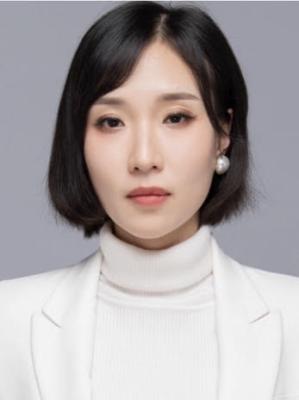
While listening to Louisville Public Media Classical during Kentucky Derby season, I encountered an unexpected broadcast of Horse Racing by Chinese composer Huang Haihuai. Chinese organist Mengfei Xu had arranged the erhu composition, which vividly depicts the excitement and energy of horseback riding, for her own performance on the organ. The timing felt unexpectedly symbolic—alongside Kentucky’s famous horse culture, 2026 also marks the Year of the Horse in the traditional Chinese zodiac. Her presentation immediately caught my attention not only for the ingenuity of the transcription itself, but also for the broader artistic questions it suggested. I had known Xu previously through her years of study at the University of North Carolina Greensboro and later at Yale University. Yet hearing this distinctly Chinese musical language translated onto the organ led me to observe a broader trend of younger Chinese organists in the United States developing repertorial interests strikingly different from the traditionally European-centered conventions of American organ culture. To explore these developments, I spoke with four Chinese organists currently studying and establishing careers in the United States: Mengfei Xu, assistant director of music and worship at Second Presbyterian Church in Louisville, Kentucky; Mi Zhou, sacred music associate at Holy Name of Jesus Cathedral in Raleigh, North Carolina; Valentina Huang, cathedral organist at Christ Church Cathedral in Houston, Texas; and Jessie Deng, organ scholar at Saint Clement’s Church in Philadelphia, Pennsylvania. Their answers revealed not only distinct artistic paths, but also a contemporary portrait of how global the organ world has quietly become.
The young Chinese organists I interviewed seem drawn toward repertoire shaped by folk traditions, coloristic writing, and contemporary musical language. Does this indicate that their relationship to the organ differs from the historically church-centered traditions of Europe and North America? As a Hungarian American composer whose own works frequently draw upon Hungarian folk traditions, I became particularly intrigued by Xu’s programming choices, which I later found echoed in the work of other Chinese organists. Mengfei Xu has included my folk-inspired toccata Által mennék on recital programs in both Louisville and Minneapolis, while Mi Zhou has performed my Kodály Triptyque in New York City and Ann Arbor. Xu and Valentina Huang have also programmed Chelsea Chen’s Taiwanese Suite, repertoire similarly rooted in vernacular musical identity and contemporary cultural expression. Meanwhile, Jessie Deng performed Qi Zhang’s Symphony in the Teapot for the dedication recital of the Dobson Opus 100 organ at Curtis Institute of Music in Philadelphia.
An encounter with the King of Instruments
European and American organists typically encounter the “King of Instruments” through church services, choir programs, parish music schools, cathedral traditions, or increasingly through online media. The Chinese organists I interviewed, however, often found a far less direct path toward the instrument. All four musicians described the organ not simply as another keyboard instrument, but as an entry point into a much broader artistic and historical world.
Mengfei Xu first arrived in the United States as a graduate piano student, originally intending to pursue a college-level teaching career in piano performance. During her graduate studies, one of her professors observed her strong affinity for Baroque music and twentieth-century French repertoire and encouraged her to begin secondary organ studies. “He suggested that I begin taking organ lessons,” Xu recalled, “because more than half of the most important keyboard repertoire in these traditions involves pedals, and only knowing the piano is not enough.” At that point, Xu, who grew up in a non-religious family in China she described as “typical,” had never even heard a pipe organ in person.
Valentina Huang encountered the organ from an entirely different direction. Originally arriving in the United States as a mathematics student, she first became fascinated by the instrument after hearing an Aeolian-Skinner organ at Wesleyan College. “I was amazed by the power of the instrument when a trumpet tune was played,” Huang recalled. Already trained as a pianist, she gradually became curious about the instrument strongly associated with Bach and began studying organ alongside piano.
For Jessie Deng, the organ initially represented a way to connect more deeply with Western musical culture itself. While studying at the Shanghai Conservatory of Music, she encountered organs, often digital, in churches, concert halls, and conservatory settings. “I thought the organ could help me communicate with Western music history and culture,” Deng explained.
Mi Zhou’s encounter with the organ came through the international festival circuit. In 2014 while still an undergraduate student at the Shanghai Conservatory, she attended the Haarlem International Organ Festival in the Netherlands. “That experience at the festival changed my direction,” Zhou recalled. “In my final undergraduate year, I decided to begin studying the organ seriously in preparation for further studies abroad.”
Sacred music and cultural discovery
It emerged from these conversations that sacred music can become a form of cultural discovery. Growing up in secular environments in China, organists frequently perceived sacred music primarily as a historical category rather than a living tradition. Their experiences in the United States gradually transformed that perception. Xu described this realization in particularly vivid terms: “Growing up in a secular, non-religious culture, I was often perplexed and fascinated by the historical importance of sacred music within Western musical culture. Only after living and studying in the United States did I begin to understand that sacred music was never simply ‘religious music.’ It shaped architecture, philosophy, education, community life, and the development of musical language itself.” Her eventual decision to become a church musician emerged not only from musical interest, but also from personal transformation. Near the end of her doctoral studies, Xu was baptized and became increasingly active in church music ministry. “I genuinely felt a real calling to serve through music,” she said, “a calling I still feel very strongly today.” In European organ traditions church culture and organ culture historically developed side by side over centuries. In contrast, for young Chinese musicians, the organ often becomes a means of discovering sacred music from the outside inward: first as repertoire, then as cultural history, and sometimes finally as lived community experience.
Programming identity
An intriguing aspect of these interviews explores repertoire choices and programming philosophy. I initially expected to find explicit attempts to cultivate distinctly “Chinese” programming identities. The responses, however, proved more nuanced. Rather than approaching repertoire primarily through nationalism or cultural representation, the organists often describe their choices in terms of aesthetics, color, emotional resonance, and historical curiosity.
Xu’s repertoire interests remain fundamentally rooted in Baroque keyboard music and the French symphonic tradition. “As I became more familiar with this repertoire,” she explained, “a whole new world opened to me when I discovered the French symphonic organ repertoire of Franck, Widor, and Vierne.” Yet her recital programming also reveals a recurring interest in contemporary works shaped by folk traditions and vernacular musical language. Alongside canonic European repertoire, she has programmed Hungarian folk-inspired works such as my Által mennék and Erzsébet Szőnyi’s Majdnem Tánc, as well as Chinese and Asian-inspired repertoire. During her studies at Yale, she commissioned Beijing Impression for two trumpets and organ by the young Chinese composer Yiran Zhao, premiering the work in New Haven as part of the Charles Ives Organ Recital.
Huang similarly described an attraction to repertoire reflecting Asian perspectives without reducing musical identity to ethnicity alone. She spoke about collaborating with Chinese composers and premiering new organ works inspired by Asian subjects. “When I listen to Chelsea Chen’s compositions,” Huang observed, “I sometimes feel like I understand the ‘inside jokes’ hidden in the music.” At the same time, she resists narrowly nationalistic approaches to programming. “I like good music in general,” she said. “I don’t want to limit myself to a particular ethnicity or cultural category.”
Deng expressed a similarly nuanced perspective. Although she avoids programming music solely for cultural representation, she acknowledged that cultural background inevitably shapes musical aesthetics and interpretation at a subconscious level.
These responses suggest something more subtle than straightforward cultural representation. Rather than promoting explicitly nationalist repertories, our younger Chinese organists appear drawn toward repertoire emphasizing coloristic writing, folk memory, emotional immediacy, and contemporary musical language while remaining deeply engaged with the European canon.
Church music, concert life, and the American organ profession
A recurring theme was the remarkable versatility demanded of organists working in the United States today. Xu described her current church position as requiring an unusually broad range of skills. “I often accompany soloists on the piano, perform solo concerts on organ, piano, and harpsichord, play continuo on organ or harpsichord, take responsibility for instrument maintenance, create arrangements, edit bulletins, manage concert series, and design programs and posters for concerts as well.” For her, the church musician’s role extends far beyond liturgical accompaniment alone.
Several subjects described balancing ambitions involving church music, concert performance, teaching, research, and contemporary music. Deng spoke enthusiastically about the creative flexibility required in concert organ performance. “Every concert is unique,” she explained. “Organists must constantly adjust registrations, articulation, and interpretation according to the acoustic space.” Huang emphasized her desire to balance teaching, church work, and performance while continuing to explore historically informed approaches to early music.
Taken together, these musicians reflect an organ profession that has become increasingly international, multifaceted, and stylistically diverse.
Conclusion
The image that first inspired these reflections remains vivid in my memory: a Chinese organ transcription depicting horseback riding sounding across Louisville during Kentucky Derby season. The juxtaposition could seem surprising, or it may represent the organ becoming a genuinely global instrument in our time. A younger generation of Chinese musicians is now entering American church lofts, conservatories, and concert halls not as outsiders imitating inherited traditions, but as artists contributing new perspectives, repertories, and cultural experiences to the instrument’s evolving identity. They have become active participants in sustaining and reshaping one of the oldest traditions in Western music. In the twenty-first century, the future of the organ may no longer belong to any single nation, church tradition, or cultural inheritance alone.