A Belgian in the American Southwest: The Musical Legacy of Camil Van Hulse
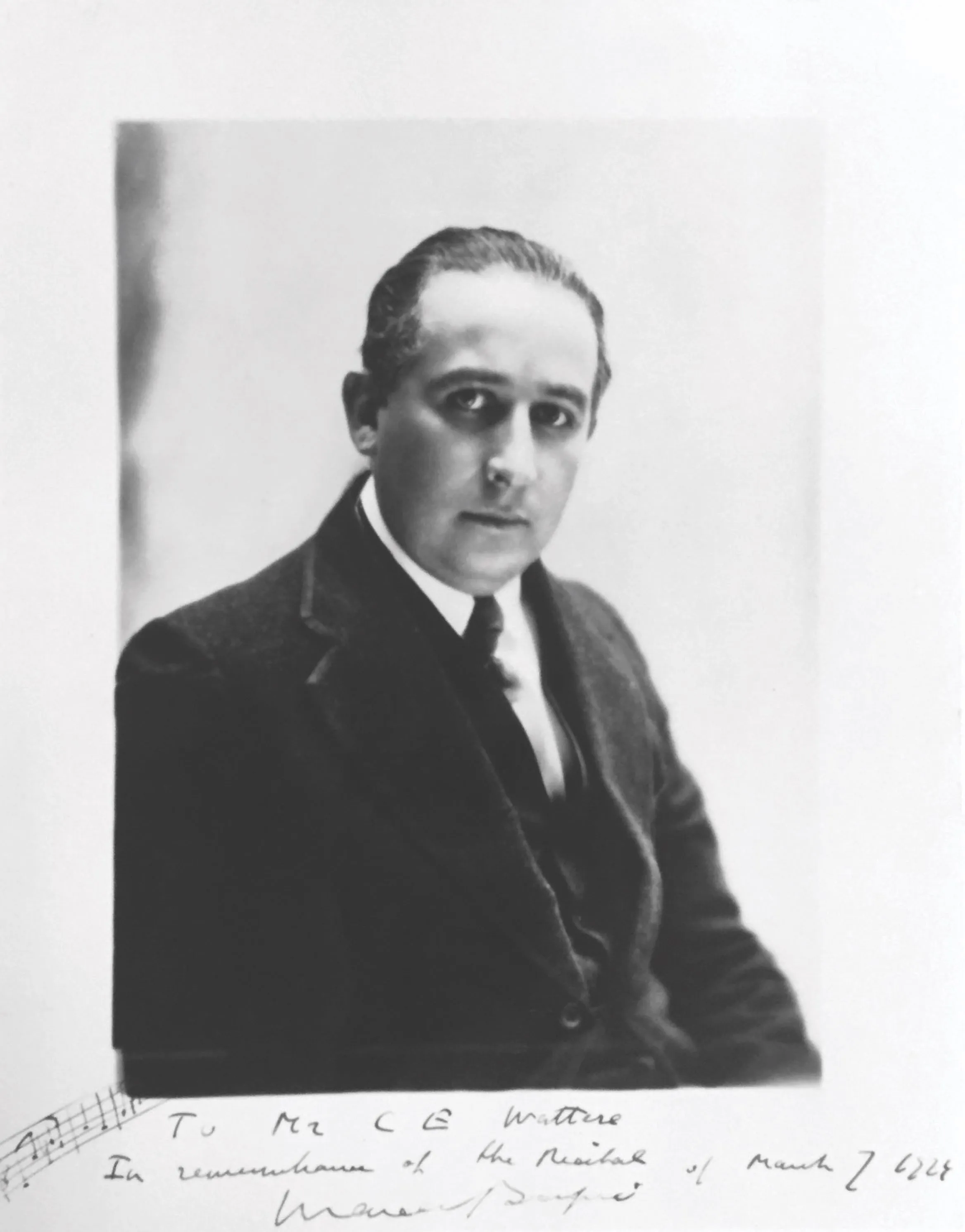
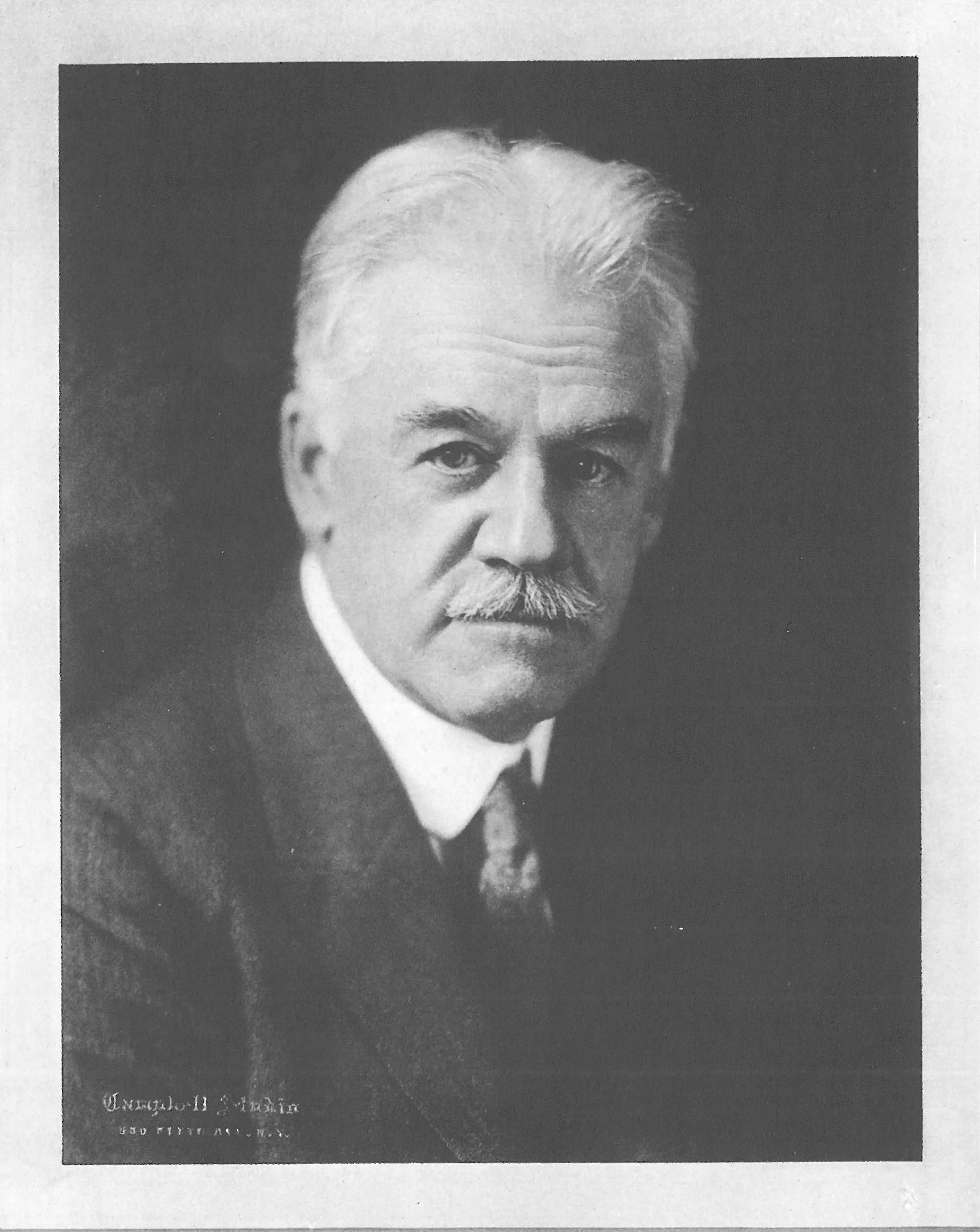
Belgian-American organist, pianist, pedagogue, and writer Camil Van Hulse (1897–1988) was also a prolific composer and influential musician whose career bridged Western European and American traditions in the twentieth century. He is known best for his solo organ and sacred choral music and contributed significantly to the musical communities in Tucson, Arizona, and Sint-Niklaas, Belgium. Though he was born and educated in Belgium, Van Hulse moved to the United States after suffering gas poisoning from trench warfare in World War I, ultimately settling in Tucson, Arizona.
Van Hulse was a pivotal leader in establishing and growing the musical scene in Tucson from his arrival in 1923 until his death in 1988. He was described as “a pioneer in Tucson’s artistic development,”1 evidenced in his involvement and development of multiple musical organizations in Tucson still in operation in the present day, most notably founding and acting as the first conductor of the Tucson Symphony Orchestra.2 Elizabeth French, former dean of the Southern Arizona chapter of the American Guild of Organists described Van Hulse as being at the “foundation of our [Tucson’s] musical life.”3 Van Hulse was also a church musician for much of his career in Tucson, serving in a variety of roles at All Saints Catholic Church and Saints Peter and Paul Catholic Church in Tucson; he eventually turned fully to composition and teaching later in his career.
Van Hulse wrote many large-scale compositions, including several orchestral symphonies, large choral works, and organ works, publishing 169 opus numbers in a multitude of musical genres. Those organ works include three organ symphonies, tone poems, suites, and collections of chorale preludes and service music. His organ works were premiered by many notable organists during his lifetime, including Alexander Schreiner, Joyce Jones, and Claire Coci.4 Camil Van Hulse utilized his Western European musical training from Belgium in the American Southwest and is a notable bridge between Western European and American musical traditions in the twentieth century. While Van Hulse’s European conservatory training in composition and performance is prevalent in his works, there is an American infusion that blends into a language distinctly his own.
Early years and training
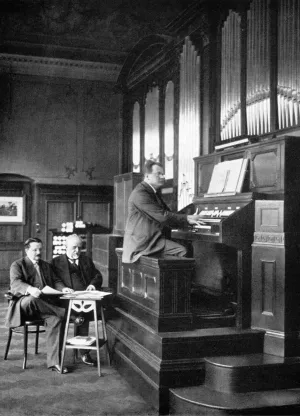
Camillus Antonius Joannes (Camil) Van Hulse was born on August 1, 1897, in Sint-Niklaas, Belgium, into a musical family, providing a strong foundation for his interest and education in music. His parents, Gustaaf Van Hulse (1862–1954) and Maria Pelagia Coppens (1871–1927), provided his early instruction in music. His mother was a singer and pianist,5 and his father served as organist and choirmaster at Sint-Niklaaskerk, a prominent and historic Catholic church in Sint-Niklaas.6 By the age of twelve, Van Hulse was assisting his father at the church, playing the organ during services7 and singing in the boys’ choir.8
In addition to his duties at Sint-Niklaaskerk, Gustaaf Van Hulse was a sexton and composer of sacred music.9 Gustaaf studied with Edgar Tinel (1854–1912) at the École de musique religieuse (School of Religious Music), in Mechelen, Belgium.10 This school was designed to “train clergy, organists, and choirmasters for their work in Belgium.”11 The first director of this school was organist and composer Jacques Lemmens,12 who is among the founders of the French Romantic organ school. Camil Van Hulse benefited from this training as he began his studies in music surrounded by the soundscape of the Belgian and French Romantic organ repertoire.
Van Hulse attended school at Saint Joseph Institute and Saint Joseph Minor Seminary in Sint-Niklaas, Belgium. Bart Moenssens, a Van Hulse biographer, explains, “After the first trimester of his third year of Greek and Latin studies, Van Hulse decided to quit his high school education and to devote himself to music definitively. He stayed at home and practiced the piano for hours every day.”13 A lover of linguistics, most of his time not spent practicing was occupied with reading and language study. By age sixteen, Van Hulse had already learned eight languages, including French, Flemish, Greek, and Latin. His early interest in linguistics became a lifelong passion.14
World War I halted Van Hulse’s momentum toward a career in music. Just after his seventeenth birthday, Van Hulse enlisted in the Belgian Army15 at the onset of the war on August 4, 1914, believing it would only last several weeks.16 The intended short enlistment lasted more than four years until the armistice in 1918. Van Hulse recounted this in an interview he gave in 1983 for the Arizona Historical Society:
My career was entirely stunt[ed] by the war. I was just getting on to be seventeen when the war broke out, and I enlisted as a volunteer. Studying was finished, playing piano, playing organ, everything was finished, and I had four years and three months of trenches and dodging bullets.17
During that time in the trenches, he was wounded by shrapnel in his left leg and suffered from gas poisoning at Streenstrate at the first battle of Ypres, eventually developing tuberculosis.18
Just two days before Armistice Day in 1918, Van Hulse contracted Spanish influenza and was rendered unconscious, awakening two days later in Bruges, Belgium. Van Hulse remembered when he awoke, “. . . the first thing they told me was the war is finished. So, I missed liberating my hometown, and I missed the end of the war.”19 The months following his return to Sint-Niklaas included many visits to the hospital. His doctors gave him only six months to live and urged Van Hulse to move to a more arid climate.
Despite this diagnosis, Van Hulse pursued a degree in music. His father urged him to study church music, hoping that he would succeed him as organist at Sint-Niklaaskerk. Instead, Camil enrolled at the Royal Flemish Conservatory in Antwerp in 1919 to study piano.20 Though his degree was in piano, he excelled in harmony and composition and was told his true musical talents lay there.21 While he studied at the conservatory from 1919 until 1923, he served as the organist at Sint-Niklaaskerk.22 Van Hulse graduated from the Royal Flemish Conservatory with honors in 1922, receiving multiple awards from the school.23 That same year, Van Hulse was awarded first prize in harmony with the highest distinction, the royal medal, and the Albert de Vleeshouwer Prize for composition.24 Additionally, on July 10, 1923, the conservatory awarded him first prize in piano.25
First years in the United States
Earning a music degree was taxing on Van Hulse’s already poor health, and his doctor again advised him to seek a different climate. On September 2, 1923, Van Hulse arrived in New York City as an immigrant to the United States of America. He first briefly settled in Muskogee, Oklahoma, and lived with an uncle, Father Joseph Van Hulse, a priest at the Church of the Assumption.26 Three of his uncles had lived and worked as Catholic priests in Eastern Oklahoma since the 1890s.27 Van Hulse stayed in Muskogee from September through November of 1923, giving his first piano recital in the United States. During his stay there, he read in a local newspaper that Tucson, Arizona, was the “most musical city in the whole United States.”28 He moved to Tucson, then a town with a population of 26,000, in November of 1923 due to both the draw of this claim and its dry desert climate.29
At that time, much of the music in Tucson was coordinated through the Saturday Morning Music Club, an organization founded by Madeline Heineman Berger, commonly referred to as “Mrs. Heineman.”30 Mrs. Heineman raised money by holding concerts performed by local amateurs so that she could bring in featured soloists such as Fritz Kreisler, Sergei Rachmaninoff, and Ignacy Jan Paderewski.31 Van Hulse had multiple small appearances in performances through the club during his first year in Tucson and slowly built a piano studio through recommendations from Mrs. Heineman.
Mrs. Heineman’s prominent influence in Tucson society through the Saturday Musical Club was part of a larger trend happening across the United States. In her essay, “Women as ‘Keepers of Culture’,” Linda Whitesitt writes that Madeline Heineman Berger’s thirty-year tenure in the organization grew the club from an “informal association of musically dedicated women” to raising more than $30,000 a year to bring in concert artists. “It was a success that echoed throughout the country as upper- and middle-class women stepped out of the protective sanctuary of members-only music-club recitals and study groups and assumed the organizational and much of the financial responsibility for the cultural development of their communities.”32 Heineman acted as an impresario to help develop the musical scene in Tucson, and Van Hulse was a direct beneficiary of this influence.
After just one summer in Tucson, Van Hulse’s health “improved noticeably,”33 and he launched his early career as a musician. He recalled spending three months in the hospital before he was well enough to start practicing. Van Hulse was appointed organist at All Saints Catholic Church in Tucson on May 1, 1924, staying there until 1939, establishing his place in the community as a church organist.34 When he was physically able, Mrs. Heineman organized a highly publicized piano recital on December 12, 1924, for Van Hulse35 at the newly built Tucson High School.36 The event was well-received, with a review in the Tucson Citizen claiming Van Hulse “is undoubtedly one of the truest artists ever heard here, and that we Tucsonans are honored that he is one of us.”37
With improved health and the ability to support a family, Van Hulse wrote to his fiancée, who was still living in Belgium, Augusta Nijs (Nys), to join him in the United States.38 The couple were engaged before Van Hulse left for the United States. Augusta emigrated from Belgium in 1924, and they were married on December 12 of that year, the morning of his debut solo recital in Tucson. They were married in All Saints Church with a small group of friends as witnesses, including Van Hulse’s sister, Madeline Van Hulse, who traveled with Augusta from Belgium.39 The couple had two daughters, Lesghinka and Aziadé (Aziyade), who were born in 1925 and 1927, respectively.40
Establishment of Tucson music organizations
Over the course of a decade, Van Hulse was instrumental in creating new musical organizations throughout Tucson. In the years 1928 and 1929, just four years after he arrived in Tucson, Van Hulse collaborated with Harry Juliani as co-founder of the Tucson Symphony Orchestra. André Stoop, biographer of Van Hulse, explains, “In a time without radios or gramophones, the Tucson Symphony Orchestra was a symphony orchestra consisting solely of amateur musicians, the only medium for the local population to get acquainted with works from the classical repertoire.”41 The players were recruited from townspeople and from the faculty of the University of Arizona.42 Even with no formal conducting experience, Van Hulse had the necessary knowledge of orchestral repertoire to choose a program and rehearse with the musicians.
The Tucson Symphony Orchestra first performed at the Tucson High School auditorium on January 13, 1929, with Van Hulse as the conductor. The debut included pieces by Franz Schubert, Ludwig van Beethoven, Wolfgang Amadeus Mozart, Alexandre Luigini, and Alexander Borodin43 and was described in local papers as “a monumental achievement”44 and a “triumph.”45 Though the symphony’s first season featured few performances, it was the start of the now oldest continuously running performing arts organization in the Southwest.46 Van Hulse was the conductor of the Tucson Symphony Orchestra for only one season, but he also conducted the orchestra for their twenty-fifth47 and fiftieth anniversary concerts, reprising their debut concert with Schubert’s Rosamunde Overture.48
In addition to the Tucson Symphony Orchestra, Van Hulse helped found four other musical organizations in Tucson. The Tucson Chamber Music Society, a precursor of the symphony, was founded by Van Hulse in 1926.49 He was a founding member of the Tucson Chorus50 and was also a member of the Society of Arizona Composers, serving as president of that organization for multiple terms.51 Van Hulse was also a founding member of the Tucson chapter of the American Guild of Organists (AGO), which had its first meeting on March 5, 1937.52 Later on, Van Hulse served as dean of this AGO chapter from 1944 until 1948.53 Elizabeth French declared that “Van Hulse’s active participation did much to stimulate and encourage the efforts of young composers.”54 Through these numerous organizations, music in Tucson expanded to a wider population.
Van Hulse’s establishment of these organizations represented a blending of American and European musical traditions. He helped establish European cultural institutions in the American Southwest, bringing his Belgian background and conservatory training. However, Van Hulse also had an interest in music of the Pascua Yacqui tribe and visited their village to transcribe music.55 His travels to Central and South America also gave him the opportunity to hear and transcribe music there. He eventually incorporated that music into several orchestral works later in his life, including Symphonia Pax Mundo, Sinfonia Maya, and The Kino Saga.56
Musical and teaching career
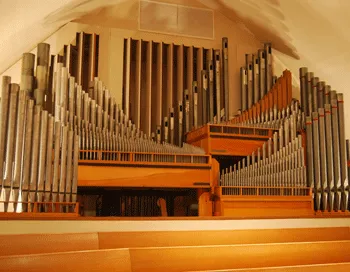
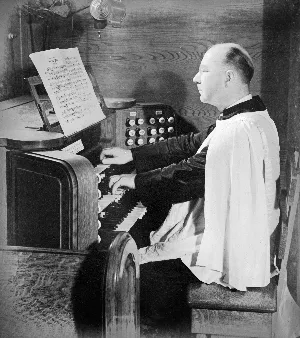
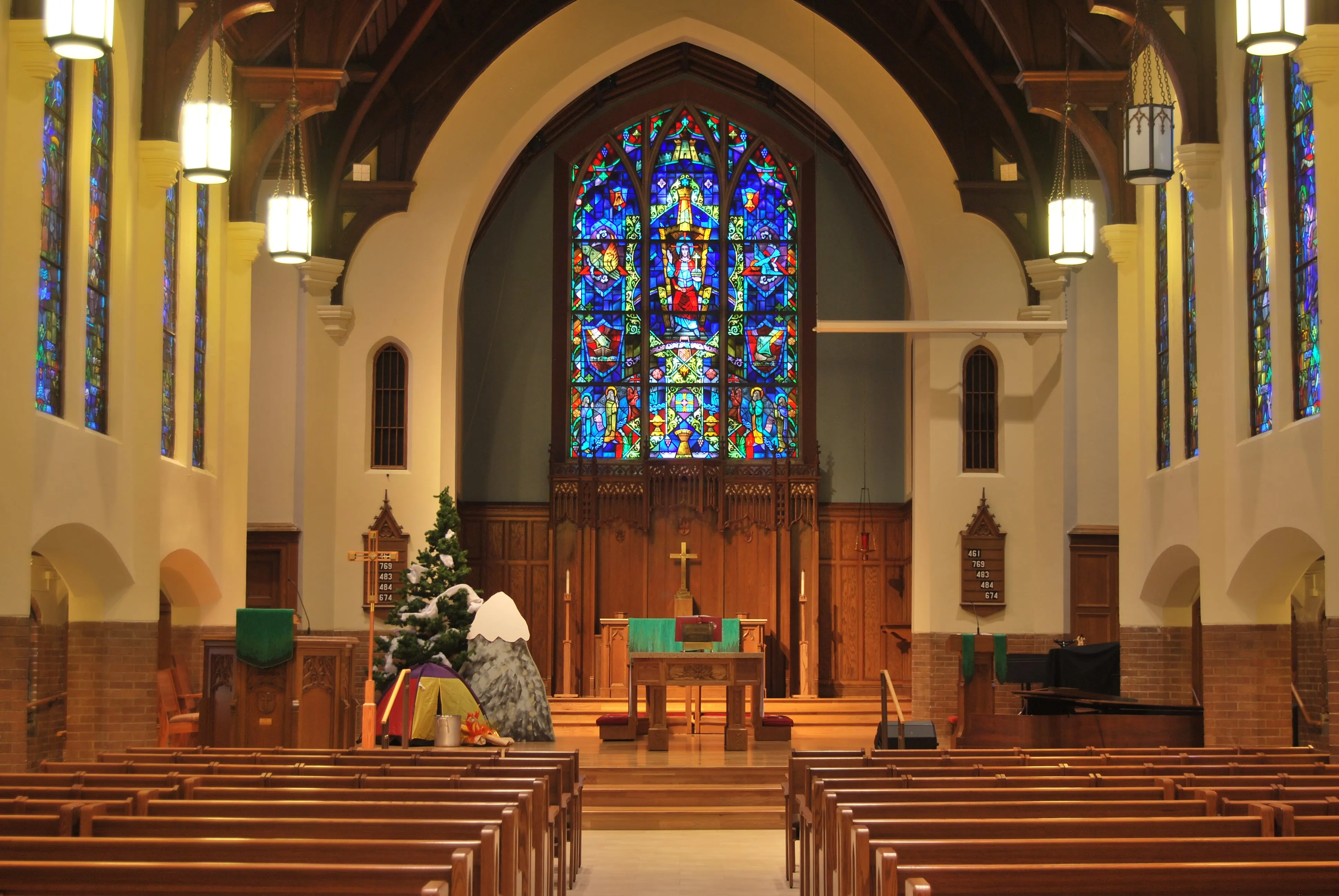
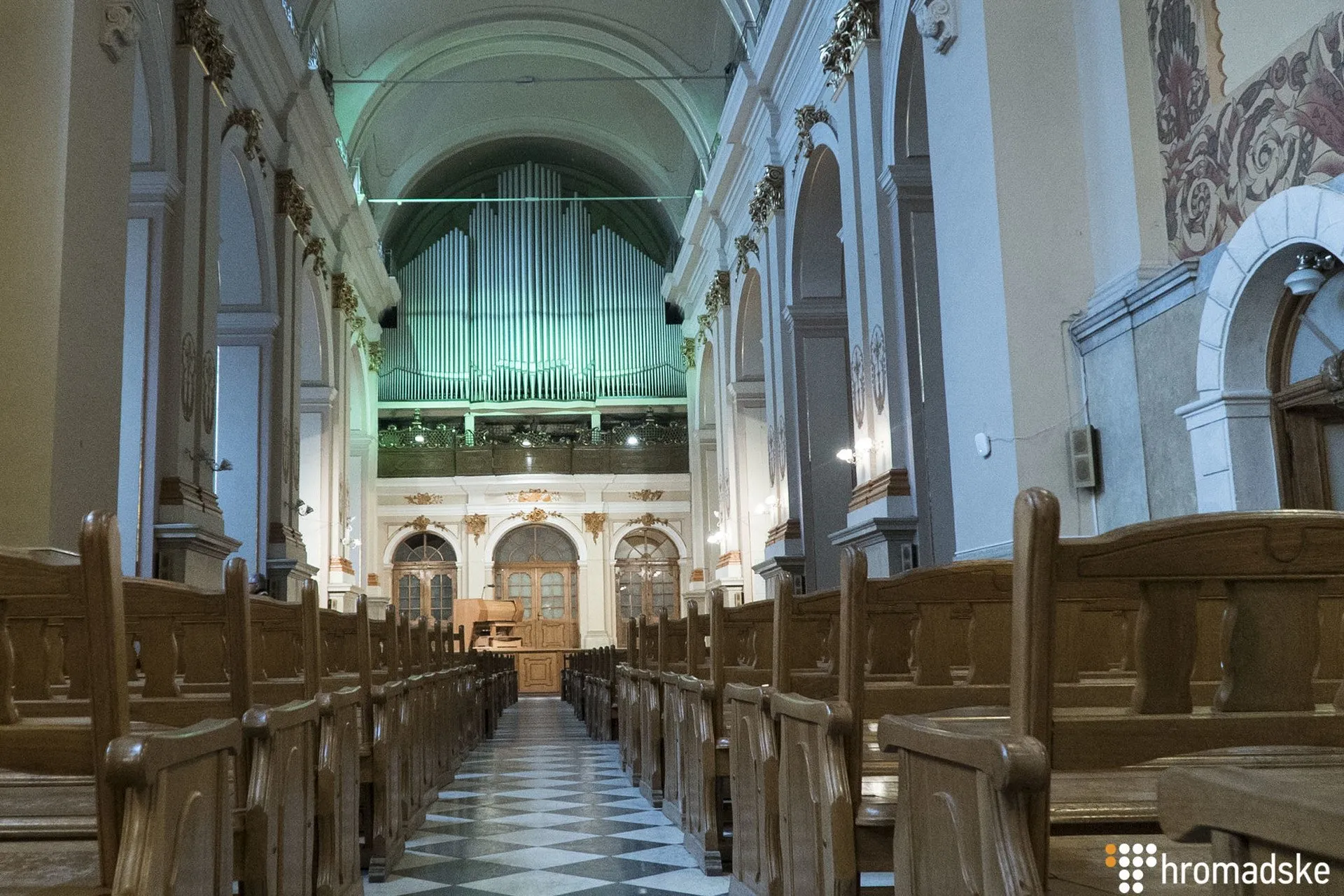
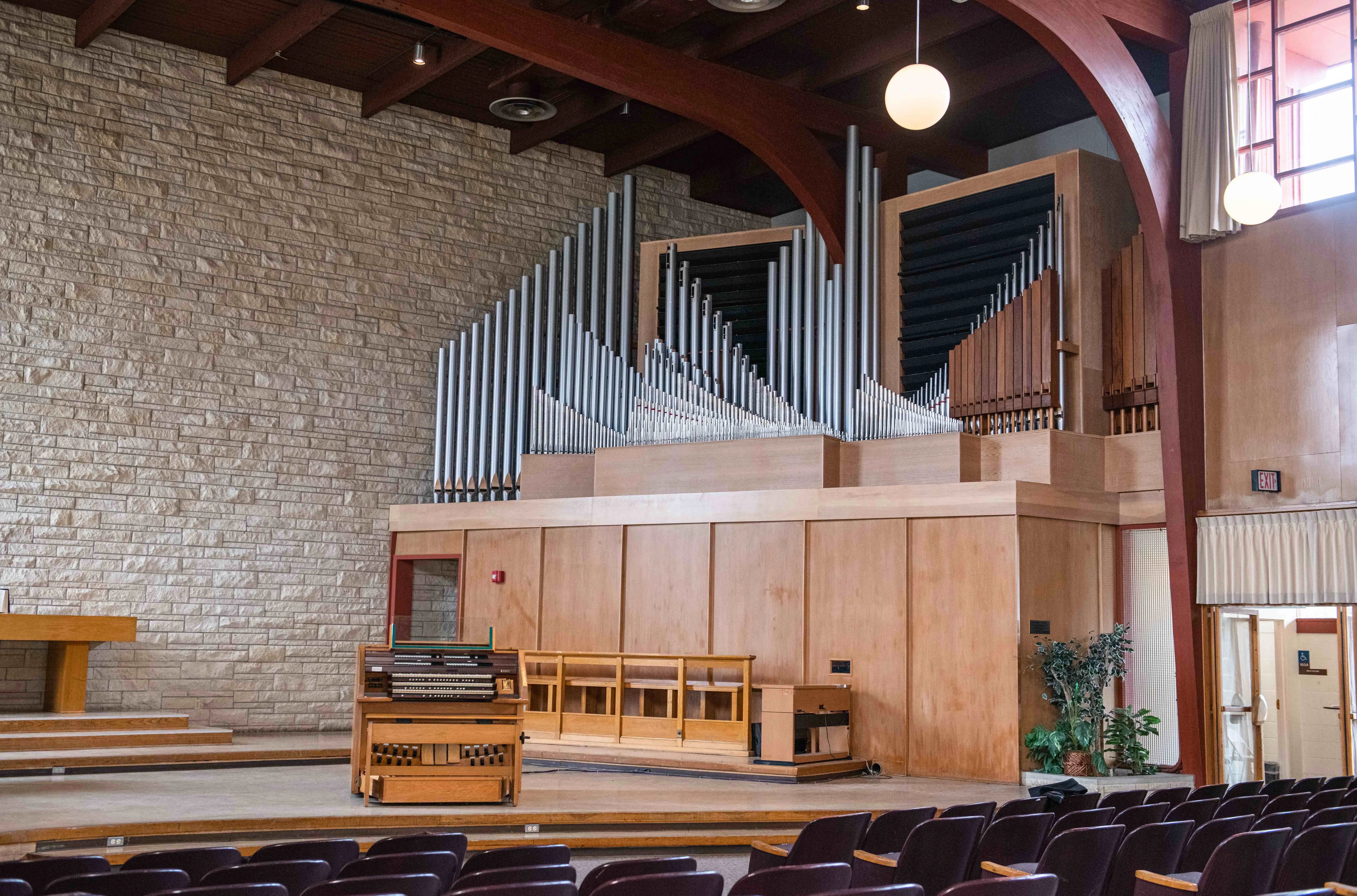
Van Hulse’s primary occupation from his arrival in Tucson in 1924 to 1957 was that of church musician. His first position, organist at All Saints Catholic Church, lasted from 1924 until 1939.57 He used his conservatory education and experience as a Catholic church musician to introduce Gregorian chant to the Tucson-area Catholic churches.58 Elizabeth French recalls that All Saints Church had a “small two-manual Hillgreen Lane instrument,” which she described as “the only respectable organ in any of the Catholic churches of this community.”59 She continues describing his duties, saying that “he often substituted in the [Saint Augustine] cathedral on feast days, playing an Estey two-manual portable organ. . . .”60 In 1939 Van Hulse was appointed organist and leader of the Gregorian Schola at Saints Peter and Paul Catholic Church in Tucson.61 He served in various capacities at both churches until 1957.62 During his tenure at Saints Peter and Paul Church, the Reuter Organ Company of Lawrence, Kansas, installed its Opus 947 in 1951 at a cost of $12,970.63
1951 Reuter Organ Company Opus 947, Saints Peter & Paul Catholic Church
GREAT ORGAN (Manual II)
16′ Gemshorn (TC, from 8′)
8′ Open Diapason (metal) 61 pipes
8′ Melodia 73 pipes (wood and metal)
8′ Gemshorn (metal) 85 pipes
4′ Octave (metal) 61 pipes
4′ Wald Flute (ext 8′)
2-2⁄3′ Gemshorn (ext 8′)
2′ Gemshorn (ext 8′)
8′ Trompette (metal) 61 pipes
Great to Great 16
Great Unison Off
Great to Great 4
Swell to Great 16
Swell to Great 8
Swell to Great 4
Choir to Great 16
Choir to Great 8
Choir to Great 4
7 blank stopkeys
SWELL ORGAN (Manual III, enclosed)
16′ Gedackt 97 pipes (wood and metal)
8′ Geigen Diapason (metal) 61 pipes
8′ Gedackt (ext 16′)
8′ Salicional (metal) 73 pipes
8′ Voix Celeste (TC, metal) 61 pipes
4′ Geigen Principal (metal) 73 pipes
4′ Gedackt (ext 16′)
2-2⁄3′ Nazard (ext 16′)
2′ Piccolo (ext 16′)
1-3⁄5′ Tierce (from 16′)
8′ Oboe (metal) 73 pipes
Tremulant
Swell to Swell 16
Swell Unison Off
Swell to Swell 4
3 blank stopkeys
CHOIR ORGAN (“Duplexed from Great Division”)
16′ Gemshorn
8′ Open Diapason
8′ Melodia
8′ Gemshorn
4′ Wald Flute
4′ Gemshorn
2-2⁄3′ Quinte
2′ Gemshorn
Tremulant
Choir to Choir 16
Choir Unison Off
Choir to Choir 4
Swell to Choir 16
Swell to Choir 8
Swell to Choir 4
3 blank stopkeys
PEDAL ORGAN
16′ Bourdon (wood) 44 pipes
16′ Gedackt (Swell)
8′ Open Diapason (Great)
8′ Bourdon (ext 16′)
8′ Gemshorn (Great)
8′ Dolce Flute (Swell)
4′ Gemshorn (Great)
8′ Tromba (Great)
Great to Pedal 8
Swell to Pedal 8
Swell to Pedal 4
Choir to Pedal 8
4 blank stopkeys
Accessories
3 General pistons (thumb)
5 Great (thumb)
5 Swell (thumb)
5 Choir (thumb)
5 Pedal (thumb and toe)
General Cancel (thumb)
Pedal combinations to Great pistons on/off
Pedal combinations to Swell pistons on/off
Pedal combinations to Choir pistons on/off
Great to Pedal reversible
Swell to Pedal reversible
Balanced Great and Choir expression shoe
Balanced Swell expression shoe
Balanced Crescendo shoe, with indicator
Sforzando reversible, with indicator
In addition to working as a church musician, Van Hulse gave a series of piano recitals in the 1930s throughout South and Central America including the countries of Argentina, Uruguay, Chile, and Mexico.64 Van Hulse did not describe it as a tour, but rather a desire to experience other countries, using concerts to fund the travel. Still in frail health, a doctor gave him strychnine before performances to prevent him from collapsing while performing.65
After seven years of living in the United States, Van Hulse returned to his home country of Belgium in 1930.66 He was recognized in 1931 by the Belgian government and awarded Knight of the Order of Leopold II.67 As he established his career and began touring as a performing recitalist, Van Hulse continued his education in Tucson, earning a Master of Music degree with an emphasis in composition from the University of Arizona in 1936. Van Hulse’s thesis was an original composition, a large-scale orchestral work titled Parnassian Overture.
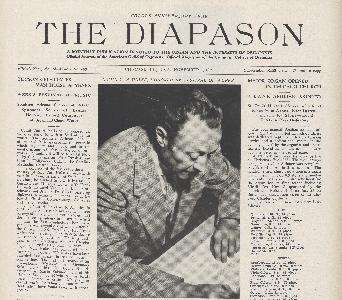
Van Hulse became known as a teacher and writer throughout the 1930s and 1940s and was increasingly involved in the Tucson community. In addition to having a studio where he taught piano, organ, and harmony, he taught at several institutions for high-school-aged students.68 During that time, his articles and reviews were published in journals including The Diapason, The Etude, and Books Abroad, among others. An article in The Diapason describes Van Hulse’s studio as “a popular gathering place for organists and choir directors, both local and national.”69 Van Hulse notably hosted Belgian organist Flor Peeters at his home when Peeters played a concert at the Fine Arts Festival in Tucson on his third concert tour of the United States in 1950.70
Throughout his life, Van Hulse was fascinated with the study of language, knowing over sixty different languages by the end of his life. “Studying languages was Van Hulse’s primary hobby. Self-taught, he grew into a polyglot who could grammatically dissect dozens of languages.” After initially learning the Spanish language by reading a local newspaper, he authored many articles in Spanish for La Nueva Democracia, a Spanish publication from New York.71 He taught the Greek, Latin, German, and French languages in addition to giving private lessons in his music studio.
Van Hulse the composer
Van Hulse continued to compose in addition to his many other musical involvements, earning local awards soon after he arrived in the 1920s, though his compositions were recognized more frequently in the 1940s. Van Hulse’s first published work for solo organ, Toccata for Grand Organ, opus 39, won the Fischer & Bro. prize,72 first prize in a national competition held by the American Guild of Organists for their fiftieth anniversary in 1946.73 He dedicated the piece to his brother, Frans, who succeeded their father as organist at Sint-Niklaaskerk in their hometown.74 After this success, Van Hulse recounted that he “didn’t have to look for any more publishers,”75 attracting attention from many different publishing houses.
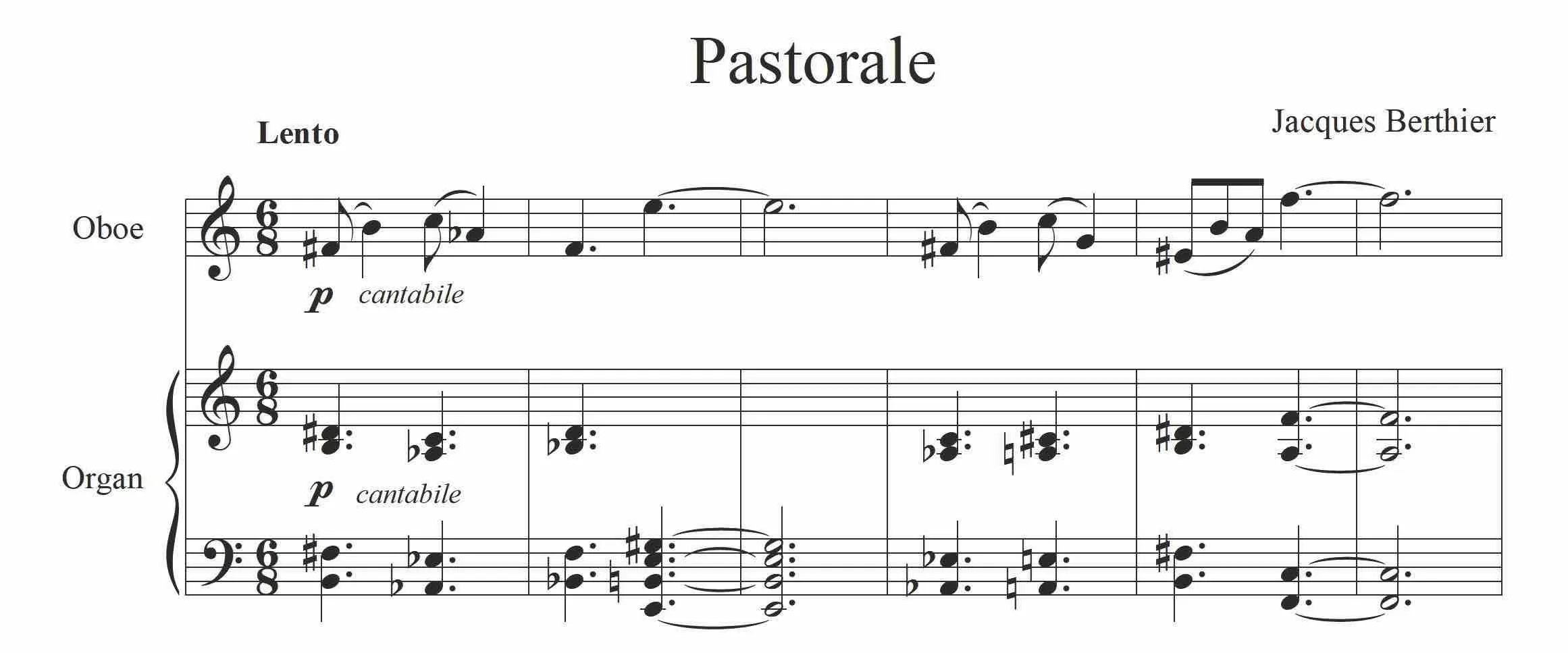
Three years after this success, Van Hulse began writing in earnest for the organ. His first multi-movement work for solo organ was Symphonia Mystica, opus 53, published in 1949. He published two more organ symphonies: Symphonia Elegiaca, opus 83, in 1956, seven years later, and Sinfonia da chiesa, opus 144, much later in 1973. Van Hulse composed other large works for solo organ, including symphonic poems and suites, as well as numerous smaller works such as chorale preludes, collections of small liturgical works, pedagogical pieces, and other individual titles. In addition to his solo organ works, many of his choral works and Masses have organ accompaniment.
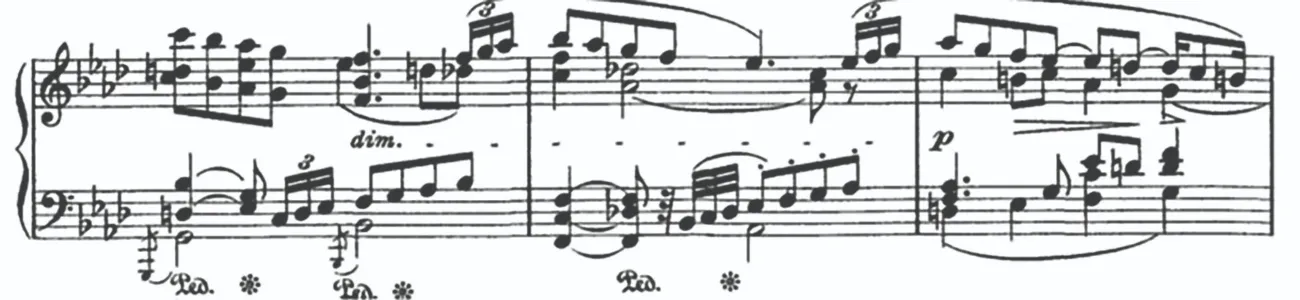
Camil Van Hulse wrote Symphonia Elegiaca, opus 83, in 1952 and 1953 in response to the death of Bernard La Berge, an influential impresario based in Montreal and New York. Van Hulse dedicated this work to La Berge’s wife, Claire Coci, who gave the premiere performance of Symphonia Elegiaca in 1954 in Tucson and New York City. This five-movement programmatic solo organ work is based on chant melodies from the Requiem Mass, including “Requiem aeternam,” “Dies irae,” and “Domine Jesu Christe.” Multiple phrases of the “Dies irae,” most notably the incipit, and the “Pie Jesu” permeate the work, symbolizing the soul’s journey after death through a persistent tension between judgment and mercy. Symphonia Elegiaca was later published in 1956 by Edition Cranz in Mainz, Germany.
In 1957 Van Hulse left his church positions and devoted the rest of his career entirely to composition. His compositions for organ and other genres and instrumentations were increasingly visible on the national stage in the 1950s and 1960s. His chamber work compositions won prizes from multiple publishing companies, such as Lorenz76 and J. Fischer & Bro.,77 and even a debut at Carnegie Hall.78
By the 1950s Van Hulse was gaining much more appreciation and recognition for his contributions to the organ scene in Tucson and further abroad. Seth Bingham listed Van Hulse with other “challenging modern composers” such as Jehan Alain, Marcel Dupré, Jean Langlais, Flor Peeters, and Leo Sowerby.79 His works were increasingly programmed nationally and internationally, and he appeared at engagements such as American Guild of Organists conventions80 and Organ Writers’ Week at the University of Redlands, California.81 One of his works for solo organ, Jubilee Suite, was included as repertoire for the 1953 American Guild of Organists examinations.82
Van Hulse recounted that the choral oratorio The Beatitudes, the recipient of the Nora Seeley Nichols Prize from the Phoenix Musicians Club in 1946, was one of his most successful compositions during his lifetime.83 Van Hulse received critical acclaim for his oratorio Via Crucis, opus 95, which was written for orchestra, chorus, soloists, and narrator and based on the passion story. After its first performance on April 23, 1963, critics hailed the work as “one of the greatest and certainly one of the most moving works of the century.”84 The Tucson Symphony Orchestra premiered Sinfonia Maya, opus 154, an orchestral work published in 1975, in 1979 for their fiftieth anniversary, with further performances on April 30 and May 1 in 1981 with the Pima College Chorus. This work was premiered in Sint-Niklaas, Belgium, in September of 1982 by the National Orchestra of Belgium, conducted by Georges Octors. Van Hulse composed throughout his life until his death in 1988 at the age of ninety.
Celebrations and legacy of Van Hulse
Beginning in the 1950s Camil Van Hulse experienced a marked resurgence of recognition in his hometown of Sint-Niklaas, Belgium, evidenced by civic honors and high-profile commemorative concerts. In 1954 he was named Chevalier de l’Ordre de la Couronne (Knight of the Order of the Crown) by King Baudouin,85 and on October 24, 1957, a tribute concert at the Onze-Lieve-Vrouwekerk celebrated his sixtieth birthday with performances of his choral and organ works, including Symphonia Mystica, opus 53, and The Beatitudes, opus 43, performed by organists Jules Verniers and Gabriel Verschraegen with the Koninklijk Gemengd Koor Sint-Gregoriusgild.86 In September 1967, coinciding with the 750th anniversary of Sint-Niklaas, he was further honored as Officer of the Order of the Crown;87 the festivities included two concerts devoted to his music, one of organ, piano, and chamber works, and another organ recital performed by the seventy-year-old composer himself, which was broadcast by the Belgian Radio and Television service (BRT), along with a televised feature, “Ten huize van Camil Van Hulse” (At home with Camil Van Hulse), underscoring his popular appeal.
Subsequent milestone celebrations continued this pattern of public tribute and premiere. Van Hulse’s Sinfonia da Chiesa, opus 144, received its European debut on August 22, 1972, by Robert E. Flood in honor of his seventy-fifth birthday; in 1977 his eightieth year was marked by a three-day festival culminating in a medal from the Minister of Netherland Culture; and further commemorative concerts in Belgium celebrated him in 1982 and 1986.
The city of Tucson recognized Van Hulse many times throughout the composer’s lifetime. In 1959 the American Guild of Organists sponsored a week-long celebration of “his thirty-six-year residency in the city” in 1959 with concerts featuring compositions by Van Hulse.88 These works were performed by organists, choirs, and instrumental groups; the highlight of the event was a recital by Charles Shaffer. Van Hulse was granted an honorary lifetime membership of the American Guild of Organists in 1966 from the chapter that he helped found nearly thirty years before. In 1975 Van Hulse was recognized with the Distinguished Citizen Award from the University of Arizona.89 Tucson also celebrated the composer by presenting two concerts of his works on October 23, 1977, which included a recital given by Joyce Jones.90
Camil Van Hulse died of pneumonia on July 16, 1988, at the age of ninety. His legacy and impact was honored by interring his remains in his two homes—Tucson, United States, and Sint-Niklaas, Belgium. His hometown of Sint-Niklaas now houses the archives of Van Hulse in the Bibliotheca Wasiana, the Municipal Public Library. It holds scores, manuscripts, programs, correspondence, photographs, recordings, and a book collection of over eight hundred volumes.91 Other documents and scores are held at his studio and Arizona home, which his family still owns.92
Van Hulse forged a connection between Belgium and the American Southwest, particularly in Tucson. In an interview about Tucson, he said, “I am inclined to think that it was divine providence that got me here. There’s no other way around it.”93 On the occasion of Van Hulse’s induction to the Grand Order of Reynaert
in 1978, Stoop described Van Hulse as follows: “[H]e has remained Flemish and European, and has propagated our cultural values to the New World whilst keeping in touch with the cultural growth in Flanders and Europe.”94
Camil Van Hulse’s published catalog reached 169 opus numbers in many genres. During his lifetime, some of the most well-known contemporary performers played his works across the United States and throughout Europe. His legacy continues as his music continues to be heard and played today and merit renewed attention as a significant contribution to church music and organ literature.
Notes
1. Arizeder Urreiztieta, “Composer Van Hulse dies at 90,” Arizona Daily Star January 25, 1988.
2. Tucson Symphony Orchestra “History: 1929–1949,” Mission and History, tucsonsymphony.org/about-tso/our-story/.
3. Elizabeth C. French, “Camil Van Hulse: A Belgian Composer Who Adopted the Southwest,” Music: The AGO–RCCO Magazine volume 12, number 5 (May 1978), page 41.
4. Arizeder Urreiztieta, “Camil Van Hulse: He helped compose Tucson’s music scene,” Arizona Daily Star, May 10, 1987.
5. André Stoop, “Van Hulse, Camil,” trans. Emma Brouwer, Lexicon van het muziekleven in het Land van Waas (Stadsbestuur in samenwerking met V.Z.W. Bibliotheca Wasiana, 1987), page 1.
6. Bart Moenssens, “Organist-componist Camil Van Hulse (1897–1988): een Wase muzikale pionier in de West,” trans. Emma Brouwer, Vlaanderen, volume 46, number 1 (January–February 1997), page 1.
7. “The Church of St. Niklaas was fortunate enough to possess a rather large instrument designed by Schrijnen, a pupil of Cavaillé-Coll.” French, page 40.
8. “At age twelve, Camil sang in a boys’ choir which he often led himself, and he frequently played the organ during services. He practiced the organ with his friend Casimier Parmentier. When one was pumping, the other would play.” Stoop, page 1.
9. Moenssens, page 1.
10. Henri Vanhulst, “Tinel, Edgar,” The New Grove Dictionary of Music and Musicians, 2nd ed., volume 25 (Oxford University Press, 2001), pages 501–502.
11. “The curriculum included courses in: religion, liturgy, and the Latin Church; plainchant; organ and piano; harmony, counterpoint, and fugue; and the composition of sacred music (vocal and instrumental).” William Peterson, “Lemmens, His École d’orgue, and Nineteenth-Century Organ Methods,” in French Organ Music From the Revolution to Franck and Widor (University of Rochester Press, 1997), page 58.
12. The École de musique religieuse was later renamed as the Lemmens Institute after its first director, Jacques Lemmens. Peterson, page 58.
13. Moenssens, page 1.
14. Stoop, page 1.
15. An article in the Muskogee Times-Democrat says that Van Hulse served as a corporal in King Albert’s infantry. “Belgian Artist Plays for Vets.” Muskogee Times-Democrat, September 11, 1923, newspapers.com/image/904265052/.
16. Moenssens, page 1.
17. Camil Van Hulse, Remembering Tucson, interview by Jean M. Blackwell, May 7, 1983, page 20.
18. “Debut Here for Belgian Pianist.” Muskogee Times-Democrat, November 5, 1923, page 11, https://www.newspapers.com/image/904263417.
19. Van Hulse, Remembering Tucson, page 20.
20. Van Hulse studied harmony and composition with Edward Verheyden, piano with Frans Lenaerts, chamber music with Constant Lenaerts, and counterpoint with Lodewijk Mortelmans. He also studied piano with Arthur De Greef in Brussels. Flavie Roquet, “Van Hulse, Camille (‘Camil’),” trans. Emma Brouwer, Vlaamse componisten geboren na 1800: lexicon (Roularta Books, 2007), page 801.
21. Urreiztieta, “Camil Van Hulse: He helped compose Tucson’s music scene.”
22. Van Hulse, Remembering Tucson, page 20.
23. “Initially, he had been denied access to the final exam because of his many absences. One of his sisters wrote a letter to Queen Elisabeth, whose mediation then allowed Van Hulse to be admitted to the exam after all.” Stoop, page 1.
24. Roquet, page 801.
25. Stoop, page 1.
26. Moniek Joos, Catalogus van de Verzameling Camil Van Hulse (Stedelijke Openbare Bibliotheek Sint-Niklaas. Sint-Niklaas, Belgium), page 6.
27. Urreiztieta, “Camil Van Hulse: He helped compose Tucson’s music scene.”
28. Van Hulse, Remembering Tucson, page 1.
29. French, page 41.
30. “Mrs. Madeline Heineman, later to be Mrs. Harry Berger, who arrived in Tucson in 1898, was to become one of Tucson’s most active musical organizers.” Joseph Cordeiro, “A Century of Musical Development in Tucson, Arizona, 1867–1967” (A.Mus.D diss., University of Arizona, 1968), page 49.
31. Van Hulse, Remembering Tucson, page 2.
32. Linda Whitesitt, “Women as ‘Keepers of Culture’,” in Cultivating Music in America: Women Patrons and Activists since 1860, ed. Ralph P. Lock and Cyrilla Barr (University of California Press, 1997), page 65.
33. Stoop, page 2.
34. French, page 41.
35. “Music Club Will Present Camil Van Hulse, Pianist.” Tucson Citizen, November 16, 1924, page 6, newspapers.com/image/580444309.
36. Van Hulse, Remembering Tucson, page 3.
37. “Camil Van Hulse Revelation To Tucson In Concert; Gill’s Numbers Add Beauty,” Tucson Citizen, December 14, 1924, page 6, newspapers.com/image/580446214.
38. Van Hulse, Remembering Tucson, page 4.
39. “Travels 7,000 Miles to Wed Tucson Pianist.” Arizona Daily Star, December 13, 1924, page 9, newspapers.com/image/163150655.
40. Joos, page 6.
41. Stoop, page 2.
42. “Van Hulse is Honored as Symphony Marks 25 Years.” The Diapason, volume 45, number 4, whole number 532 (March 1, 1954), page 7.
43. “Symphony Unit is Competent.” Arizona Daily Star, January 14, 1929, page 2, newspapers.com/image/162491792.
44. Tucson Symphony Orchestra. “History: 1929–1949.” Mission and History. tucsonsymphony.org/about-tso/our-story/.
45. Effie Leese Scott, “Symphony Orchestra Scores Triumph In Its Initial Concert,” Tucson Citizen, January 14, 1929, page 7. newspapers.com/image/581077130/.
46. Tucson Symphony Orchestra. “History: 1929-1949.” Mission and History. tucsonsymphony.org/about-tso/our-story/.
47. “Van Hulse is Honored as Symphony Marks 25 Years.” The Diapason, volume 45, number 4, whole number 532, (March 1, 1954), page 7.
48. Stoop, page 2.
49. “Mr. Van Hulse founded a Society of Chamber Music with members A. Kronkowski, Violinist, Lenard Kline, Violinist, Joe Karr, Violist, and Dr. John Mez, Cellist. This group played together for about two years before being incorporated into the Tucson Symphony Orchestra.” Cordeiro, page 109.
50. Stoop, page 2.
51. “Camil Van Hulse.” The Diapason, volume 38, number 1, whole number 445 (December 1, 1946), page 3.
52. “The Tucson Chapter of the American Guild of Organists held its first meeting on March 5, 1937. Organized by Camil Van Hulse, Mr. William Voris and John McBride, the Guild’s founding membership consisted of twenty-one persons.” Cordeiro, page 115.
53. French, page 41.
54. Ibid.
55. Van Hulse, Remembering Tucson, page 8.
56. Moenssens, page 1.
57. Ibid.
58. Van Hulse, Remembering Tucson, page 11.
59. French, page 41. If the organ was built or installed by Hillgreen-Lane & Company, perhaps it was moved here second hand. The company’s records in the Organ Historical Society Library and Archives do not contain a contract for an organ in the state of Arizona.
60. Ibid.
61. Rony Plovie, “Camil Van Hulse,” trans. Emma Brouwer, Orgelkunst 21, number 1 (March 1998).
62. According to Rony Plovie, Van Hulse served a brief time at the Saint Elizabeth Church in Altadena, California, from 1929–1930, where he was organist and director of a Gregorian choir. Rony Plovie, “Camil Van Hulse,” trans. Emma Brouwer.
63. Reuter Organ Company Opus 947 contract information courtesy of Organ Historical Society Library and Archives, Villanova, Pennsylvania.
64. Stoop, page 2.
65. Van Hulse, Remembering Tucson, page 24.
66. Joos, page 7.
67. Moenssens, page 1.
68. Stoop, page 2.
69. “‘Camil,’ as his intimates know him, is tall and distinguished in appearance and has an affable nature and a rare talent for playing host to his friends. His studios are a popular gathering place for organists and choir directors, both local and national.” “Camil Van Hulse.” The Diapason, volume 38, number 1, whole number 445 (December 1, 1946), page 3.
70. In addition, “Camil Van Hulse contributed to the Liber Amicorum Flor Peeters, which was published on the occasion of the fiftieth birthday of the grand master from Mechelen.” Stoop, page 5.
71. “I had never seen any Spanish in print. When I came here I subscribed right away to La Tucsonensa. . . . I read that from cover to cover, . . . and that is how I learned Spanish. In no time I could speak Spanish like the rest of them.” Van Hulse, Remembering Tucson, page 7.
72. “Camil Van Hulse,” The Diapason, volume 38, number 1, whole number 445 (December 1, 1946), page 3.
73. “Camil Van Hulse.” The Diapason, volume 38, number 1, whole number 445 (December 1, 1946), page 3.
74. The American Guild of Organists magazine includes this review: “Camil Van Hulse, Tucson, Ariz., won the $100. J. Fischer & Bro. prize under Guild auspices for this organ Toccata; judges were Dr. T. F. H. Candlyn, H. Leroy Baumgartner, Powell Weaver; blame them if you don’t like the music when you buy it.”
75. Van Hulse, Remembering Tucson, page 18.
76. Ibid., page 214.
77. French, page 41.
78. Stoop, page 213.
79. Seth Bingham, “Concert Organ’s Future Expansion Is Considered Near,” The Diapason, volume 45, number 8, whole number 536 (July 1, 1954), page 34.
80. “The President’s Column.” The Diapason, volume 44, number 7, whole number 523 (June 1, 1953), page 14.
81. “Organ Writers’ Week Topic at Redlands University,” The Diapason, volume 45, number 5, whole number 533 (April 1, 1954), page 2.
82. “A. G. O. Examinations,” The Diapason, volume 44, number 9, whole number 525 (August 1, 1953), page 8.
83. Van Hulse, Remembering Tucson.
84. Stoop, page 214.
85. “Camil Van Hulse Honored by Belgian King Baudouin,” The Diapason, volume 45, number 6, whole number 534 (May 1, 1954), page 27.
86. “Camil Van Hulse–A Tribute,” The American Organist, volume 40, number 12 (December 1957), page 406.
87. “The program of the concert on September 8 in the banquet hall of the town hall was comprised of a prelude for organ, the Elegy op. 38, a divertimento for organ, an aria for organ, the Quintet op. 111 and the Toccata for organ op. 127 nr. 11. Participating in this concert, among others: Victor Hens (organ), Heribert De Caluwe (piano), and the wind quintet of the Chamber orchestra of the BRT.” Stoop, page 10.
88. “Tucson Celebrates Van Hulse 36 Years,” The Diapason, volume 50, number 12, whole number 600 (November 1, 1959), page 1.
89. Roquet, page 801.
90. French, page 40.
91. Joos, Catalogus van de Verzameling Camil Van Hulse.
92. David Devine, “This Old House,” Tucson Weekly, September 18, 2003.
93. Van Hulse, Remembering Tucson, page 38.
94. Stoop, page 9.
Bibliography
“A. G. O. Examinations.” The Diapason, volume 44, number 9, whole number 525 (August 1, 1953), page 8.
Anderson, Ruth. “Van Hulse, Camil.” In Contemporary American Composers: a biographical dictionary. G. K. Hall, 1982, page 530.
Arnold, Corliss Richard. “Van Hulse, Camil.” Organ Literature: A Comprehensive Survey, Volume 2, Biographical Catalogue. Third Edition. Scarecrow Press, 1995, pages 834–835.
“Belgian Artist Plays for Vets.” Muskogee Times-Democrat, September 11, 1923. newspapers.com/image/904265052/.
“Bernard R. La Berge Heart Attack Victim.” The Diapason, volume 43, number 3, whole number 507 (February 1, 1952), page 1.
Bingham, Seth. “Concert Organ’s Future Expansion Is Considered Near.” The Diapason, volume 45, number 8, whole number 536 (July 1, 1954), page 34.
“Camil Van Hulse.” Accessed February 19, 2021. Wikipedia. en.wikipedia.org/wiki/Camil_Van_Hulse.
“Camil Van Hulse.” The Diapason, volume 38, number 1, whole number 445 (December 1, 1946), page 3.
“Camil Van Hulse–A Tribute.” The American Organist, volume 40, number 12 (December 1957), page 406.
Camil Van Hulse Archives. Bibliotheca Wasiana, Sint-Niklaas, Belgium.
“Camil Van Hulse Honored By Belgian King Baudouin.” The Diapason, volume 45, number 6, whole number 534 (May 1, 1954), page 27.
“Camil Van Hulse Revelation To Tucson In Concert; Gill’s Numbers Add Beauty.” Tucson Citizen, December 14, 1924. newspapers.com/image/580446214.
Cordeiro, Joseph. “A Century of Musical Development in Tucson, Arizona, 1867–1967.” A.Mus.D diss., University of Arizona, 1968. repository.arizona.edu/handle/10150/284974
“Debut Here for Belgian Pianist.” Muskogee Times-Democrat, November 5, 1923, page 11. newspapers.com/image/904263417.
Devine, David. “This Old House.” Tucson Weekly, September 18, 2003.
tucsonweekly.com/tucson/this-old-house/Content?oid=1073938.
French, Elizabeth C. “Camil Van Hulse: A Belgian Composer Who Adopted the Southwest.” Music: The AGO–RCCO Magazine volume 12, number 5 (May 1978), page 41.
Henshaw, Warwick B. “Camil van Hulse.” Biographical Dictionary of the Organ. Accessed February 19, 2021. organ-biography.info/index.php?id=Hulse_Camilvan_1897.
“Ill Health Brought Camil Van Hulse to U.S. and Recovery.” The Diapason, volume 43, number 9, whole number 507 (August 1, 1952), page 27.
Joos, Moniek. Catalogus van de Verzameling Camil Van Hulse Catalogi van speciale verzamelingen nr. 3. Stedelijke Openbare Bibliotheek Sint-Niklaas. Sint-Niklaas, Belgium, 1977.
Moenssens, Bart. “Organist-composer Camil van Hulse (1897–1988): a ‘Wase’ musical pioneer in the West.” Translated by Emma Brouwer. Vlaanderen, volume 46, number 1 (January–February 1997): 399-401. dbnl.org/tekst/_vla016199701_01/_vla016199701_01_0079.php.
“Music Club Will Present Camil Van Hulse, Pianist.” Tucson Citizen, November 16, 1924, page 6. newspapers.com/image/580444309.
“Organ Writers’ Week Topic at Redlands University.” The Diapason, volume 45, number 5, whole number 533 (April 1, 1954), page 2.
Ochse, Orpha. Organists and Organ Playing in Nineteenth-Century France and Belgium. Indiana University Press, 1994.
Peeters, Flor. “The Belgian Organ School.” In Hinrichsen’s musical yearbook. Hinrichsen Edition Ltd., 1950. archive.org/details/hinrichsensmusic00lond/page/270/mode/2up.
Peterson, William. “Lemmens, His École d’orgue, and Nineteenth-Century Organ Methods.” In French Organ Music From the Revolution to Franck and Widor. Edited by Lawrence Archbold and William Peterson. University of Rochester Press, 1997, pages 51–102.
Plovie, Rony. “Camil Van Hulse.” Translated by Emma Brouwer. Orgelkunst, volume 21, number 1 (March 1998), pages 26–31.
Roquet, Flavie. “Van Hulse, Camille (‘Camil’).” Translated by Emma Brouwer. Vlaamse componisten geboren na 1800: lexicon. Roularta Books, 2007, page 801.
Scott, Effie Leese. “Symphony Orchestra Scores Triumph In Its Initial Concert.” Tucson Citizen, January 14, 1929, page 7. newspapers.com/image/581077130/
Stoop, André, editor. “Van Hulse, Camil.” Translated by Emma Brouwer. Lexicon van het muziekleven in het Land van Waas. Stadsbestuur in samenwerking met V.Z.W. Bibliotheca Wasiana, 1987, pages 210–224.
“Symphony Unit is Competent.” Arizona Daily Star, January 14, 1929, page 2. newspapers.com/image/162491792.
“The President’s Column.” The Diapason, volume 44, number 7, whole number 523 (June 1, 1953), page 14.
“Travels 7,000 Miles to Wed Tucson Pianist.” Arizona Daily Star, December 13, 1924, page 9. newspapers.com/image/163150655.
“Tucson Celebrates Van Hulse 36 Years.” The Diapason, volume 50, number 12, whole number 600 (November 1, 1959), page 1.
Tucson Symphony Orchestra. “History: 1929–1949.” Mission and History. Accessed January 8, 2021. x.
Urreiztieta, Arizeder. “Composer Van Hulse dies at 90.” Arizona Daily Star, January 25, 1988.
Urreiztieta, Arizeder. “Camil Van Hulse: He helped compose Tucson’s music scene.” Arizona Daily Star, May 10, 1987.
Van Hulse, Camil. “Jaak Lemmens, Who Founded the Belgian School of Playing.” The Diapason, volume 46, number 3, whole number 543 (February 1, 1955), page 4.
Van Hulse, Camil. “Remembering Tucson: Oral History Project of Arizona Heritage Center. Interview with Camil Van Hulse.” Interview by Jean M. Blackwell. Arizona Historical Society, May 7, 1983.
“Van Hulse, Camil A J.” Edited by Jacques Cattel Press. Who’s Who in American Music: Classical. Second ed., 1985, page 609.
“Van Hulse is Honored as Symphony Marks 25 Years.” The Diapason, volume 45, number 4, whole number 532 (March 1, 1954), page 7.
Vanhulst, Henri. “Tinel, Edgar.” The New Grove Dictionary of Music and Musicians, 2nd ed., vol. 25. Oxford University Press, 2001, pages 501–502.
“Work in memory of La Berge Played By Widow.” The Diapason, volume 45, number 5, whole number 533 (April 1, 1954), page 2.
Whitesitt, Linda. “Women as ‘Keepers of Culture’.” In Cultivating Music in America: Women Patrons and Activists since 1860, edited by Ralph P. Lock and Cyrilla Barr, pages 65–86. University of California Press, 1997.
“Young Belgian Musician Will Play For Club.” Tucson Citizen, February 10, 1924.
newspapers.com/image/580253136.