The Mystery of the Disappearing Pipe Organs
As a youngster, I convinced my parents to let me learn to play the organ rather than the piano. I began taking lessons from a private teacher in Independence, Missouri, learning with large electronic organs, the next best thing to pipe organs. I was later enrolled in the Conservatory of Music at the University of Missouri–Kansas City as a keyboard major. It was there that I became obsessed with two pipe organs that I never had the chance to see or play—two grand organs that have seemingly disappeared.
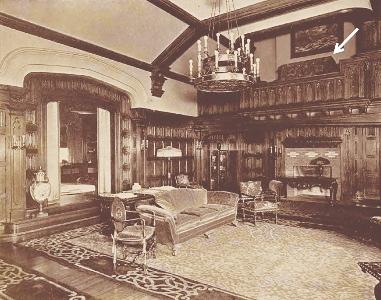
In the 1980s the University of Missouri–Kansas City’s Conservatory of Music was located in a large Gothic-style mansion on the campus originally called Hawthorn Hall, later better known as Epperson House. The house had an organ loft built on the western end of its Great Hall. The loft remains to this day, but the organ that was once there was removed decades ago.
Strangely, another pipe organ, also connected to Epperson House, was designed to be part of Epperson Memorial Hall at the Kansas City Art Institute, installed in the 1930s. Like the Epperson House organ, this instrument also disappeared.
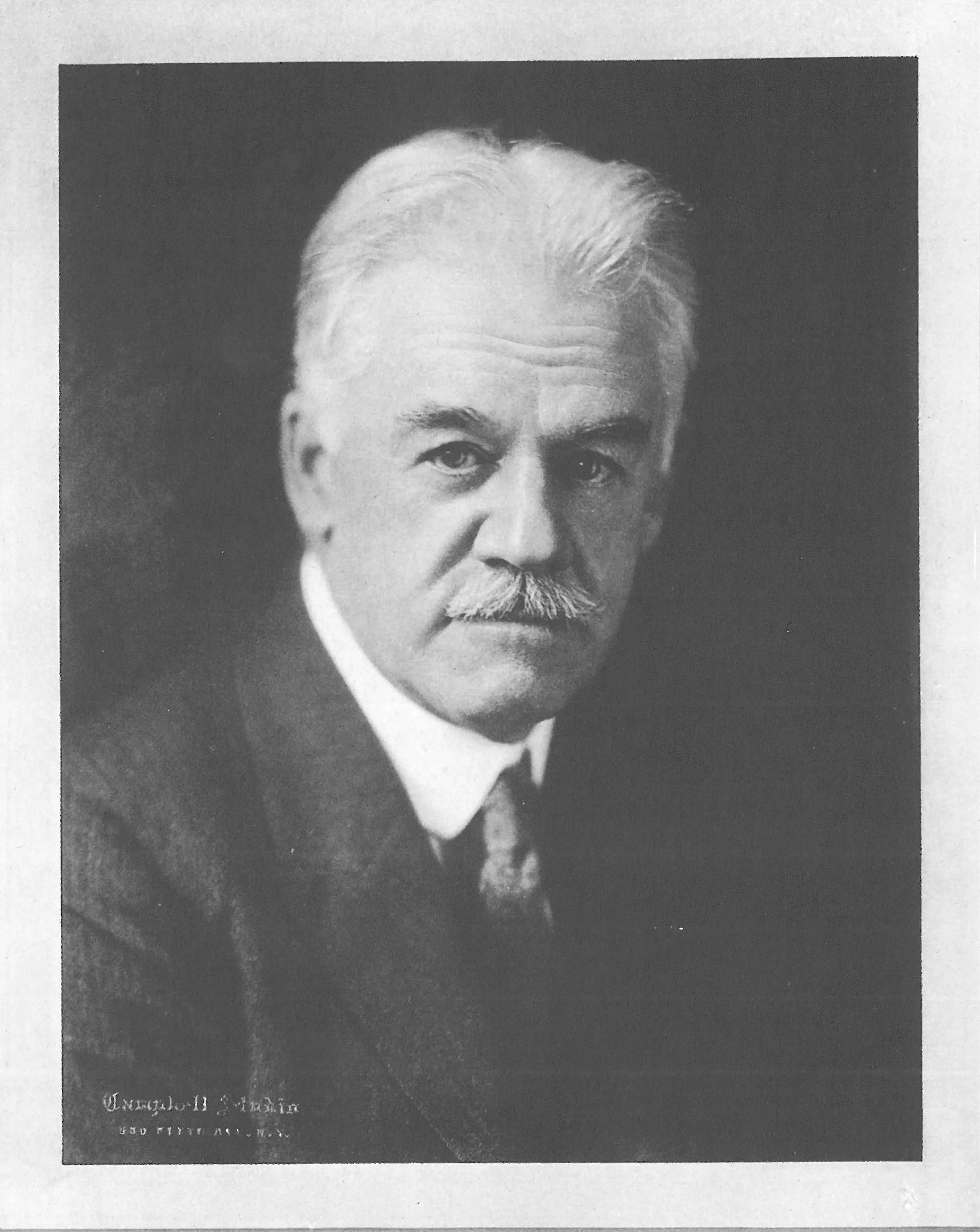
Uriah Spray Epperson (1861–1927) was a wealthy insurance underwriter and banker who was influential in the rise of Kansas City. His father, William, founded one of the first meat-packing plants in the region, not long after the end of the Civil War. Uriah, who preferred to be called “U. S.,” used his father’s wealth to begin a succession of lucrative businesses and became a beloved benefactor to the arts and the society of early Kansas City. Ultimately, U. S. envisioned and had constructed a mansion based on old English manor houses, situated in the countryside that was just on the southeastern edge of what was then Kansas City. It was a fifty-four-room mansion, replete with every modern convenience such as elevators, a swimming pool, a great hall for private concerts and theatrical plays, and a pipe organ.
In 1919, just as work was beginning on the Epperson’s mansion, the two-year-old Reuter Organ Company moved to Lawrence, Kansas, from Trenton, Illinois. Up until then, the company had mainly designed pipe organs for churches. After building an organ for the Masonic Temple in Lawrence, local business leaders persuaded the company to relocate to Kansas. By May 1921 the company had built seventy-three organs. Opus 74 was the one designed for Hawthorn Hall, a two-manual, twenty-rank instrument of stopkey control with electro-pneumatic action. The contract was dated May 1922 with a purchase price of $9,800 “cash.” Curiously, the projected date of completion was left blank. The organ was shipped May 22, 1923.
“Compared to a church or theater organ, Opus 74 was a modest instrument,” said Albert Neutel, Jr., president, chief executive officer, and co-proprietor of the Reuter Organ Company in my correspondence with him. He added, “For a private residence it was very special. The tonal specification of the organ, or the stops that it contained, were quite stunning—16′ Violone in the manual, French horn, and Echo division, to name but a few things that made it unique.” An eighty-eight-note “standard” player mechanism was supplied
Mr. Epperson and his wife Mary Elizabeth (1855–1939) were eager supporters of the art, music, and cultural activities of Kansas City, especially in the early years of the Kansas City Art Institute. From these associations, they formed a close friendship with Harriet Barse (1871–1922), an organ student at the Kansas City Conservatory of Music. Because of the close bond that Harriet had with the Eppersons, some newspaper articles of the day curiously refer to Miss Barse as having been “adopted” by the Eppersons. Harriet was only ten years younger than Mr. Epperson and sixteen years younger than his wife. There was never any formal adoption, and the newspaper accounts referring to that may have been a politely coded way to refer to the closeness they attained. After the death of her mother in 1921, Harriet moved into the Epperson’s residence, and it was her proficiency as an organist that apparently prompted the desire for an organ to be installed in their new mansion. Miss Barse was already well-known throughout the area for her musical accomplishments with the piano and organ. She traveled to the Reuter Organ Company in Lawrence on multiple occasions, working closely on the design of an organ tailored to her specifications.
Although an organ loft was already built into the Epperson’s home, installation of the instrument made for a lengthy undertaking. Sadly, Miss Barse would never get the chance to play the organ, as she died December 20, 1922, of a perforated gallbladder at the age of forty-seven, before the it was completed. It would remain unplayed and silent as the Eppersons mourned the loss of their dear friend. The oak console and ivory keyboards were shrouded by an antique ornate tapestry. It was not until November 29, 1925, that a special program was held to dedicate the organ. Powell Weaver, Harriet’s friend and mentor, played for a gathering of her other friends and admirers.
Reuter Organ Company Opus 74 (1923)
GREAT DIVISION (Manual I, enclosed)
16′ Violone (scale 44, 85 pipes, 2⁄9 mouth, metal)
8′ Diapason (scale 42, 73 pipes, 1⁄4 mouth, metal)
8′ Concert Flute (“reg.,” 85 pipes, wood and metal)
8′ Dulciana (scale 56, metal) 73 pipes
8′ Violoncello (ext 16′)
8′ Viol Atheria [sic] 73 pipes (scale 64, metal)
4′ Traverse Flute (ext 8′ Concert Flute)
8′ French Horn (“Reed”) 73 pipes
Tremolo
Cathedral Chimes (Echo)
Great to Great 16
Great Unison Off
Great to Great 4
Swell to Great 16
Swell Unison Off
Swell to Great 4
SWELL DIVISION (Manual II, enclosed)
16′ Bourdon (“St. Dia.,” wood) 97 pipes
8′ Diapason (scale 44, metal) 73 pipes
8′ Gedackt [sic] (ext 16′)
8′ Aeoline (scale 62, metal) 73 pipes
8′ Viol [sic] d’Orchestre 85 pipes (scale 64, metal)
8′ Viole Celeste 59 pipes (scale 62, metal)
4′ Harmonic Flute 73 pipes (“#1,” wood and metal)
4′ Violin (ext 8′ Viol d’Orchestre)
3 rk. String Mixture 98 pipes (“12-15-17,” scale 79, 84, 88, from 8′ Viol d’Orchestre and two ranks, metal)
2 Piccolo (ext 16′)
8 Oboe (“Reed”) 73 pipes
8 Clarionet (“Reed”) 73 pipes
Tremolo
Orchestral Harp 49 bars (“Single Stroke,” Deagan)
Orchestral Harp (“Reiterating Stroke”)
Swell to Swell 16
Swell Unison Off
Swell to Swell 4
ORCHESTRAL DIVISION (“Playable from either Manual and is effected [sic] by the couplers of the manual on which it is played.”)
8′ Echo Salicional 73 pipes (scale 62, metal)
8′ Quintadena 73 pipes (scale 60, metal)
4′ Fern Flute (“reg.,” wood) 73 pipes
8′ Vox Humana (“reg., Reed”) 73 pipes
8′ Cathedral Chimes 25 tubes (“Deagan’s Class A”)
Vibrato
Echo On Great Off
Echo On Swell Off
PEDAL DIVISION (“Augmented,” enclosed)
16′ Contra Violon (fr Great)
16′ Bourdon (“X large,” wood) 32 pipes
16′ Lieblich Gedeckt [sic] (fr Swell)
8′ Cello (fr Great 16′)
8′ Flute Dolce (fr Swell 16′)
Great to Pedal 8
Great to Pedal 4
Swell to Pedal 8
Accessories
6 General pistons (thumb)
6 Great and Pedal pistons (thumb)
6 Swell and Pedal pistons (thumb)
2 Echo and Pedal pistons (thumb)
Great to Pedal reversible
Balanced Great expression shoe
Balanced Swell expression shoe
Balanced Echo expression shoe
All Swells to Swell shoe (thumb)
Balanced Crescendo shoe with indicator
Sforzando reversible (toe) with indicator
3 horsepower blower
The following excerpt is from an article in the society pages of The Kansas City Times, November 30, 1925:
IN MEMORY OF HARRIET BARSE
Mr. and Mrs. Epperson dedicated a Pipe Organ at Hawthorn Hall.
There was an organ dedication of unusual interest, yesterday afternoon at Hawthorn Hall, 5200 Cherry Street, the home of Mr. and Mrs. U. S. Epperson. The dedication was in memory of the late Harriet Barse, adopted daughter of Mr. and Mrs. Epperson, who died nearly three years ago. Miss Barse was an organist of fine gifts and established position. She had been organist in several of the leading churches of Kansas City, including the First Church of Christ, Scientist, where she presided for eight years. Her love of the organ was almost devotional, and because of it and because of their own interest in organ music, Mr. and Mrs. Epperson provided her with a splendid instrument in their home.
The organ was built by the Reuter Organ Company of Lawrence, Kas., extensive builders for churches, but less known for instruments adapted to homes. Miss Barse went to Lawrence, selected the equipment and made the specifications best suited to Hawthorn Hall, and later superintended the installation. Although she watched the organ grow to completion, it was not her privilege to play it.
Because of their bereavement, Mr. and Mrs. Epperson had not used the organ until yesterday, when their friends and those of Miss Barse were invited to hear a program by Powell Weaver, assisted by Mrs. Winifrede Repp Railey, soprano. Among the friends were Miss Barse’s many associates in the musical life of Kansas City.
The organ, a 2-manual, proved to be an instrument of fine quality. It is built under an extensive grill set in the great living room, with an echo organ and chimes placed on the third floor. The program served to show the scope of the main instrument at its auxiliaries, and revealed a particularly sweet tone of the lighter passages. Its admirable fitness as an addition to the spacious and beautiful house must have impressed everyone.
U. S. Epperson became acutely ill and died in his mansion on June 3, 1927. Ownership of Hawthorn Hall was willed to Mr. Epperson’s friend and business partner, James Jesse Lynn, with a stipulation that Mrs. Epperson be allowed to remain in the residence with a generous income for the rest of her life.
Mary Elizabeth Epperson became a key benefactor for the arts and society of Kansas City, providing for the Kansas City Philharmonic and donations to the city’s Music Hall. But her most extravagant support went to the Kansas City Art Institute, where she funded the building of a memorial hall for her husband on the campus. When it was dedicated in 1928, the U. S. Epperson Memorial Hall cost nearly $80,000, which was the equivalent of approximately $1.475 million today. The Gothic-style hall featured an auditorium that could seat four hundred people. There was a stage for lectures and musical performances and a lower floor for art exhibitions. The following year Mrs. Epperson gave an additional $20,000 ($370,000 today) for a pipe organ to be built by the Reuter Organ Company.
The contract for Reuter Opus 335 was dated February 15, 1929, with completion set for September 15 of that year. The contract price was $5,463.00 (compare this with Mrs. Epperson’s express donation above), with ten percent due upon execution of the contract, “within 20 days after complete installation, proper examination of the organ is to be made by Mr. Powell Weaver, and if organ is satisfactory of contract price to be paid.” Mr. Weaver was then the conductor of the Kansas City Philharmonic.
Like the organ built for Hawthorn Hall, Reuter Opus 335 was a two-manual, electro-pneumatic-action instrument with stopkey control. The keyboards were ivory-faced, with the stops capped in both light and dark woods. The console was detached and portable so it could be moved within twenty-six feet, allowing for added versatility within the hall. It had an ebony finish instead of the usual mahogany, giving it an almost black yet elegant appearance. The façade pipes were mostly zinc and decorated with gold bronze. The wood pipes and woodwork were described in detail within the original contract to have been made of “well-seasoned clear lumber of various kinds of wood” and “protected from dampness or moisture by two coats of nitro-cellulose lacquer applied with an airbrush.” The original contract details many aspects of the organ to be built, with extensive notes of additional features and customizations that show it was intended to be visually and musically a very impressive instrument. Oddly, just like its sister organ, Opus 74, there are no known photographs of Opus 335 to accompany the newspaper articles of the day that announced them.
Reuter Organ Company Opus 335 (1929)
GREAT ORGAN (Manual I, enclosed)
8′ Open Diapason 73 pipes (scale 42, metal)
8′ Clarabella (wood) 73 pipes
8′ Dulciana (metal) 73 pipes
8′ Flute Harmonic 73 pipes
Tremolo
Chimes (prepared at console)
Great to Great 16
Great Unison Off
Great to Great 4
Swell to Great 16
Swell to Great 8
Swell to Great 4
SWELL ORGAN (Manual II, enclosed)
16′ Lieblich Bourdon 97 pipes (wood and metal)
8′ Open Diapason 73 pipes (scale 46, metal)
8′ Stopped Diapason (ext 16′)
8′ Salicional (metal) 73 pipes
8′ Vox Celeste (TC, metal) 73 pipes
4′ Flute d’Amour (ext 16′)
2 2⁄3′ Nazard (ext 16′)
8′ Oboe Bassoon (“Reed”) 73 pipes
8′ Vox Humana (“Reed”) 73 pipes
Tremolo
Swell to Swell 16
Swell Unison Off
Swell to Swell 4
PEDAL ORGAN
16′ Grand Bourdon 32 pipes
16′ Echo Bourdon (Swell)
8′ Flute Dolce (Swell)
Great to Pedal 8
Swell to Pedal 8
Swell to Pedal 4
Accessories
4 General pistons (thumb)
4 Great and Pedal pistons (thumb)
4 Swell and Pedal pistons (thumb)
Balanced Great expression shoe
Balanced Swell expression shoe
Balanced Crescendo shoe (with indicator)
Great to Pedal reversible
1 1⁄2 horsepower Orgoblo blower
An “Estimate Sheet” in the organ’s files at the Organ Historical Society Library and Archives provides interesting data on how the contract price was calculated:
Great Diapason $361
Clarabella $275
Dulciana $257
Harmonic Flute $232
Tremolo $40
Chimes preparation $10
Great total $1,175
Swell Bourdon unit $770
Diapason $309
Salicional $260
Vox Celeste $213
Oboe $279
Vox Humana $329
Swell total $2,160
Pedal Bourdon “Lge.” $416
“Base” $1,075
Extra Swell Frames, Motors $200
Drayage $50
Blower $415
Unspecified charge $43
“Less 1 borrow” $18
When Mrs. Epperson became ill and homebound, the Kansas City Philharmonic came to her home to perform a concert in gratitude for the years of her and her husband’s generous support. She died in her palatial home on October 22, 1939, at the age of 84.
Mrs. Epperson’s death would not portend well for Epperson House and specifically for its pipe organ. J. J. Lynn took ownership of the home and its inventory of furnishings. Already living in his own estate, Lynn first considered moving the offices of the U. S. Epperson Underwriting Company, which he had been president of upon Mr. Epperson’s passing, to the Epperson home. However, neighboring residents objected to a business being operated from the home. Since it was near the University of Missouri–Kansas City, Lynn decided to give it to the school for its use.
At the time there was concern about the outbreak of a global war. The university decided to convert Epperson House into a men’s dormitory to house Navy flyer cadets, meaning many alterations would be made to the house. According to Randal J. Loy, historian of Grace and Holy Trinity Cathedral of the Episcopal Diocese of West Missouri, Kansas City, it was Walmer August Heinrich Brummer (1905–1995) who purchased the Epperson House organ in 1943. Brummer was an organist himself, but also repaired and sold refurbished pipe organs throughout the Midwest. Because of the war effort at the time, there were many shortages of materials, especially when it came to parts for pipe organs. Opus 74 was disassembled, and its parts were scattered. It was noted that some of the instrument ended up in the organ at Trinity United Methodist Church in Granite City, Illinois. While this was a solid lead, as I unfortunately discovered Trinity Church recently closed, and my attempts to contact its former clergy and congregants have been unsuccessful.
A July 19, 1966, inspection report of the organ by Reuter indicated extensive water damage to the instrument, though much of it was still playable. At some point, a twenty-note set of Deagan Chimes had been installed. An estimate for repair had been requested by the museum; however, a Mrs. Hughes, comptroller of the museum, had indicated the museum “would really like to sell” the instrument.
In the early morning of April 24, 1967, the residence director of the institute saw the orange glow of flames illuminating the hall’s lancet windows from inside. Firefighters arrived just after 4:00 a.m. to find the fire raging. By the time it could be brought under control, the damage inside was extensive. The heavy red velvet stage curtain had been engulfed along with most of the seating and an extensive amount of audio and visual equipment. The building was not structurally damaged but the same could not be said for the organ. The console was heavily charred and severely water damaged. The overall damage to the instrument and its workings was devastating. A representative of the Reuter company inspected the damage and determined that it would cost over $22,000, more than $200,000 today, to repair the instrument. That was the last record of Opus 335. Like its older sister organ from Epperson House, it simply disappeared. Perhaps it was sold off and hopefully repaired by another caretaker, but no record has been found. Perhaps some parts of the organ survived and were repurposed, but that has also not been recorded. Chances are it was all dismantled, removed, and discarded.
The Epperson pipe organs must have impressed and entertained those who experienced them. The organ loft in Epperson House has been empty for over eighty years. But the legacy of the organ that was once there lives on in the countless ghost stories about the mansion. Along with stories about a spectral woman in white, screams heard in the night, and the mysterious scent of cigar smoke, reports of organ music coming from the empty mansion have been reported for decades. Like many classic horror movies, a Gothic mansion’s pipe organ has gone from being a great and special instrument to the stuff of eerie legend. Having never heard a note from the wind in their pipes, I have still been moved and frankly haunted by those incredible instruments that are no more. The author welcomes contact regarding any information about the whereabouts or pictures of the Reuter pipe organs Opus 75 and Opus 335.
I would like to thank the following people for their assistance in writing this article: Sean Cureton, associate archivist and librarian, Organ Historical Society, Villanova, Pennsylvania; Jan Kraybill; Randal J. Loy, historian, Grace and Holy Trinity Cathedral of the Episcopal Diocese of West Missouri; Zachary Neuman, archivist, Kansas City Art Institute; Albert Neutel, Jr., president, chief executive officer, and co-proprietor of the Reuter Organ Company; and Simone and Tabitha Smith, local historians, researchers, and dearest of friends.