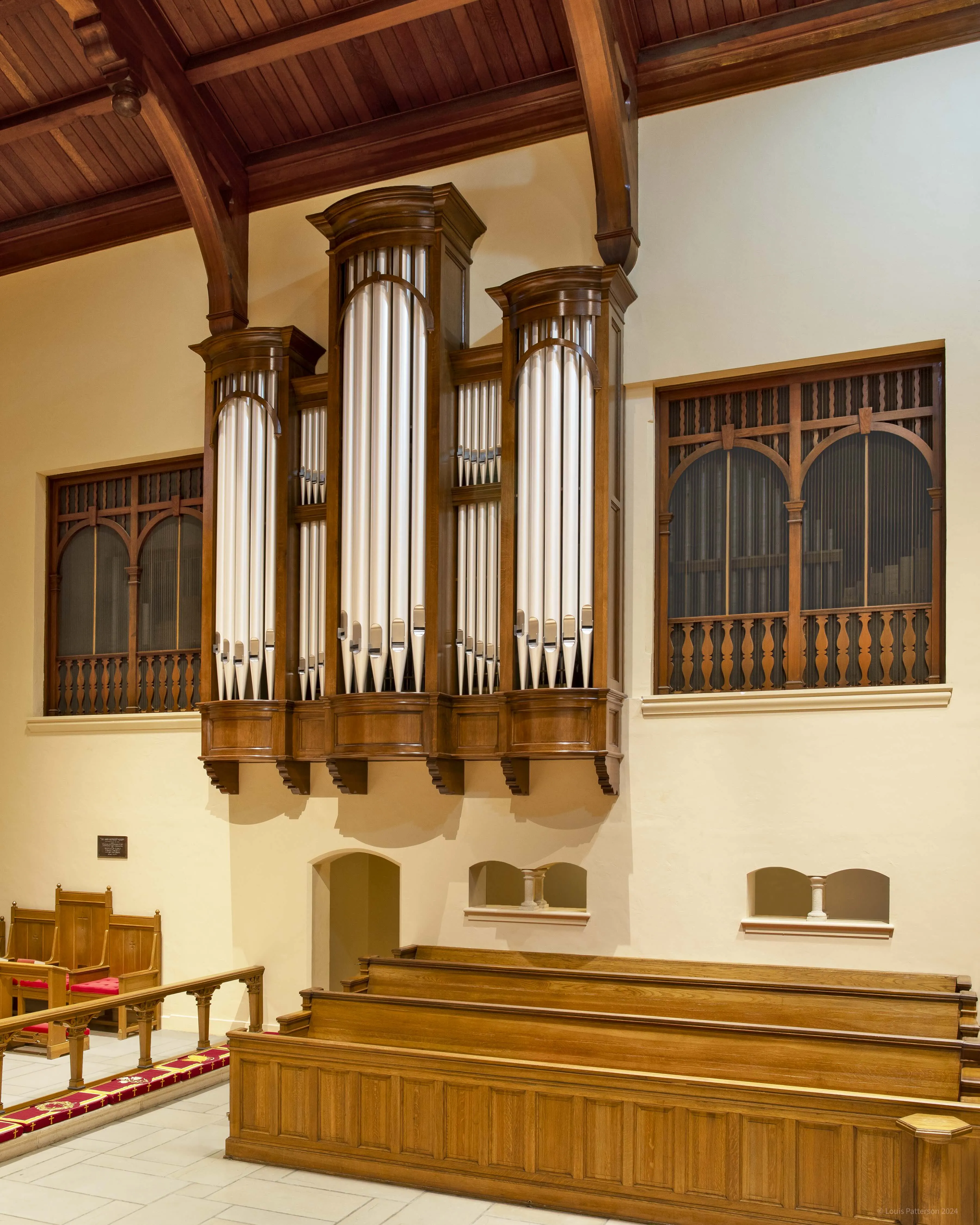
Schoenstein & Co. Organ Builders Opus 187
Schoenstein & Co. Organ Builders, Benicia, California; Saint Philip’s Episcopal Church, Coral Gables, Florida
The have-your-cake-and-eat-it-too organ: Choruses and mixtures for the Symphonic organ
My favorite organs are “have-your-cake-and-eat-it-too organs.” These instruments have loads of color, a huge dynamic range, intuitive expressive controls, fast action, and a comfortable console, all underpinned by a rock-solid mechanical system. They also have diapason choruses that are balanced, and mixtures that add color and richness without aural pain. It is the combination of all these items—easy to say and hard to achieve—that lets the organist want for nothing.
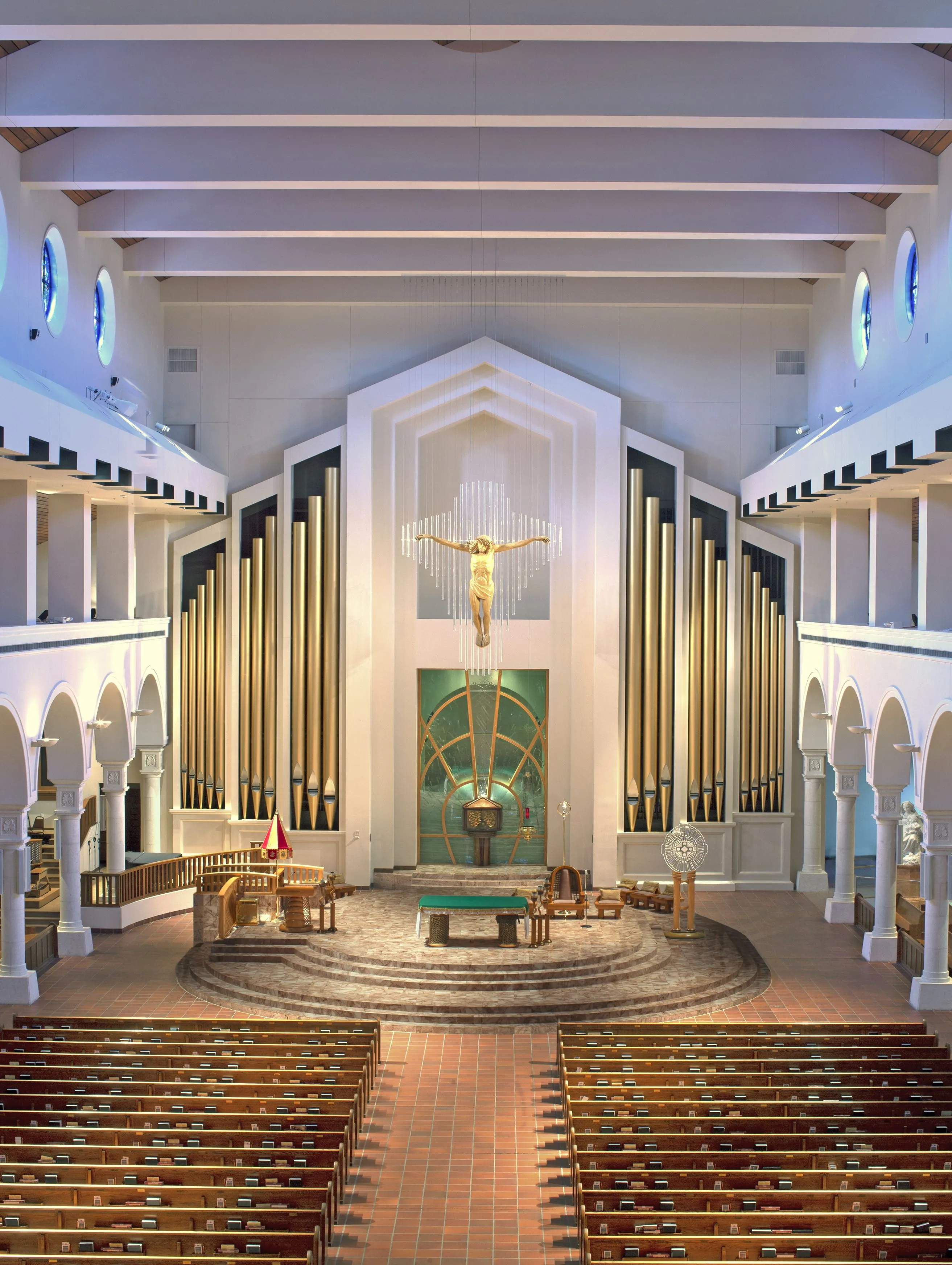
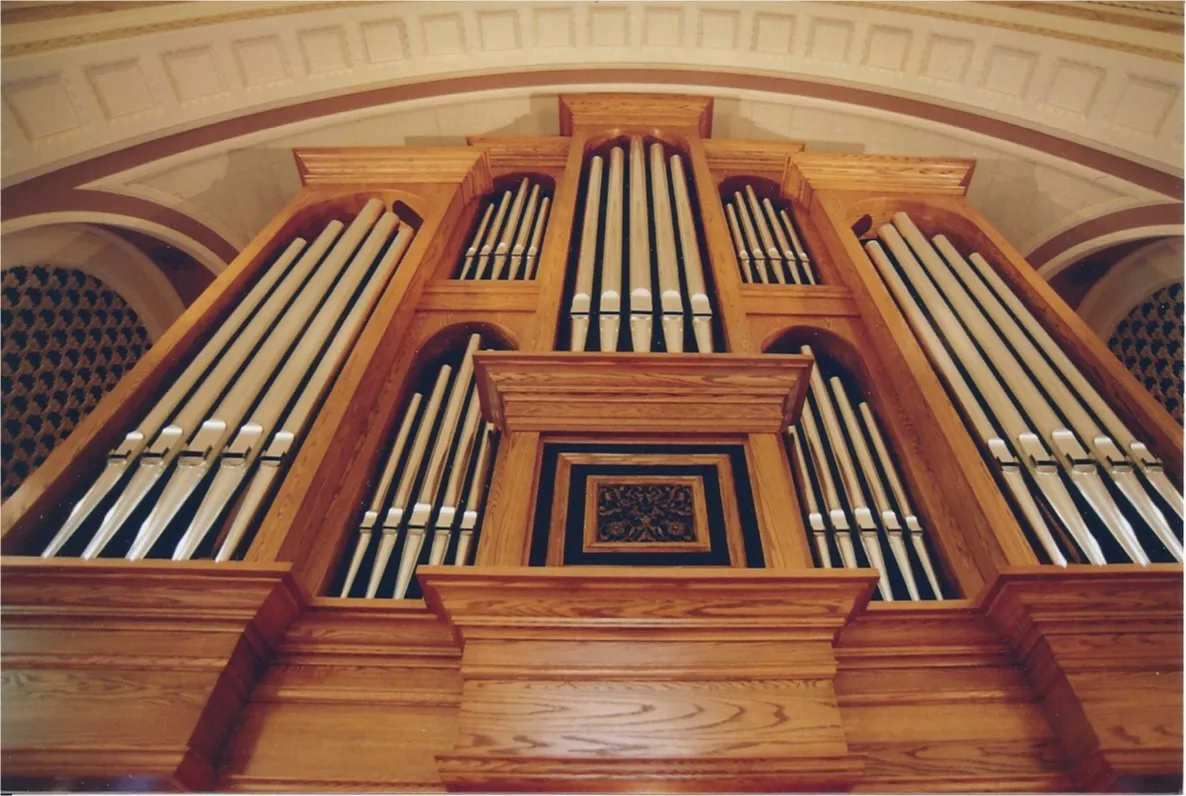
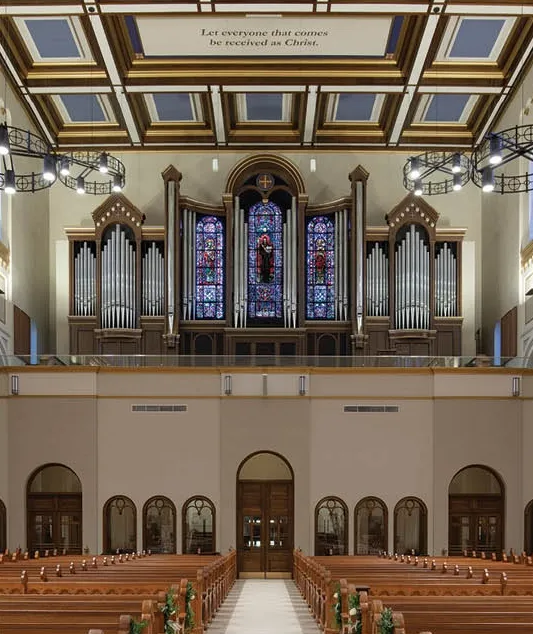
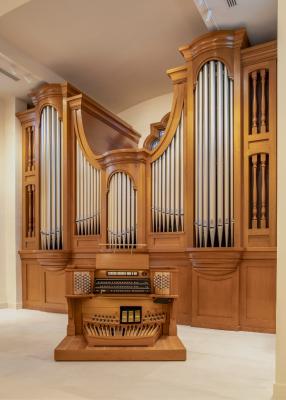
Saint Philip’s Episcopal Church of Coral Gables, Florida, home to our Opus 187, required a big organ sound in a sensitive acoustic, where balanced choruses and successful mixtures are especially vital. Taking this organ from “have-your-cake” to “eat-it-too” hinged on an excellent symphonic diapason chorus with perfect mixtures.
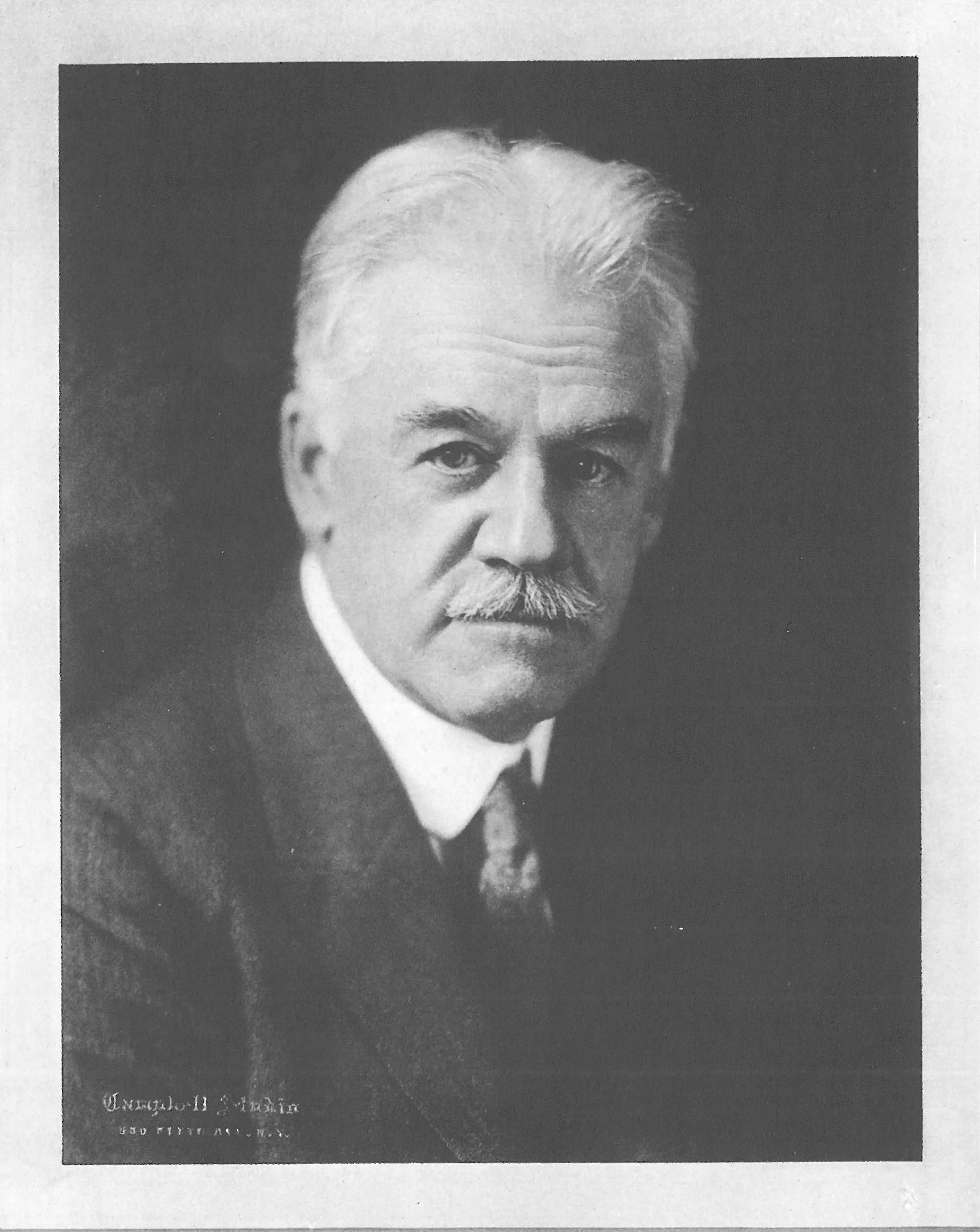
Our tonal research of the past forty years keeps returning to two pillars of tonal design, Aristide Cavaillé-Coll and G. Donald Harrison. Combining these influences with our own listening and experience guides us in the creation and refinement of the symphonic diapason chorus. The balance of each rank from bass to treble—what we call “cello scale”—can be traced to Cavaillé-Coll, and our mixture composition to G. Donald Harrison.
Cello scale
Centered around the color and expression of the Symphonic organ is a core ensemble of singing diapasons. At once unique to the organ and expected to be universally musical, diapasons are the hardest part of the organ to “get right.” I expect diapasons to function as the string section of the symphony orchestra, with perfect balance and color variety. For individual open diapasons, my ears crave the balance of a string instrument. Imagine the “scale” of a cello: a rich bass with definition, a natural ascendancy to a singing treble.
Our study of Cavaillé-Coll began in the 1980s with a trip to France focused on small choir organs. In 2021 as part of the design process for our first large French Romantic-style organ in Silverado, California, head voicer Timothy Fink did extensive primary-source investigation into Cavaillé-Coll’s diapason chorus scaling and voicing techniques. Thanks to his research, we gained a real understanding of how mathematical root progressions were used for both scale and cut-up. When we heard the results, we knew this was the road to “cello scale.”
As Cavaillé-Coll recommends, we construct and voice metal pipes like wood pipes, with the upper lip positioned directly above the flue. This embouchure gives precise speech and control over the standing tone. It also offers more power and colorful harmonics, all in good proportion to the fundamental. Where the cellist controls these parameters with the bow, we do so with pipe construction and voicing.
Seeking the “cello scale” paid off: the organist can play the Great Open Diapason alone and enjoy warm, rich tone with every note in proper balance. Multiplied across the other diapasons, and with necessary independent bass stops, the result is a singing, versatile diapason chorus that resembles tutti strings in the orchestra.
Mixtures for color, not consternation
Every organist can think of mixtures they despise. Too loud, too gravelly, too soft, the list goes on and on. For such a ubiquitous color in the organ, it is one of the hardest areas in which to find success, particularly in American churches. Done right, mixtures should provide brilliance in the bass, richness in the treble. They are for color, not power or clarity; power comes from the reeds, clarity from the scale progressions outlined above.
Our mixtures can be traced to G. Donald Harrison. When I set out to find the recipe for a successful musical mixture, the obvious starting point was Aeolian-Skinner organs from the late 1930s. I was fortunate to spend several years playing at Saint Mark’s Church, Philadelphia, home to nine Harrison mixtures from 1937 in a dry American acoustic.
Studying these along with other successful examples of Kimball, ours, and others, revealed patterns in composition, scale across the mixture, and scale relationship to the 8′ Diapason. Copying, however, would not be enough, and so began my work to integrate these patterns into our scaling method.
Opus 187’s Great Fourniture, intended to pair with the Great (or full) diapason chorus, has breaks concentrated in the middle register so they’re disguised by the unison stops. At soprano C (37), there are three unisons, providing richness without too much clang. Progressions keep high pitches from becoming thin and too piercing; lower cut-ups with gentle voicing keep the whole stop in balance with the rest of the chorus.
The Swell Mixture has more typical breaks, with the twelfth remaining a prominent figure throughout. Designed to color the reeds and transform them from round and Anglo-American into something more fiery, this mixture has higher cut-ups and is voiced louder. Used with the other diapasons, this mixture provides more clang than its sibling on the Great and is therefore placed under the control of the expression box.
Saint Philip’s takes the cake
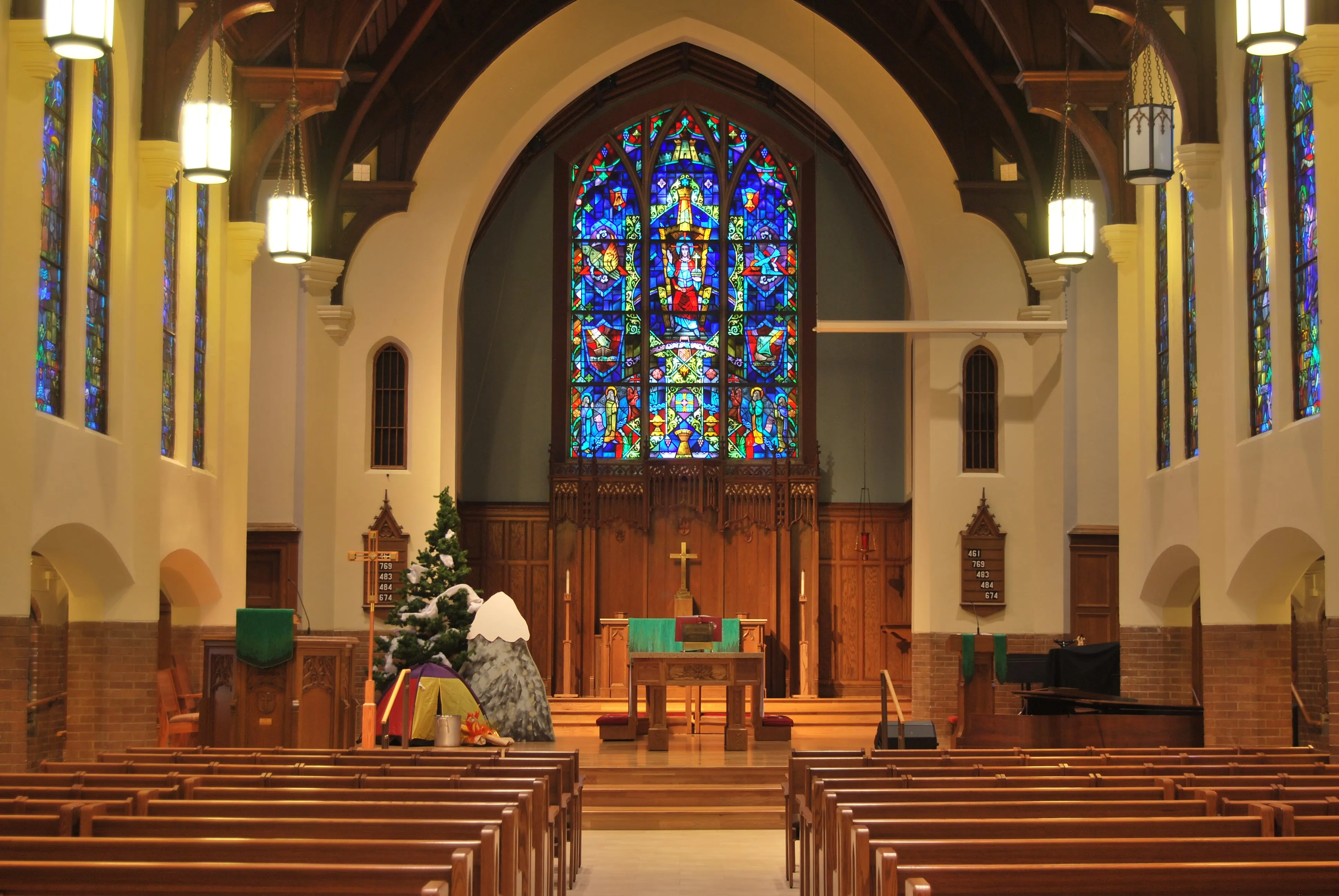
Surrounded by impressive buildings and scenery, Saint Philip’s is the truly exceptional place in Coral Gables. Their thriving parish and day school are completely integrated, with students singing in the RSCM chorister program as part of their school curriculum. Students were interested and involved throughout the organ project, studying the stoplist in class, helping unload trucks and plant pipes, and interviewing our technicians for their school news program. Everyone we met, from staff to student, exuded friendliness and pride in their institution.
Opus 187 will be put to the test in all our favorite ways. Listeners from age five to ninety-five will regularly hear the organ in myriad musical settings: school chapel services, combined choir Evensongs, concerts. The instrument was introduced to the parish on Easter Sunday, April 5, 2026, and will be dedicated on September 26 and 27 with a recital by Robert McCormick followed by a festive choral service.
The care with which Saint Philip’s undertakes all its work, from major projects to organized, clean corridors, led to a smooth-running project and happy result for builder and client. This stems from their leadership, including the Reverend Dr. Mary E. Conroy, rector; Christopher Harrell, associate for music and liturgy; and Edward Diaz, chief operations officer. We are grateful to each for their personal attention given to the new organ and our crew.
We hope Opus 187 will show its listeners that the organ is for those who want to have their cake and eat it, too. An excellent ensemble sound requires constant cultivation, and so we are grateful for this opportunity to continue our work to bestow on the organ all the expressive musical potential of the symphony orchestra.
—Bryan Dunnewald
President and Tonal Director
Schoenstein & Co.
Listen to this organ on Schoenstein.com.
The Schoenstein & Co. staff
Aly Aly
David Anderson
Ryan Anderson
Erik Asprey
Dean Belgarde
Drue Berti
Jack Bethards
Ann Bharoocha
Bronwyn Burns
Logan Caraway
Bryan Dunnewald
Timothy Fink
Christopher Hansford
Forrest Martin-Ruben
Yolanda Mascote
Abigail Nelson
Humberto Palma
Louis Patterson
Patricia Schneringer
Photo credit: Louis Patterson
Church website: https://church.stphilips.org/
GREAT
16′ Contra Dulciana (Choir)
8′ Open Diapason 61 pipes
8′ Echo Diapason (Gallery) 61 pipes
8′ Harmonic Flute 61 pipes
8′ Lieblich Gedeckt (Gallery) 61 pipes
8′ Dulciana (Choir)
4′ Principal 61 pipes
4′ Spire Flute 61 pipes
4′ Dulcet (Choir)
2-2⁄3′ Twelfth 61 pipes
2′ Fifteenth 61 pipes
2′ Fourniture IV 244 pipes
8′ Tromba* (Choir)
Chimes (G20–G44)
SWELL (Manual III, expressive)
16′ Bourdon (ext Stpd Diap) 12 pipes
8′ Violin Diapason 61 pipes
8′ Stopped Diapason 61 pipes
8′ Gamba 61 pipes
8′ Gamba Celeste 61 pipes
4′ Gemshorn 61 pipes
4′ Harmonic Flute 61 pipes
2-2⁄3′ Nazard 61 pipes
2′ Fifteenth (ext Gemshorn) 12 pipes
1-3⁄5′ Tierce 54 pipes
1-1⁄3′ Mixture III 183 pipes
16′ Bass Horn (ext Cornopean) 12 pipes
8′ Cornopean 61 pipes
8′ Oboe 61 pipes
Tremulant
Swell 16′
Swell Unison Off
Swell 4′
CHOIR (Manual I, expressive)
16′ Contra Dulciana (ext 8′) 12 pipes
8′ Dulciana 61 pipes
8′ Concert Flute 61 pipes
8′ Erzähler* 61 pipes
8′ Erzähler Celeste* (TC) 49 pipes
4′ Dulcet (ext Dulciana) 12 pipes
4′ Silver Flute 61 pipes
2′ Piccolo (ext Silver Flute) 12 pipes
8′ Tromba* 61 pipes
8′ Clarinet 61 pipes
Tremulant
Choir 16′
Choir Unison Off
Choir 4′
* Double-enclosed within the Choir
PEDAL
32′ Acoustic Bass
16′ Open Wood (Gallery) 32 pipes
16′ Contra Dulciana (Choir)
16′ Bourdon (Swell)
8′ Octave 32 pipes
8′ Dulciana (Choir)
8′ Flute (Great Harmonic Flute)
8′ Bourdon (Swell)
4′ Choral Bass (ext Octave) 12 pipes
4′ Harmonic Flute (Great)
32′ Contra Posaune (ext Swell) 12 pipes
16′ Trombone* (ext Choir) 12 pipes
16′ Bass Horn (Swell)
8′ Tromba* (Choir)
8′ Oboe (Swell)
4′ Clarinet (Choir)
Mechanicals
Great to Pedal 8
Great to Pedal 4
Swell to Pedal 8
Swell to Pedal 4
Choir to Pedal 8
Choir to Pedal 4
Swell to Great 16
Swell to Great 8
Swell to Great 4
Choir to Great 16
Choir to Great 8
Choir to Great 4
Swell to Choir 16
Swell to Choir 8
Swell to Choir 4
Choir to Swell 8
Manual I/II Reverse
All Swells to Swell
Console
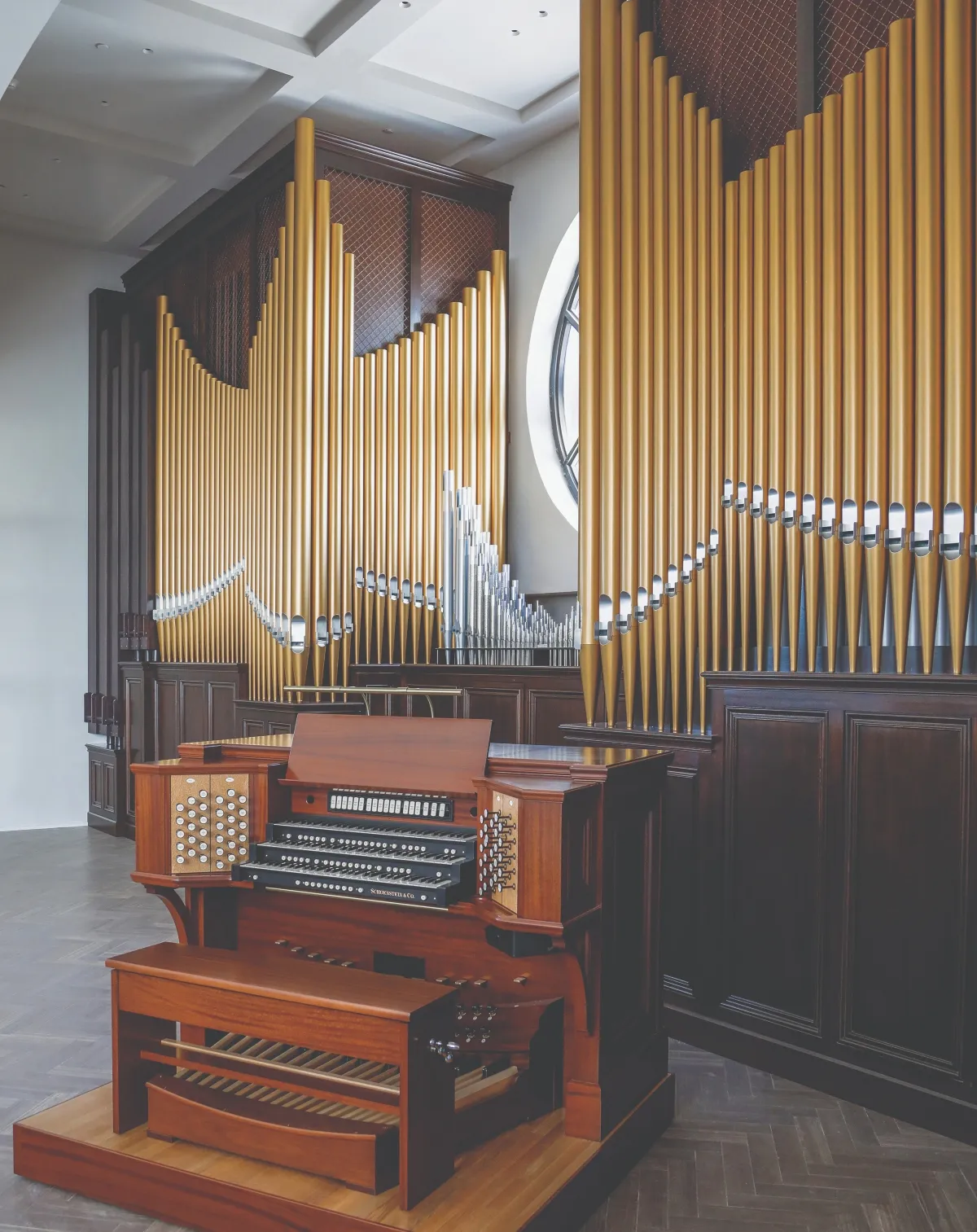
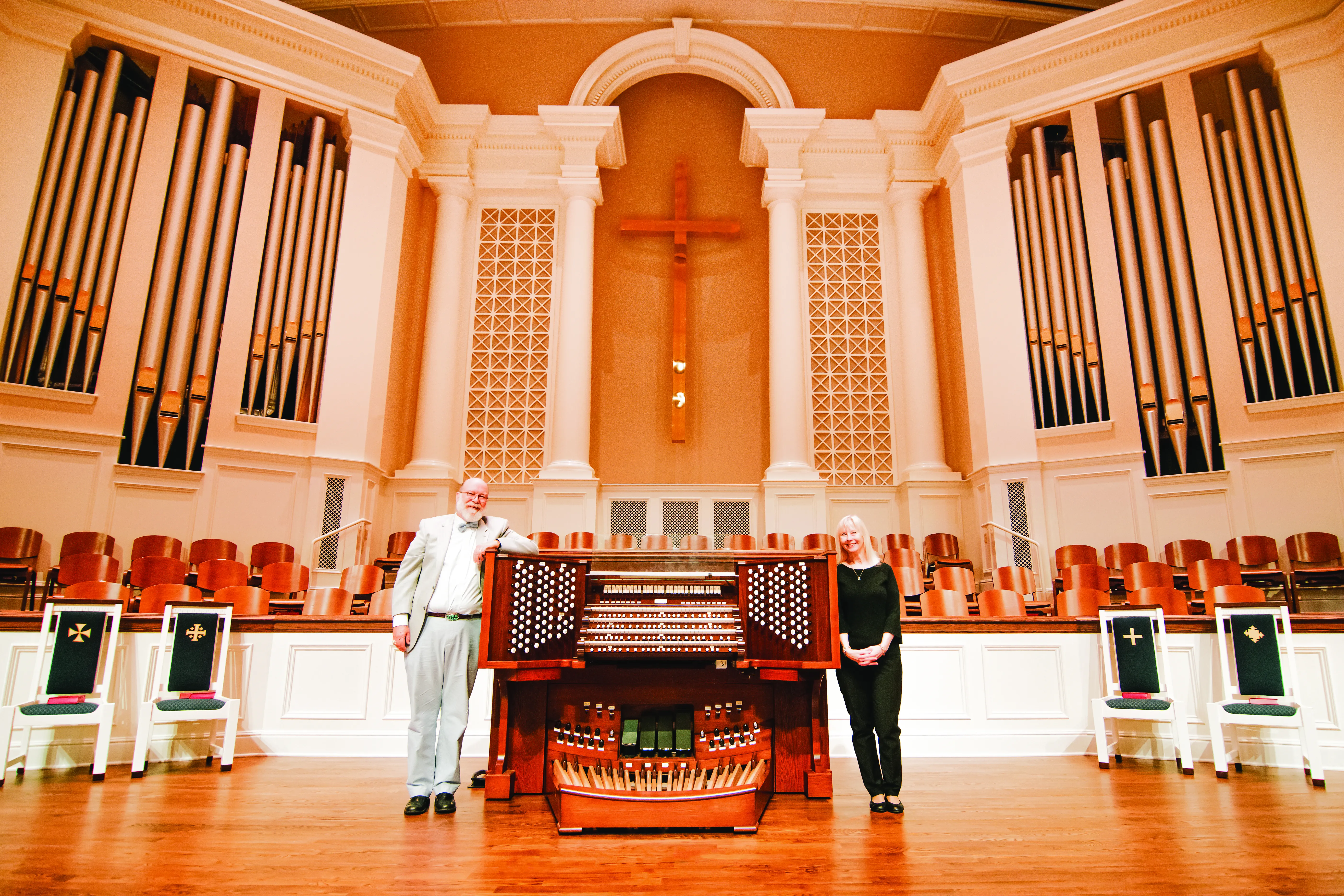
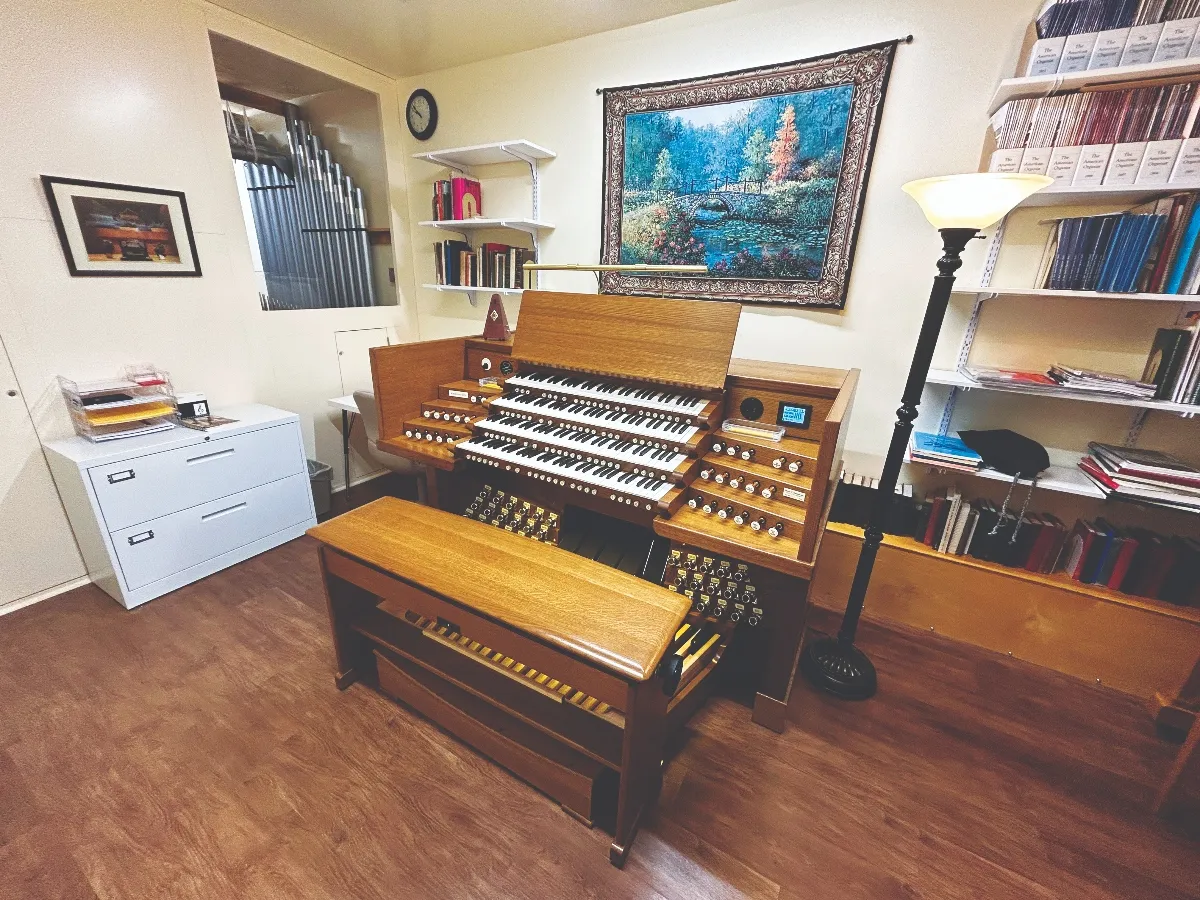
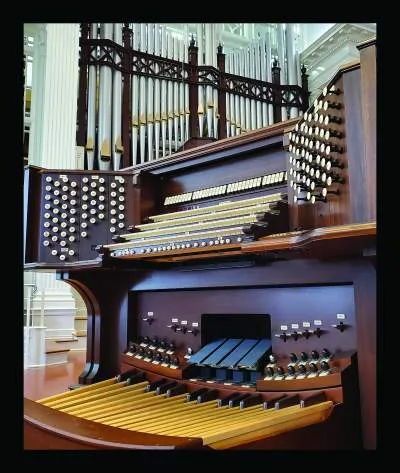
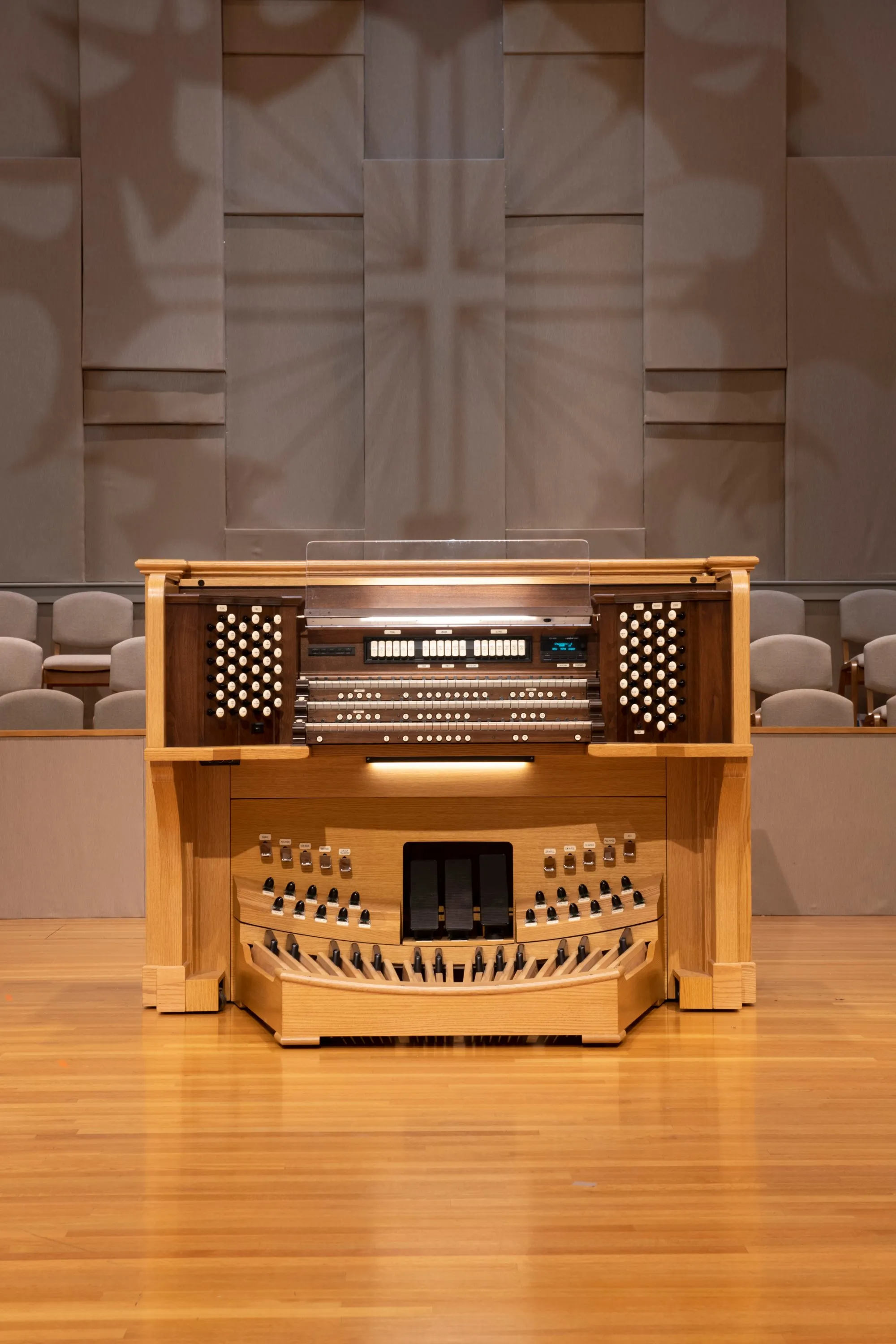
Three manual and pedal American-style open drawknob console with adjustable bench and music rack all of hardwood.
Bone- and ebony-covered keys with articulated touch.
Polished ebony drawknobs on brass shanks.
Three balanced expression pedals of brass: Choir, Swell, and Inner Choir.
Music rack and pedal light, coupler rail light.
Record/playback system.
Solid state combination action with 5,000 assignable, lockable memory levels with backup and level indicator. Programmable piston range for each memory folder.
18 General pistons and toe studs (12 left, 6 right)
8 Great pistons
8 Swell pistons
8 Choir pistons
4 Pedal toe studs
1 Set piston
1 General Cancel piston
Level Up / Down pistons
Great to Pedal reversible piston and toe lever
Swell to Pedal reversible piston and toe lever
Choir to Pedal reversible piston
Full Organ reversible piston and toe lever with multiple memories and indicator
Piston sequencer (European system) with piston number indicator
1 (+) toe stud
5 (+) pistons
1 (–) piston
29 voices, 34 ranks, 2,105 pipes