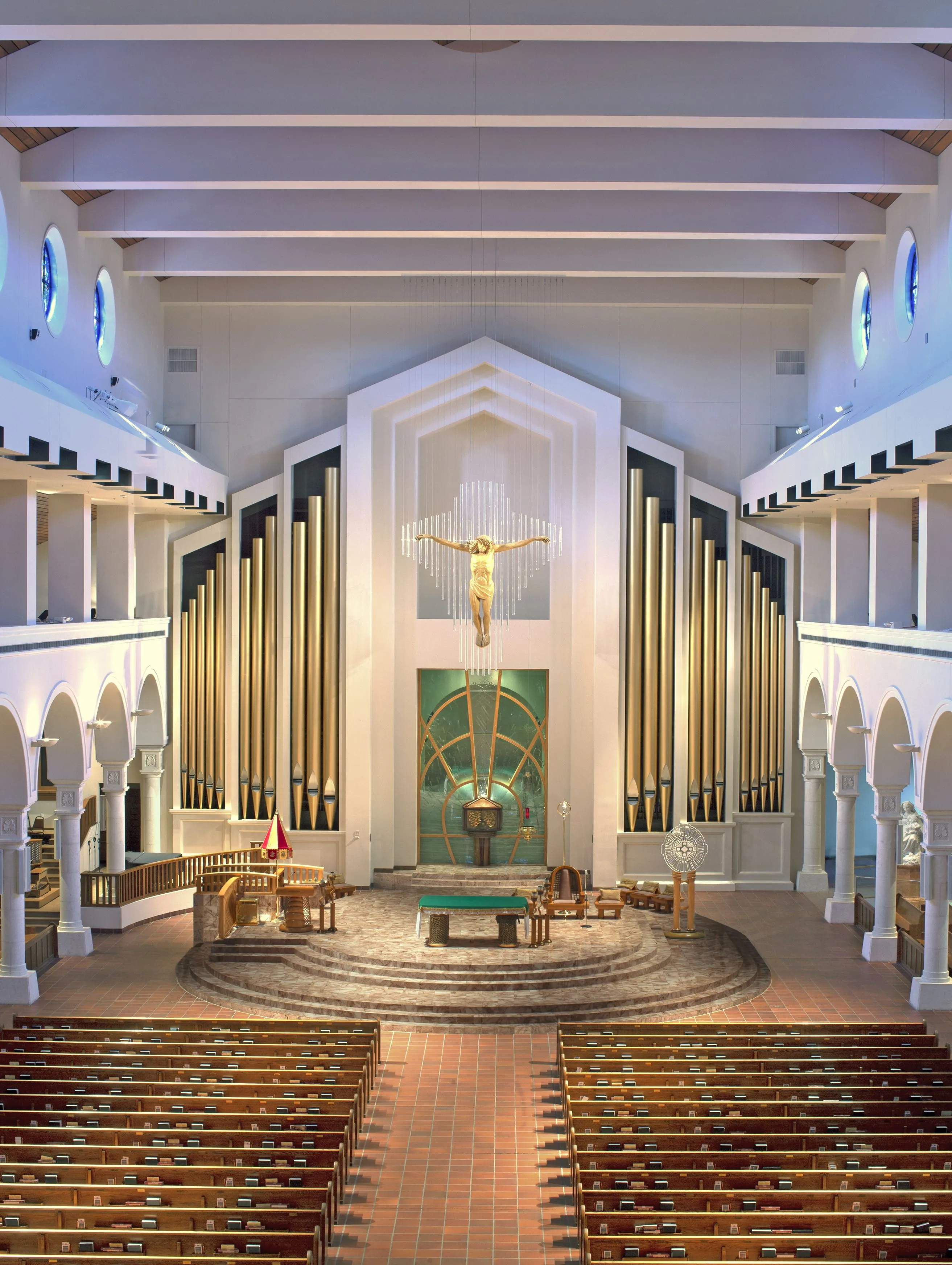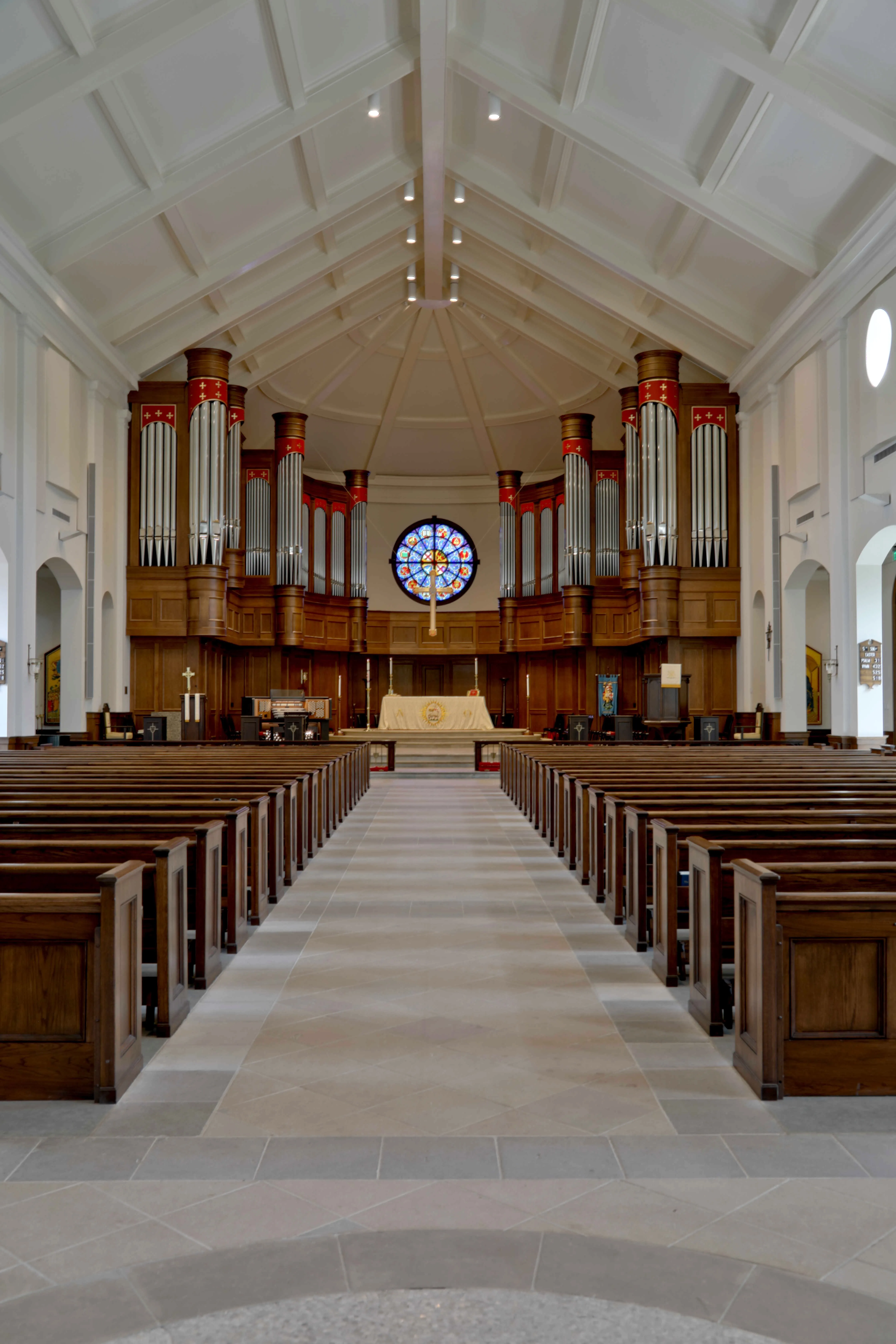
Cover Feature: Trinity Church Wall Street
Glatter-Götz Orgelbau, Pfullendorf/Aach-Linz, Germany, Rosales Organ Builders,
Whittier, California; Trinity Church, New York City
From the church
To commission a new organ for Trinity Church, New York City, currently in its 329th year, is to first contend with a considerable history. While little is known about instruments in Trinity’s earliest buildings, the iconic Richard Upjohn church of 1846—now a mere 180 years old—has contained an array of new and rebuilt instruments, whose story reads like a condensed version of American organ history. What began in 1846 with Henry Erben, both innovative and anachronistic, later settled into a more staid pattern: instruments that kept up with prevailing trends but rarely set them.
Such a characterization hardly applies to music at Trinity. Organ buffs may know the parish’s long-standing reputation for quality and quantity of both organ and choral music, but even cognoscenti may not appreciate just how far back that tradition runs. In 1864 Trinity was one of the first parishes to establish a choir of men and boys, instituting a standard of tone and repertoire, and beyond that, elevating the role of music as something integral to worship, not an incidental adornment.
Today’s worship music at Trinity is far broader in scope and style. In addition to the range of canonical repertoire performed by Trinity organists and sung by Trinity’s professional, parish, and youth choirs at Sunday services, the organ is heard at all 12:05 p.m. weekday services; Compline by Candlelight features improvised choral music; Evensong services feature both choral and organ music; and special services including Jazz Vespers, Taizé, and Celtic Healing Prayer further expand the breadth of repertoire and quality of experience.
Music outside of worship has an equally vibrant and lengthy history. In the 1920s, Organist and Choirmaster Channing Lefebvre began a noontime recital series that would continue for decades. Under his assistant and later successor, George Mead, concert music programming expanded further. Mead enjoyed a long and unsung tenure, from 1923 to 1966, with many illustrious assistants along the way. From 1968, Larry King broadened the programs to feature professional ensembles and diverse musical genres, renaming the series Noonday Concerts and showcasing avant garde works, his own among them. In recent years, that series has expanded still further, becoming today’s Concerts at One series, ranging from preeminent artists in jazz and early music with Trinity Baroque Orchestra and Trinity Choir to commissioned works and world premieres with NOVUS, Trinity’s contemporary music ensemble.
Trinity Church remains at the forefront of commissioning new music, ensuring that the voices of today resonate for generations to come. In recent years, Trinity’s commissioning efforts have amplified underrepresented voices; explored pressing social issues; and contributed to the expansion of sacred and secular choral, orchestral, and chamber music repertory. Through its acclaimed ensembles including Trinity Choir, Downtown Voices, and NOVUS, Trinity has championed myriad living composers, leading to performances of works that have garnered Pulitzer prizes and Grammy nominations.
Finally, Trinity has long recognized the importance of music education and outreach in a culture sorely in need of it. Trinity’s music education program sends teaching artists to more than 900 students in schools and after-school programs across all five boroughs. Currently, more than 400 students come to Trinity for free instruction and programming. These opportunities include the Trinity Youth Chorus (ages 5–18) and our JAZZ HOUSE KiDS partnership, which provides lessons and classes to more than 100 students, who then participate in ensembles at Trinity.
The new Glatter-Götz/Rosales is the centerpiece of a campus-wide initiative to bring distinguished pipe organs to all of Trinity’s worship spaces. That process began in 2017 at St. Paul’s Chapel (a historic Trinity property five blocks north on Broadway), with the installation of a revitalized 1989 Noack organ placed within the Johannes Geib case of 1802. In the Chapel of All Saints, a beautiful, contemplative sanctuary within Trinity Church dating from 1912, Richards, Fowkes & Co. completed their Opus 26: a two-manual organ in quarter-comma meantone. This jewel has enriched worship in the chapel and provided New York a unique setting for Renaissance and early Baroque music. With a seating capacity of just 65, the Chapel of All Saints and the new organ make for a dramatically intimate musical experience.
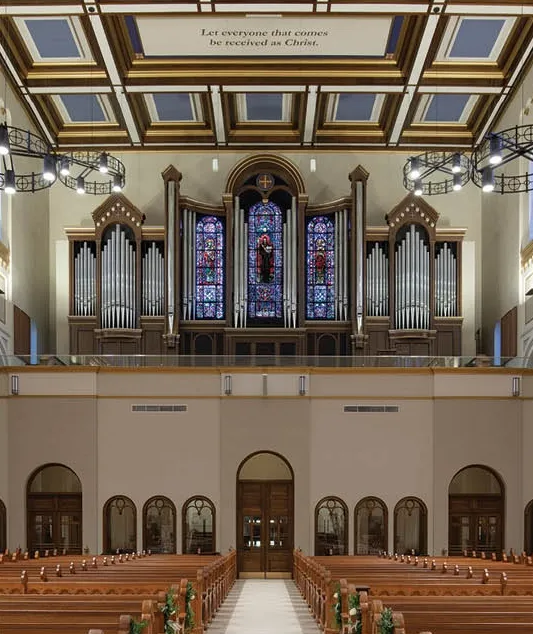
For Trinity itself, history had to be our teacher. Most organs in this space had failed to reach their ultimate potential on account of environmental conditions. The chancel chamber was cramped; the gallery, though expansive, was inefficient. The organ project was fortunate to coincide with a major renovation of church and chapel, allowing longstanding limitations to be addressed alongside broader acoustic concerns. The chancel organ space (as Mr. Rosales describes later) is now an ideal of its kind, giving surprising clarity while affording a hushed mystery and magic only a chamber can provide. The gallery loft, now with a concrete wall at the back and excellent surfaces, has dramatically improved bass response, projection, and clarity. Various alterations to the room itself have transformed a good-enough acoustic into something truly special.
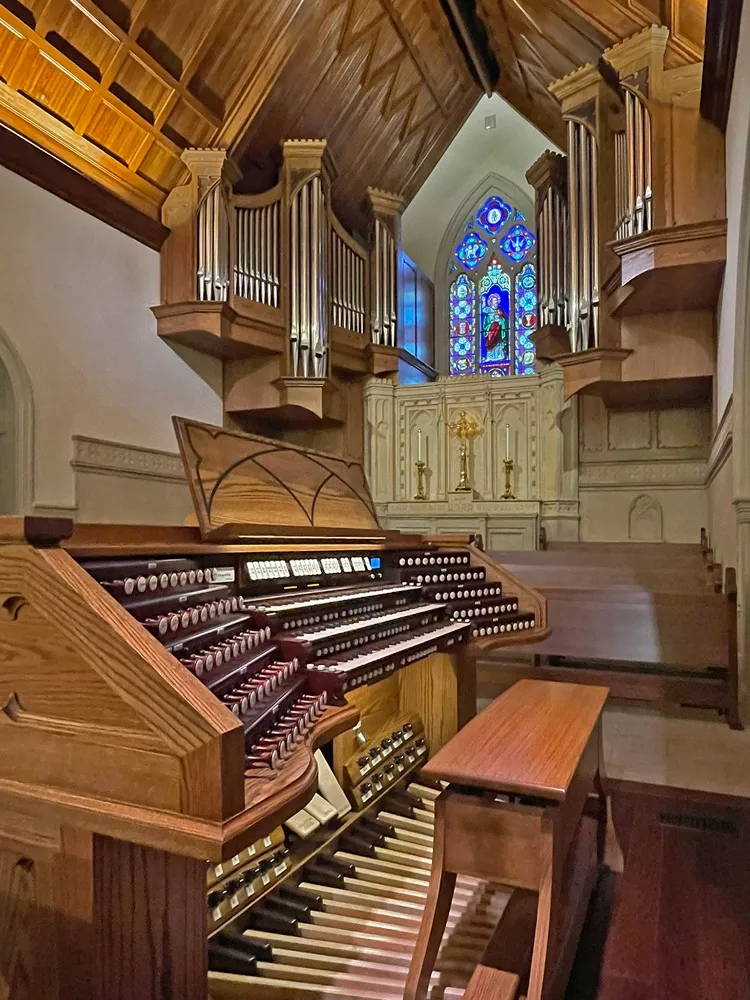
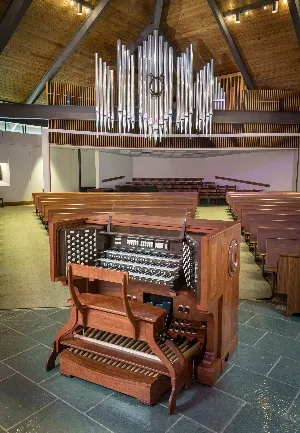
The conception of the organ was shaped by a two-year research period involving the music team, clergy, and members of the congregation. Instruments of all types and varied settings were examined, and larger questions debated. Should Trinity have two entirely separate organs? How important was choral accompaniment in each location? How would the instrument(s) interact with ensembles and orchestra? Initial design work envisioned two separate organs, but gradually an evolution of thinking arrived at the present scheme. The choir has moved around the building a great deal over the past 60 years, and its travels are sure to continue. It seemed essential, therefore, that choral accompaniment be seriously accommodated front and back. That realization caused the mobile console to be ordered, as the initial plans had included only the gallery console.
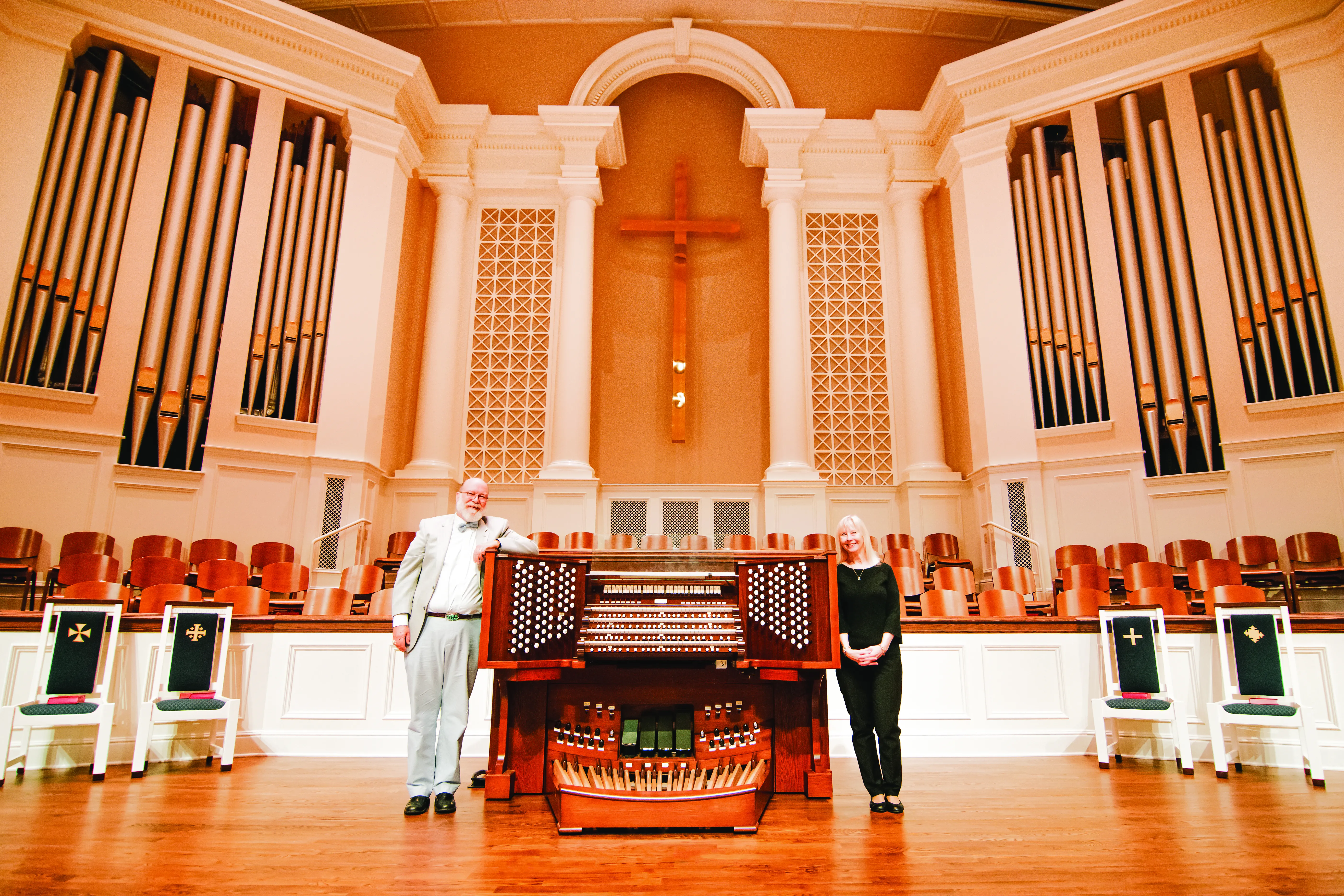
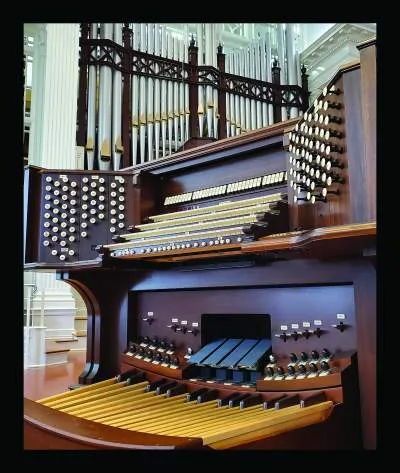
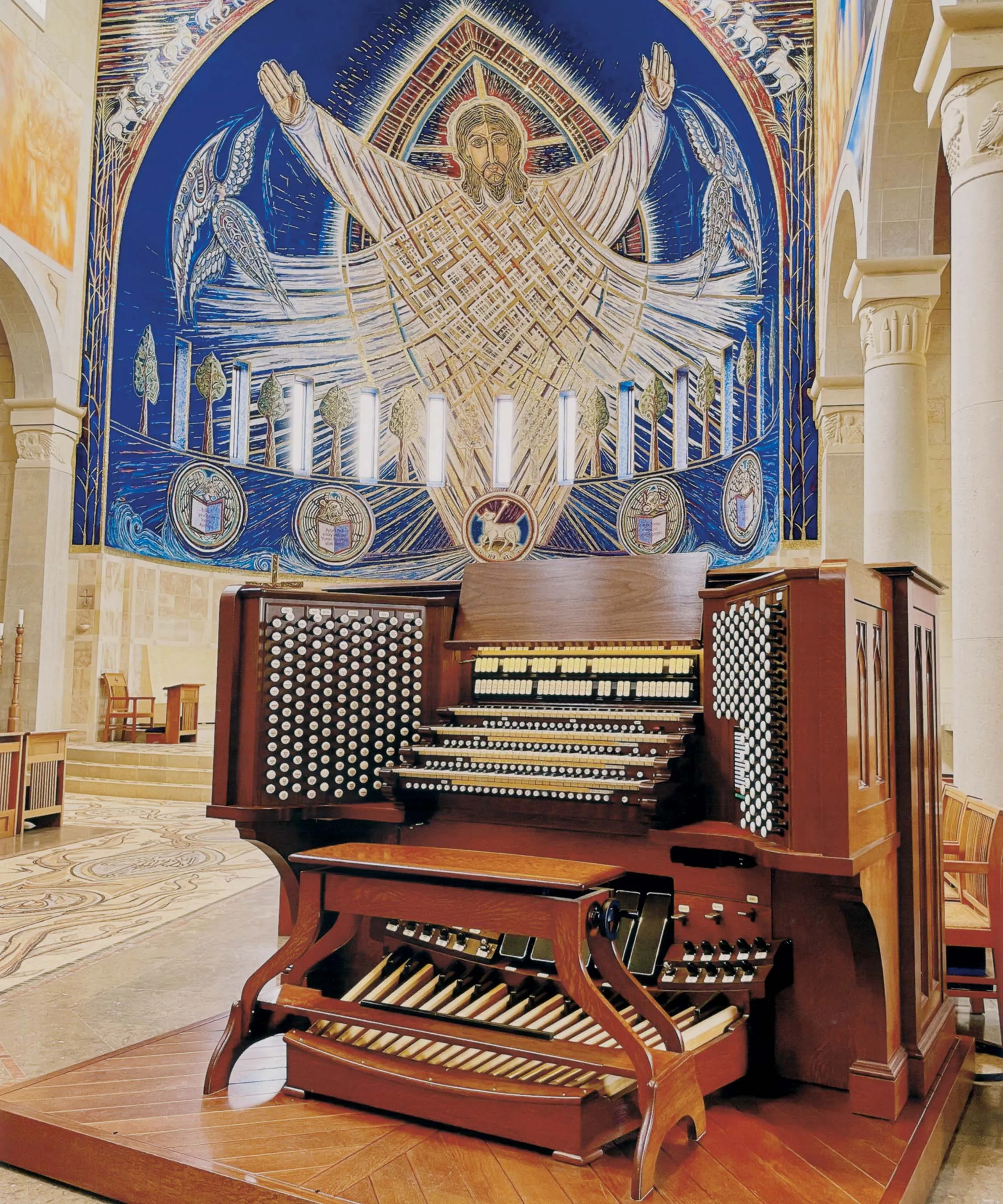
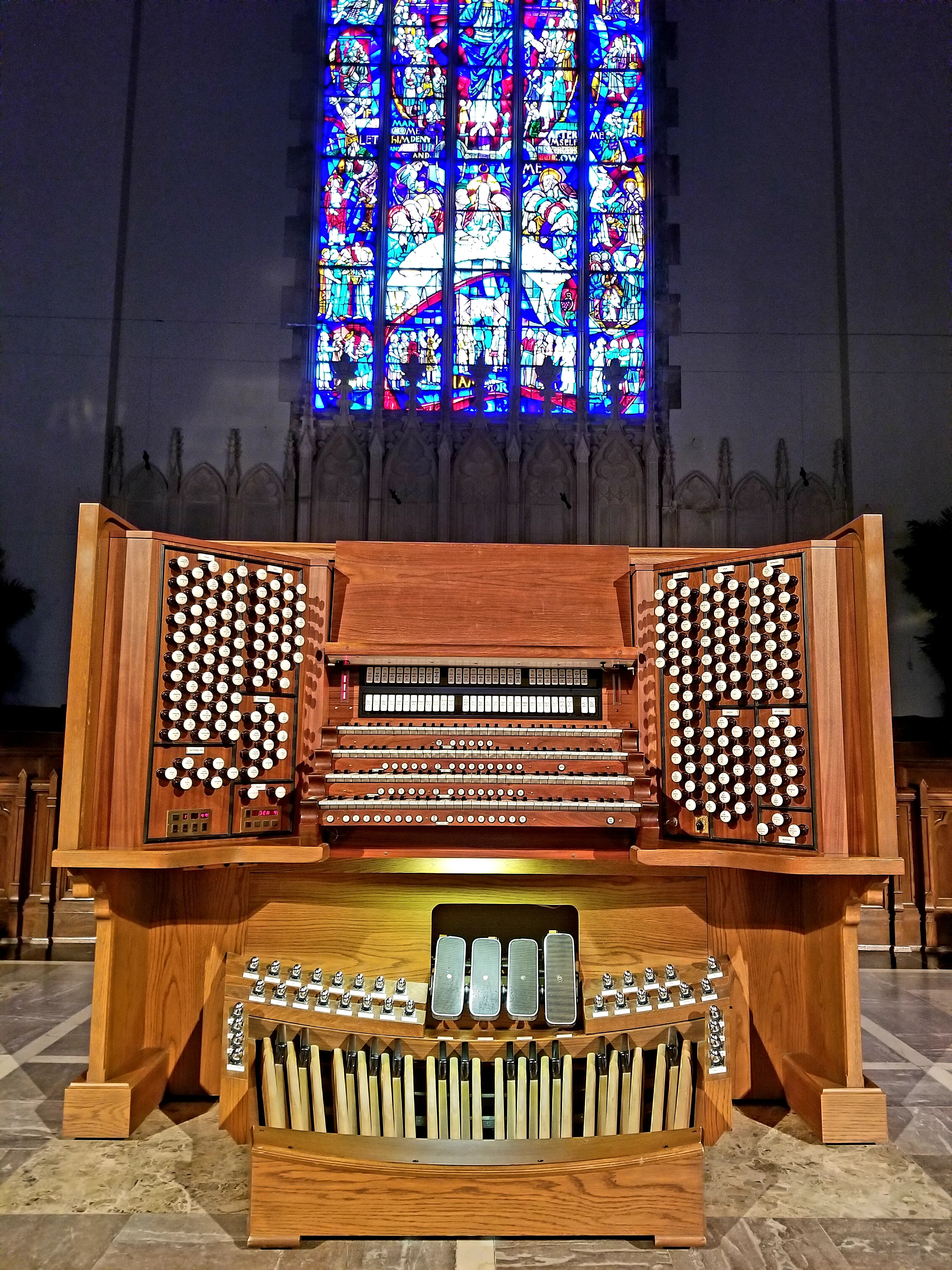
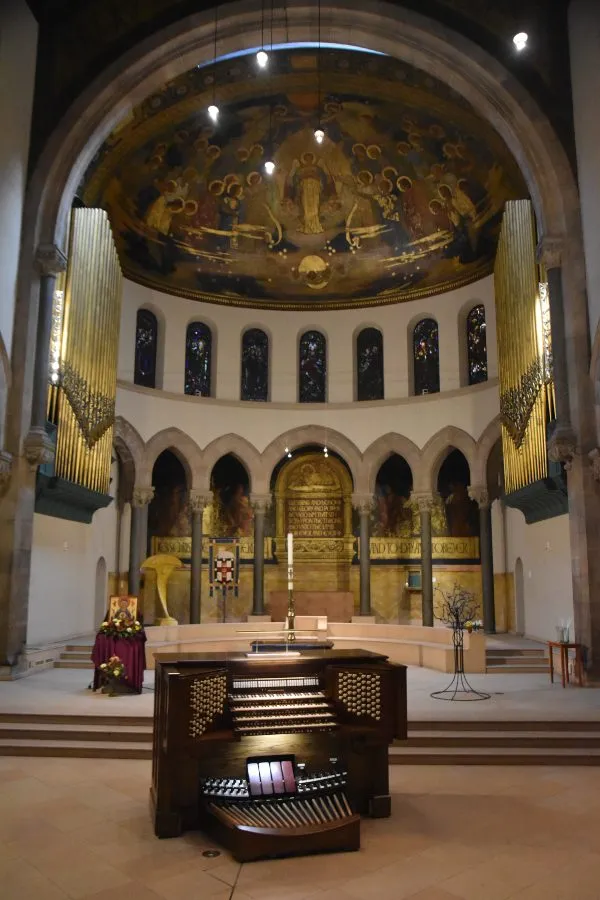
While the organ as a whole seems more a summation than anything truly innovative, certain features deserve mention. The low-profile amphitheater mobile console has not merely a height-adjustable bench; the entire console itself moves up and down, to accommodate in true comfort the dimensions of any player. In the gallery organ, the largest wood pipes are duophonic, saving considerable room. All organ spaces are fully climate-controlled and humidified, to maintain tuning stability independently and together. Special controls allow flexibility for expression and arrangements of the eleven divisions over the four manuals, while avoiding excessive controls and keeping octave coupling to a minimum.
Of the dozens of people who have made this project possible, certain people deserve special mention. Even for an institution with significant resources the organ project at Trinity required considerable persuasion to come to life. The arguments were made eloquently and with great conviction by Vestryman William H. A. Wright and consultant Jonathan Ambrosino, augmented by the Reverend Phillip A. Jackson, who was then vicar and is now rector. After contract-signing, Jonathan has remained on to help with the many administrative and logistic aspects such a project entails. The Reverend Michael Bird, having shepherded a new organ project at his former parish, was thankfully no stranger to the disruption and coordination that installation, voicing, and tuning requires. But no one has worked more tirelessly than Organist and Chorusmaster Avi Stein, who has seemingly severed a piece of his heart and devoted it to this effort. In micro, he has managed a thousand small details. But in macro, he has had the consistency of vision, and a parent’s patience, in seeing it all come to fruition.
From the tonal designer
Designing an organ on a monumental scale is a rare chance for an organbuilder. However, even such an opportunity is not without obstacles for success. The adage that “the church is the sounding board” was of concern when designing the specification and pipe construction details for Trinity’s instrument. Therefore, it is gratifying to review the many changes and improvements made to the spaces containing the organ, which now project and enhance the new organ’s sound as never before.
When I was asked to consider participating, my memory recalled a youthful visit to Trinity Church, in 1965, to hear the Aeolian-Skinner. That recollection tempered my enthusiasm, as it was one of the more disappointing experiences with the many famous instruments of Manhattan. The sound lacked energy, as it did not have an acoustical environment that could project and enhance it. The willingness to participate in the creation of a new instrument would require assurance that the acoustics and the spaces where the instrument’s various divisions reside would be improved significantly.
Installing an organ in front of a large stained-glass window is not uncommon. When the window is floor to ceiling as a major reflective surface, however, typically there is a lack of projection of bass frequencies and an emphasis of the higher pitches. Acoustical testing with our portable pipe array and an abandoned 32′ Violone in the rear gallery confirmed the need for major improvement to the organ’s space. Bass tones were lost in the nave, while high frequencies, which should add clarity without harshness, were exaggerated. A new wall was needed behind the organ to provide a solid reflecting surface as well as isolation from seasonal temperature changes.
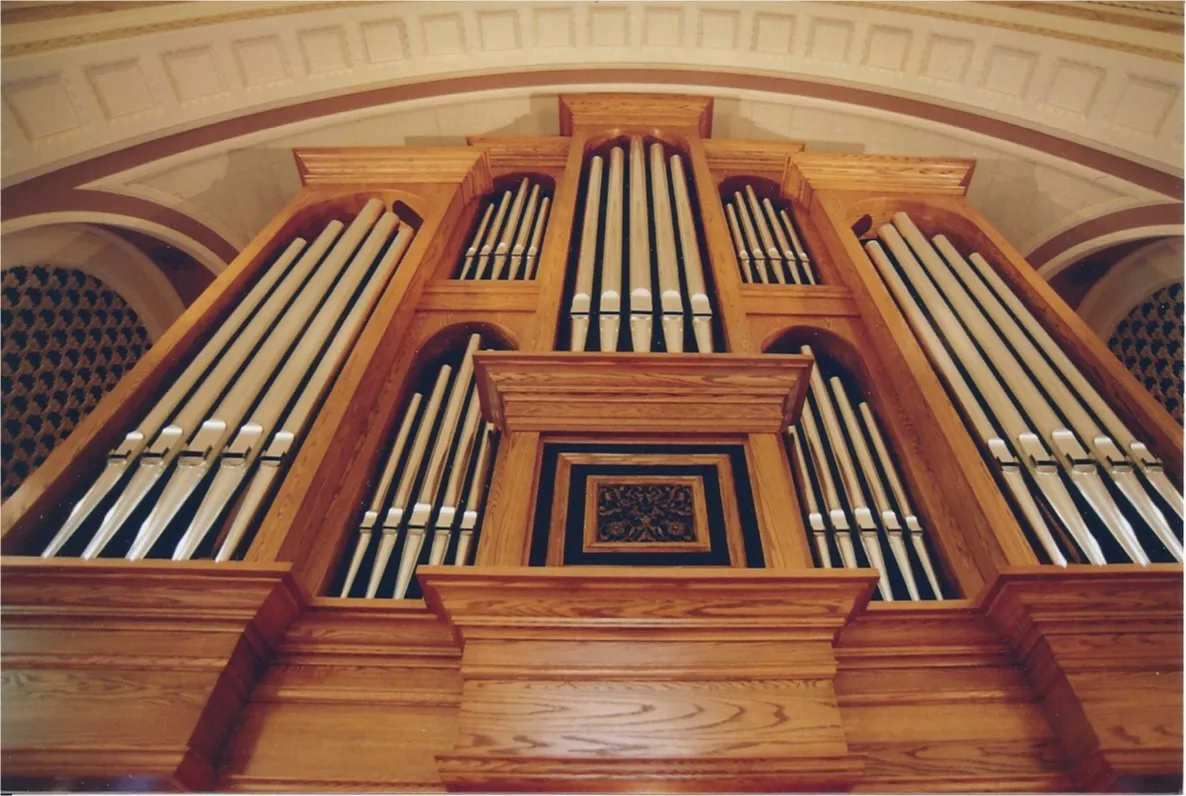
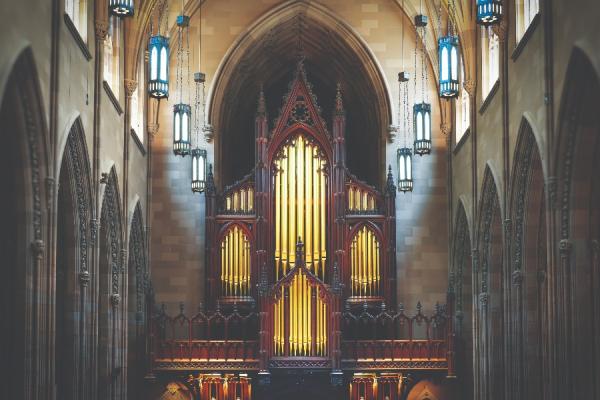
Also to be considered was the existing Henry Erben façade casework. Most of the church’s other decorative elements—altar, chancel furnishings—are newer, while the Erben façade survives from 1846, when the current building was constructed. Designed for an idiosyncratic instrument of its time, the case needed much restoration of woodwork, redesign, and replacement of its pipe array. Except for its mute façade pipes, the original Chaire Organ had been removed to make more room for a free-standing console and choristers. It was decided early on that re-creation of this division was essential to restore an acoustical presence close to those seated in the nave.
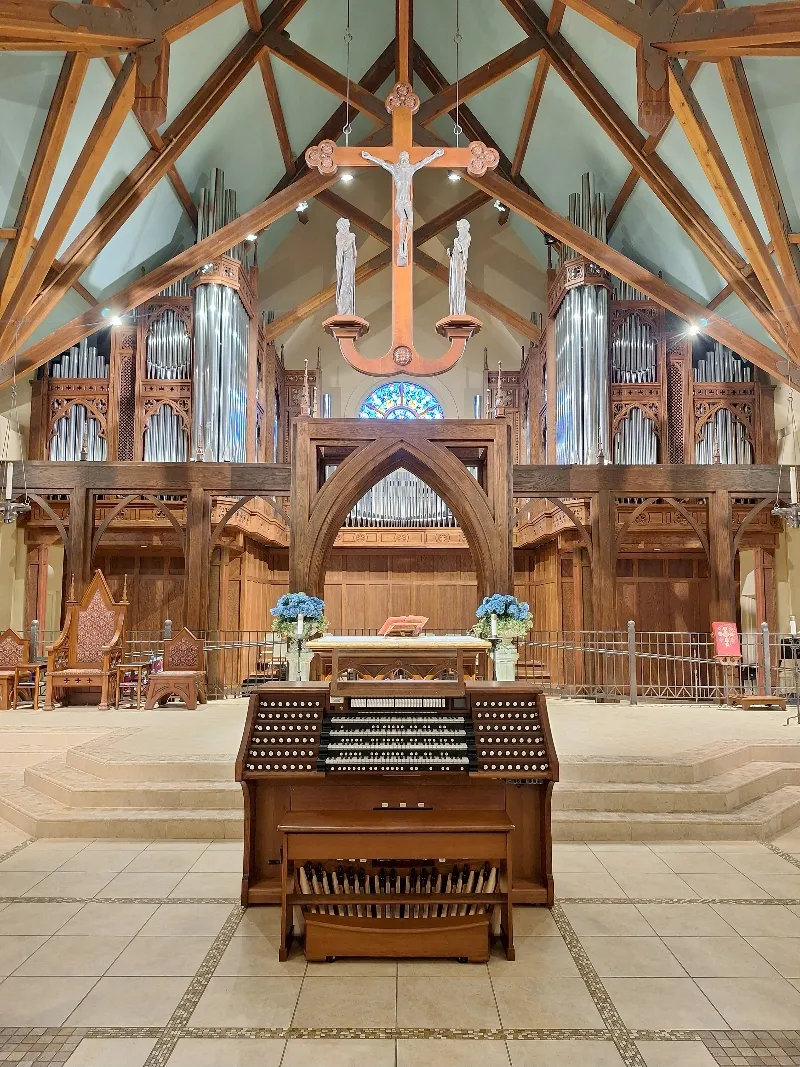
The chancel organ (north chamber) presented a different challenge altogether, as its construction is solid stone and brick, while its proportions are deep—almost tunnel-like. Its physical redesign, windchest placement, pipework, expression shutters, and specification followed advice from project acoustician Dana Kirkegaard and were executed by the craftsmen of Glatter-Götz Orgelbau. The result is unimaginable clarity and projection.
To take advantage of the organ’s depth, I specified two sets of shutters, with an inner enclosure containing both the most powerful reed chorus and the softest voices under double expression. 16′, 8′, and 4′ Trumpets with hooded resonators on 15 inches wind pressure provide a powerful, room-filling chorus that can be quieted to an Echo organ level dynamic. The sound of the Aeoline, Celeste, and Vox Humana can be smoothly hushed to pianissimo.
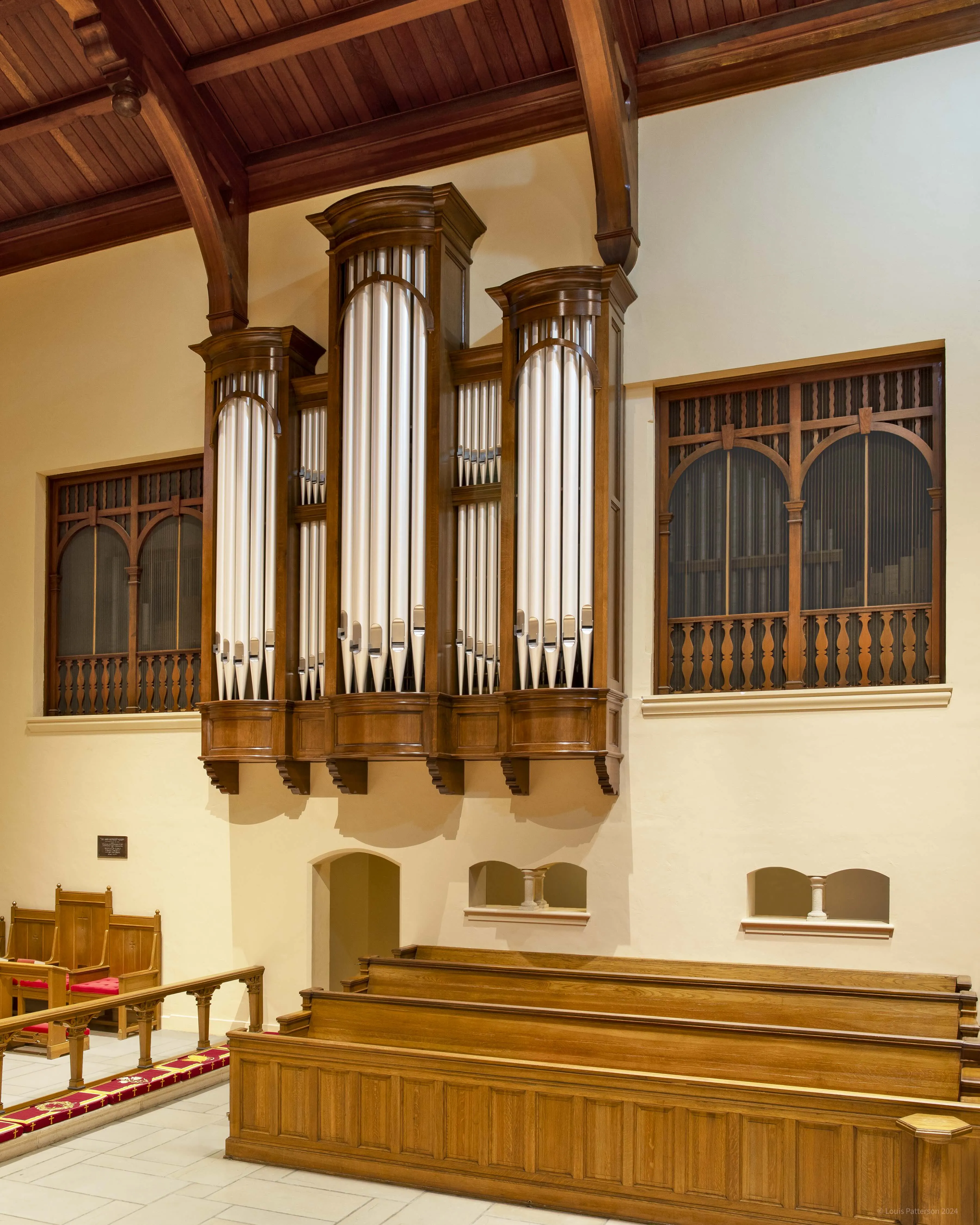
Two ranks are unenclosed, the Great Diapason and Octave, while the remainder of the Great, Swell, and Pedal are under expression in the forward part of the chamber. On the opposite side of the chancel, a shallow chamber has been rethought as a four-rank continuo division, called Positive.
The gallery organ’s tonal design considered a broad range of musical choices and the usual concerns of congregational singing and choral accompaniment. With three divisions under expression, a generous array of foundation stops, three principal choruses, and chorus and color reeds of differing dynamic levels, accompaniments of any type can be accommodated.
Except for the Chaire, each section offers at least two levels of chorus reed tone. Those stops on five inches wind pressure complement the foundations and lighter registrations. Those on seven inches wind provide added color and power to enhance the choruses without dominating them.
On a more heroic level are three Tuba ranks of differing colors and dynamic levels. The Tuba Minor offers a unique forte color with a distant echo-like placement at the rear of the Choir enclosure. The Solo Tuba Mirabilis offers the next dynamic level in a particularly bright format. The Tuba Major is the crowning stop of the ensemble, as both a solo voice and the full-organ’s final addition.
The Pedal has two 32′ open wood sets, a dark-toned Diapason and a rich-toned Violone. The other Pedal stops include, with borrows, eight 16′ flues and nine 16′ reeds. The powerful Trombone unit provides this 8,000-pipe instrument with its final full-organ grandeur.
It has been an honor to be entrusted with the tonal design, voicing, and tonal finishing of this organ; to work for a client with vision, commitment to excellence, and a supportive clergy and musicians who clearly communicated their requirements. And thanks to my coworkers, collaborators, suppliers, and voicers, without whom a project of this magnitude would not be possible.
—Manuel Rosales
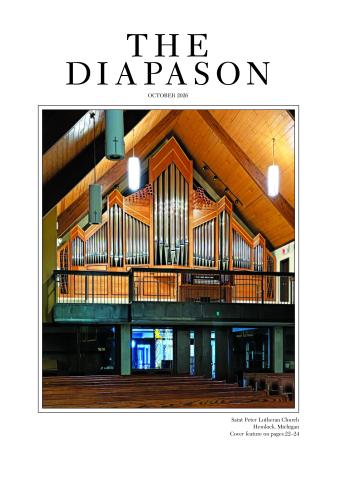
Cover photo courtesy of Trinity Church
Great
1. 32′ Violone 56 pipes (CC–AA duophonic, 5 pipes)
2. 16′ Principal (bass in façade) 61 pipes
16′ Violone (ext 32′) 12 pipes
3. 16′ Bourdon 49 pipes (1–12 Pedal Boudon)
4. 8′ Principal 61 pipes
5. 8′ Bell Diapason 61 pipes
6. 8′ Salicional (1–12 Violone) 49 pipes
7. 8′ Flûte harmonique 61 pipes
8. 8′ Rohrflöte 61 pipes
8′ Bourdon (ext 16′) 12 pipes
9. 5 1⁄3′ Gros Nasard 61 pipes
10. 4′ Octave 61 pipes
11. 4′ Spitzflöte 61 pipes
12. 3 1⁄5′ Grosse Tierce 61 pipes
13. 2 2⁄3′ Octave Quint 61 pipes
14. 2′ Super Octave 61 pipes
15. 2′ Waldflöte 61 pipes
16. Corneta V (tenor F) 215 pipes
17. Fourniture IV 244 pipes
18. Mixture VIII 336 pipes
19. 8′ Trumpet 61 pipes
Tremolo
20. 16′ Contra Tromba 61 pipes
21. 8′ Tromba 61 pipes
22. 4′ Tromba Clarion 61 pipes
23. 8′ Trompette-en-chamade 61 pipes
Gallery Great Unison Off (mobile console only)
Chaire (gallery rail case)
24. 8′ Prestant (in façade) 61 pipes
25. 8′ Voce umana (tenor F) 44 pipes
26. 8′ Hohlflöte 61 pipes
27. 4′ Octave douce 61 pipes
28. 2 2⁄3′ Nasard 61 pipes
29. 2′ Waldflöte 61 pipes
30. 1 3⁄5′ Tierce 61 pipes
31. 1 1⁄3′ Larigot 61 pipes
32. 8′ Dulzaína 61 pipes
Tremolo
Chaire Unison Off (mobile console only)
Birds
Bells
Swell (enclosed)
33. 16′ Lieblich Gedeckt 61 pipes
34. 8′ Diapason 61 pipes
35. 8′ Viole de gambe 61 pipes
36. 8′ Voix céleste 61 pipes
37. 8′ Flûte traversière 49 pipes (1–12 Bourdon)
38. 8′ Bourdon 61 pipes
39. 4′ Principal 61 pipes
40. 4′ Flûte octaviante 61 pipes
41. 2 2⁄3′ Nasard 61 pipes
42. 2′ Octavin 61 pipes
43. 1 3⁄5′ Tierce 61 pipes
44. Plein jeu III–V 269 pipes
45. 8′ Trumpet 61 pipes
46. 8′ Hautbois 61 pipes
47. 8′ Voix humaine 61 pipes
Tremolo
48. 16′ Waldhorn 61 pipes
49. 8′ Cornopean 61 pipes
50. 4′ Clarion 61 pipes
Gallery Swell 16
Gallery Swell Unison Off (mobile console only)
Gallery Swell 4
Choir (enclosed)
51. 16′ Corno dolce 61 pipes
52. 8′ Geigen Principal 61 pipes
53. 8′ Stopped Diapason 61 pipes
54. 8′ Dulciana 61 pipes
55. 8′ Vox angelica 61 pipes
56. 4′ Principal 61 pipes
57. 4′ Flute 61 pipes
58. 2 2⁄3′ Nasard 61 pipes
59. 2′ Doublet 61 pipes
60. 1 3⁄5′ Tierce 61 pipes
61. 1 1⁄7′ Septième 61 pipes
62. 1′ Piccolo 61 pipes
63. 8⁄9′ Neuvième 61 pipes
64. Mixture IV–V 250 pipes
65. 16′ Contra Fagotto 61 pipes
66. 8′ Clarinet 61 pipes
67. 8′ Flügel Horn 61 pipes
Tremolo
68. 8′ Tuba Minor 61 pipes
8′ Tuba Magna (Solo)
8′ Trompette-en-chamade (Great)
Gallery Choir 16
Gallery Choir Unison Off
Gallery Choir 4
Great Trombas on Choir
Solo (enclosed)
69. 8′ Violoncello 73 pipes
70. 8′ Gamba Celeste 73 pipes
71. 8′ Doppelflöte 73 pipes
72. 4′ Orchestral Flute 73 pipes
16′ Corno di bassetto (ext 8′) 12 pipes
73. 8′ Corno di bassetto 61 pipes
74. 8′ French Horn 61 pipes
75. 8′ English Horn 61 pipes
Tremolo
76. 8′ Tuba 61 pipes
Glockenspiel
16′ Tuba Magna (ext 8′) 12 pipes
77. 8′ Tuba Magna (unenclosed) 61 pipes
4′ Tuba Magna (ext 8′) 12 pipes
Gallery Solo 16
Gallery Solo Unison Off
Gallery Solo 4
Great Trombas on Solo
8′ Trompette-en-chamade (Great)
Pedal
78. 32′ Open Wood 27 pipes (CC–AA duophonic, 5 pipes)
32′ Violone (Great)
32′ Resultant
16′ Open Wood (ext 32′) 12 pipes
16′ Principal (Great)
16′ Violone (Great)
79. 16′ Bourdon 32 pipes
16′ Corno Dolce (Choir)
16′ Lieblich Gedeckt (Swell)
10 2⁄3′ Quint (self-adjusting)
80. 8′ Octave 32 pipes
8′ Open Wood (ext 32′) 12 pipes
8′ Violone (Great)
8′ Bourdon (ext 16′) 12 pipes
8′ Lieblich Gedeckt (Swell)
81. 4′ Super Octave 32 pipes
4′ Flûte (ext 32′ Open) 12 pipes
4′ Bourdon (ext 16′) 12 pipes
82. 32′ Contra Trombone 32 pipes
16′ Trombone (ext 32′) 12 pipes
83. 16′ Posaune 32 pipes
16′ Tuba (Solo)
16′ Tromba (Great)
16′ Waldhorn (Swell)
16′ Fagotto (Choir)
16′ Corno di Bassetto (Solo)
8′ Tromba (ext 32′) 12 pipes
8′ Tromba (Great 16′)
8′ Trumpet (ext 16′ Posaune) 12 pipes
84. 4′ Clairon 32 pipes
4′ Octave Tromba (ext 32′) 12 pipes
Gallery Pedal Unison Off
8′ Trompette-en-chamade (Great)
8′ Tuba Magna (Solo)
Chancel Great (enclosed with Chancel Swell)
85. 8′ Diapason 61 pipes (façade, unenclosed)
86. 4′ Octave (unenclosed) 61 pipes
87. 16′ Bourdon 61 pipes
8′ Chimney Flute (ext 16′) 12 pipes
8′ Salicional (Swell)
8′ Celeste (Swell)
88. 4′ Spire Flute 61 pipes
89. 2′ Fifteenth 61 pipes
90. Mixture IV 244 pipes
91. 8′ Bell Clarinet 61 pipes
Tremolo (Swell)
Chancel Great Unison Off
Chancel Positive (unenclosed, south case)
92. 8′ Principal (façade) 61 pipes
93. 8′ Gedeckt 61 pipes
94. 4′ Hohlflöte 61 pipes
95. 2′ Doublet 61 pipes
Chancel Positive Unison Off
Chancel Swell (enclosed, north chamber)
96. 8′ Geigen Principal 61 pipes
97. 8′ Harmonic Flute 49 pipes (1–12 from Geigen)
98. 8′ Salicional 61 pipes
99. 8′ Celeste 61 pipes
100. 4′ Fugara 61 pipes
101. 4′ Flute 61 pipes
102. 2 2⁄3′ Nasard 61 pipes
103. 2′ Piccolo 61 pipes
104. 1 3⁄5′ Tierce 61 pipes
16′ Contra Oboe (ext 8′) 12 pipes
105. 8′ Trompette 61 pipes
106. 8′ Oboe 61 pipes
Tremolo
Chancel Swell 16
Chancel Swell Unison Off
Chancel Swell 4
Chancel Solo (doubly enclosed within Chancel Swell)
107. 8′ Aeoline 61 pipes
108. 8′ Unda Maris 61 pipes
109. 8′ Vox Humana 61 pipes
Tremolo
110. 16′ Trombone (hooded) 61 pipes
111. 8′ Trumpet (hooded) 61 pipes
112. 4′ Clarion (hooded) 61 pipes
Chancel Solo 16
Chancel Solo Unison Off
Chancel Solo 4
Chancel Pedal (north chamber)
113. 16′ Open Bass 32 pipes
16′ Bourdon (Great)
8′ Octave Bass (ext 16′) 12 pipes
8′ Diapason (Great)
8′ Chimney Flute (Great)
8′ Salicional (Swell)
4′ Octave (Great)
4′ Chimney Flute (Great)
16′ Trombone (Solo)
16′ Contra Oboe (Swell)
8′ Trumpet (Solo)
4′ Clarion (Solo)
Chancel Pedal Unison Off
Balanced Expression Pedals
Choir
Swells (both)
Solos (both)
Register Crescendo
Expression Couplers
Solo on Choir
Choir on Crescendo
Gallery Swell on Crescendo
Chancel Swell on Solo
Chancel Solo on Crescendo
All Swells to Swell
Combinations (both consoles)
Generals 1–25 / 1–10 (thumb/toe)
Greats 1–10 (thumb)
Swells 1–10 (thumb)
Choir/Rückpositiv/Positive 1–10 (thumb)
Solo 1–8 (thumb)
Pedals 1–8 (toe)
Great to Pedal reversible (thumb/toe)
Chancel Great to Pedal reversible (thumb/toe)
Swell to Pedal reversible (thumb/toe)
Chancel Swell to Pedal reversible (thumb/toe)
Choir to Pedal reversible (thumb)
Chancel Positive to Pedal reversible (thumb)
Solo to Pedal reversible (thumb)
Chancel Solo to Pedal reversible (thumb)
Antiphonal Swells reversible (thumb)
All Swells to Swell reversible (thumb)
Pedal Stops on Great Divisionals knob
Pedal Stops on Swell Divisionals knob
Sostenuto (each manual, with indicator, thumb)
Additive Sostenuto knob
All Divisionals Next–All Generals Next
Library–Scope–Set–Cancel
Next and Previous (multiple)
Solid State Organ Systems Organist Palette
Couplers
Gallery Organ
Great to Pedal
Swell to Pedal
Choir to Pedal
Chaire to Pedal
Solo to Pedal
Swell to Pedal 4
Choir to Pedal 4
Solo to Pedal 4
Swell to Great
Choir to Great
Chaire to Great
Solo to Great
Swell to Choir
Solo to Choir
Pedal to Choir
Solo to Swell
Choir to Swell
Swell to Great 16
Choir to Great 16
Solo to Great 16
Swell to Great 4
Choir to Great 4
Solo to Great 4
Both Organs
Pedal Divide
Manual II–I Transfer (mobile console only)
Gallery Organ Off–Chancel Organ Off
Chancel Organ
Great to Pedal
Swell to Pedal
Positive to Pedal
Solo to Pedal
Swell to Great
Positive to Great
Solo to Great
Swell to Choir
Solo to Choir
Pedal to Choir
Swell to Great 16
Swell to Great 4
113 independent stops, 138 ranks, 8,029 pipes
Builders’ websites:
Church website: