Harpsichord Notes: Les Songes Agréables
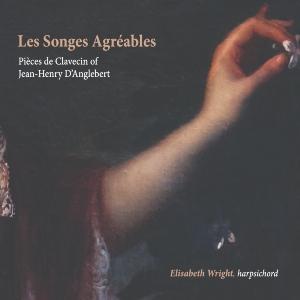
Les Songes Agréables: Pièces de Clavecin of Jean-Henry D’Anglebert
Les Songes Agréables: Pièces de Clavecin of Jean-Henri D’Anglebert. Elisabeth Wright, harpsichordist. Lindoro 2-CD set, NL3076, €25. Available from lindoro.es.
Pièces de clavecin—Suite No. 1 in G Minor: “Prélude,” “Allemande,” “Courante,” “Sarabande,” “Gailliarde,” “Gigue,” “Passacaille”; Suite No. 2 in G Major: “Prélude,” “Allemande,” “Deuxième Courante,” “Sarabande,” “Menuet,” “Gailliarde,” “Gigue,” “Chaconne Rondeau”; Suite No. 3 in D Minor: “Prélude,” “Allemande,” “Courante,” “Sarabande grave,” “Gigue,” “Gailliarde,” “Gavotte”; Les Songes Agréables d’Atys M. de Lully; Les Sourdines d’Armide M. de Lully; Passacaille d’Armide M. de Lully; Tombeau de M. de Chambonnières.
Elisabeth Wright’s illustrious career has included a decades-long position as harpsichord and fortepiano teacher at Indiana University, Bloomington, where she taught many of today’s leading harpsichordists in North America and beyond. Shortly after her retirement, Lindoro released this album of selections from Jean-Henri D’Anglebert’s Pièces de Clavecin, in which this master teacher continues to instruct. This volume is a masterclass in sensitivity, touch, and sonority. Each piece in this album exudes elegance, beauty, and charm, and a listener may also learn the possibilities of timing in the dances. Included in this album are selections from the suites in G minor, G major, D minor, and a few transcriptions from the G-minor and D-major suites—a lush selection recorded in only two days! D’Anglebert’s writing includes an exorbitance of ornaments, often referred to in French music as “graces,” built into the fabric wherever they may be found. Wright’s delivery exemplifies the grace necessary for an effective delivery, and nary an ornament is out of place or feels contrived. Every one fits and flows naturally in the fabric of the music, whether as melodic embellishment or harmonic and rhythmic accent.
The preludes in each suite vividly herald the character of the forthcoming dances. The G-minor prelude poignantly captures the suite’s angst, while the strident G-major prelude hints at optimism to be revealed, unlike the D-minor prelude’s austerity, a fitting character for the dances to follow. The G-minor’s held dissonances provide the listener moments to appreciate temperament that accentuates them. Given D’Anglebert’s appointment in Louis XIV’s court, the composer intimately knew the sound and feel of the dances as played by Les 24 Violons du Roi, the ensemble that existed solely for the king’s entertainment. The D-minor allemande calls to mind the image of a smaller ensemble, with articulation so refined that one may even hear the bow strokes of string instruments. The other two allemandes unfold seamlessly with a delicious pacing; lines are always singing with no voices left hanging; the listener is invited to sit with the proud yet sensitive nature of each allemande. The G-minor courante easily evokes a court ensemble playing for the king’s pleasure, yet its zesty interplay between triple and duple meter lends a very earthy, human quality to the dance. The G-minor and G-major gigues continue this zest, and fire is tempered with elegance, the latter of which reaches its zenith in the D-minor gigue’s lilt. Sarabandes draw the listener away from insistent dance rhythm and offer luscious sonority tempered with inner sorrow (G minor), a gentle stroll rather than merely a court dance (G major), and liquid gold in sound (D minor).
The gailliarde, a less common slow dance, is treated in each suite with similar richness. Wright weaves an air of mystery into the singing, fantasy-like G-minor dance. The stately G-major and D-minor dances are exercises in singing sound and suavité. The listener may readily appreciate the differences in tempo and sonority between the French gailliarde and the English galliard, thanks to the three in this album. D’Anglebert’s dances require time to unfold and bloom, which Ms. Wright provides. Lest one conclude that a slower tempo is required to create and appreciate sonority, the D-minor gavotte and the G-major chaconne rondeau are respectively strident and triumphant, making the listener hungry for more!
The opulence that characterizes so much of D’Anglebert’s harpsichord writing is on full display in his transcriptions of movements from Lully’s operas. The title piece of the album Les Songes Agréables and Les Sourdines d’Armide treat the listener to the most luscious of transcriptions, undoubtedly meant for the listener to sip and savor. Wright again provides space for the instrument to bloom and give the densely packed ornamentation time to waft through the air. The
Passacaille d’Armide is the epitome of this opulence, and Wright handles the incredibly packed score with a virtuoso deftness as well as orchestral clarity befitting an ensemble conductor. The elegant sway of inegalité, that ever-so-defining feature of French Baroque music, enraptures the listener with the dance, and in Wright’s hands the myriad ornaments become melodic shapes and indeed “graces.” The heartachingly beautiful Tombeau de M. Chambonnières beautifully concludes this album. Its seamless fabric is a shroud that gently caresses the audience, evoking many deeply held memories in this most personal tribute.