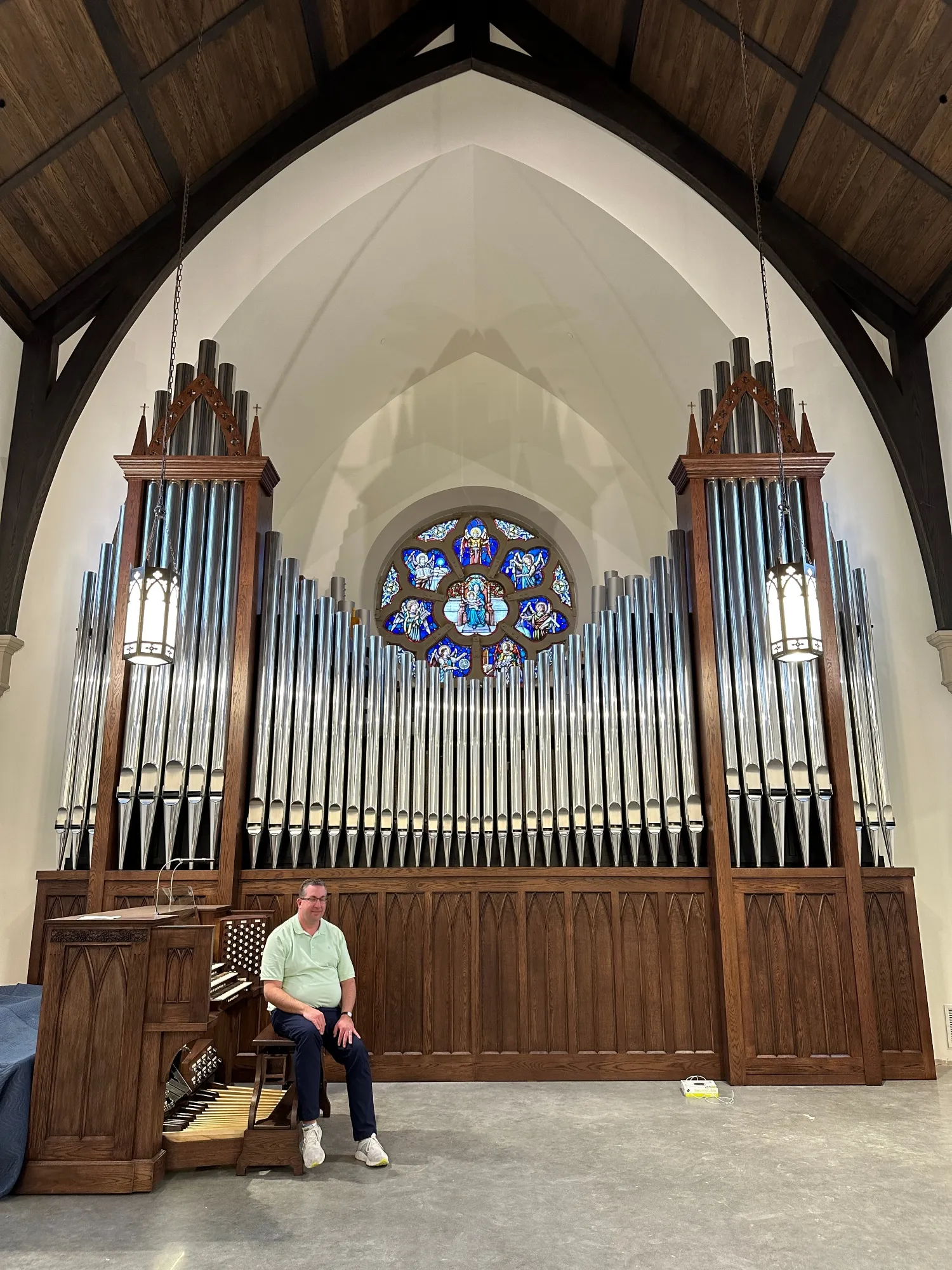
Cover feature: Létouneau Pipe Organs Opus 138
Létourneau Pipe Organs, Saint-Hyacinthe, Québec, Canada; Saint Charles Avenue; Presbyterian Church, New Orleans, Louisiana
From the builder
When the sanctuary at Saint Charles Avenue Presbyterian Church opened on February 2, 1930, it was filled with the sounds of a 16-rank, three-manual Austin pipe organ from two shallow chambers in the chancel. That instrument was replaced in 1980 with another Austin offering 27 ranks from a functional case in the church gallery and a further six ranks enclosed in a chancel division in the gospel-side chamber. Each instrument served its era, though their sizes and dispositions were, each in their own way, limiting.
We were invited, among others, to put forward initial ideas for a new pipe organ in 2002. Hurricane Katrina brought that conversation to a halt, but in the years of rebuilding that followed, continuing discussions made clear that Létourneau was the congregation’s chosen organ builder. Even so, it was not until 2021 that a contract was signed—nearly two decades after those first visits. The gallery divisions of the organ were the first to arrive onsite and were installed in the early summer of 2025, with the chancel divisions following that October. Onsite voicing began in early 2026 and continued for nearly two months.
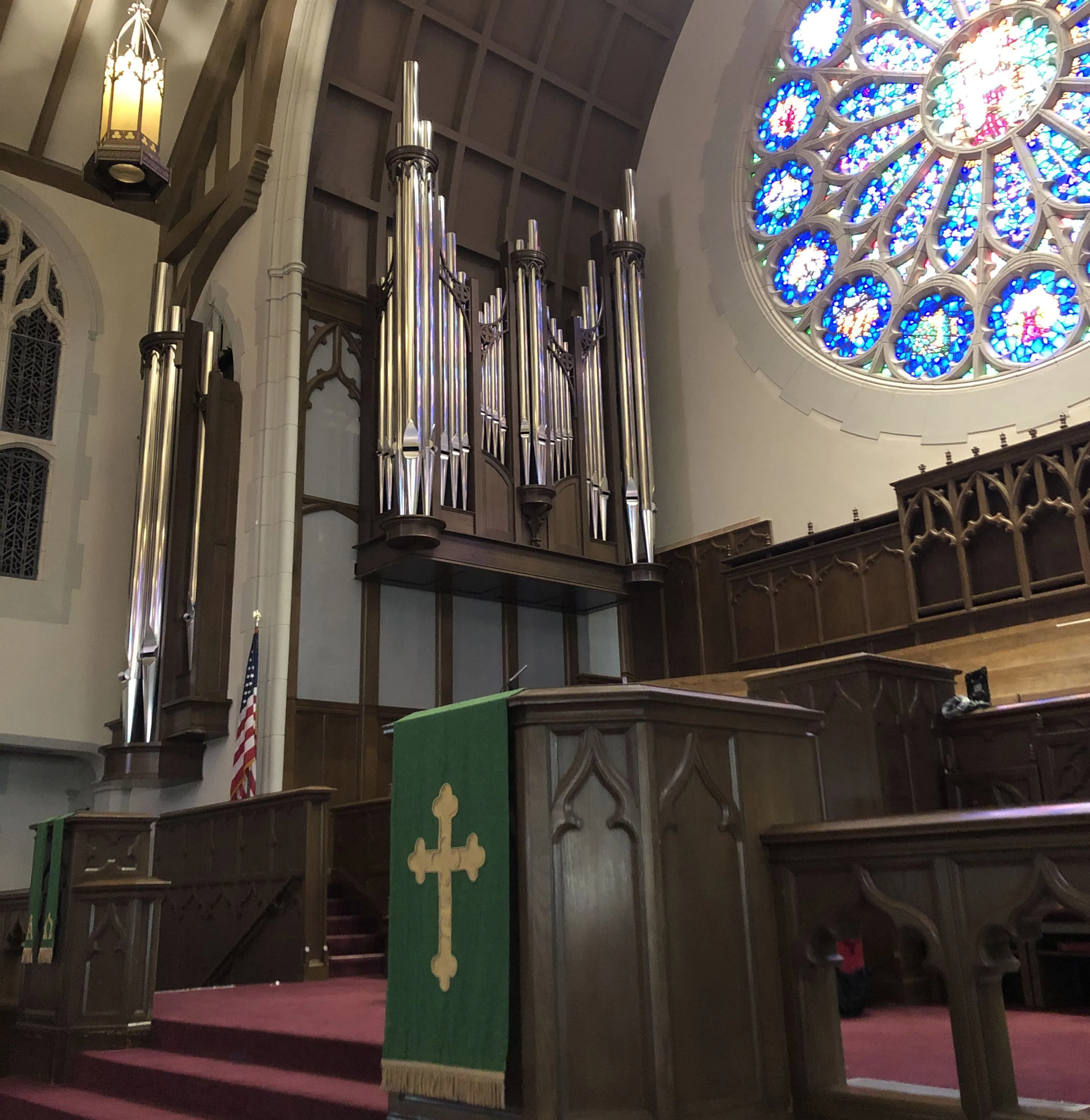
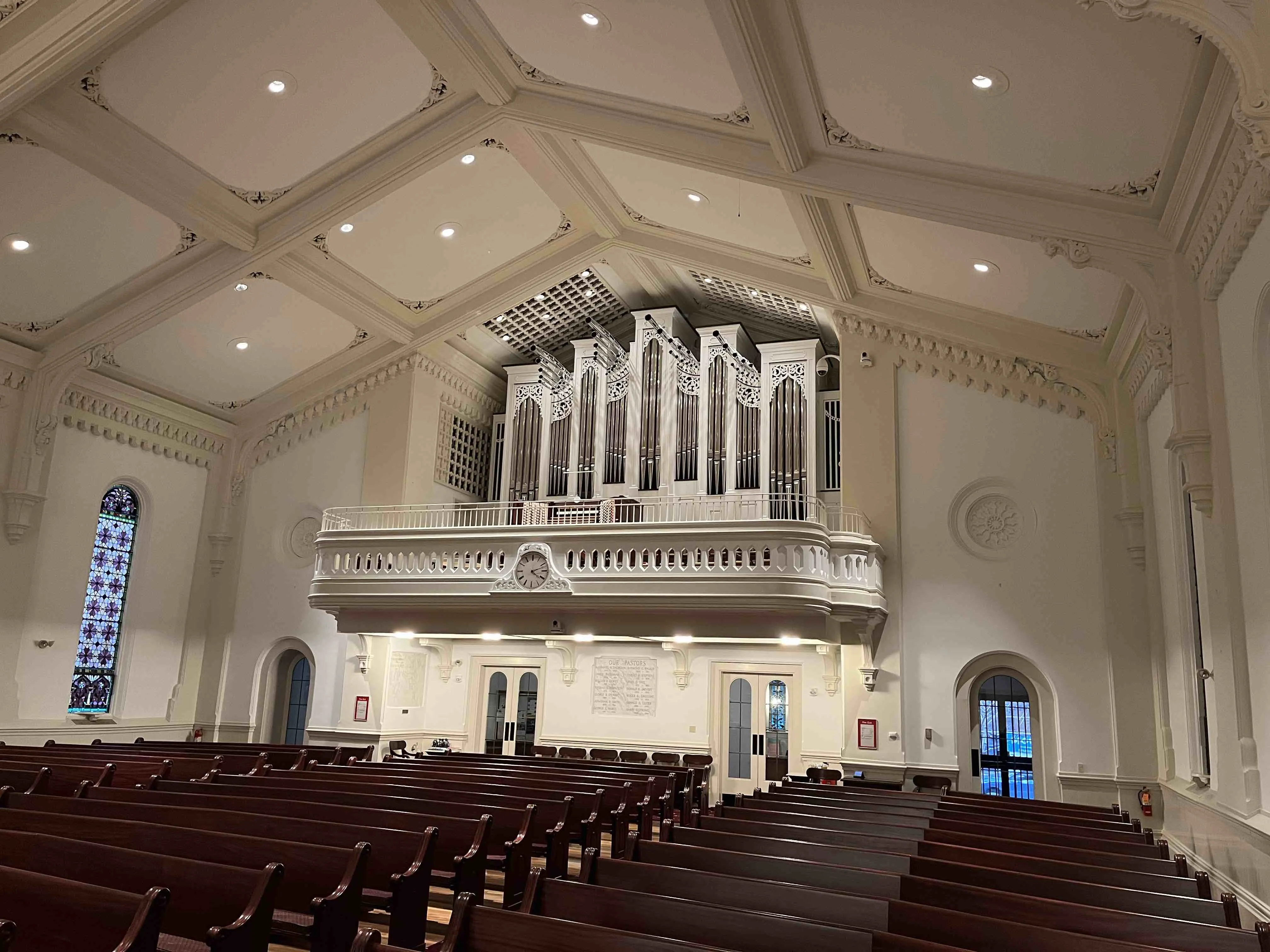
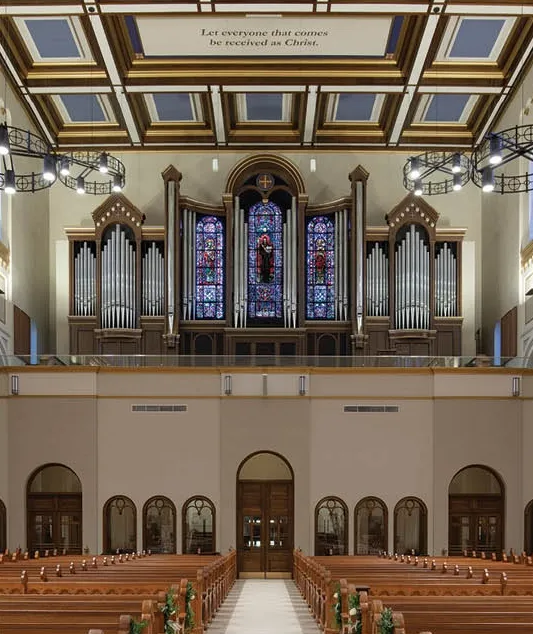
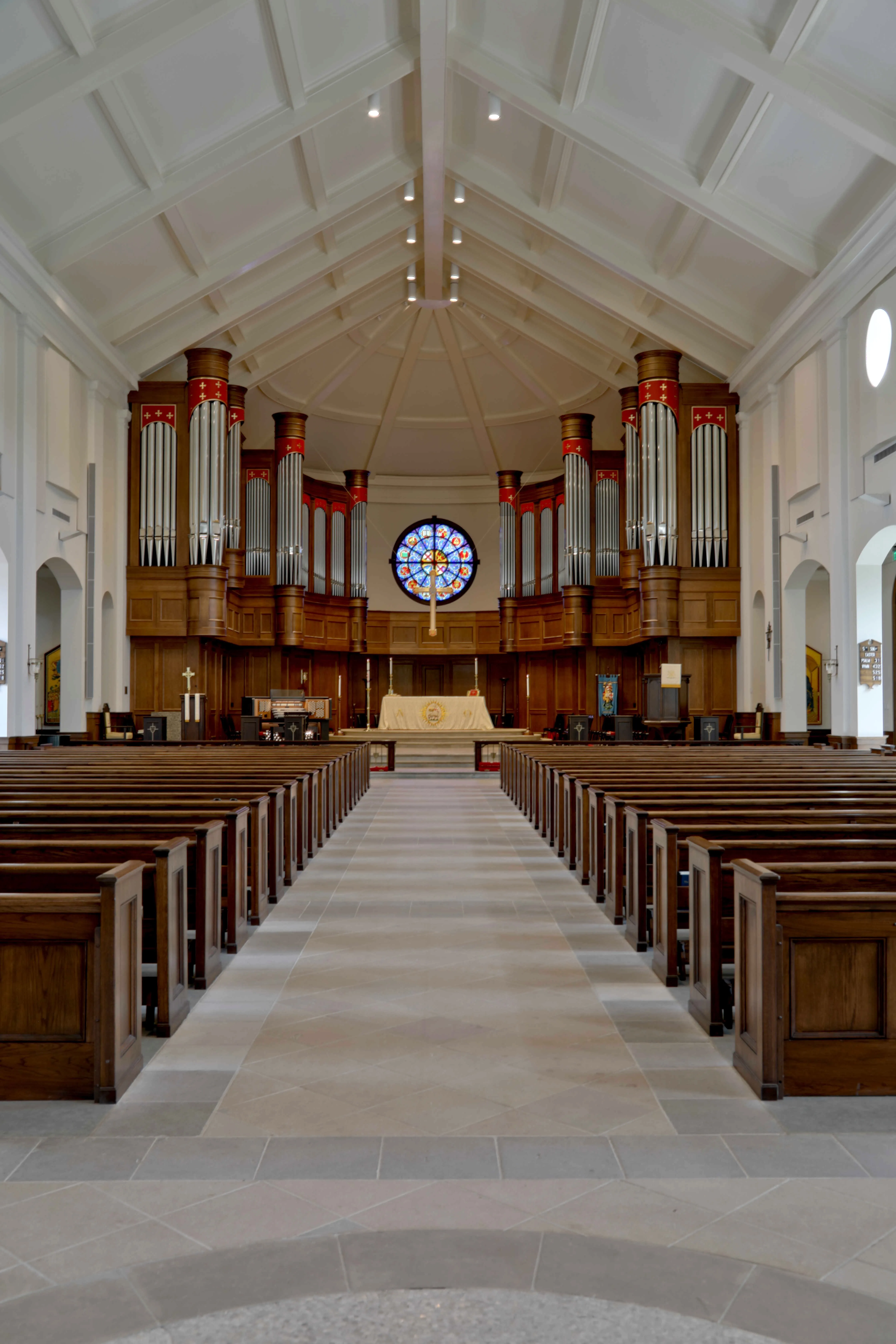
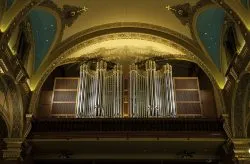
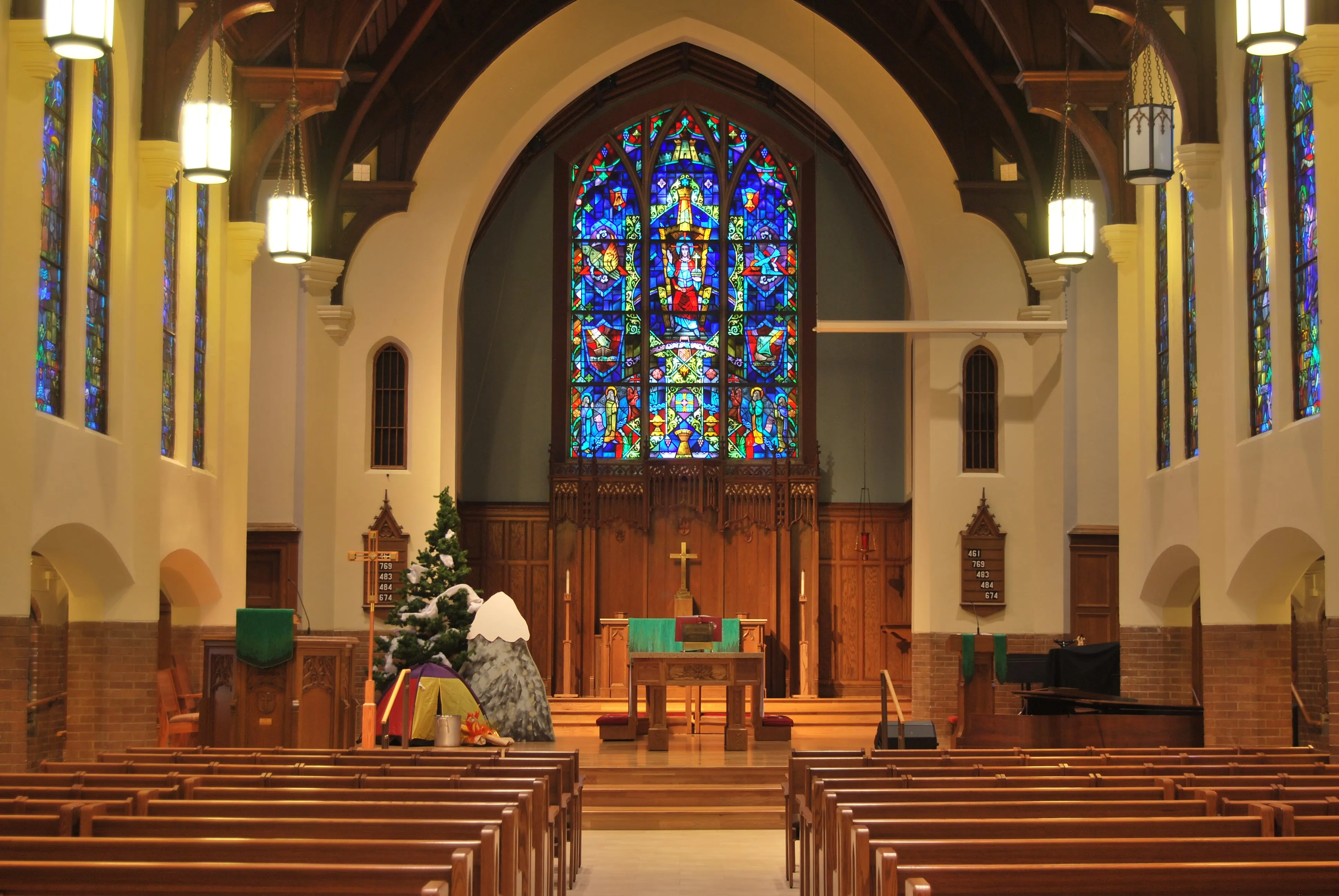
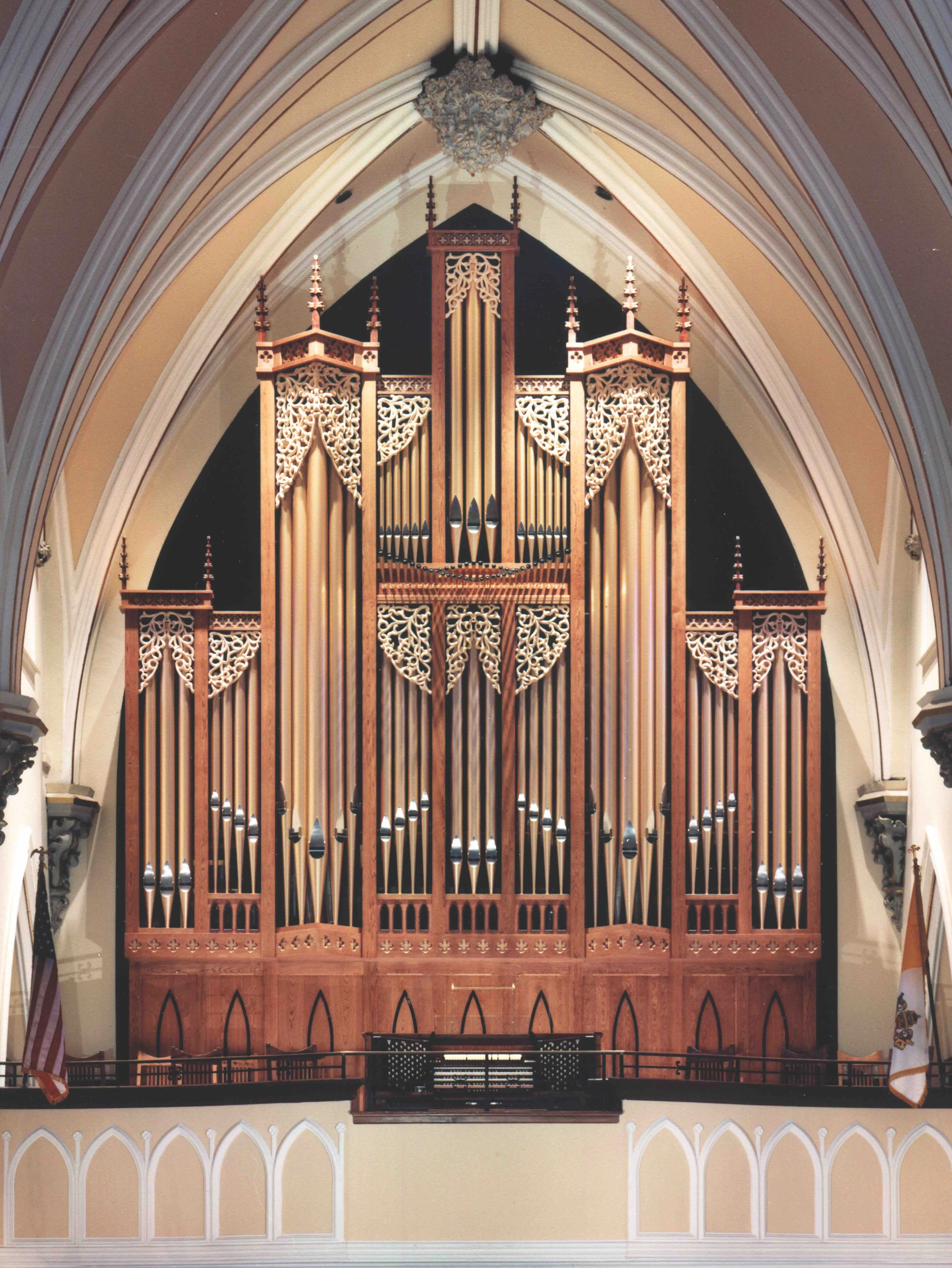
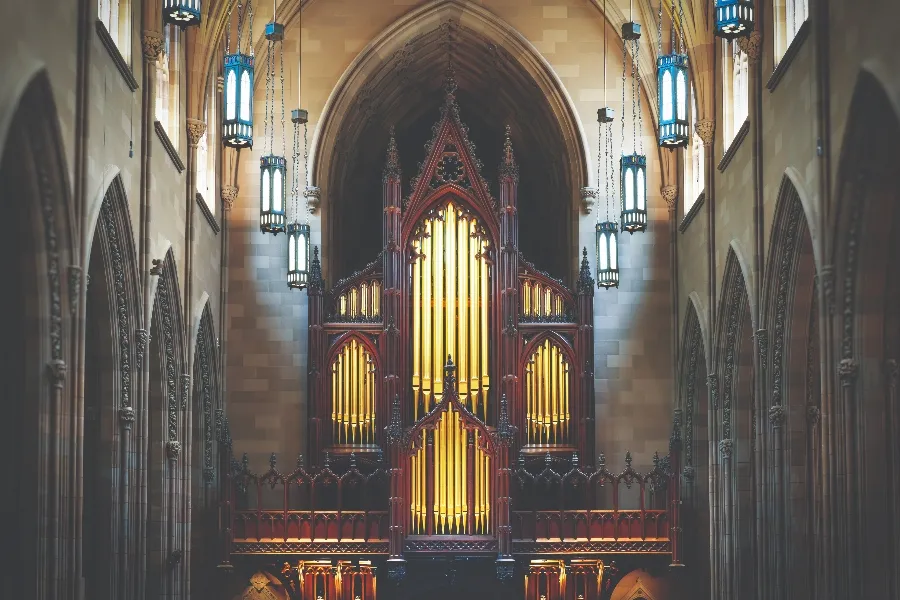
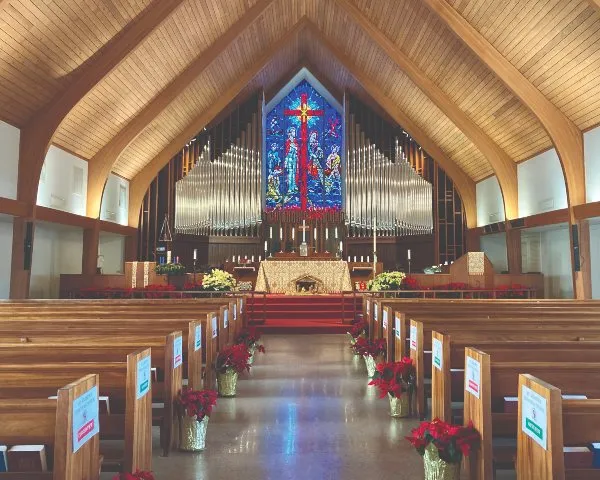
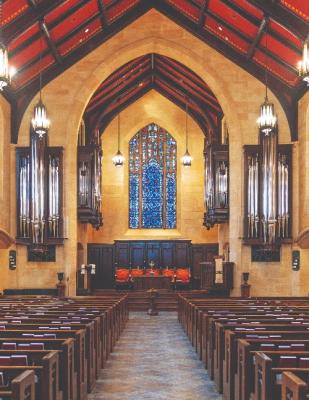
Létourneau’s Opus 138 resides in the four corners of the sanctuary. The Great, Swell, Solo, and Pedal divisions completely fill the chancel chambers, with new tone openings created between the chambers and the nave. These have been filled with symmetrical casework in oak and 16′ tin pipes, replacing faux plaster pipes that had occupied these wall surfaces since 1930; the casework is complemented by two new cantilevered cases displaying 8′ façade pipes facing each other in the chancel. At the other end of the room, two cases in the gallery each cantilever 16′ façades over the choir risers. These cases contain the Positiv, Choir, and Gallery Pedal divisions, with bass pipes from the Positiv 8′ Open Diapason, the Pedal 16′ Contrebasse, and the Pedal 8′ Violoncello on display. With the organ disposed around the sanctuary, an extraordinary range of effects—intimate to overwhelming, antiphonal and blended—becomes available to suit any need.
Between those first visits to Saint Charles Avenue Presbyterian Church and the signing of a contract, Létourneau was privileged to restore the Aeolian-Skinner pipe organ at Winthrop University in Rock Hill, South Carolina, in 2010. Winthrop University is the alma mater of Steven Blackmon, the church’s longtime director of music, and as it turned out, shared an abiding admiration for Aeolian-Skinner’s Opus 1257. Its tonal influence on Opus 138 is, as Steven himself might say, not insignificant.
The two instruments address very different acoustical situations. Opus 1257 resides in Winthrop’s Byrnes Auditorium, a 3,000-seat hall built during the Great Depression. Despite recent physical and acoustical changes to the auditorium, this 65-rank organ still impresses with its elegance and effectiveness in so vast a space. Saint Charles Avenue Presbyterian Church is, by contrast, of moderate proportions with seating for perhaps 600 on the main floor. The sanctuary’s acoustics were improved during post-Katrina renovations, but the space’s cubic volume remains the limiting factor.
Years ago, we described the Winthrop organ in this journal (July 2009, pages 24–25) as having a relatively placid Great division without chorus reeds; a good variety of mixture stops throughout; a delicate six-stop Positiv; a largely independent Pedal with 32′ stops extended from manual 16′s; and a superbly flexible Swell driven by a French-inspired reed chorus. Most elements of Opus 1257’s stoplist can be found in Opus 138 in one form or another, with some redistribution across the seven divisions as space permitted.
Opus 138’s Great, Swell, and Solo divisions in the chancel relate to one another in traditional fashion, with the Solo providing the organ’s most intimate and most extroverted voices. The expressive Positiv in the gallery occupies a role somewhere between a secondary Great and a secondary Swell—offering a complete principal chorus, broad string stops, and chorus reeds at 16′ and 8′—while the expressive Choir’s softer voices make it a natural choice for accompaniment. The two Pedal divisions—front and back, as it were—offer considerable independence: The chancel Pedal is grounded in a 16′ Open Diapason of strong fundamental and warm harmonic development, providing a natural foundation for the 8′ Principal, 4′ Choral Bass, and four-rank mixture above it. The Gallery Pedal’s 16′ Contrebasse and 8′ Violoncello are comparatively more restrained. Back in the chancel, the pedal flutes have been carefully balanced, with independent 8′ and 4′ ranks to enrich trio textures.
Far from a copy, the acoustical differences between the two rooms informed many specific tonal decisions with Opus 138. Wind pressures are lower than at Winthrop, and scalings have been reduced in varying degrees to achieve the right timbre at a reduced output level. The mixtures follow Aeolian-Skinner’s characteristically generous progressions, adapted through smaller scales and, in select bass octaves, lower pitches. The reed stops have been shaped by the same influence: the Great 8′ Trompette, the Positiv 8′ Trompette, and the Solo 8′ Touchstone Trumpet all employ Aeolian-Skinner’s distinctive French domed shallots with the faces cut at a very slight angle. The Swell trumpets, in contrast, feature English tapered shallots, as do the Pedal reed and the high-pressure 8′ Tuba, for a rounder, warmer tone.
Apart from the Tuba, the entire organ plays from Létourneau’s proven pallet-and-slider windchests. Refined over decades of production, these stoutly built chests are valued for their longevity and ease of maintenance. The end-to-end tone channels of slider chest design allow flue pipes to be voiced naturally for warmth and responsive speech, while trennschiede within the channels ensure that the reed stops are isolated and respond with equal promptness. The chests’ pulldown magnets and slider solenoids are wired to output panels by Solid State Organ Systems, and the entire organ is managed by their MultiSystem II platform. Three processors—Gallery, Swell, and Solo—are linked by fiber optic cable for reliable data transmission and a degree of lightning protection, while the console connects to the gallery organ by a single CAT-6 cable.
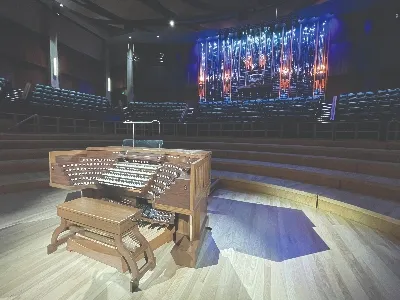
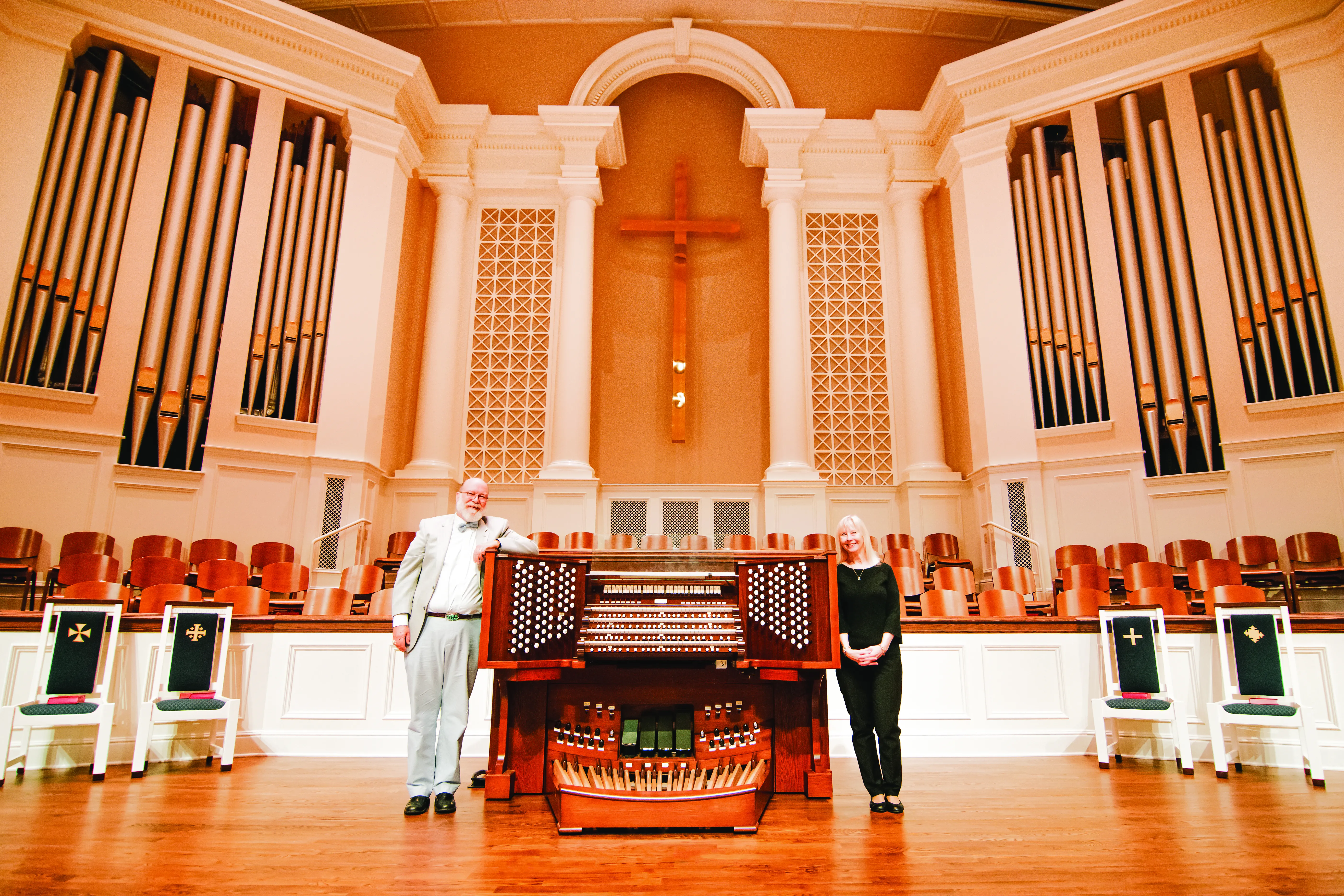
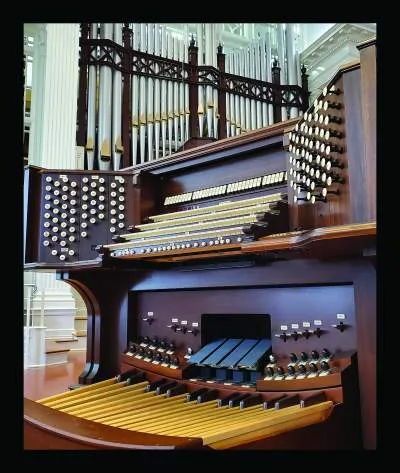
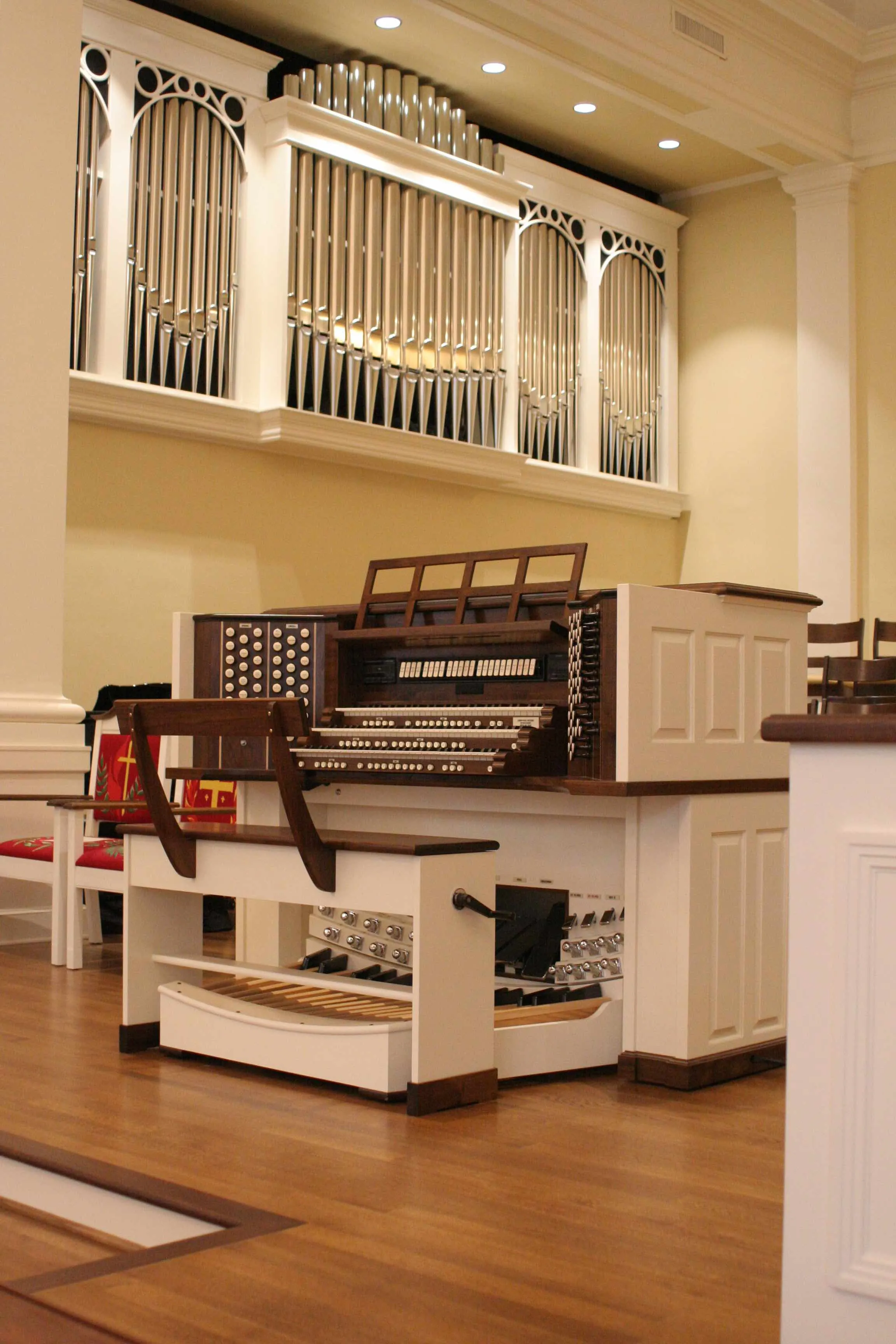
The large four-manual console features traditional drawknobs in angled jambs, as well as a row of tilting tablets above the fourth manual. It offers an extensive array of divisional pistons alongside twelve generals and 999 levels of memory. Also available is SSOS’s Organist’s Palette, which is an iPad interface enabling wireless record-playback from anywhere in the sanctuary. This is an especially valuable aid for assessing registrations and balance with such a spatially complex instrument. The Palette additionally offers a transposer function and a stopwatch, along with controls to fine tune the General piston sequencer, the Sostenuto functions, and the Pedal Divide. The console further features a programmable expression matrix—a concept developed by the late Richard Houghten—through which the four expressive divisions may be assigned as desired to any one (or more) of the four expression pedals.
Létourneau’s Opus 138 is, in several respects, an act of homage: to the Aeolian-Skinner tradition that so vitally shaped its tonal character; to the memory of Dudley Oakes, a dear friend and former colleague whose vision for this project never wavered; and to a congregation whose faith outlasted a hurricane and a pandemic. Building the 79-rank instrument occupied our team of twenty-five for the better part of a year in our Québec workshop, with further months of installation and onsite voicing following. We are enormously grateful to Saint Charles Avenue Presbyterian Church for their trust, as well as for the remarkable forbearance they showed across the instrument’s long gestation. It is our hope that this extraordinary instrument, our Opus 138, will serve both this congregation’s worship and the musical life of New Orleans for many generations to come.
—Létourneau Pipe Organs
From the organist
After nearly forty years as music director and organist here at Saint Charles Avenue Presbyterian Church, I have learned a few things: how to pace a hymn so that it neither drags nor sprints, how to conduct and accompany the fun family that is our Chancel Choir, and—perhaps most importantly—how to dream patiently. That patience has at last been rewarded with the dedication of this new pipe organ: an instrument that might be fairly described as a long-anticipated “final draft,” after decades of thoughtful revisions.
The Austin organ it replaces served faithfully and mostly without complaint for many years. It did what was asked of it and, occasionally, even what was not. Yet as it was entering its fifth decade, it became clear that no amount of necessary restoration could persuade it to become something it was not. We could invest generously in its upkeep, but it would remain, at heart, a well-meaning but limited neo-Baroque companion. Faced with that reality, we chose the more adventurous path: instead of renovating the past, we would build for the future.
As it happens, our nearly hundred-year-old sanctuary itself had been quietly waiting for just such an ambition. Tucked away in corners up and behind the lectern and pulpit were organ chambers, long inhabited by an even older instrument that had, shall we say, retired without fully vacating the premises. These spaces, ripe for reclamation, offered a remarkable and irresistible opportunity. Rather than being confined to a single location, the Centennial Organ now speaks from every corner of the room. The result is an effect that might be described, with only slight exaggeration, as “Surround Sound for the Soul.” One no longer simply hears the organ; one is, at times, gently (or even not so gently!) embraced by it.
This spatial/acoustical design is matched by opportunity for musical breadth. This new instrument has been conceived as a comprehensive resource, capable of doing justice to repertoire from across the centuries. Whether the clean lines of early music, the sweeping gestures of the Romantic era, or the more adventurous colors of modern works, this organ is equipped to respond with marvelous flexibility. It can lead a congregational hymn, support the choir, or step forward on its own in concert mode—and in so doing, reminding us that it has quite a lot to say.
Of course, instruments of this scope do not just magically appear. They are the result of vision, persistence, and—perhaps most crucially—trust. The congregation of this church has, over the course of forty years, demonstrated all three in abundance.To allow an organist to design his “dream instrument” from the ground up is no small act of faith. It suggests a community that not only values music but is willing to invest in it with not only seriousness, but with patience and good humor as well.
And speaking of good humor, it would be remiss of me not to invoke the myriad memories I have of the planning of this organ with the indefatigable and indomitable Dudley Oakes. Dudley and I began imagining the possibilities for a new instrument here at Saint Charles Avenue Presbyterian Church as early as 2002. At that time, he was vice-president in charge of sales at Létourneau and full of good-natured enthusiasm for the possibilities. Unfortunately, Hurricane Katrina put a literal twenty-year damper on our plans to replace the old Austin, but Dudley helped me to never lose hope. During many subsequent visits over the following years, we continued to plan, reimagine, and revise our plans, with the blueprint for the final project ever growing in the process. The church finally signed the contract in 2021 for a new-from-the-ground-up 79-rank Létourneau with Dudley as the proud owner of the company. That he would not live long enough to see our mutual dream come to fruition will always be a source of sorrow for me; he would have loved this organ and would have beamed with pride over this long-deferred achievement.
Over my nearly four decades of association with this church, Saint Charles Avenue Presbyterian has provided its music director not just employment, but encouragement, collaboration, and occasional gentle tolerance when musical ambitions grew . . . shall we say ambitious. This beautiful instrument stands as a shared achievement: the product of a long-held vision, certainly, but also of a congregation willing to say, “Yes, let’s see where this goes.”
This is not merely an amalgamation of pipes, processors, and mechanisms, but it is a new and living voice within a beautiful acoustical environment. Opus 138 will continue to shape worship, inspire artistry, and, from time to time, remind us of the joys of a well-placed chord, even if we’re not quite sure which corner of the room it sprang from.
With sincere gratitude—and just a hint of satisfaction—this instrument is offered to the glory of God and to the life of this church. May it serve faithfully for many years to come, and may it always keep us listening . . . from all the directions.
—Steven Blackmon
Director of Music/Organist
Photo credits: Steven Blackmon, except as noted
Builder’s website: www.letourneauorgans.com
Church website: www.scapc.org
GREAT (Manual II, 85 mm pressure)
16′ Contra Geigen 12 pipes extension of 8′ Geigen, zinc
8′ Open Diapason 61 pipes 70% tin (façade)
8′ Geigen 61 pipes zinc and 55% tin
8′ Flûte harmonique 61 pipes zinc and 55% tin
8′ Holzflöte 61 pipes wood and 33% tin
4′ Octave 61 pipes 70% tin (façade)
4′ Rohrflöte 61 pipes 33% tin
2-2⁄3′ Quint 61 pipes 55% tin
2′ Super Octave 61 pipes 55% tin
1-1⁄3′ Fourniture IV 244 pipes 19-22-26-29, 55% tin
2′ Cornet III–V 239 pipes 15-17-19, 55% tin
8′ Trompette 66 pipes 55% tin, Bertounèche/Aeolian-Skinner shallots
Great 16′
Great Unison Off
Great 4′
8′ Tuba (Solo)
8′ Touchstone Trumpet from Solo
4′ Touchstone Trumpet from Solo
Chimes from Solo
Zimbelstern 5 bells
Nachtigal
SWELL (Manual III, enclosed, 125mm pressure)
16′ Quintaton 61 pipes wood and 33% tin
16′ Flauto Dolce from Solo
8′ Geigen Diapason 61 pipes 55% tin
8′ Viole de gambe 61 pipes zinc and 70% tin
8′ Voix Celeste 54 pipes from G8, zinc and 70% tin
8′ Stopped Diapason 61 pipes wood and 33% tin
8′ Flauto Dolce from Solo
4′ Prestant 61 pipes 55% tin
4′ Flauto traverso 61 pipes 33% tin
2′ Fifteenth 61 pipes 55% tin
1-1⁄3′ Plein jeu III 183 pipes 19-22-26, 55% tin
16′ Fagotto 61 pipes 55% tin, tapered English shallots
8′ Trumpet 66 pipes 55% tin, tapered English shallots
8′ Hautbois 61 pipes 55% tin, tapered English shallots
8′ Vox Humana 61 pipes 55% tin, tapered English shallots
4′ Clarion 78 pipes 55% tin, tapered English shallots
Swell Tremulant
Swell 16′
Swell Unison Off
Swell 4′
SOLO (Manual IV, enclosed except *, 210mm pressure)
16′ Flauto Dolce 12 pipes extension of 8′ Flauto Dolce, zinc
8′ Doppelflöte 61 pipes wood and 33% tin
8′ Flauto Dolce 61 pipes zinc and 33% tin
8′ Flute Celeste 54 pipes from G8, zinc and 33% tin
4′ Flûte harmonique 61 pipes stopped construction, 33% tin
4′ Flauto Dolce (ext) 12 pipes extension of 8′ Flauto Dolce, 33% tin
8′ Clarinet 61 pipes 55% tin, tapered English shallots
Solo Tremulant
8′ Tuba 66 pipes 380mm wind, 55% tin, tapered English shallots
8′ Touchstone Trumpet * 90 pipes 165mm wind, 55% tin, Bertounèche/A-S shallots
Solo 16′
Solo Unison Off
Solo 4′
Chimes 37 notes Walker digital
Harp 49 notes Walker digital
Glockenspiel 37 notes Walker digital
PEDAL (125mm pressure)
32′ Contra Geigen 32 notes Walker digital
32′ Contra Bourdon 32 notes Walker digital
16′ Open Diapason 32 pipes 70% tin (façade)
16′ Geigen from Great
16′ Bourdon 32 pipes wood
16′ Quintaton from Swell
16′ Flauto Dolce from Solo
8′ Principal 32 pipes 55% tin
8′ Geigen from Great
8′ Stopped Flute 32 pipes wood and 33% tin
4′ Choral Bass 32 pipes 55% tin
4′ Nachthorn 32 pipes 33% tin
2-2⁄3′ Mixture IV 128 pipes 19-22-26-29, 55% tin
32′ Contra Bombarde 32 notes Walker digital
32′ Contra Fagotto 32 notes enclosed with Swell, Walker digital
16′ Bombarde 32 pipes 165mm wind, 55% tin
16′ Fagotto from Swell
8′ Trompette 12 pipes extension of 16′ Bombarde, 55% tin
4′ Clairon 12 pipes extension of 8′ Trompette, 55% tin
8′ Tuba from Solo
8′ Touchstone Trumpet from Solo
4′ Touchstone Trumpet from Solo
Chimes from Solo
Octave Chimes from Solo
Pedal Divide
GALLERY POSITIV (Manual I , enclosed except *, 85mm pressure)
16′ Bourdon 61 pipes wood and 33% tin
8′ Open Diapason * 61 pipes 70% tin (façade)
8′ Chimney Flute 61 pipes wood and 33% tin
8′ Viola 61 pipes zinc and 55% tin
8′ Viola Celeste 54 pipes from G8, zinc and 55% tin
4′ Principal 61 pipes 55% tin
4′ Koppelflöte 61 pipes 33% tin
2′ Fifteenth 61 pipes 55% tin
1-1⁄3′ Harmonic Mixture II–IV 208 pipes 19-22, 55% tin
16′ Fagotto 61 pipes 55% tin
8′ Trompette 66 pipes 55% tin
Positiv Tremulant
Positiv 16’
Positiv Unison Off
Positiv 4’
16′ Tuba from C13, from Solo
8′ Tuba from Solo
8′ Touchstone Trumpet from Solo
4′ Touchstone Trumpet from Solo
Glockenstern 5 bells
Echo Chimes 37 notes Walker digital
Chrysoglott 61 notes Walker digital
Orchestral Harp 61 notes Walker digital
GALLERY CHOIR (Manual III, enclosed, 85mm pressure)
8′ Geigen Principal 61 pipes 55% tin
8′ Lieblich Gedackt 61 pipes wood and 33% tin
8′ Erzähler 61 pipes zinc and 55% tin
8′ Erzähler Celeste 54 pipes from G8, zinc and 55% tin
4′ Flauto Traverso 61 pipes 33% tin
2-2⁄3′ Nazard 61 pipes 33% tin
2′ Piccolo 61 pipes 33% tin
1-3⁄5′ Tierce 61 pipes 33% tin
16′ English Horn 61 pipes C1 to B12 half-length, 55% tin
8′ Oboe 61 pipes 55% tin
Choir Tremulant
Choir 16′
Choir Unison Off
Choir 4′
GALLERY PEDAL (105mm pressure)
32′ Flûte conique 32 notes Walker digital
16′ Contrebasse 32 pipes 70% tin (façade)
16′ Bourdon from Positiv
16′ Lieblich Gedackt 12 pipes extension of Choir 8′ Lieblich Gedackt, wood
8′ Violoncello 32 pipes 70% tin (façade)
8′ Lieblich Gedackt from Choir
16′ Posaune 32 pipes 55% tin
8′ Octave Posaune 12 pipes extension of 16′ Posaune, 55% tin
* = unenclosed
All usual sub octave, unison, and octave intermanual couplers.
93 stops, 79 ranks, 4,433 pipes