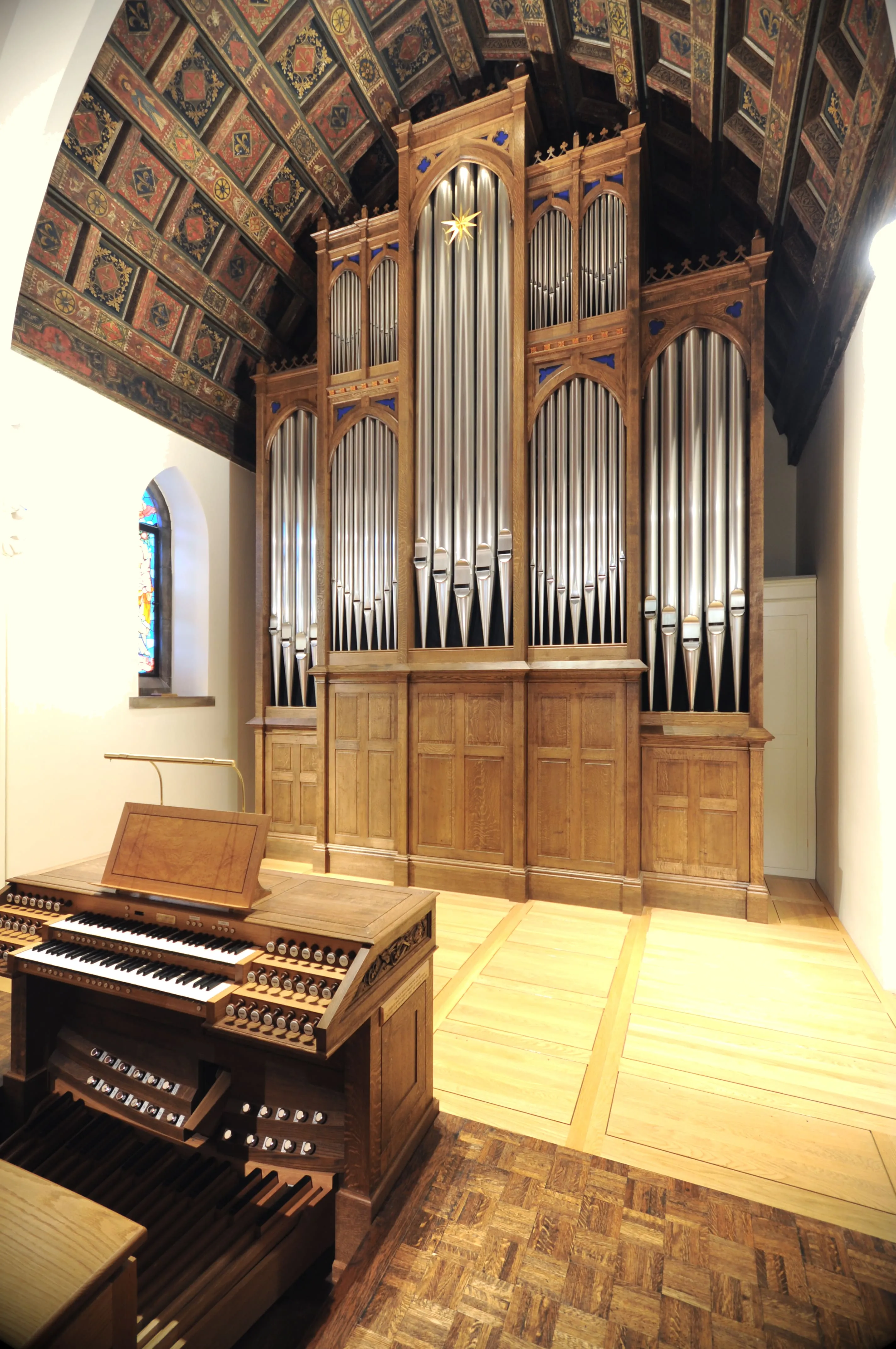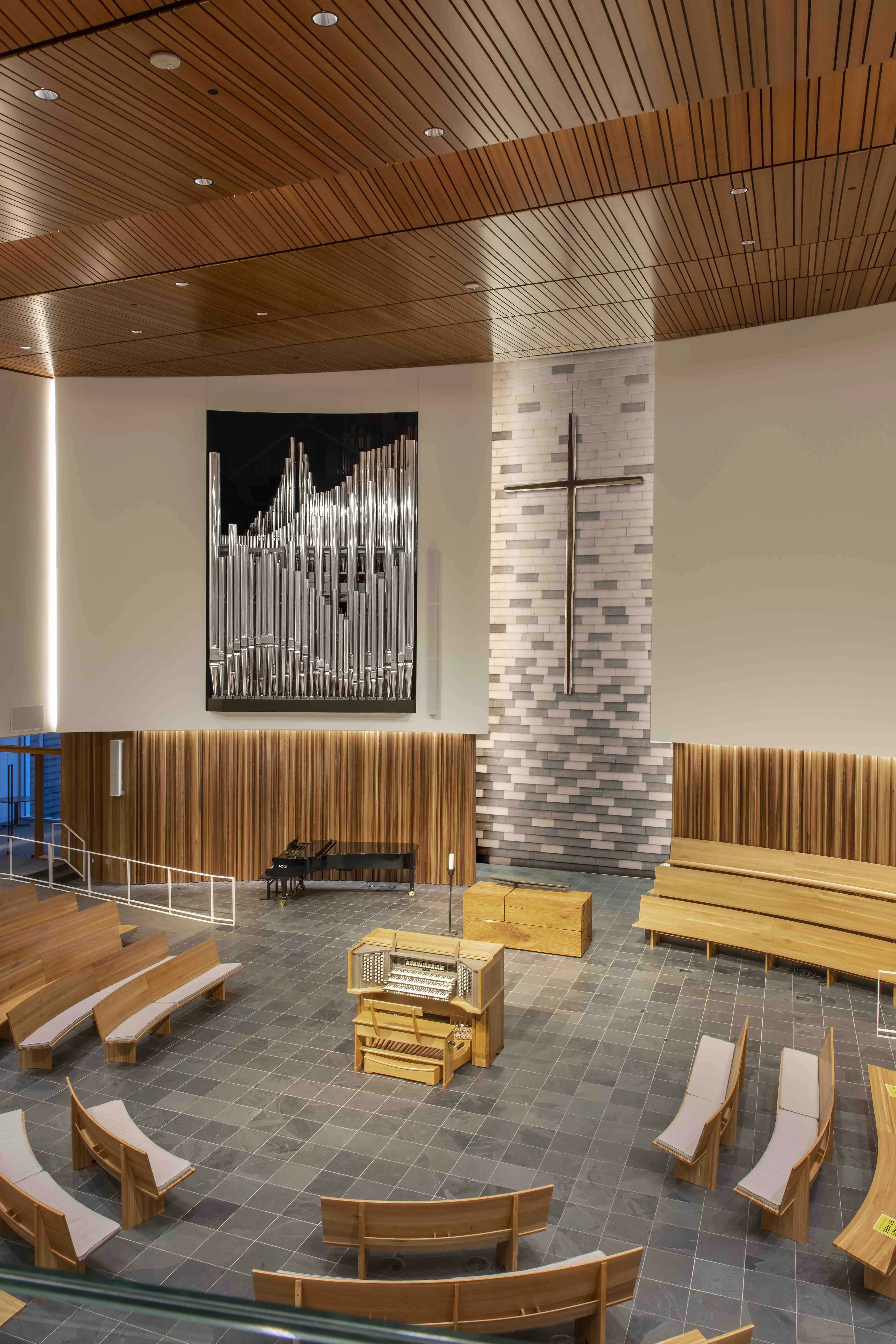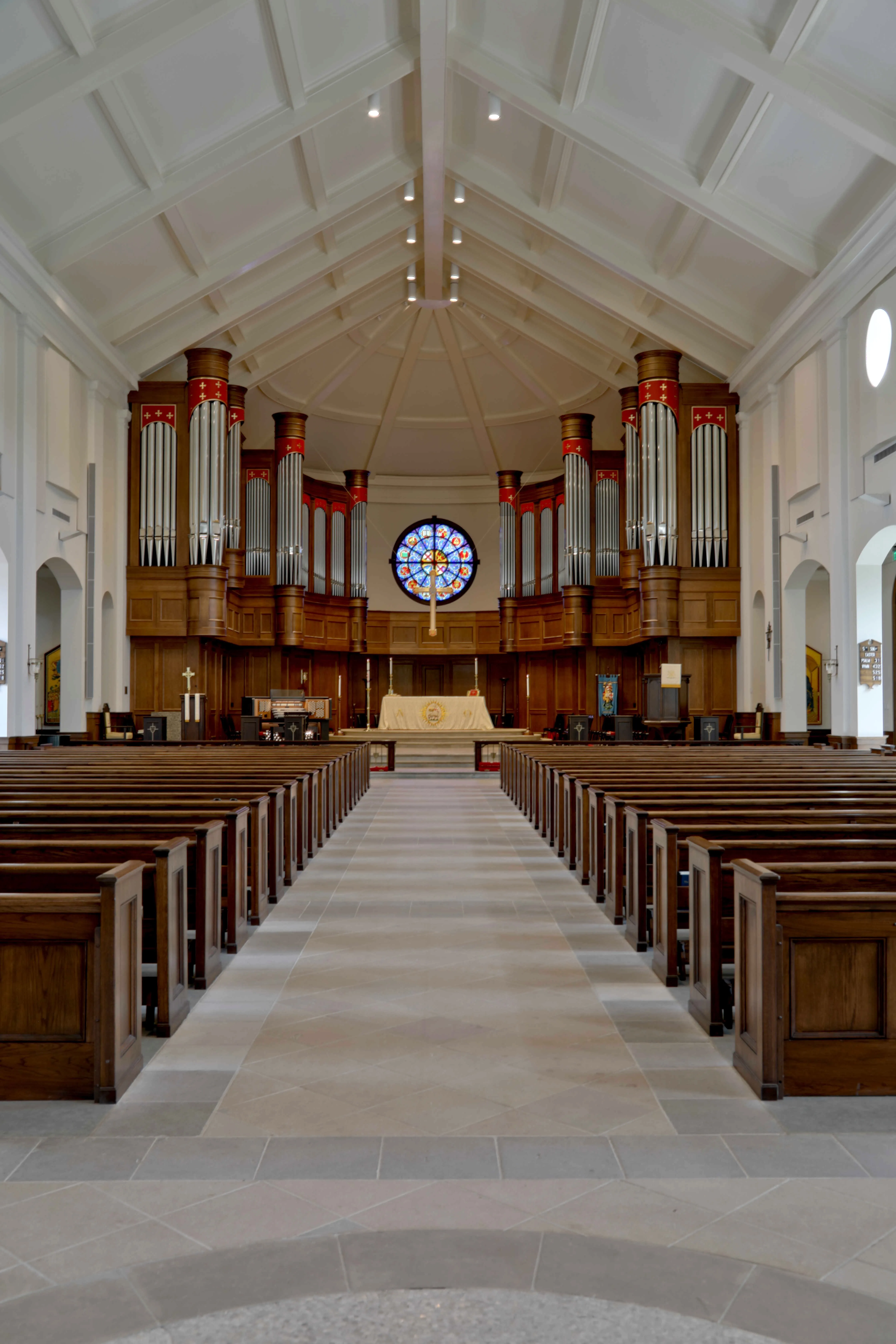
Cover feature: Juget-Sinclair Opus 56
Juget-Sinclair Organbuilders, Montréal (Québec), Canada; Cathedral of Saint Joseph, Sioux Falls, South Dakota
From the organist
More often than not, when I talk with colleagues about organ projects we are faced with a looming and apparently insoluble dilemma: German Baroque or French Symphonic? Having to choose between the two monumental and beloved repertoires seems impossible; and yet, the technical conflicts crop up immediately. Chiff vs. no chiff; polyphonic vs. progressive mixtures; chorus vs. solo reeds; treble ascendancy, speed of speech, expressive divisions, and on and on. The accusation sometimes leveled at an instrument that bridges the gap is that it is “eclectic” or worse, a “mutt” that doesn’t do anything particularly well.
Still, at the outset of this project we decided to take on the challenge. One of my interview questions for Robin Côté was where we should take an organ study tour in preparation for this instrument. He answered right away: Toulouse and Freiberg, to explore the best of the Silbermann and French Romantic traditions. Quite a juxtaposition! Another key inspiration was the organ at the Bales Recital Hall at the University of Kansas, on which I grew up playing a wide variety of repertoire, and which was built by Hellmuth Wolff, an influential craftsman who mentored some of the Juget-Sinclair team. In the end, I think we have achieved something quite remarkable with a 55-stop organ: a coherent and flexible instrument that does justice to both the Silbermann and French Symphonic traditions, and, by extension, to many other traditions besides. It is not a copy of anything or an academic exercise in historicism; it has its own identity and (I believe) quite a future. One of my students recently played a one-hour recital of Franck and Vierne, exploring a full range of symphonic colors and reed choruses. It is still astonishing to me to listen to a program like that, knowing that the same instrument could just as easily shift to the brightness and brilliance of a Silbermann principal chorus. Yet, somehow it all works!
The team from Juget-Sinclair will share more of the technical considerations in their essay. I want to close by mentioning the purpose of the instrument: providing music for the Catholic liturgy, as this is an installation in a Catholic cathedral. The stylistic dilemma does not just affect repertoire and concert music. The Catholic liturgy in the twenty-first century is quite eclectic as well. On any given Sunday, the organ may accompany Gregorian chant or dialogue with that tradition through improvisation or chant-based repertoire. But immediately after a chant we may have a sixteenth- or seventeenth-century Genevan or Lutheran hymn tune; or perhaps a nineteenth- or twentieth-century Anglican hymn in a more modern harmonic idiom, followed by a Mass Ordinary setting by a living composer. Choral anthems are chosen from a wide variety of times and places—Brahms one week; Bach the next; Franck or Fauré the next; Stanford or Howells the next. A range of colors under expression is absolutely necessary for choral accompaniment. Then, of course, there are preludes and postludes from a wide range of sources. Taking all of this together, it is clear to me that the liturgy itself calls for something more than a narrow stylistic focus. I felt it was my responsibility to bring something to the cathedral that does not just fit my personal repertoire or preferences. I believe we’ve built an organ that goes far beyond that—an instrument that will inspire new ideas and approaches long after my time here is finished.
—Jared Ostermann, DMA, Cathedral Music Director and Organist
From the builder
Introduction
Denis Juget began building practice organs and continuo organs in a chicken shed in 1994. Like a steam locomotive, momentum gradually built and built, and this year we have completed our third cathedral organ! Cathedrals are not exactly a dime-a-dozen, and the fact that we recently had back-to-back cathedral projects (our Opuses 54–55 at the Cathedral of the Sacred Heart in Richmond, Virginia, and now Opus 56 in Sioux Falls) is not lost on us. The organ for the Cathedral of Saint Joseph in Sioux Falls took approximately two years from start to finish. This represents about five percent of our personal careers, and as such, all of the artisans at Juget-Sinclair have poured their skill, care, pride, and love into this instrument, which (if we have done our jobs well) will be continually appreciated and last for centuries!
Laying the foundation
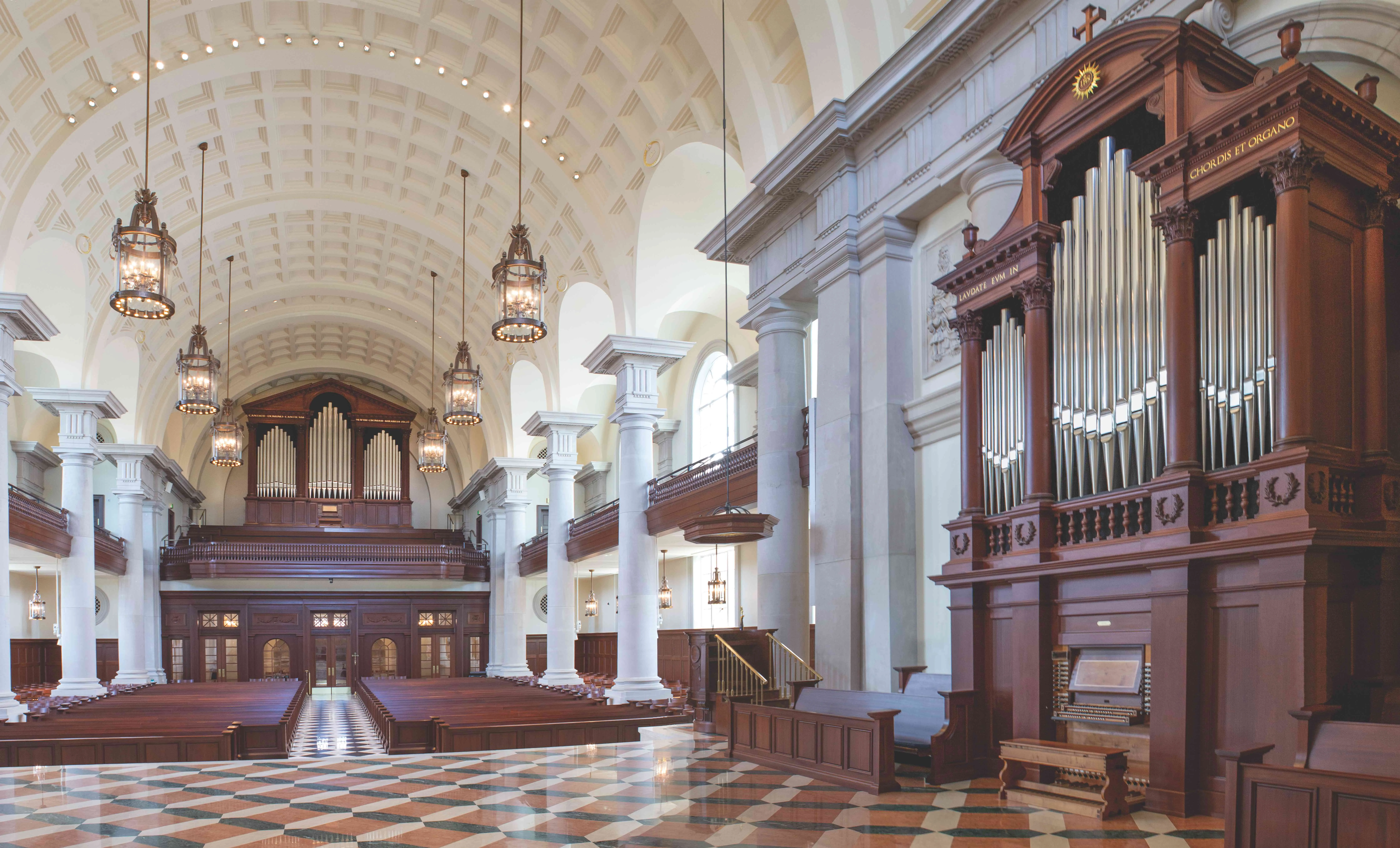
Though the stakes for such an important project are admittedly high and the design challenges many, several aspects of this project seemed easy due to the natural way in which some things just “clicked.” Our first visit to the cathedral felt like home: the architecture (by French-American architect Emmanuel Masqueray) is reminiscent of our churches in Québec. Before roads and railroads became the norm, Montréal was the gateway to the Midwest, and the Saint Lawrence River was the highway. Saint Joseph is the patron saint of workers and carpenters, and we consider him to be the patron of organbuilders too. The other major aspect of the project that just seemed to fall into place naturally was the tonal design of the instrument, largely due to the fact that the organist (Jared Ostermann) and consultant (Kevin Vogt) seemed to be on the same wavelength as us right from the very start. We also believe the fact that these two important figures had the opportunity to play some of our previous organs helped establish confidence in us, and our opportunity to hear Jared as a finalist in the 2011 Canadian International Organ Competition established our confidence in him!
Early discussions with the cathedral made it clear that their top priority was to bring a world-class organ to Sioux Falls. In each of our instruments we strive for the very best, and we are deeply honored that the Cathedral of Saint Joseph felt that we were up to the task! The bar was clearly set very high, as evidenced by the magnificent renovation and decoration carried out in the cathedral over the past twenty years. Tonally, the cathedral sought an organ that could accompany the Catholic liturgy, provide congregational and choral accompaniment, and be able to comfortably interpret repertoire from various styles. Of these various styles, composers such as Vierne and Bach were at the top of this list. From this, the idea was born to find a way to marry nineteenth-century French Symphonic with eighteenth-century Saxon style.
Learning from the masters
Trying to describe sound is like trying to describe a color. The best way to make sure two parties are on the same page when talking about sound is for both parties to have heard the same thing and to have the same point of reference. Because of this, it was beyond helpful to go with Jared and Kevin overseas to see, hear, and play several carefully selected masterpieces from which to draw inspiration. Fortunately for us, Toulouse boasts a veritable smorgasbord of interesting and authentic nineteenth-century French organs. We were blown away by the Puget at Notre-Dame-de-la-Dalbade, the Poirier & Lieberknecht at Notre-Dame-de-la-Daurade, and the Cavaillé-Coll of Saint-Sernin, to name a few. After a few days in Toulouse, we flew to Leipzig and from there made trips to see the Gottfried Silbermann organs of the Hofkirche in Dresden, as well as the Petrikirche and Mariendom in Freiberg.
Though the French Symphonic and Gottfried Silbermann styles may seem at odds at first glance, visiting examples of both helped us to realize just how many commonalities there are that could form the glue that holds the concept for our organ in Sioux Falls together. For example, Silbermann retained a French-style trompette in the pedal right up to the very end of his career. Many of his reeds are quite French in character (especially at the Mariendom in Freiberg), and similarities can also be found in the flutes of his earlier organs. Coming back to Montréal, only slight changes were made to the stoplist, but we felt much more confident in our tonal approach especially when it came to the principal choruses. The 16′ and 8′ manual principals are of a wider scale and narrower mouth than Silbermann, but the higher principals move progressively towards Silbermann scales with 2/7 mouths, culminating with the mixtures, which are quite similar to what we heard in the Freiberger Dom. This allows the organist to have four creamy 8′s for a fonds d’orgue, and also have a bright and punchy principal chorus. Our time in Saxony gave us the courage to go further into Silbermann’s style than we initially thought would be possible and still have a coherent result. It also gave us the confidence to add a temperament that is just strong enough (1/8 comma meantone) to be noticeable, while still being pleasant in all keys.
Turning dreams into reality
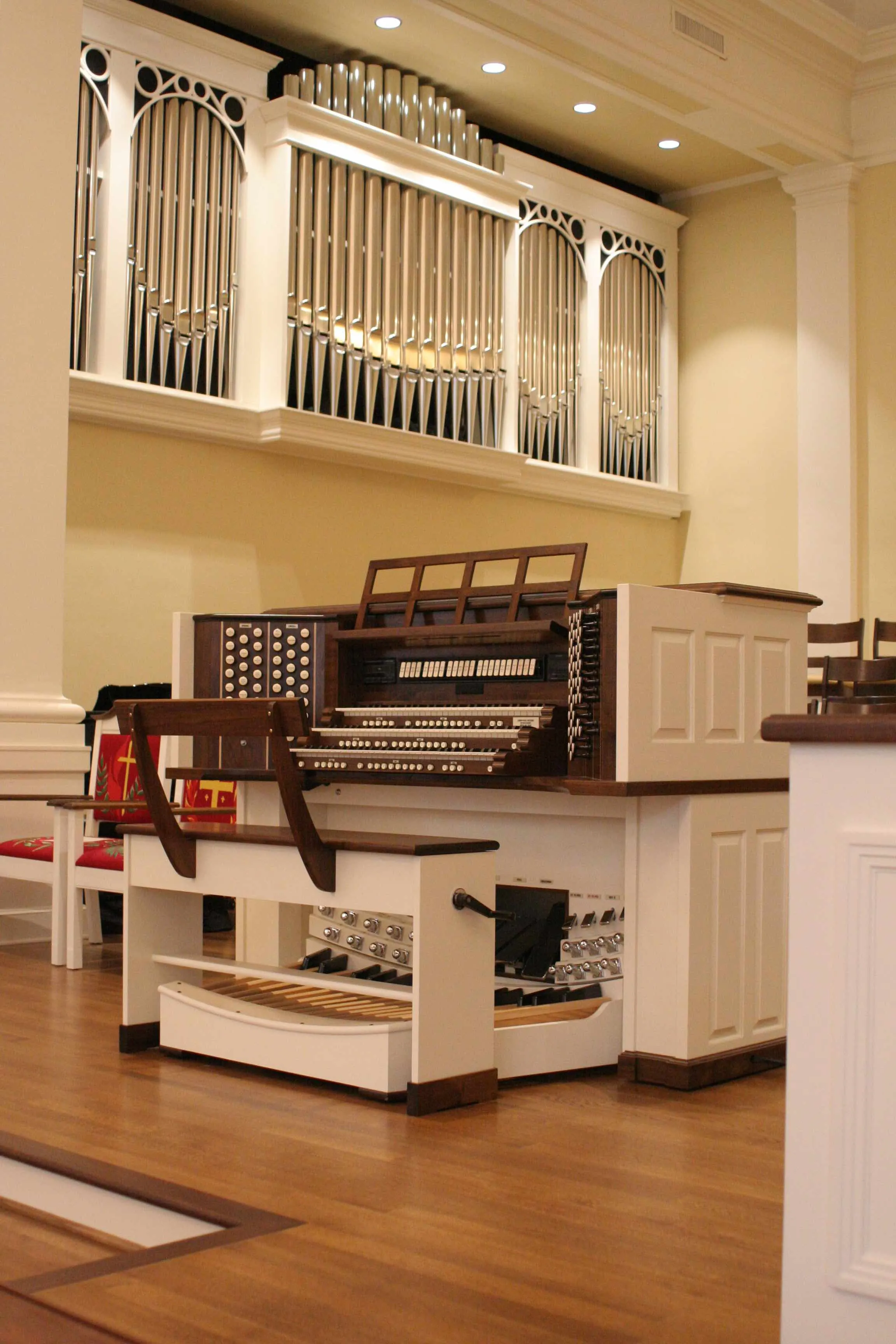
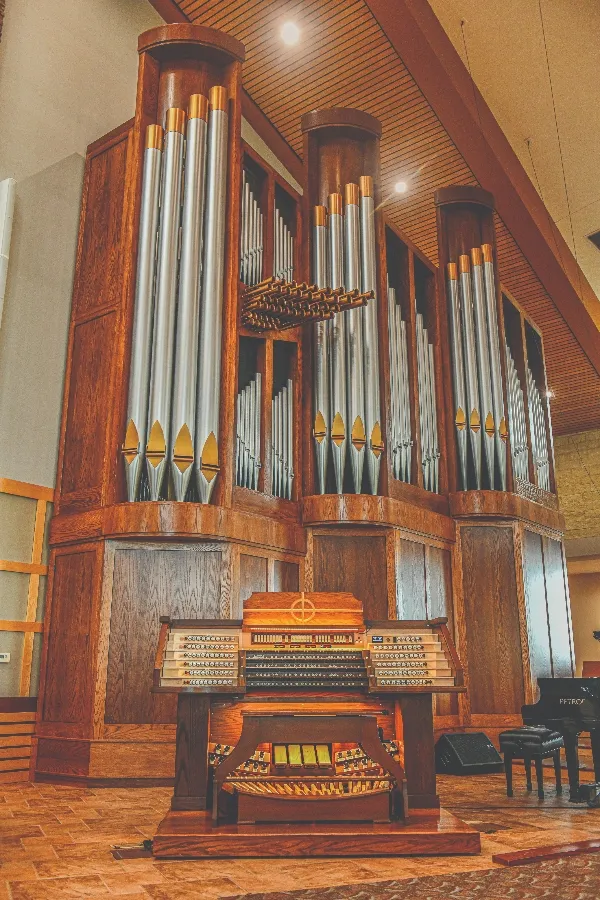
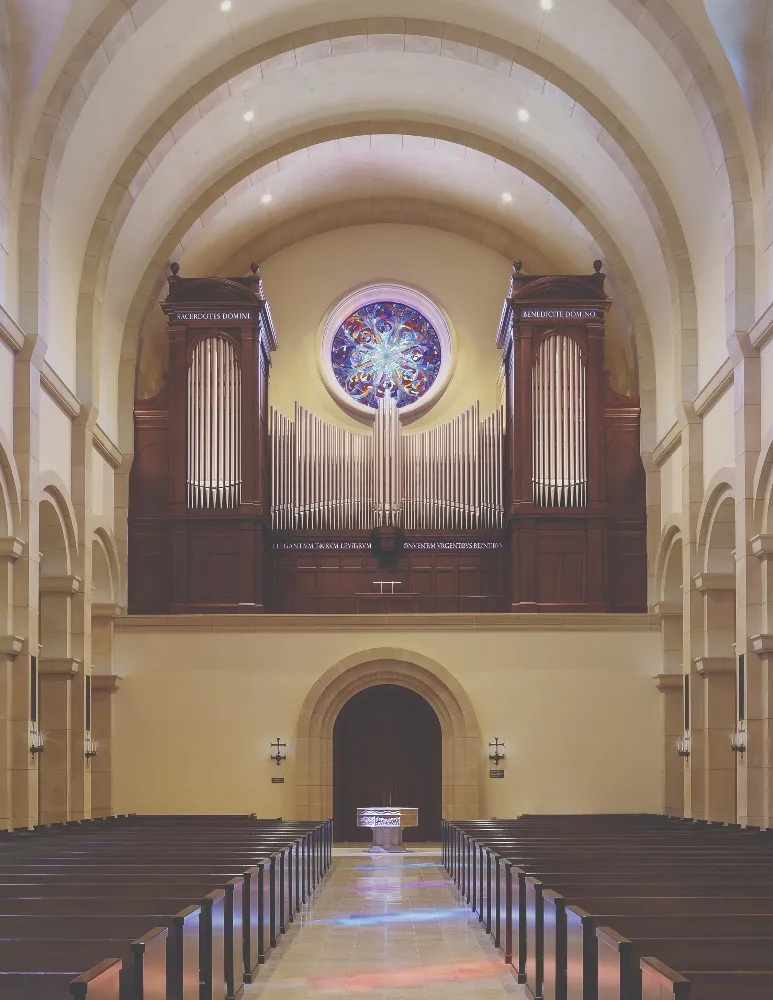
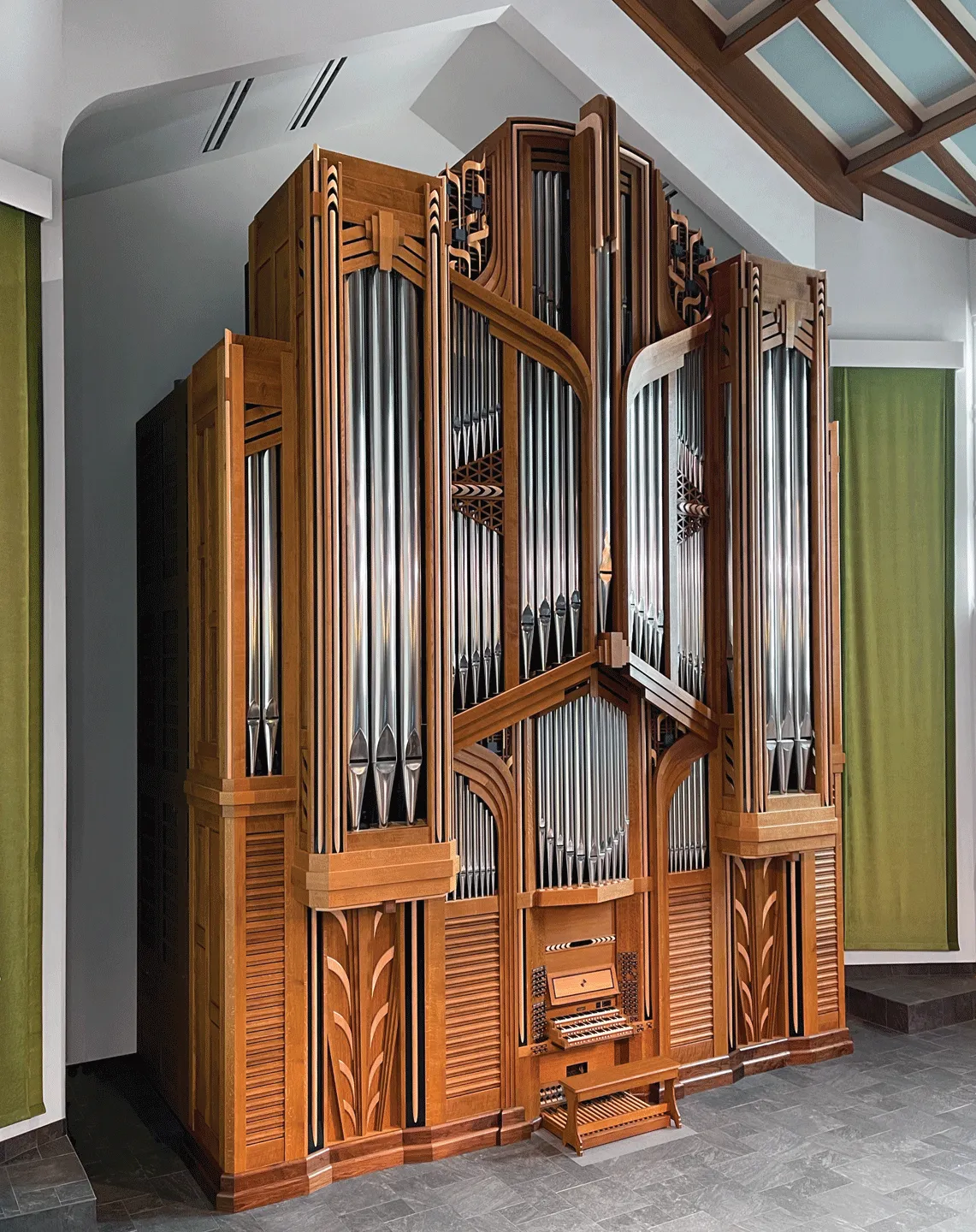
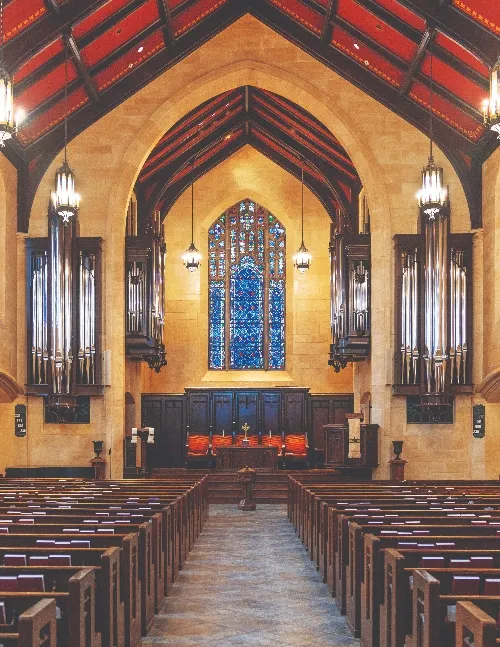
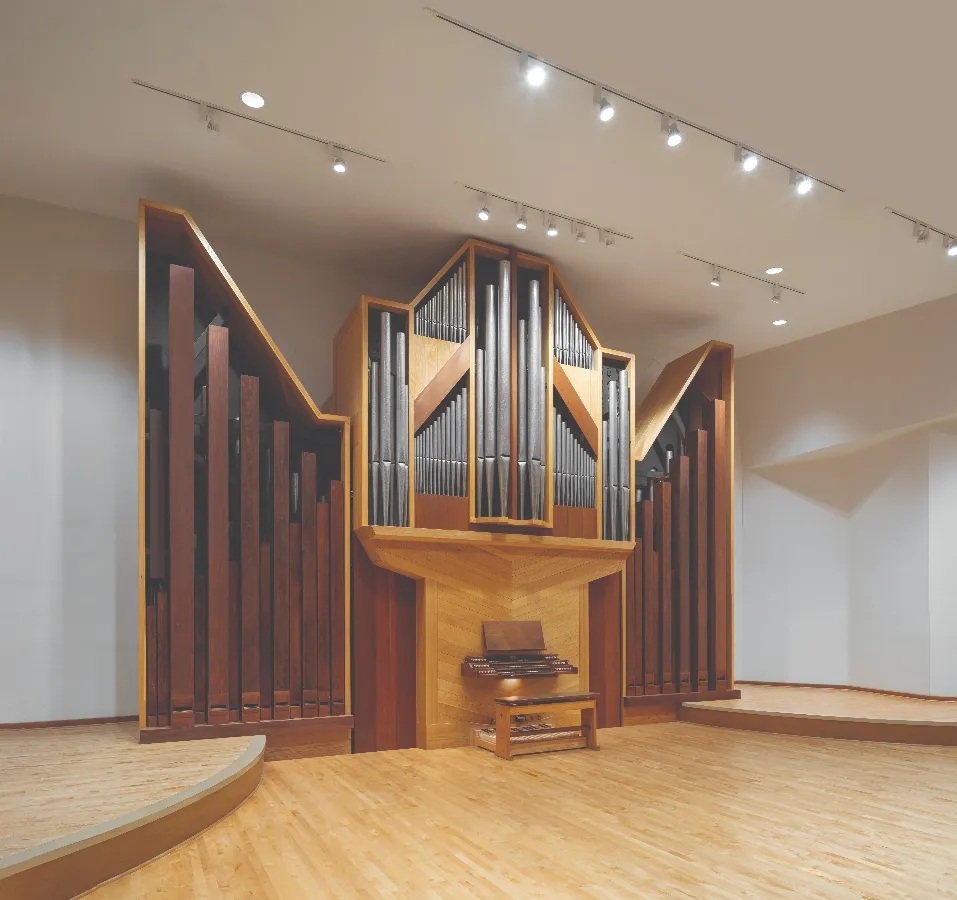
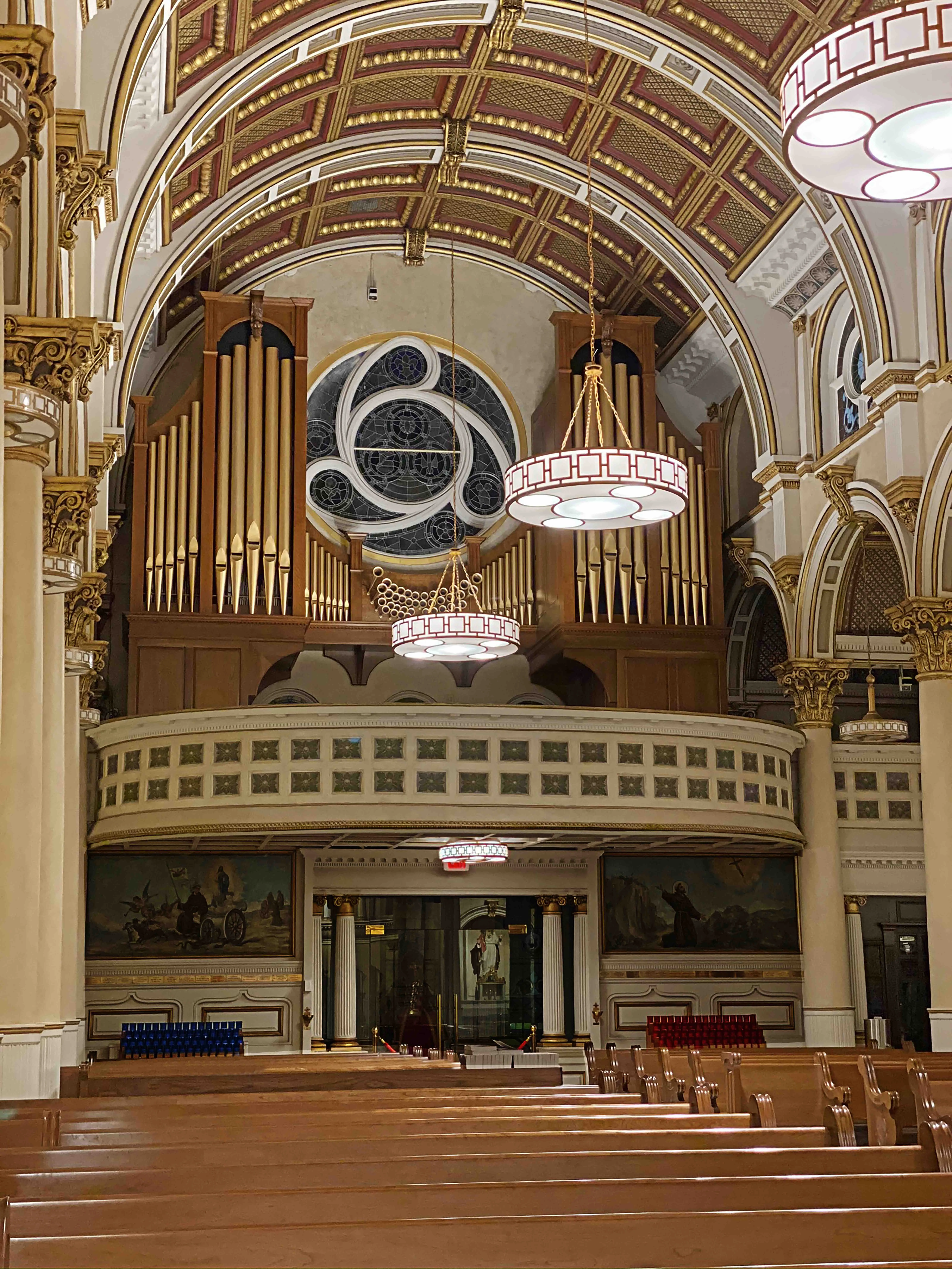
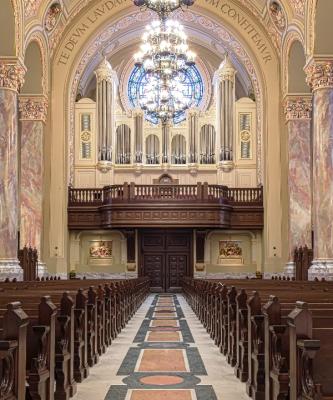
The physical layout of the organ posed some interesting design challenges. The organ is placed in a relatively shallow balcony, and an HVAC duct and access to and from the stairwell, as well as leaving the rose window unobstructed, ultimately guided us to the final layout. We had to go back to the drawing board a couple of times before we were able to find a layout that met all these requirements, provided good access for tuning and maintenance, and made sense aesthetically. Now, the Positif and Récit boxes are placed below the rose window, flanked by the Pédale to the liturgical south and the Grand-Orgue to the north. All the pipes except the pedal basses are more or less on the same level, which helps tuning stability between divisions throughout the seasons. The Pédale Trombone 16′ and Grand-Orgue Basson 16′ (full length, straight) are hidden within the 16′ towers of the case, which feature the low D and D-sharp of the Montre 16′ as their center pipes. The organ case is adorned with carvings done in-house and also gilded by us. They make good use of the Saint Joseph lily to help tie the organ to its community. All told, from the moment pencil hit paper to brushing off the last of the excess gold leaf, approximately two thousand hours were devoted to the carvings.
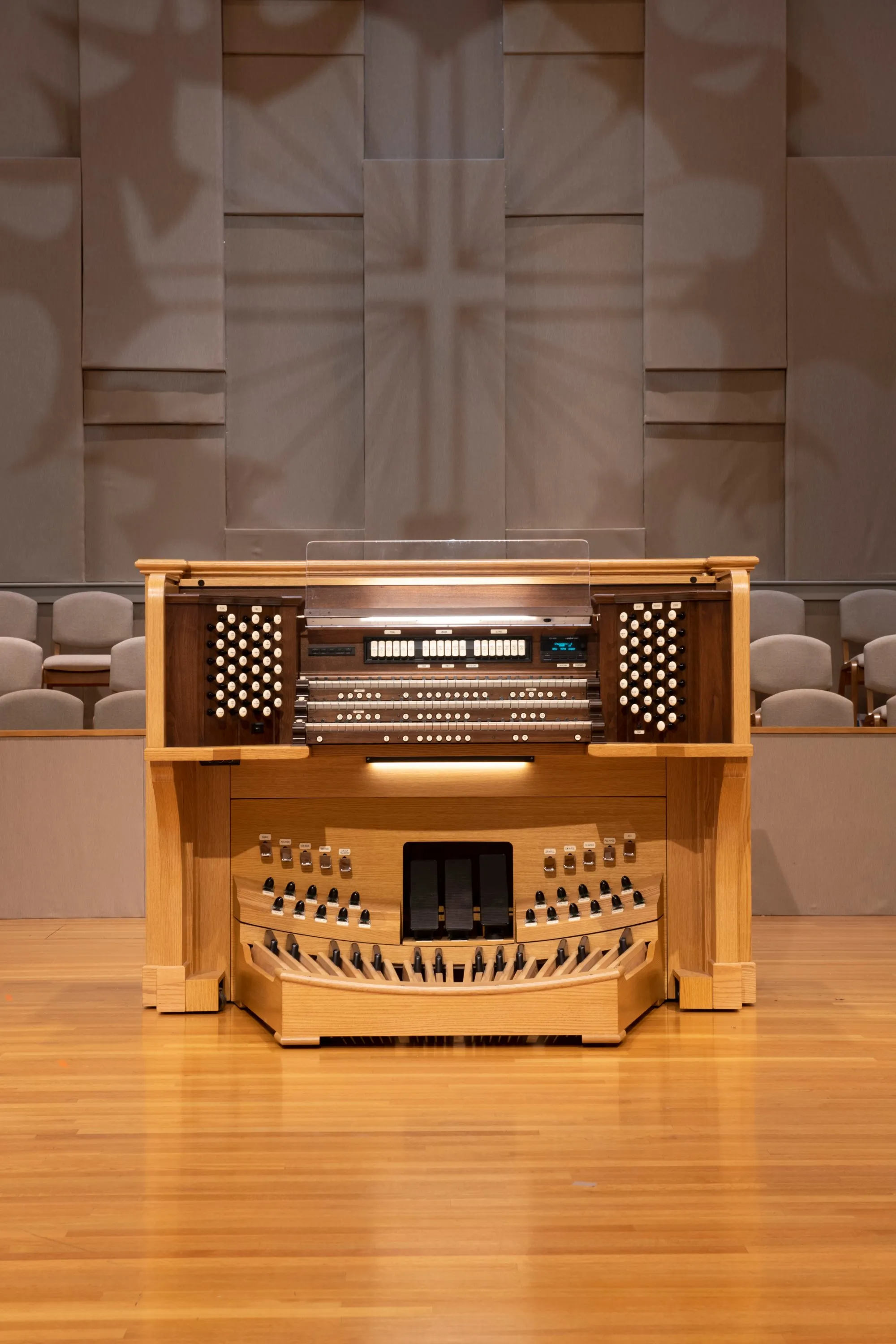
Placing the Grand-Orgue and Pédale so far laterally from the integrated console posed quite the design challenge for the mechanical action. Careful thought, a holistic technical design, nearly one mile of carbon-fiber trackers, and a lot of patience ultimately resulted in what is, in our opinion, perhaps our best action-feel to date! We aim to build as much of the organ ourselves as we possibly can. Building all of our own action components allowed us to overcome the obstacles present and still have a very responsive, comfortable result!
Tonally, we had a fair bit of fun as well. The pedal has a three-rank Harmoniques 32′ compound stop that plays dedicated quint, seventh, and ninth ranks of the 32′ harmonic series. Space unfortunately did not allow for a true 32′ stop, but the first twelve pipes of the quint allow for a justly-tuned resultant, and the effect of all three ranks playing with the plenum gives the impression of a soft Contra-trombone 32′ underpinning everything. The sumptuous five-second reverberation of the cathedral helps these resultant stops to be even more convincing.
Conclusion
We are very fortunate to be located in a vibrant city like Montréal. Naturally crossing paths with institutions such as the Canadian International Organ Competition and McGill University also tends to bring young talent to our door, whether for just a visit or an apprenticeship. Our team comprises thirteen artisans (the average age in our shop is now 38 years old), of which six went to Sioux Falls to set the organ up over a period of three weeks. Voicing took two months with two (and occasionally three) people. Of course, it is bittersweet to say goodbye to one of our organs when it is complete, but our own community here in Montréal were able to show their appreciation by coming to our open house this past summer where we estimate more than 200 people came to see, hear, and play Opus 56 before it was disassembled and shipped.
This entire project has been an absolute dream for us from the beginning right to the very end. Sioux Falls has a lot to offer, and we hope you will have a chance to visit. We have been so lucky to have this experience and to get to know the people in Sioux Falls who made it all happen. We can only hope that our future holds more projects like the Cathedral of Saint Joseph in Sioux Falls!
—Alex Ross & Robin Côté
Juget-Sinclair team who worked on Opus 56
Clément Bodart, cabinetmaker
Robin Côté, president
François Couture, cabinetmaker
Théodore Dupuis, wood carver and cabinetmaker
Dean Eckmann, organbuilder
Jean-Dominique Felx, organbuilder
Denis Juget, organbuilder
Alexis Kelly, organbuilder
Michal Michalik, pipemaker
Alex Ross, organbuilder and voicer
Stephen Sinclair, vice president
Graham Webb, pipemaker
Philipp Windmöller, organbuilder
Builder’s website: juget-sinclair.com
Cathedral website: stjosephcathedral.net
Photo credit: Robin Côté
Grand-Orgue (Manual I)
16′ Montre 58 pipes
8′ Montre 58 pipes
8′ Salicional 58 pipes
8′ Bourdon 58 pipes
8′ Flûte harmonique 58 pipes
4′ Prestant 58 pipes
4′ Flûte à cheminée 58 pipes
2-2⁄3′ Quinte 58 pipes
2′ Doublette 58 pipes
1-3⁄5′ Tierce 58 pipes
2′ Plein-jeu VI 336 pipes
Cornet V (from middle c) 170 pipes
16′ Basson 58 pipes
8′ Trompette 58 pipes
4′ Clairon 58 pipes
II/I
III/I
Positif Expressif (Manual II)
8′ Principal 58 pipes
8′ Unda-maris (TC) 46 pipes
8′ Bourdon 58 pipes
8′ Dulciane 58 pipes
4′ Prestant 58 pipes
4′ Flûte à fuseau 58 pipes
2-2⁄3′ Nazard 58 pipes
2′ Doublette 58 pipes
1-3⁄5′ Tierce 58 pipes
1-1⁄3′ Larigot 58 pipes
1′ Sifflet 58 pipes
1-1⁄3′ Plein-jeu IV 232 pipes
8′ Trompette 58 pipes
8′ Clarinette 58 pipes
Tremblant
III/II
Récit Expressif (Manual III)
16′ Bourdon 58 pipes
8′ Flûte traversière 58 pipes
8′ Cor de nuit 58 pipes
8′ Viole de gambe 58 pipes
8′ Voix céleste (TC) 46 pipes
4′ Flûte octaviante 58 pipes
4′ Salicional 58 pipes
2′ Octavin 58 pipes
2′ Plein-jeu III–V 225 pipes
16′ Cor anglais 58 pipes
8′ Trompette harmonique 58 pipes
8′ Basson-hautbois 58 pipes
8′ Voix-humaine 58 pipes
4′ Clairon harmonique 58 pipes
Tremblant
Pédale
32′ Basse acoustique (fr. Harmoniques)
16′ Contre-basse 30 pipes
16′ Soubasse 30 pipes
16′ Montre (from G-O)
8′ Principal 30 pipes
8′ Bourdon 30 pipes
8′ Violoncelle 30 pipes
4′ Prestant 30 pipes
2-2⁄3′ Mixture IV 120 pipes
32′ Harmoniques 90 pipes
16′ Trombone 30 pipes
8′ Trompette 30 pipes
I/P
II/P
III/P
55 stops, 75 ranks, 3,651 pipes
58-note keyboards with bone naturals and ebony sharps
30-note flat pedalboard with radiating sharps in oak with ebony-faced sharps
Mechanical key action
Electric stop action with multi-level electronic combination system and sequencer
Solid hardwood case, mortise and tenon construction
Adjustable bench