Cover feature: Buzard Opus 50
Buzard Pipe Organ Builders, Champaign, Illinois, Opus 50; Saint Peter Lutheran Church, Hemlock, Michigan
In any industry there are times of certainty, where everything pretty much follows established routines and the product is of highest quality, though no new ground is broken. Buzard Pipe Organ Builders Opus 50 is definitely outside that model. From the beginning, there was amicable discussion on many topics, ranging from visual concepts of the case design, to unusual adaptations of the stoplist to meet specific liturgical needs, and space considerations that would coordinate with planned additions to the church building. In each case, the discussions have fostered results that surpass the ordinary and impart a unique character to the instrument.
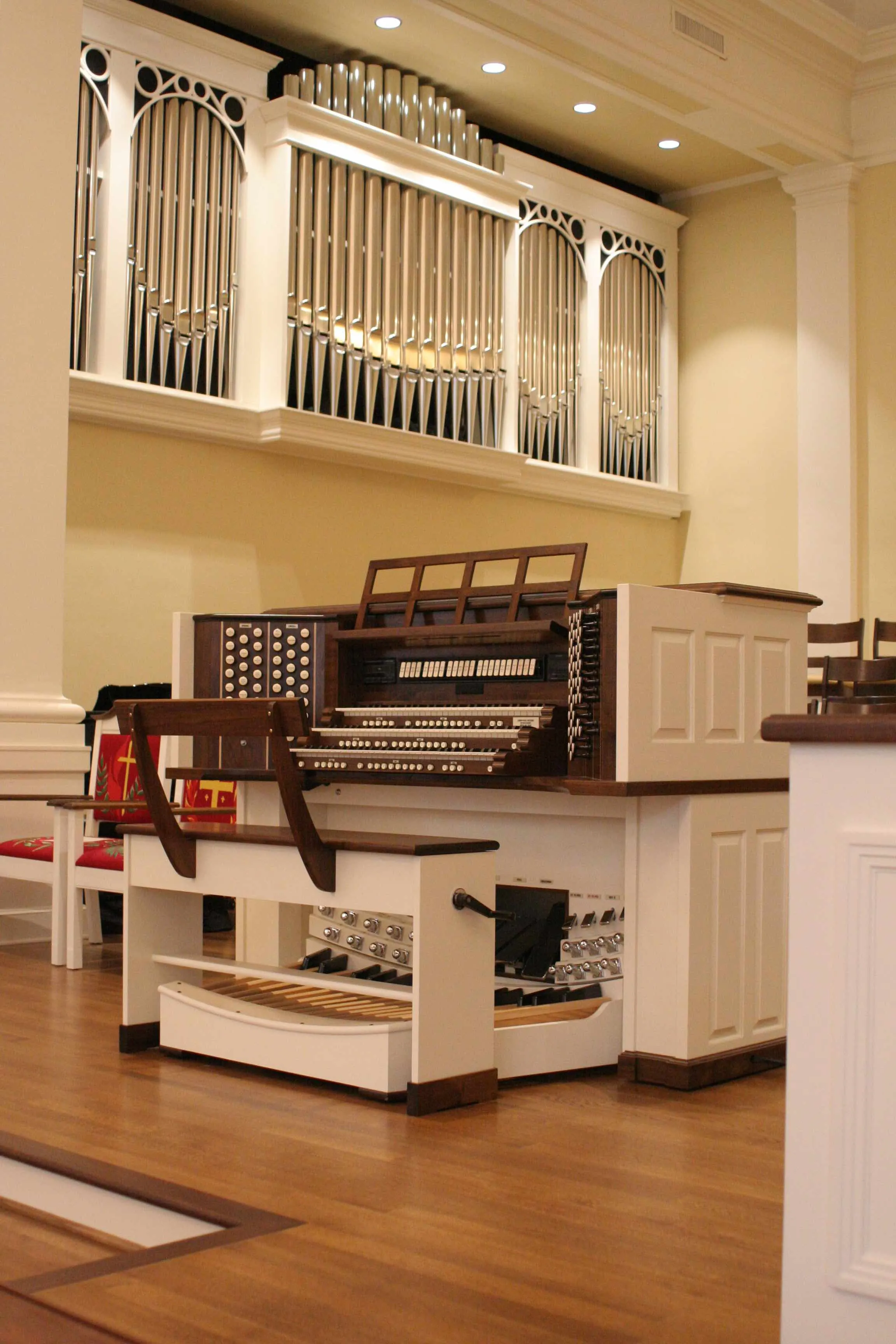
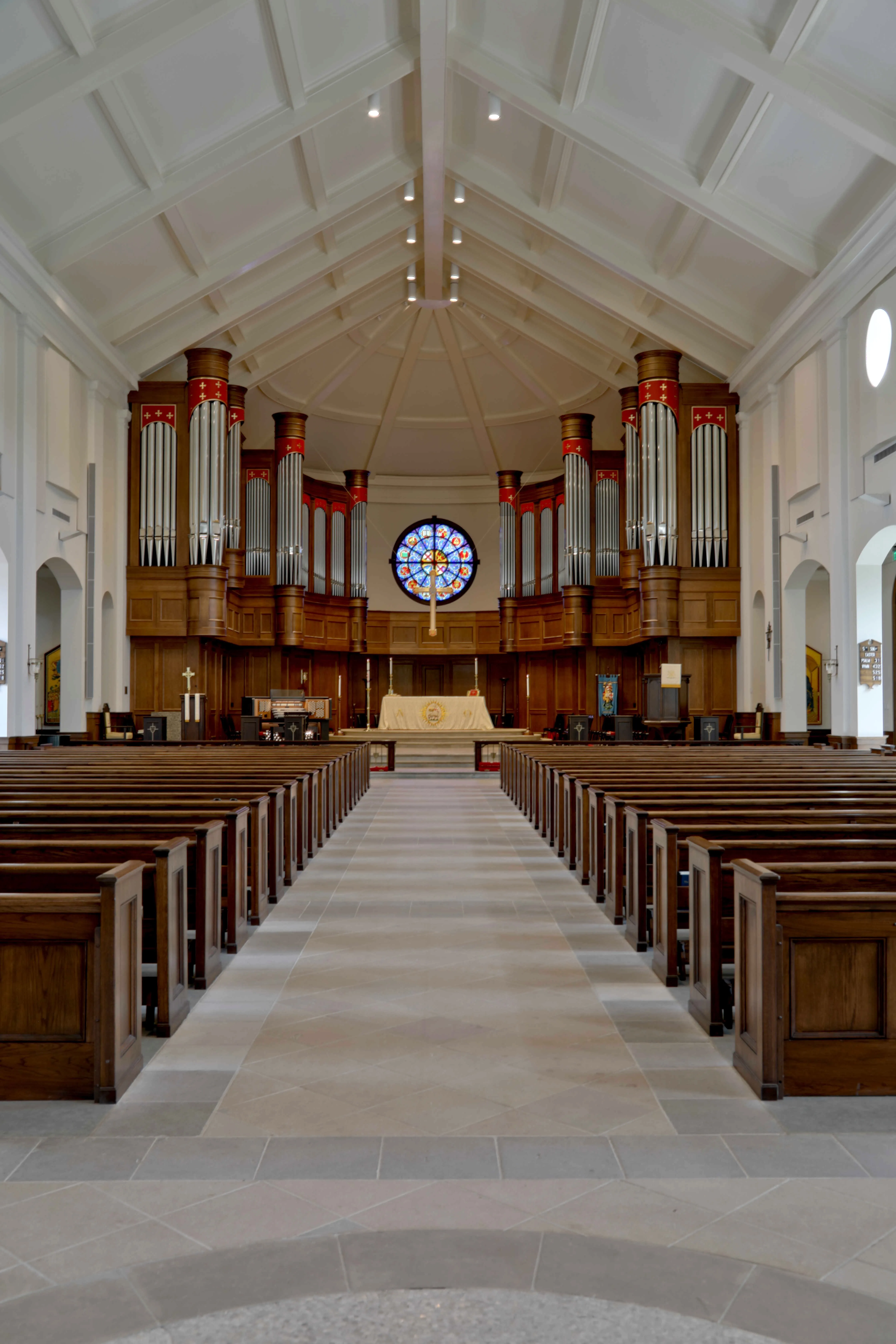
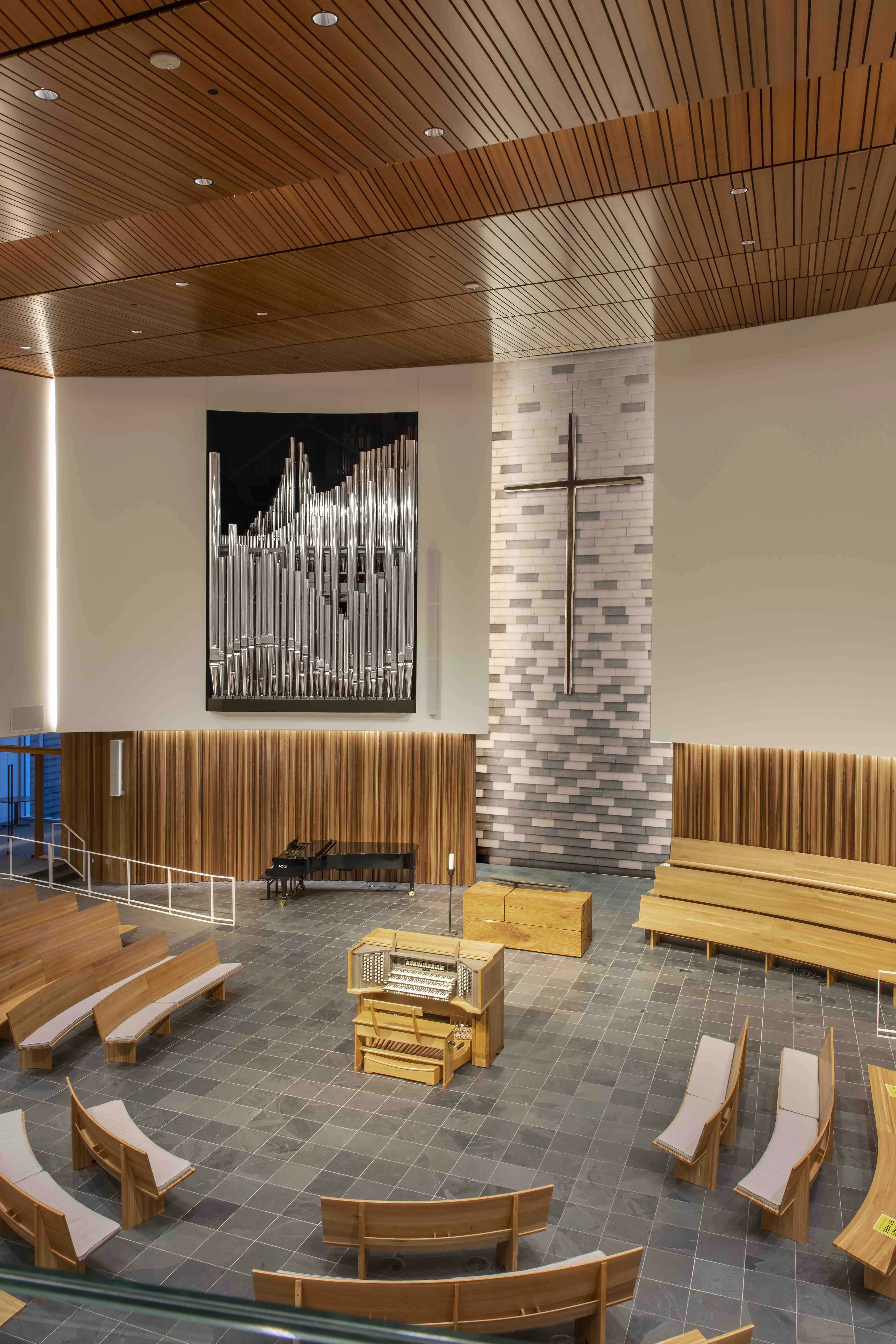
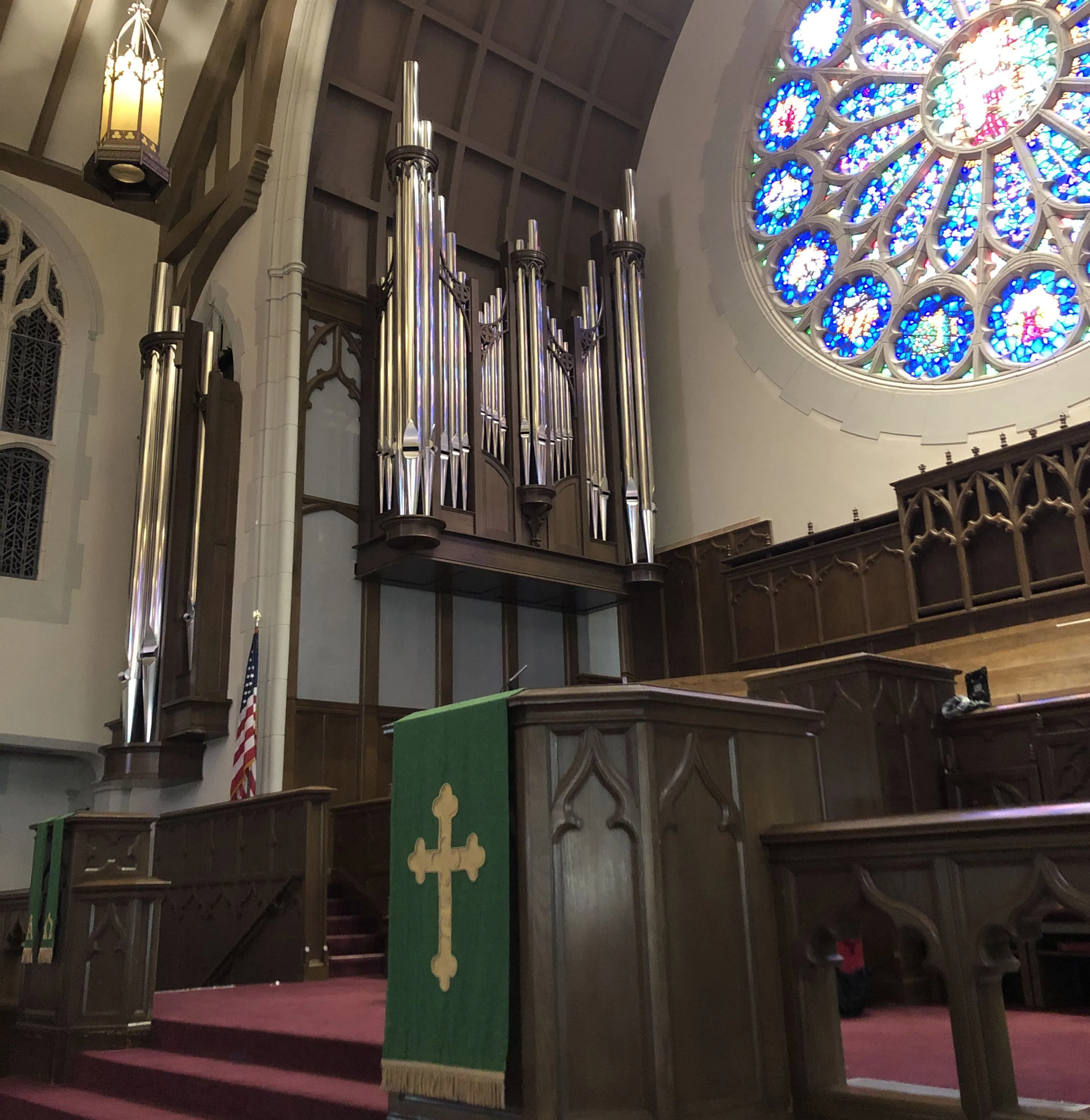
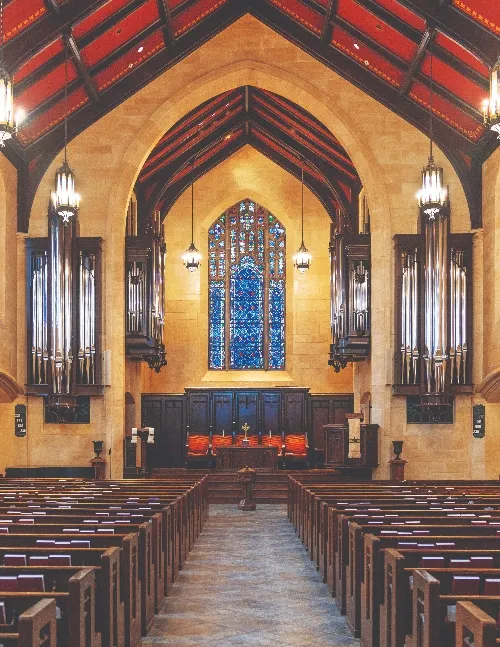
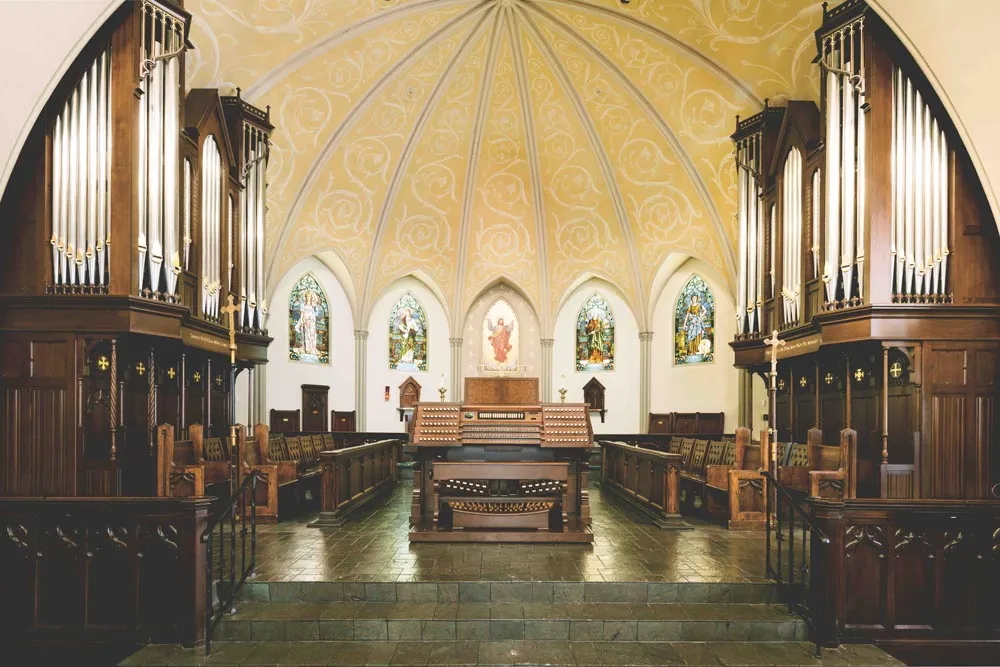
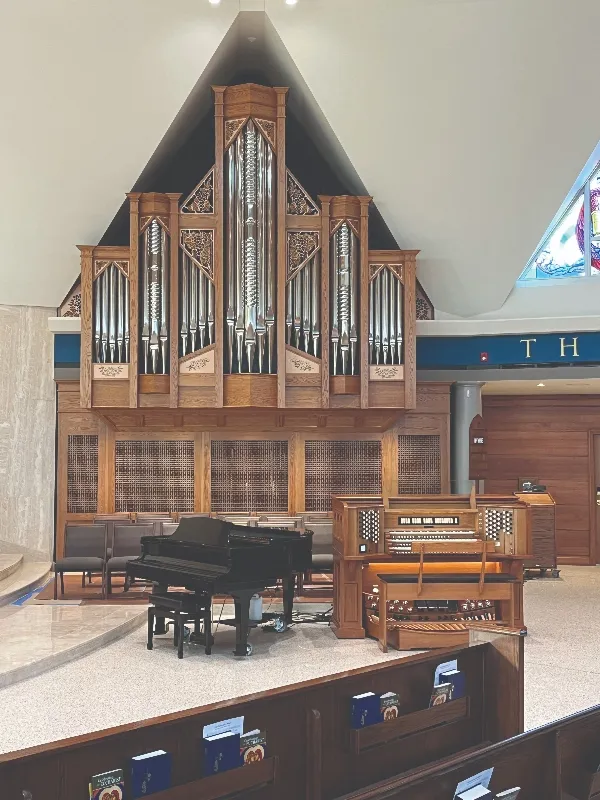
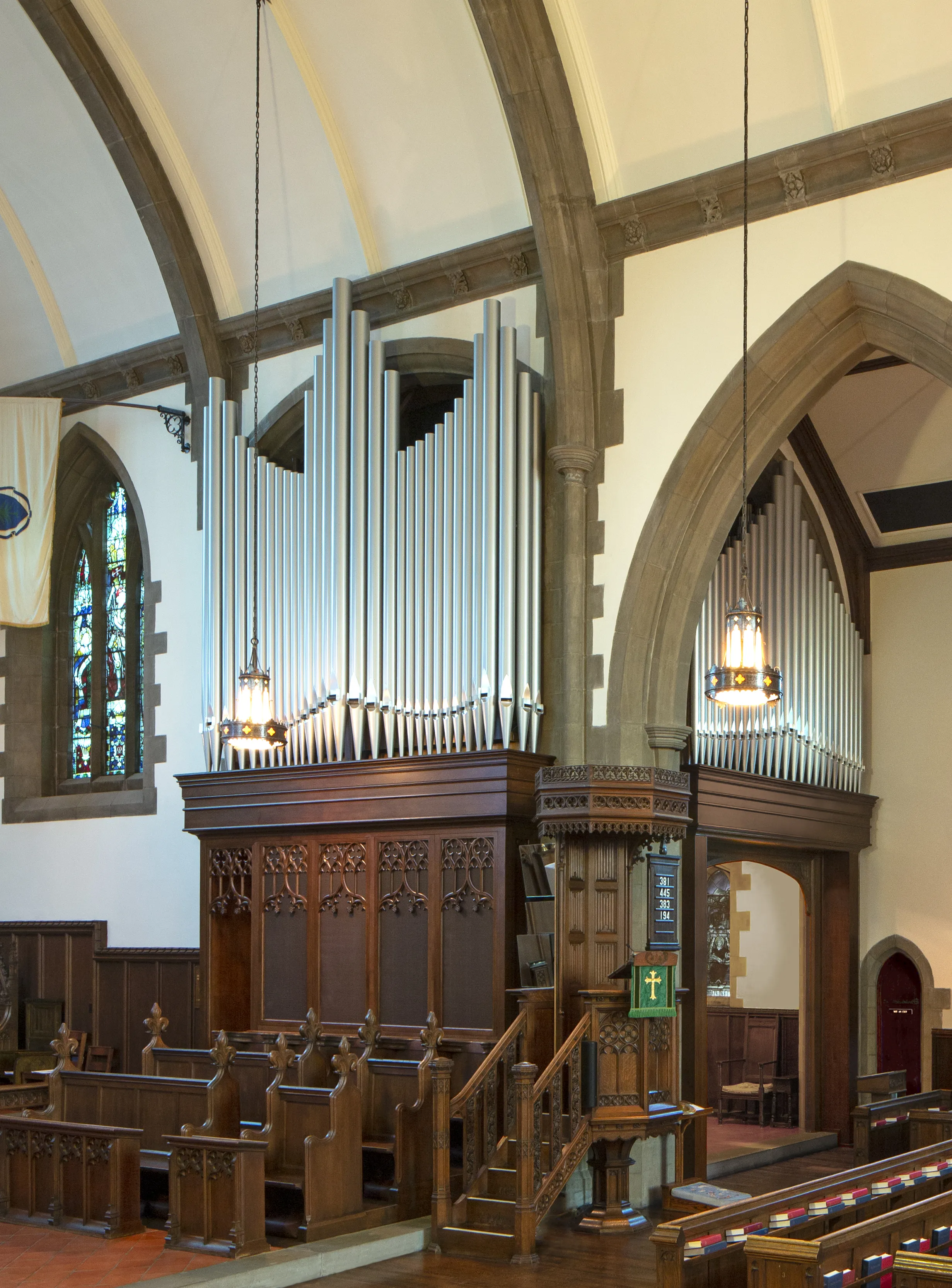
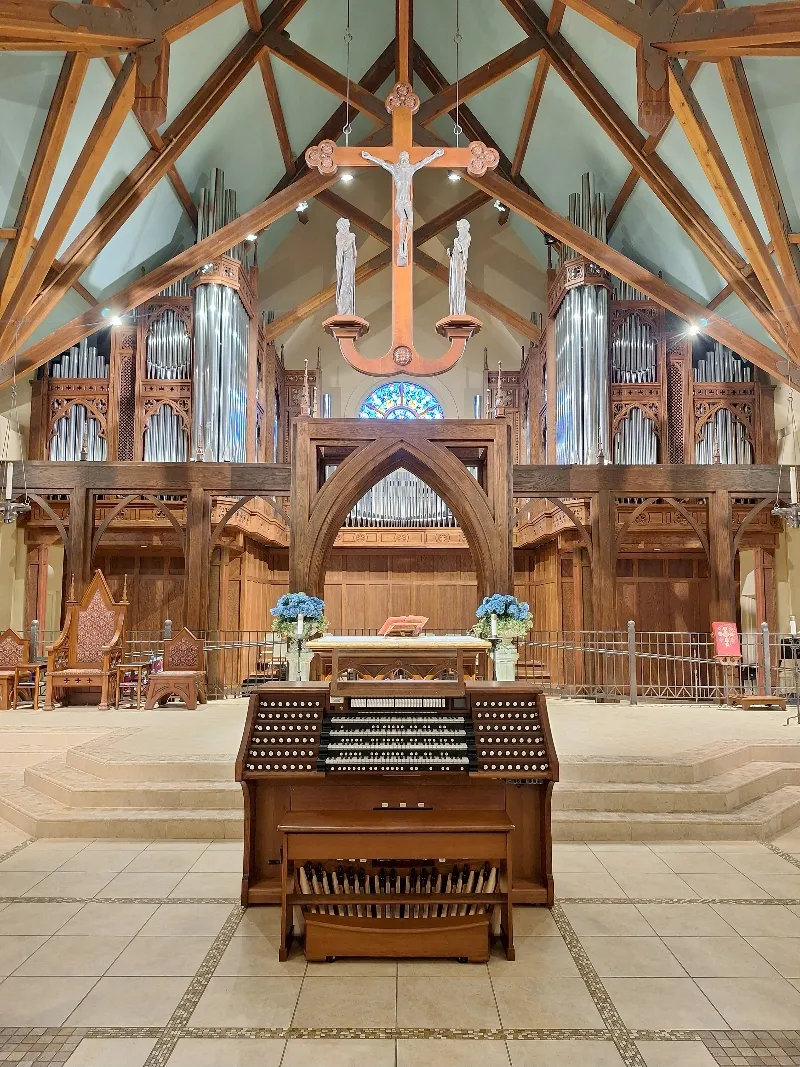
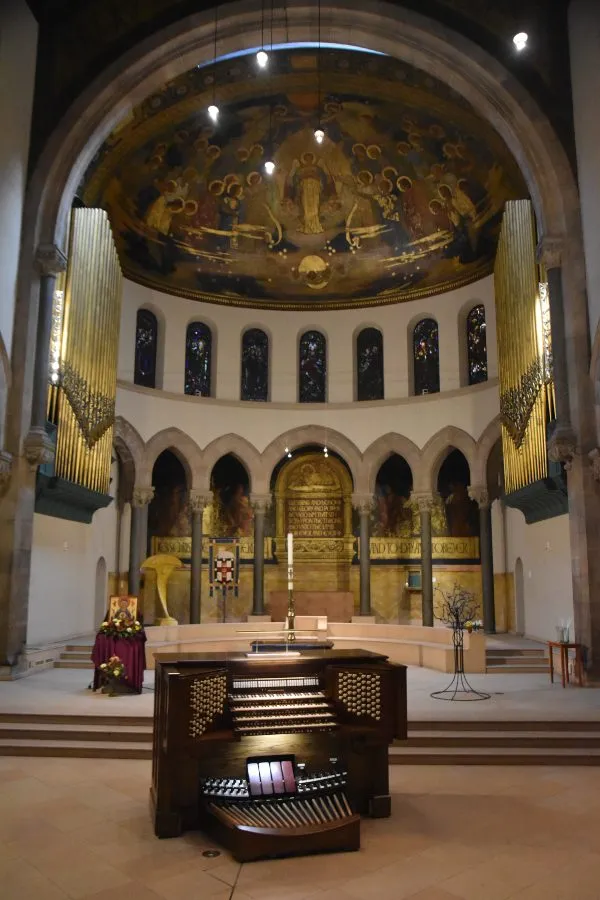
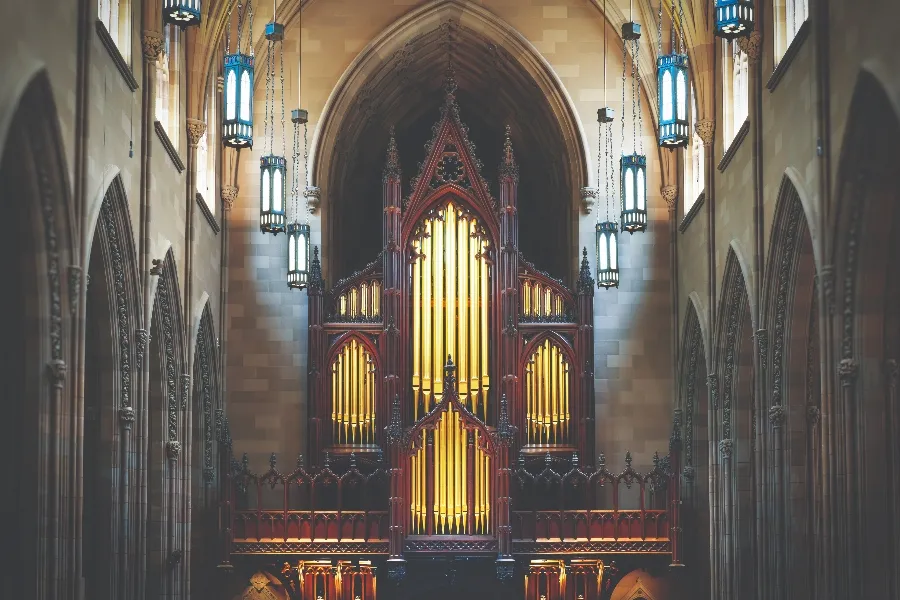
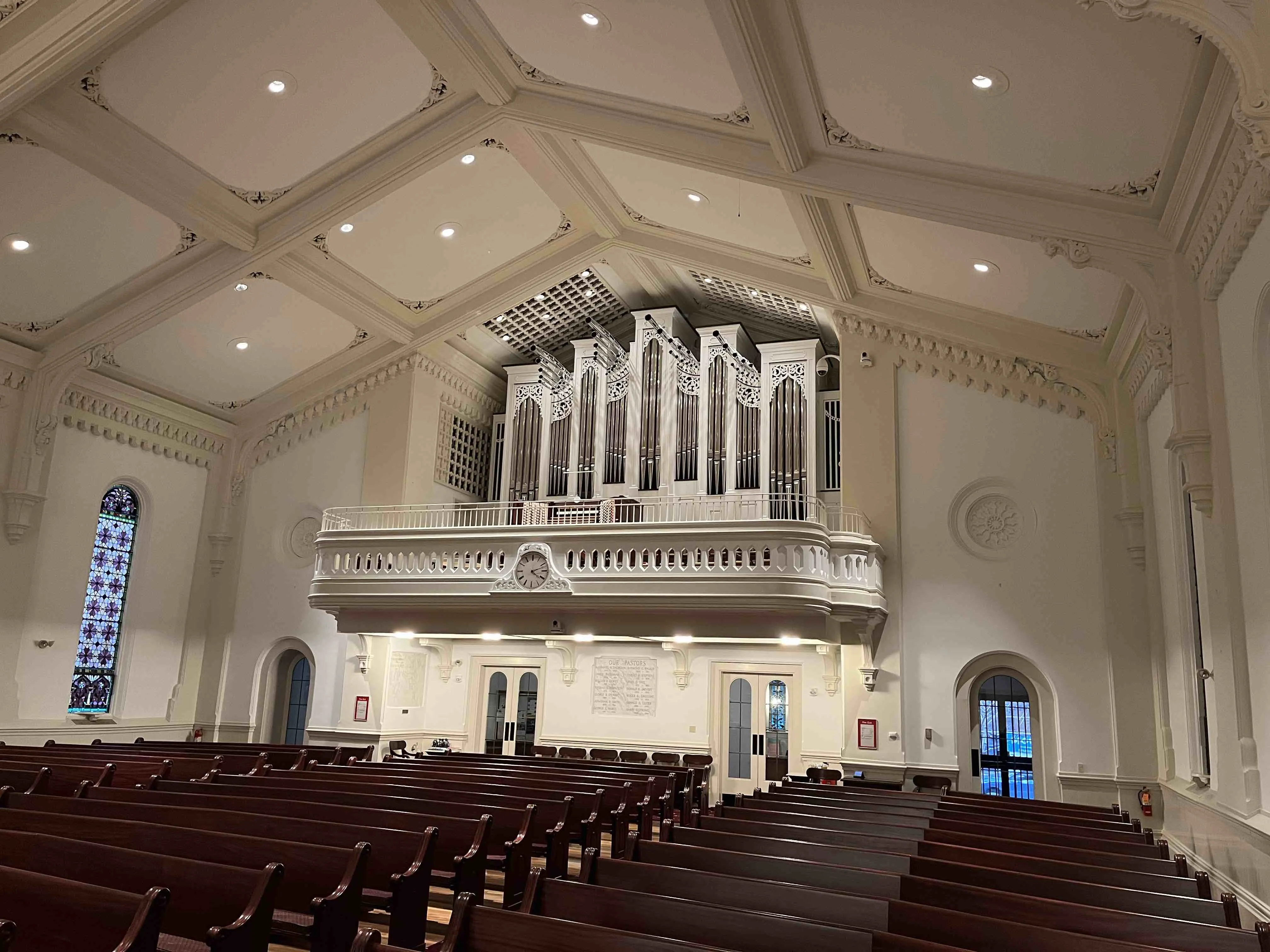
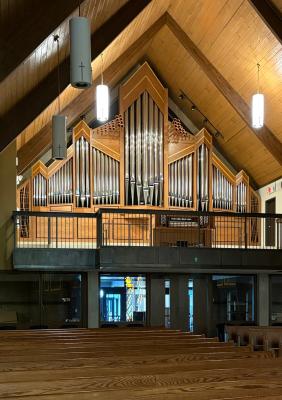
Built in 1978, the primary worship space might easily be categorized as a typical A-frame of the period (Photo 1). However, the stark geometric lines are given warmth through gently curved outlines and semi-abstract treatments of the faceted glass windows (Photos 2 and 3). Exquisitely crafted furnishings of the chancel and judicious use of gold leaf in the decorations impart a richness of beauty that frequently is absent in similar buildings (Photo 4). Casework of the new organ subtly reflects some of that with amber-colored maple trim contrasting with darker oak and the stylized grilles at the left and right ends (Photo 5). Even the copper Trompette en Chamade adds its touch of color reflecting in the polished tin façade pipes (Photos 6 and 7).
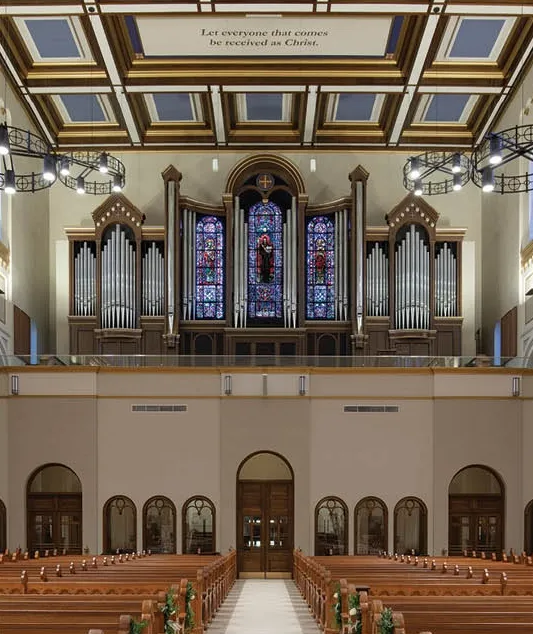
The new organ is located in a rear gallery, with choir singers and handbell ringers standing directly in front of it. This arrangement always presents a challenge for the organbuilder: how to project enough organ energy into the nave to lead an enthusiastically singing congregation without completely deafening everyone in the gallery. Our response is to locate as much of the pipework as possible above the heads of those who are nearest to it and then focus the sound to travel over them and into the nave. To enhance tuning stability, all those chests are located at the same level to minimize the effects of temperature stratification (Photo 8).
Space considerations required us to install some of the bass pipes, which are less noticeably affected than trebles by temperature, at floor level. The normal frame-and-panel construction of the lower casework was adapted by leaving a one-inch gap between the frame and each panel, rendering an acoustical transparency while retaining the visual impact of casework (Photo 9). Since these low frequencies are much more easily tolerated by those nearby, this treatment delivers a well-balanced ensemble to worshippers in the nave.
Building and installing Buzard Opus 50 was part of a major expansion of the church building, and it was a privilege to work together with the building committee and architect to harmonize the varying requirements of each component. As just one example, we were able to relocate the organ blower into the main case where it can supply air of a seasonally controlled temperature to the organ. The originally intended blower room ended up being located out on the roof using completely untreated air. With Michigan’s wide range of seasonal outdoor temperatures, this would have presented constant tuning issues with the organ.
Director of Music and Organist Brian Heinlein made several suggestions that we were delighted to accommodate. A common feature of several previous Buzard organs has been a “split” Great division, where the Diapason chorus is unenclosed and the remaining stops are enclosed and able to couple independently. We agreed with Brian that a Choir division with its own manual and completely independent of the Great would be preferable. Even though both divisions end up looking relatively small on paper, this arrangement offers a great deal of flexibility in registration.
An unusual but ultimately handy request was for Great to Choir couplers at 16-8-4. Especially on hymns unfamiliar to a congregation, this allows the melody to be highlighted without sacrificing the cohesive ensemble of the harmony voices.
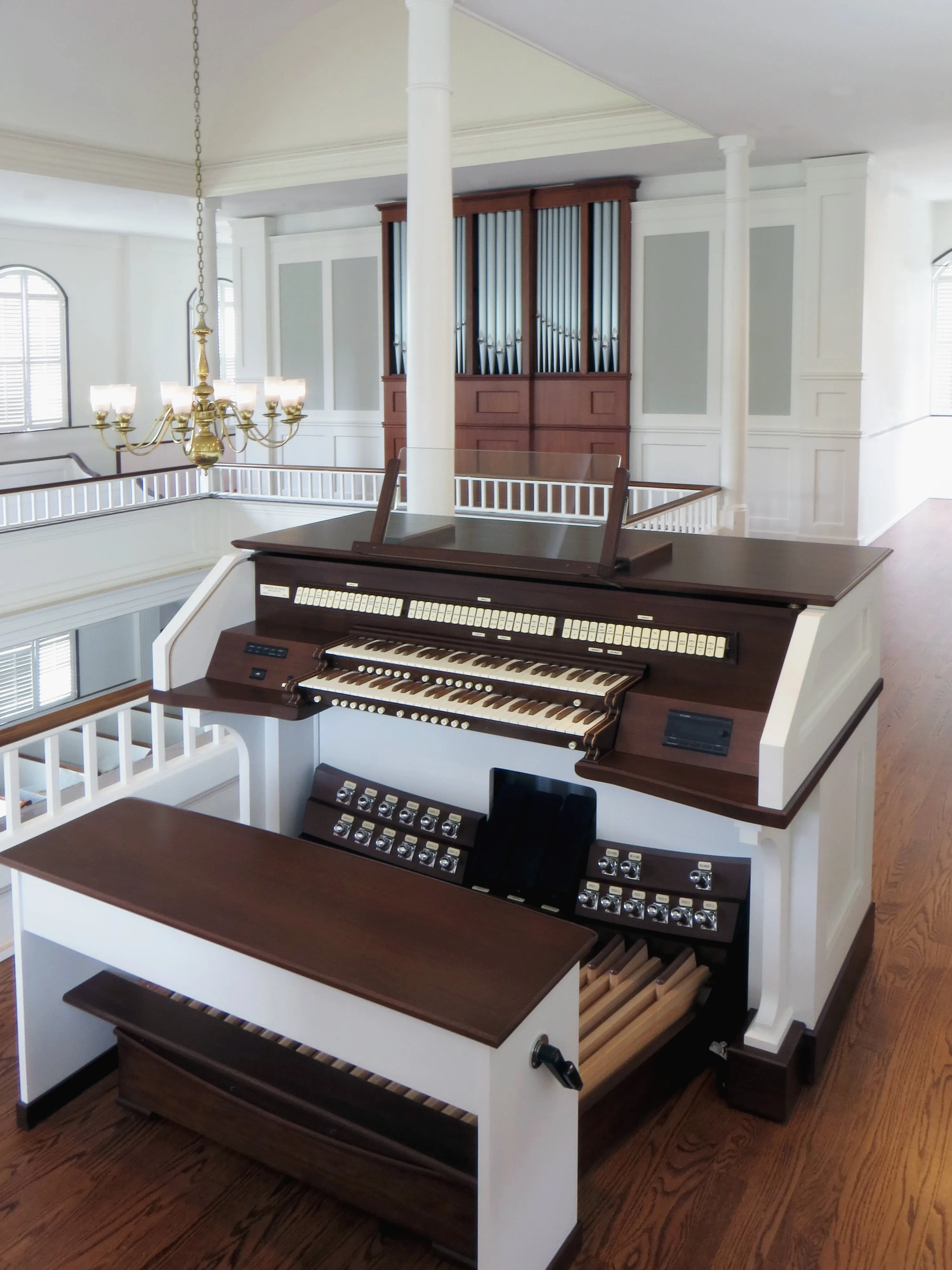
In the constant race between organists and suppliers of organ control systems, many features that only a few years ago were considered fantasies have become normally expected. Opus 50 introduces something new for us: All Divisionals Become Generals (Photo 10). One tab engages 24 additional generals and instantly reverts those pistons to divisionals when cancelled! This is true for each memory level. While much of this effect has been available for some time with the “Scope” or “Range” feature, we have not accessed it previously with one stop tab. In an effort to minimize confusion, we chose not to include the 24 “blind” generals in the piston sequencer, which will assume “Next” after regular General 14 will be regular General 1 of the next memory level.
Many of us who direct choirs while accompanying them on the organ are familiar with the whiplash effect of giving a clear cutoff with the head at the end of an anthem while both hands hold on to that final chord. Brian asked for a Sostenuto device mounted on the Crescendo pedal. It is spring-loaded and will sustain anything that is being played when it is engaged until it is released, leaving the hands free to give the clear cutoff.
From a tonal perspective, Opus 50 continues to refine characteristics that have been an integral component of Buzard organs. At the core of the Great, Swell, and Pedal are robust diapason choruses, each with its own character deliberately fashioned to blend seamlessly with the others. Flutes and strings then take their marching orders to be in appropriate relationship to those choruses, never sacrificing their own color, but always willing to blend into the larger tapestry. The wide range of reed stops complete the ensembles in whatever way is required, whether a voice of authority, a sheen of brilliance and power, a round fullness and warmth, or the haunting sigh of a plaintive melody.
The stoplist does not hide the fact of an interesting cooperation between classically trained straight stops on slider chests and unit stops with multiple functions. Our approach to this concept is born from a desire to equip the organist with flexible tools for colorful registrations rather than simply filling in the missing pieces of a scantily designed specification. In our work, a stop with extensions that allow it to be available at several pitches is never intended to be played at all those pitches simultaneously. Instead, our method is to carefully study the intended use of each available pitch and then gently tailor the scaling and voicing techniques to highlight the character range for that particular pitch.
As one example, the bottom octave of the 16′ Violone is primarily heard as a Pedal stop. The character of the next two octaves defines the sub octave of the Great Diapason chorus and must deliver pitch clarity without excessive weight. The midrange at the 8′ pitch serves as a small-scale Diapason in the Choir and must blend with the 4′ Spindle Flute for modest choral accompaniments. And finally, as the Choir 4′ Principal it must balance well with the 8′ Bourdon and 2′ Recorder for continuo registrations.
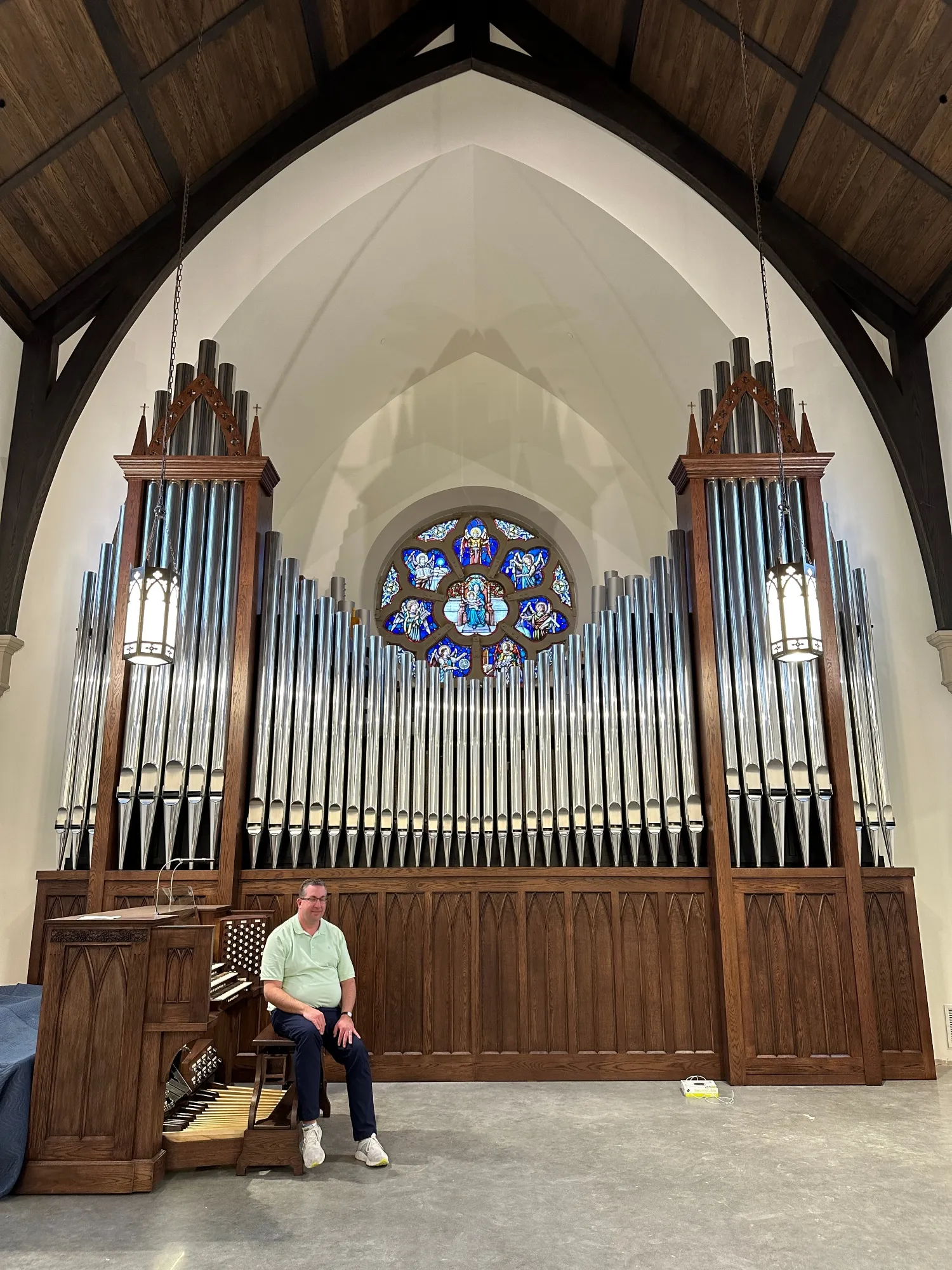
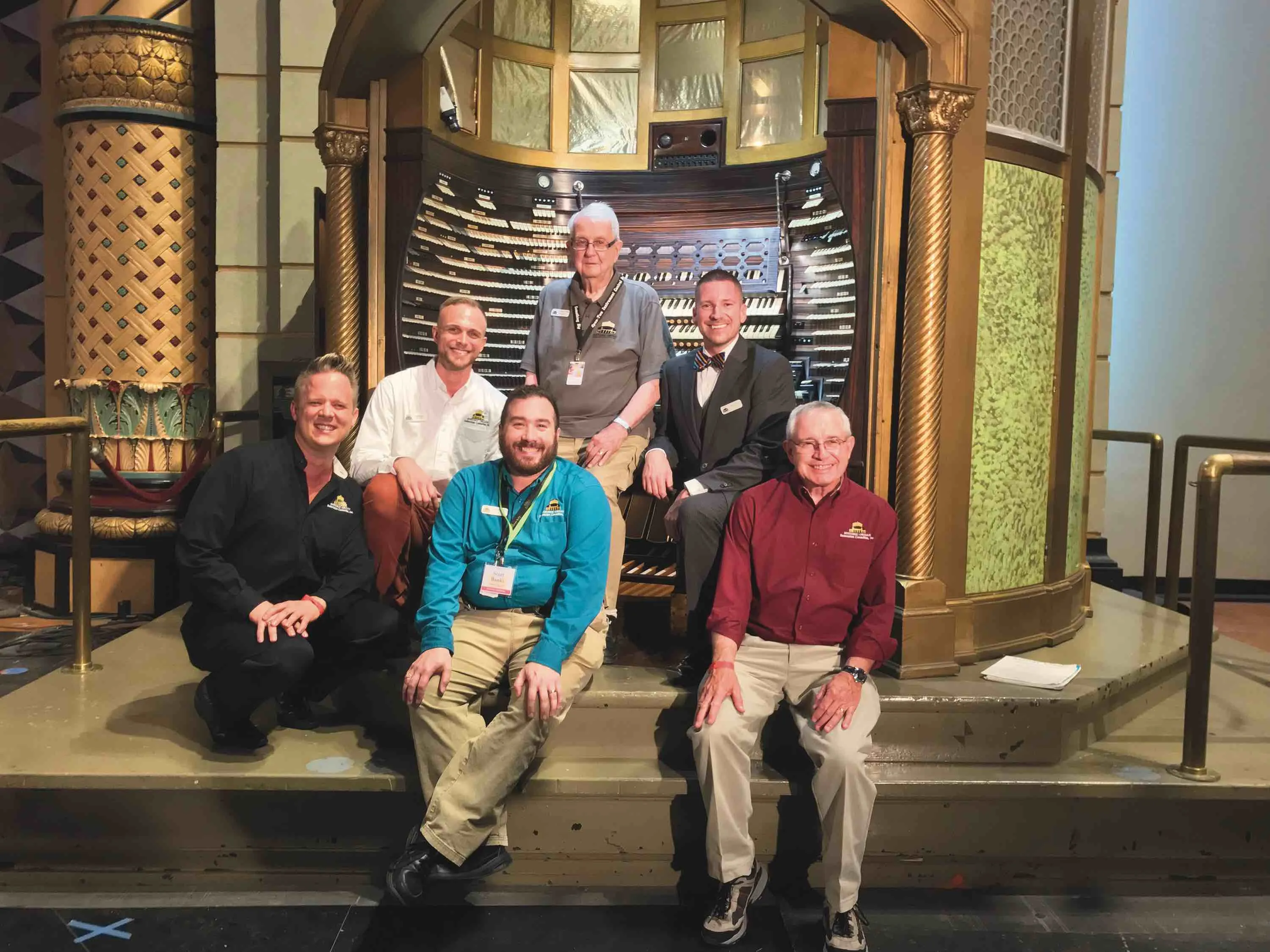
Due to circumstances beyond our control, delivery and installation of Opus 50 was delayed well beyond the contracted date. The entire team of Buzard Pipe Organ Builders is very grateful for the patience and understanding shown to us by the members and staff of Saint Peter’s Church during the long process. It is our earnest desire that the work of our hands will continue to add a sense of beauty to the worship of Almighty God in this sacred space. (Photos 11 and 12 are just a couple of fun shots of some of our team showing the pride they take in their work.)
For more detailed information on this project and all of the work we love to do, please visit www.buzardorgans.com.
—Fredrick Bahr
President and Tonal Director
Photos by John-Paul Buzard, Fredrick Bahr, and Joseph Zamudio.
GREAT (Manual II, unenclosed)
16′ Violone (Ch, from #28)
8′ Solo Diapason III (from #1, #27, #28, #30)
1. 8′ Open Diapason (Gt slider) 61 pipes
2. 8′ Solo Flute 37 pipes (1–24 from #29; 25–61 Gt slider)
3. 4′ Principal (Gt slider) 61 pipes
4. 2-2⁄3′ Twelfth (Gt slider) 61 pipes
5. 2′ Fifteenth (Gt slider) 61 pipes
6. 1-3⁄5′ Seventeenth (Gt slider) 61 pipes
7. 1-1⁄3′ Mixture IV (Gt slider) 244 pipes
Tremulant
16′ Bassoon (Sw, from #19)
8′ Tromba (Ch, from #32)
8′ Minor Trumpet (Sw, from #19)
4′ Tromba Clarion (Ch, from #32)
8. 8′ Trompette en Chamade 61 pipes (unit chest)
Chimes
Zimbelstern
SWELL (Manual III, enclosed)
9. 8′ Open Diapason (Sw slider) 61 pipes
10. 8′ Stopped Diapason (Sw slider) 61 pipes
11. 8′ Salicional (Sw slider) 61 pipes
12. 8′ Voix Celeste (GG, Sw slider) 54 pipes
13. 4′ Principal (Sw slider) 61 pipes
14. 4′ Harmonic Flute (Sw slider) 61 pipes
15. 2-2⁄3′ Nazard (Sw slider) 61 pipes
16. 2′ Octavin (Sw slider) 61 pipes
17. 1-3⁄5′ Tierce (Sw slider) 61 pipes
18. 2′ Full Mixture IV (Sw slider) 244 pipes
19. 16′ Bassoon (unit chest) 85 pipes
20. 8′ Trompette (Sw slider) 61 pipes
21. 8′ Oboe (Sw slider) 61 pipes
4′ Clarion (from #19)
Tremulant
8′ Tromba (from #32, not affected by couplers)
8′ Trompette en Chamade (not affected by couplers)
CHOIR (Manual I, enclosed)
8′ Violin Diapason (from #28)
22. 8′ Bourdon (Ch slider) 61 pipes
4′ Principal (from #28)
23. 4′ Spindle Flute (Ch slider) 61 pipes
24. 2′ Recorder (Ch slider) 61 pipes
25. 1-1⁄3′ Larigot (Ch slider) 61 pipes
26. 8′ Clarinet (Ch slider) 61 pipes
Tremulant
16′ Trombone (from #32, not affected, by couplers)
8′ Tromba (from #32, not affected by couplers)
4′ Tromba Clarion (from #32, not affected by couplers)
16′ Trompette en Chamade (Gt, from #8, not affected by couplers)
8′ Trompette en Chamade(Gt, from #8, not affected by couplers)
4′ Trompette en Chamade(Gt, from #8, not affected by couplers)
PEDAL (unenclosed)
32′ Resultant Bass (from #28)
32′ Subbass (Walker digital)
16′ Contrebasse (Walker digital)
27. 16′ Open Diapason (unit chest) 44 pipes
28. 16′ Violone 85 pipes (enclosed in Choir; unit chest)
29. 16′ Bourdon (unit chest) 56 pipes
16′ Lieblich Gedeckt (Walker digital)
8′ Principal (from #27)
8′ Violoncello (Ch, from #28)
8′ Bourdon (from #29)
30. 4′ Choral Bass (unit chest) 44 pipes
4′ Open Flute (from #29)
2′ Octave (from #30)
31. 2-2⁄3′ Mixture IV (unit chest) 128 pipes
32′ Contra Trombone (Walker digital)
32. 16′ Trombone 85 pipes (enclosed in Choir; unit chest)
16′ Bassoon (Sw, from #19)
8′ Minor Trumpet (Sw, from #19)
8′ Tromba (Ch, from #32)
4′ Tromba Clarion (Ch, from #32)
8′ Trompette en Chamade (Gt, from #8)
All normal couplers 16-8 (or UO)-4
Great to Choir 16-8-4 for soloing
out hymn melodies
Generals 1–14
Divisionals
Swell 1–6
Great 1–6
Choir 1–6
Pedal 1–6
Reversibles
32′ Trombone
32′ Subbass
Rev.-1
Rev.-2
Great to Pedal
Cymbalstern
Reeds Off
Full Organ
32 stops, 41 ranks, 2,387 pipes