In the Wind: Vietnam and Cambodia

The far side of the world
This January, Wendy and I traveled across twelve time zones to Southeast Asia for a cruise on the Mekong River in Vietnam and Cambodia. Noon became midnight, and our flight from New York to Singapore was the world’s longest commercial non-stop flight, more than 9,500 miles in over eighteen hours. I read that the airplane would consume more than 65,000 gallons of fuel in those eighteen hours. From there, it was a short flight to Saigon. (The official name that residents pay taxes to is Ho Chi Minh City, but most people prefer to call it Saigon.) Saigon has over ten million residents, 1.5 million more than the five boroughs of New York City, and most of them get around the city on scooters. Vespa is both the genus and the Italian word for wasp, and that is the brand of the most popular scooter. Driving in Saigon traffic or crossing the street is a lot like poking a huge wasp nest.
After a couple days of sightseeing in Saigon, we rode in buses to The Jahan, the 230-foot boat that would take us and forty-six fellow passengers up the Mekong River to Phnom Penh, Cambodia. We were there in the dry season and learned that the river’s level would rise as much as thirty feet during the monsoon. The Jahan stopped each day, nosing into steep banks and tying up to a tree. The crew would pass a gangplank across and cut a stairway into the dirt with shovels so we could go ashore to visit a palm sugar farm, rice fields, fish farm, rice paper (for spring rolls) and rice candy workshop, pottery studio, war museum, and temples. When on shore we rode in buses, tuk tuks, cycle cabs, and ox carts.
The most impressive temple we visited was Angkor Wat outside the city of Siem Reap, Cambodia. Built between 1113 and 1150 A.D. by King Suryavarman II of the ancient Khmer Empire, Angkor Wat is the largest religious site in the world, covering 402 acres. The central temple is surrounded on four sides by moats a kilometer-and-a-half long and 150 meters wide. The laser-straight lines of the moats are testament to the architectural skills of the builders.
The central structure of Angkor Wat consists of five towers, one in the center and one on each corner of a perfect square, four-hundred meters to a side. What seem like miles of corridors are completely covered with reliefs depicting epic battles, coronations, and other events. Ornately inscribed texts tell the history of the kingdom and its population.
Angkor Wat is situated so that the causeway at the western entrance and the center tower align perfectly with the sunrise of the spring and autumn equinoxes. We were there two months before the spring equinox, but those arranging our tour had us on buses at our hotel at 5:00 a.m. so we could witness the sunrise over Angkor Wat. There are other ancient monuments in the world that feature celestial alignment, notably Aztec, Mayan, and Roman sites. It is remarkable to realize that people of ancient culture had such astronomical knowledge and architectural precision to be able achieve those effects.
The Church of Saint-Sulpice in Paris, France, famous among organists for the two masters who occupied the organ bench for a cumulative century, Charles-Marie Widor and Marcel Dupré, is home to a gnomon, an architectural array that marks the position of the sun at an equinox and at the summer solstice. Sunlight beams through an opening in a stained-glass window twenty-five meters above the floor, reflects off an obelisk, and marks the positions on gold discs along a meridian that crosses the church from one transept to the other. This installation is featured in Dan Brown’s novel, The Da Vinci Code, in which much of the mystery and some of the skullduggery takes place in Saint-Sulpice.
Angkor Wat was abandoned for centuries until Portuguese Capuchin Friar António da Madalena discovered and explored the ruins in 1586. In 1860 the French naturalist Henri Mouhot published travel notes that brought Angkor Wat wide public recognition, but it was not until the early twentieth century that serious restoration efforts began. The site had been engulfed by jungle (Angkor Wat is at 13° North latitude) that took decades to clear. It was declared a UNESCO World Heritage Site in 1992, establishing it as a major tourist site. There were 7,650 visitors in 1993 and 2.6 million by 2018.
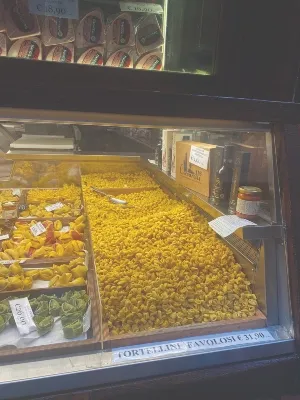
King Suryavarman II was a benevolent monarch who established comprehensive health care for his subjects. The principal purpose of the monumental moats was to provide a water supply for the population during the tropical dry season. Our visit to Angkor Wat was the highlight of a wonderful trip, though I should not forget to mention the food. The cuisine of Vietnam and Cambodia is spectacular. Pho, clear spiced broth with rice vermicelli, vegetables, and protein, the soup that forms the name of hundreds of American restaurants, is ubiquitous, even at breakfast. Held over from the time when both countries were French colonies, fluffy, flaky, unctuous croissants were everywhere, and woks over open fires were present in each household.
Houses of worship
We visited four ancient temples in Southeast Asia, all devoted to Buddha. They were crowded with tourists, but despite the throngs, there was a sense of awe and reverence at each site. Tour guides were giving their spiels, but all tour groups had earphones so there was little noise, nothing like the pandemonium we have experienced in popular destinations like Florence.
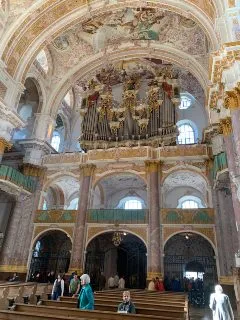
Over fifty years of working on, in, and around pipe organs, I have been in hundreds of church buildings in at least ten countries. Some are opulent, loaded with untold riches of art and expensive materials, some are quiet wood frame chapels nestled in distant rural groves. Houses of worship of any description share an aura of reverence. They are the pride and joy of the people who built them, care for them, and worship in them. A fine organ is a wonderful addition to most any church building, a statement of devotion to the music of the church and beauty of worship. I have always found it a privilege to work in those buildings and see it as a responsibility to respect the stewardship that provides funds for those wonderful instruments.
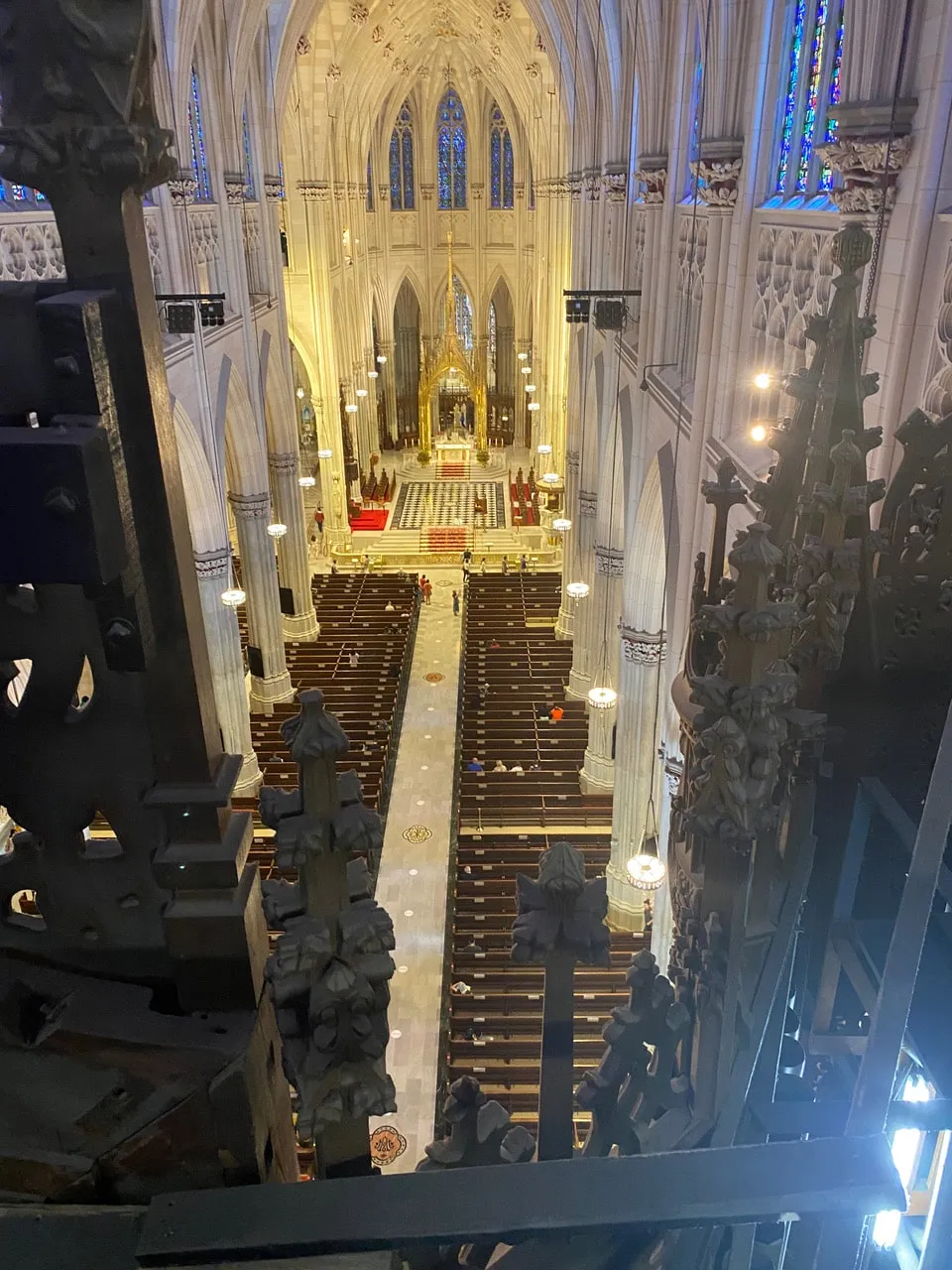
Saint Patrick’s Cathedral in New York City is visited by 5.5 million people every year, an average of more than 15,000 a day. The bustle of Fifth Avenue in mid-town Manhattan is nothing like the open breezy fields of Cambodia’s ancient temples. There is a constant rumble of footsteps, traffic, horns, and sirens, but there is still an aura of dignity and reverence as the crowds mill about in the towering church. The Gothic acoustics of the lofty cathedral blend the city’s energy into a pleasant rumble that is sometimes modified with sounds from the two organs originally built by Geo. Kilgen & Son—though the large gallery organ is currently out of the building for restoration. It will be a great treat to hear that landmark organ when it is returned to the church in 2027.
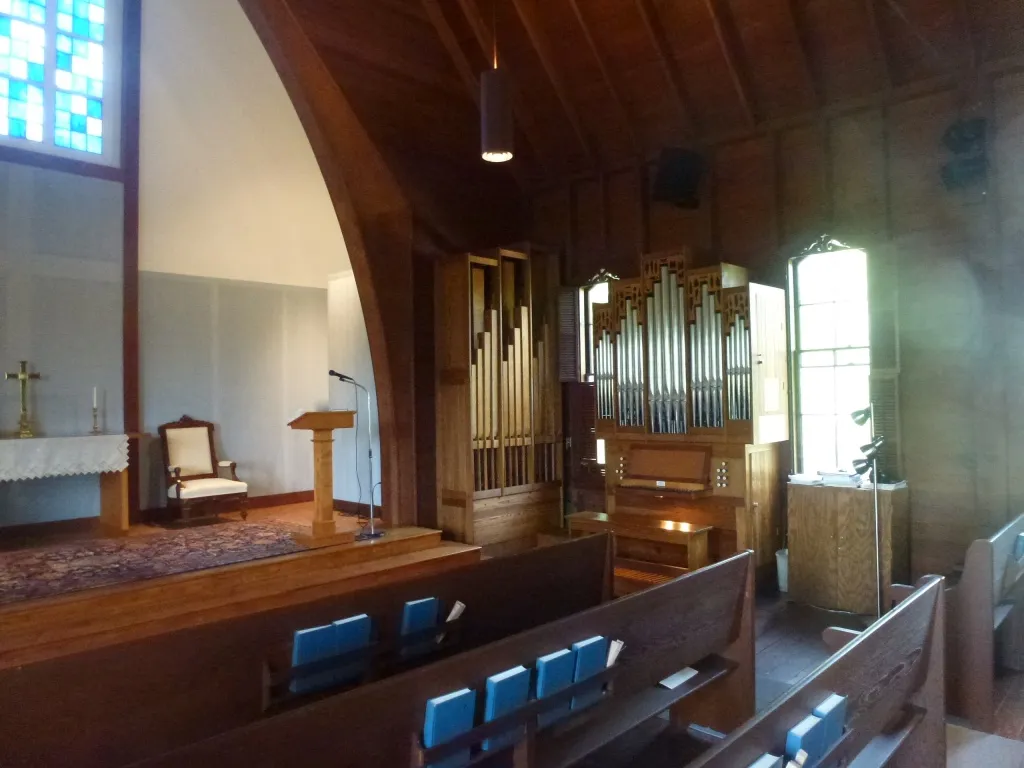
Squirrell Island, Southport, Maine, is a summer-only island with about a hundred cottages and the Community Chapel. My friend John Farmer and I installed the Bozeman-Gibson organ (Opus 12) in the chapel in 1976, fifty years ago this summer. That lovely one-manual organ is testament to the people of the island village. The island’s water supply is above ground and is drained each fall to avoid freezing, so the island is uninhabitable during the winter. Why shouldn’t the quaint little summer chapel have a proper pipe organ? I recently drove to New Hampshire to visit George Bozeman for a lunchtime of reminiscence. His was the first shop in which I worked during the summers of 1975 and 1976 while I was a student at Oberlin.
The Organ Clearing House has worked in the Cathedral of Saint John the Divine in New York City, especially installing the organ after its restoration following the fire inside the cathedral around Christmas of 2001. That legendary building is the largest church building in the Western Hemisphere with a total interior length of 601 feet. The cathedral has a dozen chapels dedicated to various individuals and causes, including the Fire Department of New York following September 11, 2001, and the building is continuously used for dazzling art displays, dancers (both earthbound and aerial), even the iconic tight-rope walker Philippe Petit who stunned the world by walking a wire between the twin towers of the World Trade Center in New York. You need a pretty big interior space for walking across on a rope to be a thing.
Saint James the Fisherman is an Episcopal summer chapel in Wellfleet, Massachusetts, on Cape Cod’s Route 6 on the way to Provincetown. Founded in 1950, the chapel offers services from early June to late September accompanied by their treasured 1887 Steinway piano. The late Fenner Douglas, professor of organ at Oberlin and later Duke University, and the late Joan Lippincott, head of the organ department at Westminster Choir College, were both summer residents in Wellfleet who attended services at Saint James. Thirty-five years ago, Fenner invited me to propose installing an organ in the chapel where we had a nice visit followed by a seafood lunch, but the project never gained traction. The chapel is a simple wood structure surrounded by pine trees, a great place to worship on a sunny summer Sunday before a picnic on the beach.
In the January 2008 issue of The Diapason, I wrote about the frenetic Christmas shopping scene on Fifth Avenue in New York:
I’m writing from New York City on the evening of Sunday November 18, 2007. It’s five days before Thanksgiving, and Fifth Avenue is festooned with every gaudy bauble imaginable. European tourists are spending their gargantuan euros, spreading Christmas cheer from Gucci’s to Saks, from the Disney Store to the NBA Store. Elaborate light displays draw attention to $5,000 handbags, displays of shoes worthy of Imelda, and unimaginably expensive jewelry. Chestnuts are roasting on open fires. They smell terrific, blending with the bustle of the city. My mind’s eye flashes an image of the fireplace in our house, associating the smell of the chestnuts with sitting in the peace of that favorite of rooms. One of the carts selling chestnuts had middle-Eastern music playing over loudspeakers—no doubt a nod to the indigenous music of Bethlehem, Palestine, or the West Bank. Fitting. I’m pretty sure that the shepherds gathering in the alley behind The Inn were not singing four-part-harmony in the key of G. I’m pretty sure that snowy flakes weren’t falling softly, clothing all the world in white. In fact, I’m pretty sure that the shepherds weren’t white.
I escaped that scene by stepping into Saint Thomas Church on Fifth Avenue at Fifty-Third Street to attend choral Evensong. I continued:
There is a magnificent quietness to a building like this. You can hear distant noises from the street—an impatient taxi, an indignant pedestrian—and you can hear subway trains rattling up the River Styx, but these noises seem only to enhance the quietness. There’s a tinge of incense mixed with beeswax that is the peculiar smell of an Anglican church. It is the smell of quietness.
Institutional hygiene
I auditioned for the position of organist and choir director at a Congregational church in suburban Boston in 1984. I served there until I joined the Organ Clearing House in 2000, knowing that I would be taking on a travel schedule that would preclude me from being a reliable organist. On the day of my audition and interview, I noticed that the metal stall dividers in the downstairs men’s room were rusty and wobbly so the doors could not be latched. It seemed strange because everything else in the building was in great condition. The sanctuary and main building were relatively new and beautifully kept.
I was consultant for a church on the west coast, assisting their conversations toward acquiring a new organ. The rector told me a story that has informed my observations since. When he arrived at the church to begin his tenure, he was aware that while the building itself was in good condition, the contents were not. Every closet, nook, and niche was packed full of obsolete, unnecessary stuff. The basement was crammed, everything in kitchen cabinets was unusable, and classrooms were a-jumble with assorted worn-out furniture. He realized that the valuable space intended for use in ministries was being squandered and resolved that he would guide the parish to clean the mess and put the building back in full productive use. By the time I visited, the place was ship-shape, devoid of useless detritus, and various rooms in the building were scheduled for a variety of parish and community activities. I was struck by how he emphasized the value of the church’s real estate to support the church’s ministries.
When I am in a building working as a consultant or contractor, I follow that rector’s example and advise my clients about the use and maintenance of their buildings. I am focused on the relationship between the building and the organ starting with simple concepts like keeping unauthorized people out of organ chambers. I do not like to see organ areas used for storage, especially when things are stacked on reservoirs as that spoils the organ’s tuning and voicing. Once a wedding was delayed because a plywood sign promoting a long-ago church fair fell against the organ blower’s air intake. No air in the organ, no Air on the G String.
They’re all important.
It may seem out of proportion to write about majestic ancient temples, soaring big-city cathedrals, and woodsy summer chapels in the same breath, but it seems to me that they are all important symbols of our dedication to faith and worship. The builders of the twelfth-century temples we visited in Cambodia were focused like those who built the thirteenth-century cathedrals of Europe and the summer chapels in Southport, Maine, and Wellfleet, Massachusetts. Before the modern age of big-city service businesses like banks and insurance companies, church steeples were the tallest things around. The edifice we know as Trinity Church Wall Street was the tallest structure in the United States when it was completed in 1846 and remained the tallest in New York City until 1890. The Church of the Covenant at the corner of Berkeley and Newbury streets was the tallest building in Boston when it was completed in 1867.
My workshop and office is in Adams, Massachusetts. North Adams, the next town to the north, is known as the City of Steeples. Approaching downtown North Adams from the west on Route 2, you come over a rise and see the town spread out before you, with six tall steeples giving the town its distinctive look.
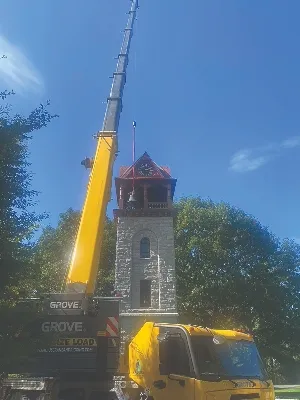
We might say that there is no such thing as a necessary steeple. Each steeple or spire is an expensive addition to a building that signifies the faith of the people reaching to the heavens. Of course, once you have a steeple, you have a great place for bells. Let the good news peal across the rooftops. King Suryavarman II didn’t have bells.