In the Wind: instruments of practice
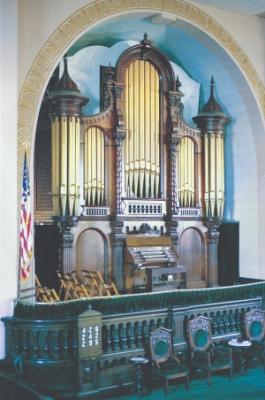
Practice, practice, practice. . . .
A story in the August 1, 2026, edition of The New York Times begins, “Cristopher Rodriguez has been screamed at. He has been threatened with violence and confronted by police. . . . Mr. Rodriguez is not some kind of sociopath. These confrontations over the years have come despite his best efforts to distance himself and his abnormally loud instrument from his neighbors.” Under the headline, “The Bagpiper’s Endless Quest for a Place to Practice,” the story tells of the strategies developed by pipers in New York City as they search for places where they can practice without disturbing others. Crowded apartment buildings are out, so they wind up on the hilltops of the city’s huge cemeteries, along the polluted industrial canals, and under elevated highways. The article does not really address the challenges of bagpipe practice during the winter.
According to the story, the tones of a bagpipe “weigh in” at over a hundred decibels, comparable to a motorcycle revving. I imagine that a piper could practice fingerings and learn new pieces on a substitute sack-less pipe, but I expect that the heart of the pipers’ technique is managing the wind, keeping that doodlesack full of air. I have only played instruments where you sit on a bench with no collision hazard, but I can imagine that the “walking about” part of piping requires practice as well. A piper needs to play the pipes and produce and manage air pressure without tripping over curbs or bumping into lamp poles.
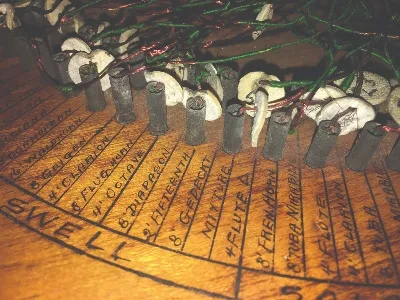
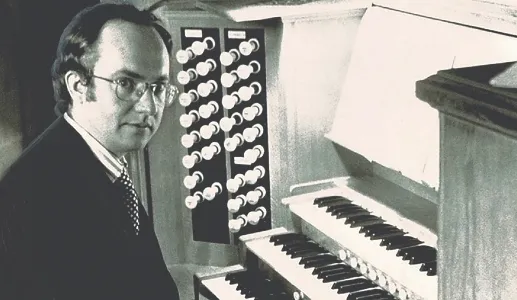
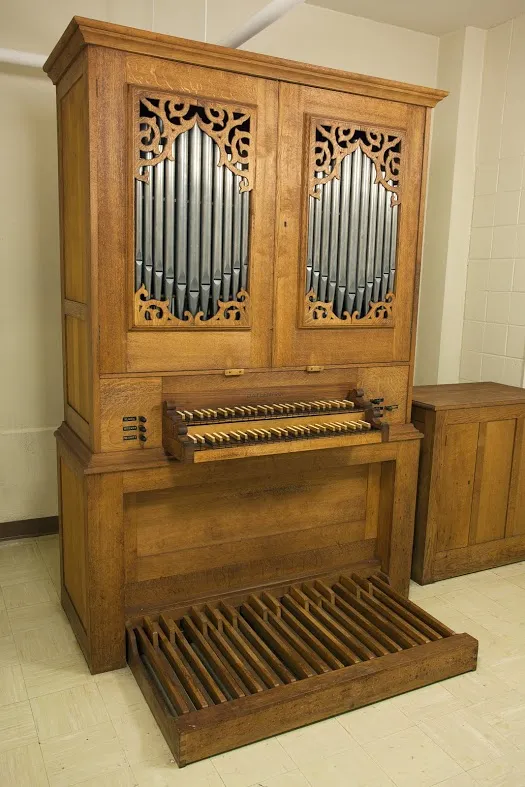
As I read the article, I remembered the luxury of Robertson Hall of the Oberlin College Conservatory of Music where I was a student in the 1970s with three floors of little studios devoted to practicing all the various instruments. There were scores (hundreds?) of Steinway grand pianos, fewer upright pianos, a small fleet of harpsichords, sixteen pipe organs in two-story rooms, and lots more rooms without pianos where students could practice orchestral instruments. A brilliant cacophony rolled through the halls as hundreds of students toiled in their woodsheds, but once you were in a room, you did not hear your neighbors.
All of us who practiced regularly on pianos kept track of our favorites by room number. I once had a dream that Oberlin was replacing all the Robertson Hall pianos at once and leaving the old instruments in front of houses all over town for trash pickup, and my friends and I searched the town to claim our favorites by serial number. That was pretty good foresight to know the serial numbers, but I have conjured up lots of boasts about myself during dreams.
§
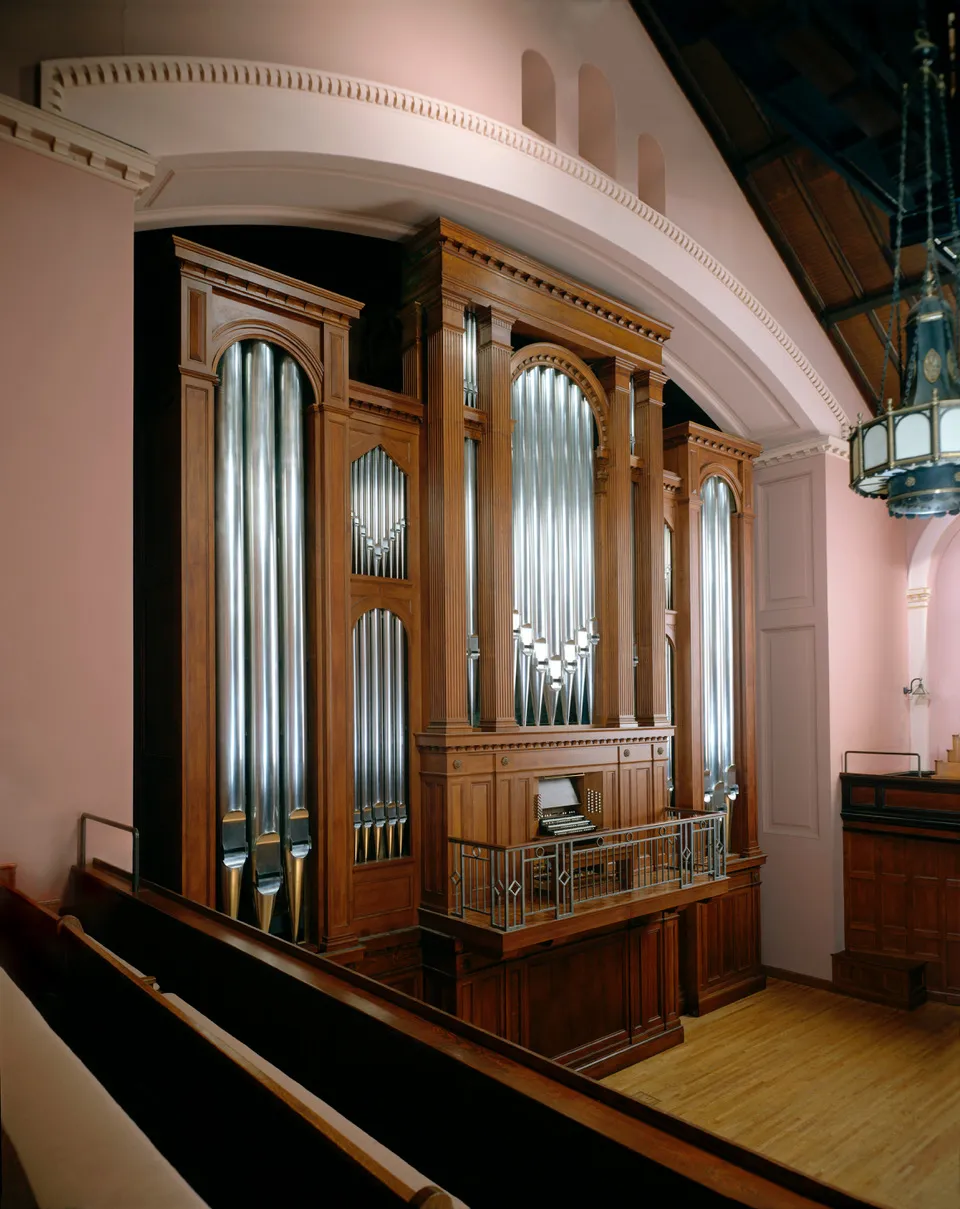
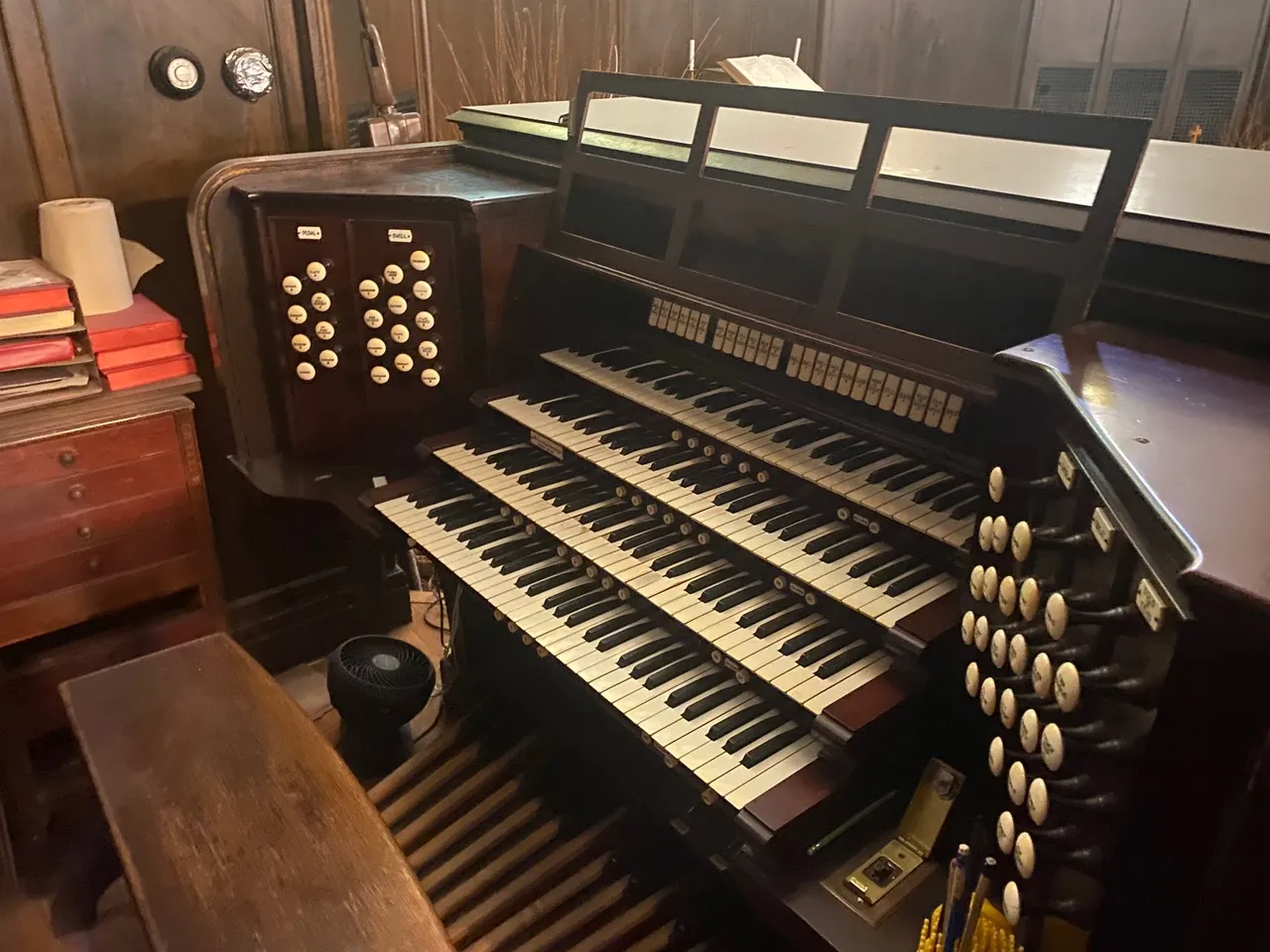
I started taking organ lessons at the age of twelve, and my first practice organ was Ernest M. Skinner Company Opus 128, built in 1905 for the Parish of the Epiphany in Winchester, Massachusetts, my home church where my father was rector. The Skinner opus list starts with Opus 101, so this was a very early Skinner organ. At the time it was built, Robert Hope Jones was working with Skinner in a short-lived professional relationship. The organ was sixty-five years old when I started my lessons. Even to my nascent ears and fingers it was in terrible condition, but I was thrilled to be allowed access to the empty church where I could play in solitude for hours. Two years later, I started lessons with a new teacher who was organist of the First Congregational Church in Winchester, a couple blocks from the rectory where we lived, and I was given practice privileges there on the brand-new, three-manual organ by C. B. Fisk, Opus 50. That was a great luxury and very convenient as I walked past the church twice a day coming and going from school. Maybe my father’s position in town and active participation in the Winchester Ecumenical Association gave my access a boost, but I remember that a deal was struck where I would play for occasional funerals in return for all those hours of practicing. After the Parish of the Epiphany installed C. B. Fisk Opus 65 to replace the aging Skinner, it was soon known as “Winchester New,” and Opus 50 took the sobriquet “Winchester Old,” spoofing on the well-known hymntunes with the same names.
The other organ I practiced on during my high school years was E. & G. G. Hook’s Opus 283, built in 1860, in the First Congregational Church in Woburn, Massachusetts. Woburn is the next town to Winchester, and the Woburn-Winchester high school football rivalry is exhibited each year on Thanksgiving Day. In the nineteenth century, Woburn was famous for its production of leather, so their football team is called the Tanners.
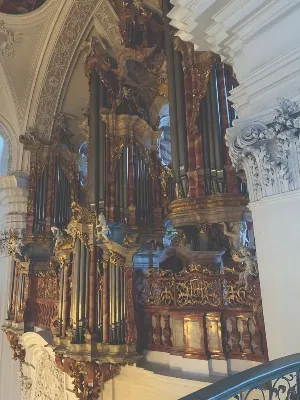
That Hook organ is a grand affair. Fifty-five years after I first knew it, both the organ and the congregation that owns it are in poor condition, but in the 1970s the parish was active and the organ was in great condition. It is a huge wood-frame building, and the massive thirty-five-rank organ is high up in the front commanding the acoustics like a champ. It was about a thirty-minute walk from home, and it was a thrill to play. Having spent my high school years practicing on two new Fisk organs and that marvelous Hook, I had to adjust to the five-rank Holtkamp Martinis and six- or eight-stop Flentrop practice organs at Oberlin.
I hope I did not take those practice privileges for granted. Of course, once I had regular jobs as a church organist, having the use of the building for practicing was part of the deal, but I know now that when I was a beginner in junior high and high school, that regular and free access was a privilege. I imagine that many churches have gotten increasingly business-like when considering allowing students to practice, considering the cost of operating lights and organ blowers, and security concerns only increase. It is more than fifty years ago now, but I remember walking in and out of church buildings as if I owned them. I hope that many of you who play for churches can make organs available for young students to practice. The future of the art depends on it.
Maintaining a fleet
Student musicians who play orchestral instruments face the challenge of acquiring instruments of high enough quality to support their levels of musicianship. Dr. Sarah Hamilton, professor of oboe at the State University of New York at Fredonia, has published an essay about the purchase and maintenance of oboes for serious students (https://sites.google.com/fredonia.
edu/fredoniaoboe/buying-and-maintaining-the-oboe/buying-an-oboe) in which she states that prices for good student oboes range from $3,000 to $8,000, and hints that prices can be much higher, a challenge for the families of promising young students.
While we know that high-quality pianos can be very expensive, it is not difficult to find surplus pianos. In my last church position, I knew that several members of the Junior Choir were taking piano lessons but practicing on cheap electronic keyboards. Several older couples had asked me what they might do with their now unused pianos as they planned retirement downsizing, so I put a notice in the church’s newsletter inviting parishioners to give those pianos to families with young students of the instrument. The deal would be that the receiving family would pay for a piano technician to assess the instrument and for the move. I helped with the arrangements and was delighted that six fine pianos were placed under the fingers of those kids at minimal cost to the families.
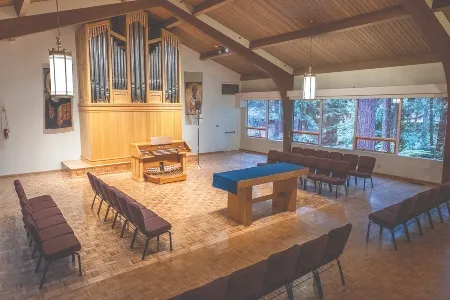
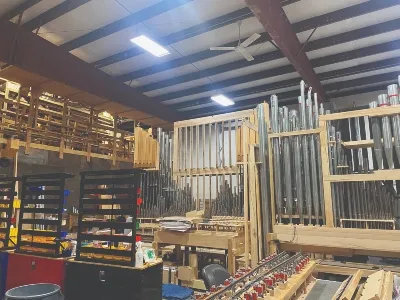
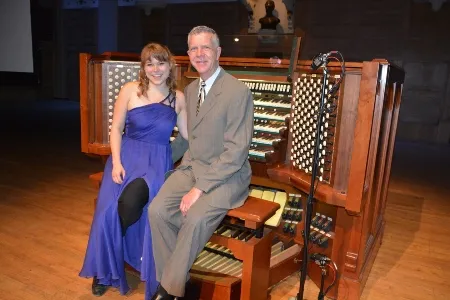
Universities and conservatories of music provide instruments for students of the piano, harpsichord, and organ, and many of the larger percussion instruments, while students of orchestral instruments must bring their own. The cost of purchasing and maintaining pianos is not limited to piano students because singers and instrumentalists need access to them, but organists are in a special situation. Any school with a serious organ department must invest huge sums, often many millions of dollars, in instruments for practice, teaching, and performance. The quality of those instruments can be considered recruiting tools for attracting students, but that separates organists from their peers.
School politics often struggle with the cost of providing organ majors with fleets of pipe organs. Further, because no practice-room pipe organ is anything like an organ for performance, organ majors must have primary access to the larger organs on campus for lessons and practice as they prepare required performances. While a violinist would love to have time to get used to the acoustics of a concert hall before a degree recital, much of the available time is gobbled up by organists. It has been a long time since I was a student at Oberlin, but while I knew that the brand-new Flentrop organ in Warner Hall was special, I know I took it for granted that I was privileged to have a lesson on it each week along with at least an hour or two of practice time.1
Things that go bump in the night
I have had a few good startles when practicing alone in dark buildings. The earliest I remember was during my high school years when I was practicing on Fisk Opus 50 in the Congregational Church late on a winter afternoon. I had started while the sun was up, and I had only the music rack and pedalboard lights on. But the sun had set, and I was sitting in an oasis of light in an otherwise dark church. The custodian came to let me know he was closing the building and stood next to me while I was playing because he did not want to startle me. I saw him out of the corner of my eye and jumped with a yell followed by a good shared laugh.
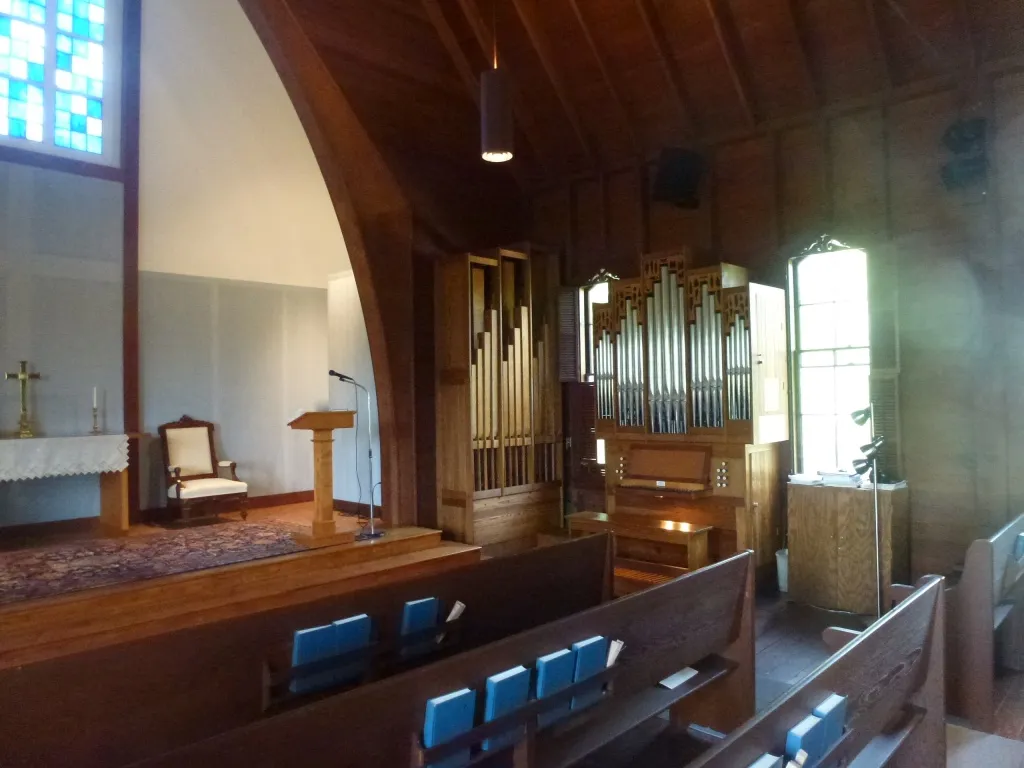
I was practicing alone at night in a little wood-frame church in Yarmouth Port, Massachusetts, when there was a great bang from inside the organ followed by animal shrieking. A Havahart trap had been set on a crawl-board above the pedal trackers. I am not sure who was more surprised, the raccoon or me.
Time management
When I was active playing the organ, sightreading was one of my strengths. I could resurrect a piece for a Sunday postlude by playing it through a couple times. That skill was a boon for preparing weekly worship services with prelude and postlude, four hymns, two anthems, and a solo, but I was not strong at working hard to master the most difficult literature. I love learning from organists how they manage their practice time. Some I know who have demanding full-time church jobs have to manage their practice time carefully because their schedules are full of staff meetings, committee meetings, relations with choir members, managing libraries, and other time-consuming demands of running a large church program.
Some have daily routines of practicing scales on the piano to keep their fingers strong and nimble. Others practice transposition regularly so that skill is always at the ready. Still others make sure to budget time for learning new literature. Many are frustrated to find that the continuing task of preparing service music two or three weeks in advance is all they can find time for. Some find it necessary to acquire modest practice organs for choir room or home or do most of their practicing in early morning or evening because of the scheduling demands of a busy city sanctuary. When I cared for the organs at Trinity Church in Boston, it was common for tourists to call for requests from behind the velvet ropes near the publicly located organ console.
Those colleagues who play lots of concerts away from home, especially on lengthy international tours, have two levels of practice to maintain, the finger-crunching work to learn and maintain literature, and the challenges of getting familiar with and preparing registrations on a variety of instruments. These artists know better than anyone how very different one organ is from the next, one of the special challenges unique to the organ. In his memoir Recollections, Marcel Dupré recalled arriving in a town in Wales where he was to play a recital. When the church’s organist picked him up at the railroad station, he asked if he could go to the church to practice. The organist replied that it would be useless. “I have a capricious instrument. You pull this stop and you get that one. If you pull a viola stop, you get a trumpet, and so forth. You would waste preparing registrations for your pieces. So I am planning to take you on a nice tour of the countryside.” When Dupré asked why he had been engaged, the organist replied, “I wished to meet you and to hear you play.” Dupré insisted on meeting the “rebel,” and found that the organist was right, and made his way through the concert doing “juggling acts” for registrations.2 I never heard Dupré play live, but I’m guessing he did okay.
§
I am writing this on August 10, 2026, the one-hundredth birthday of Marie-Claire Alain. I am sorry not to have known her, though I heard her play the dedication recital on the Flentrop in Warner Hall in Oberlin in November of 1974. I guess she was about forty-eight years old when I was eighteen. Though Facebook has its drawbacks, I am especially grateful for it on occasions like this as dozens of her former students—disciples—are posting their memories, photos, and gratitude for all she did for them—encouraging artistry, shaping musical beings, and helping guide the occasional wayward soul on a path toward wisdom. She is especially remembered for championing the wonderful organ music of her older brother Jehan Alain, who served as a dispatch rider in the French Army and was killed during the Battle of Saumur during World War II on June 20, 1940.
Marie-Claire Alain was one of the most prolific recording artists of organ music, producing more than 260 albums during her career, including three complete sets of the organ music of Johann Sebastian Bach. When asked by a writer for an organ journal why she was recording that for the third time she replied, “It’s because of the instruments, the instruments above everything else, and the fine state to which they have been restored, and the fact they are now accessible. These recordings use organs from Bach’s time, and we know that even Bach played some of them—it’s an extraordinary feeling, to put your hands on the keyboard, knowing that he was there 250 years before you.”3
Marie-Claire Alain taught at the Paris Conservatoire, and the list of her students published on Wikipedia is a Who’s Who of twentieth-century organists including Diane Bish, George Baker, Daniel Roth, Wolfgang Rübsam, Guy Bovet, and Gerre Hancock, to name but just a few. It’s good to take a moment to remember that brilliant and gracious woman.
Notes
1. I was thrilled to return to Oberlin in November of 2024 for the celebration of the fiftieth anniversary of that organ’s dedication, which was played by Marie-Claire Alain on the Feast of St. Cecilia, November 22, in my freshman year.
2. Marcel Dupré, Recollections, trans. and ed. by Ralph Kneeream (Belwin-Mills, 1978), pages 130–131.
3. Craig Whitney, “Mare-Claire Alain, Master of the Organ, Dies at 86,” The New York Times, March 4, 2013.