On Teaching: Barbara A. Black

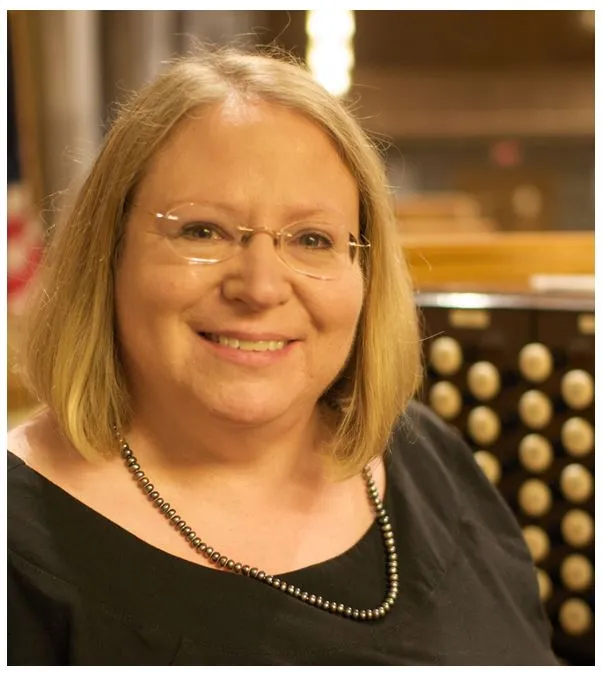
Barbara A. Black
I am writing this in early February about two weeks after my mother died at the age of ninety-two. Various aspects of my mother’s journey over the last few months have preoccupied me as well as the rest of my family. She seemed well, though in need of significant changes in her life situation. But then various serious health challenges, all of which had been around for a long time, caught up with her. In the end, her death at that particular time was sudden and unexpected, though on a longer arc it wasn’t surprising.
This whole story explains why I have not published a column in a while, and why I won’t for a little while longer. In theory, I am able to write the next couple of “Introduction to Harpsichord” columns more or less standing on my head. However, I want to treat them with the respect that they and the readers deserve. That means coming back in a couple months with a clear head and more relaxed spirit.
This column has always been written from a personal point of view and reflects my feeling that pedagogy is a phenomenon that encompasses essentially everything. This includes technical specifics of pedaling, fingering, or registration, as well as any thoughts and experiences that any teacher, prospective teacher, or student encounters along the way. Therefore, I feel free to write a few words about my mother, even though she was not a musician and did not teach me anything directly about music or about teaching music.
My mother was indeed a teacher. She was a legal historian and taught classes in that field and also in contract law for many decades, mostly at Columbia Law School, where she also served a term as dean. Not surprisingly, I never experienced her work in the classroom. But I know that she was devoted to teaching and had a reputation as a great classroom teacher. I think that some of my own deep respect for and love of teaching came from her by osmosis and example.
I have mentioned here from time to time that I was a late bloomer as a musician. Leaving aside the exact details of that scenario as it played out for me, that is also a description that fits my mother with her professional work. In her case, the reasons were societal. As a young woman in college and in law school in the early 1950s, she had it drummed into her repeatedly that she should not expect to have a career at all, but rather to be a homemaker. (There were professors around in those days who explicitly believed that places in universities were wasted on women, since they would not use their learning or their degrees to pursue careers.) Indeed my mother married and had three children. And in those days—more so than now, though there are still difficulties now—that lead to her staying home for a number of years. She was in her thirties when she went back to school to explore her love of history and added a PhD in history to her law degree. She began her teaching career past the age of forty.
This gave her a certain perspective on the concept of a career and what the possibilities might be. There is a quote from my mother from a commencement speech that she gave at her alma mater Brooklyn College in 1988 that a number of people have been coming back to and talking about in the time since her death: “Don’t be discouraged when you find that the process of self discovery takes a long, long time. Don’t even be surprised if at fifty you are still wondering what you are going to be when you grow up.” This philosophy has helped me to be patient with my own career. But more importantly, it has informed my attitude toward teaching. There is no such thing as someone being too old or in the wrong place in their life to study and learn if they want to do so.
I mentioned that my mother was not a musician. There is a bittersweet story about that. When she was a child or perhaps her early teens, she wanted to take piano lessons. But her father told her that she did not need lessons; if she had any talent she would just be able to sit down and play. I do not mention this to condemn my grandfather. Of course he was wrong about this, and it was tragic that he ended up squelching her interest in playing piano. But like all of us, he understood only that which he had a chance to learn about. And of course he was not the only person who has believed that musical or any artistic talent is something that is bestowed on a chosen few by some sort of magic. (There may be hidden layers to the story. Was he worried about affording the lessons or a piano? Was he consciously or otherwise trying to save face?)
But this story has always prodded me further toward believing the exact opposite: that anyone who is interested can get something real and valuable from studying and engaging with music, regardless of anyone else’s thoughts about their talent. This is probably my single strongest belief and principle about teaching and learning.
I should add that in her seventies my mother did indeed take piano lessons for a little while, and she got a lot out of it, though arthritis intervened before long. My mother was someone who valued honesty, accuracy, kindness, and patience. She took people as she found them and treated people well. She did not want to suffer a long decline and would say that if she ever “dropped dead” we should all rejoice. It is difficult to rejoice, but I am very glad that the end came the way she wanted it to.