“Passing the Time” with John Cage
In Zen they say, “If something is boring after two minutes, try it for four. If still boring, try it for eight, sixteen, thirty-two, and so on.” Eventually one discovers that it’s not boring at all but very interesting.1
—John Cage (1912–1992)
It may be that John Cage’s greatest legacy as a composer is helping us experience time. He is best known for his aleatoric writing (using I Ching coin tosses and indeterminacy in performance), for experiments with sound (amplifying plucked cactus spines and dripping water),2 and for redefining the concert experience, most notably in his iconic work, 4′33′′, premiered on August 29, 1952.3 Cage’s concept for a three-movement work during which no sound is played is often viewed as a way to focus the audience’s attention on sounds in the concert hall by denying them what they would normally expect. The composer revealed the limitations of this explanation in his remark that the piece “opens you up to any possibility only when nothing is taken as the basis. But most people don’t understand that.”4 While the title of the work seems to secure its exact duration, by the time it was published, Cage wrote in his note before the score that its “movements may . . . last any lengths of time.”5
This indeterminacy of duration characterizes a later piano work, Cage’s ASLSP, commissioned for the 1985 University of Maryland Piano Festival and Competition.6 The title is an abbreviation of “as slow as possible”; it also refers to “Soft morning, city! Lsp!” These are the first exclamations on the last page of James Joyce’s Finnegans Wake. Cage did not include details about the work’s tempo or dynamics; when asked by Thomas Moore who premiered the piano work, he responded that if each of the eight sections lasted a minute, the piece would then take eight minutes to perform.7 Despite this cryptic answer, the title suggests that the pianist should expand the piece beyond this to give an impression of slowness, perhaps waiting for each sound played to die away completely before playing the next.
Of course, the organ has no such limitation; as long as there is wind in the windchest, selected pipes will sound. This makes it the ideal instrument for ASLSP, as argued by organist Gerd Zacher, who made a strong case to Cage for reworking the piece for organ. Organ2/ASLSP was completed in 1987 and dedicated to Zacher, who premiered it later that year in Metz, France, taking about twenty-nine minutes. Like the piano version, it consists of eight sections, but all eight are to be played, unlike the piano piece, where the performer is to leave out one of the sections at will. Cage explains that although all are to be played, “. . . any one of them may be repeated, though not necessarily.”8
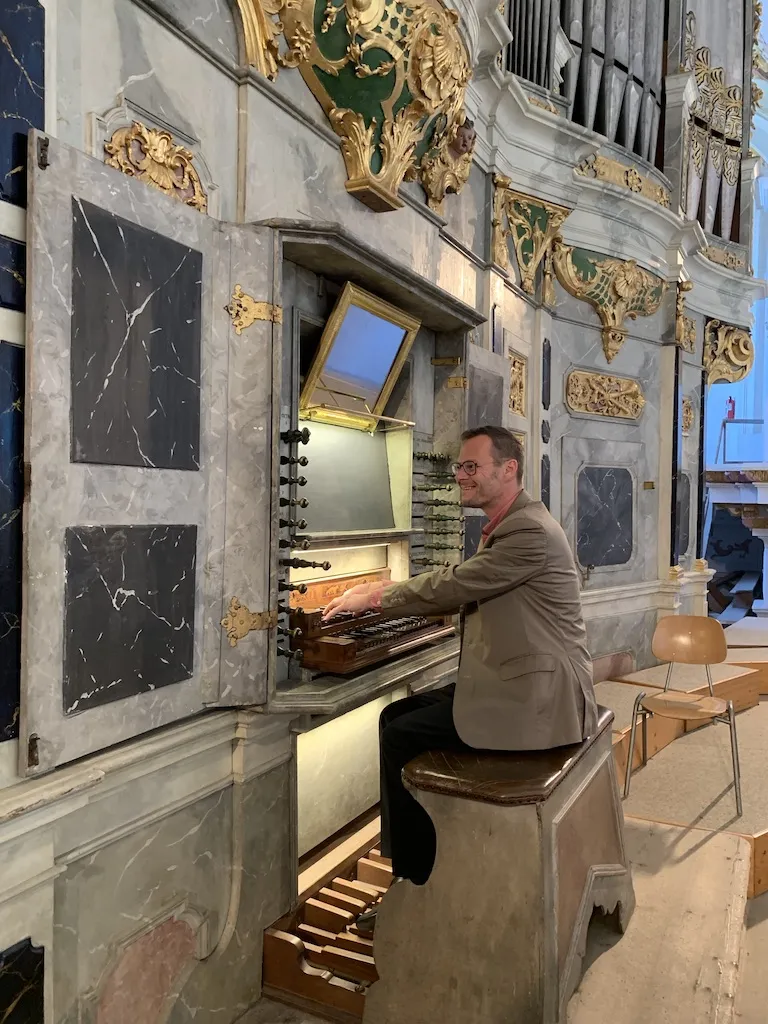
Since its first performance, Organ2/ASLSP has inspired numerous organists to consider the many aspects implicated by the indication “as slow as possible.” In 2005 Christoph Bossert and Hans-Ola Ericsson made a recording of the piece lasting seventy-one minutes, eighteen seconds, limited by the duration of music possible on one compact disc. In 2008 Diane Luchese performed the work for almost fifteen hours, limited by the time available to her in the concert hall at Towson University, Maryland, where she is a professor. In that performance, each of the eight sections lasted for 112 minutes.9 On August 14 and 15, 2017, Hans Fidom, research director of the Orgelpark in Amsterdam, presented the piece for organ and sound installation over an eight-hour period (four hours each day). Fidom played the Rieger organ at the Martinskirche in Kassel, Germany, an instrument where the organist can change the wind pressure, concurrent with a sound installation by Mirjam Meerholz. In section one of Cage’s work she included sounds from a live recording made at Halberstadt the preceding summer.
Over the two days, the event attracted over 700 listeners, many of whom stayed for the whole eight hours. One of the listeners said she felt like being able to live in the ongoing sound; others tracked the sounds through the scores that Fidom provided for the audience and walked along the seven speaker systems Meerholz created.10
On March 8, 2022, Christopher Anderson mounted a sixteen-hour performance of Organ2/ASLSP in Perkins Chapel, Southern Methodist University, Dallas, Texas, as part of A Festival of Form: John Cage & the Infinite Human. In that case, each notated line of the score spanned one hour.
Alexander Meszler, assistant professor of organ at Luther College, Decorah, Iowa, and a member of The Diapason’s 20 Under 30 Class of 2019, gave a twenty-four-hour performance of Organ2/ASLSP (three hours for each movement) in January 2024, beginning at 5:00 p.m. and finishing at the same time the next day. Meszler was almost never alone in the hall, thanks in part to a late-night (2:00 a.m.) arrival by the college orchestra, which had been on tour. Over 1,000 people tuned into the live-stream, and he completed the performance to a standing-room only audience of local community members.11
All of these live performances occurred during the ongoing 639-year performance of Organ2/ASLSP at the Burchardikirche in Halberstadt, Germany. This began on September 5 (Cage’s birthday), 2001; if all goes as planned, it will continue until 2640. The problem of a venue was solved in this case because the church had been abandoned for decades and could be used uniquely for this musical event. The idea for the project originated in 1998 in Trossingen, Germany, where Christoph Bossert, organ professor at the Trossingen Musikhochschule, had invited organists and organbuilders to consider aspects of time in music. The title of Cage’s work provoked thoughts about the organ’s capabilities in rendering the work “as slowly as possible.” Hans Fidom explains, “In principle, this idea is untenable: playing as slow as possible on an organ would mean that the music would never get beyond the first tones, as they would only die when the wind flow to the pipes producing them stopped—which it won’t, provided the organ is maintained well. Hence, the Trossingen group envisioned Cage’s music sounding so slowly that experiencing it would evoke a sensation of endlessness.”12 Since Cage’s title depends on an impossibility in practice, it presents both a challenge to performers and a departure point for philosophical reflection.
For example, Alexander Meszler’s choice of the time duration was not limited by the venue; the Sundt Organ Studio in the Hall of Music at Luther College was available to him for as long as he wished. In determining what was “humanly possible,” he asked himself,
What can one human do? What is our limit? In a weird overly empirical way, I said twenty-four hours is a ‘starting point,’ a first test of sorts. I don’t need to be the one that finally figures out what ‘possible’ truly is, but my job is to move us closer to it. Just like there is an infinity of points between two points, there is an infinity of ‘possibles’ between me and ‘as slow as possible.13
Skylights in the venue for the performance gave Meszler the idea of shaping the registration of Cage’s score to the natural light of the sun’s cycle over the course of a day.
Knowing what time the sun was going to rise, I was able to time a sort of ‘overture’ to the rising sun before the first rays of light came up (probably about an hour before). . . . This was perhaps where things really started to feel transcendent to me—the fact that I could hear an overture over the course of an hour.
Similarly, there was no time restriction of use of the Burchardikirche in Halberstadt. The time period of 639 years was determined by the length of time between the first documented organ in Halberstadt, built in 1361, and the dawn of the new millennium. The John-Cage-Orgel-Stiftung Halberstadt determined the type of instrument to be built, with keys and pipes assembled as needed for the requirements of the work. The keys are held down by small sandbags, and the pipes are sounded with air under light pressure. This removed any limitations caused by a living performer or group of performers who would need to be present at all times during 639 years. Although bellows are visible in the arm of the transept across from the organ, these are not functioning, since the wind is provided by an electric blower. Working out the details of the instrument to be installed in the Burchardikirche delayed the starting date of the performance, which is why it was postponed until 2001.
Fascinating as this non-human time-scale is, the sound production of the organ does not permit changes of dynamic and timbre in the same way that a live performance on a larger organ can. Luchese, Fidom, Anderson, and Meszler had all used changing registrations and even wind pressures during their extended performances. All had experienced time and organ sound in new ways as a result. As Luchese wrote, “The extreme slowness of Organ2/ASLSP challenges listeners’ perception of its musical structure. In many performances individual notes extend far beyond what we experience as the specious present, or ‘now.’”14 She yearned to create an even longer performance that would transcend the endurance of one single player, and she contacted me about the possibility of putting together a team of four organists to perform Cage’s work over an eight-day period, with twenty-four hours for each of the eight sections.
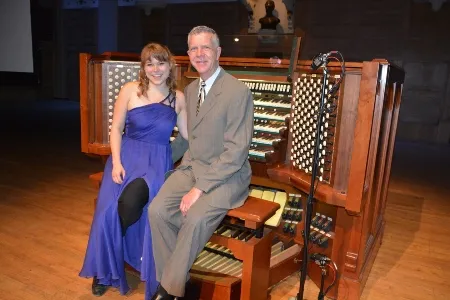
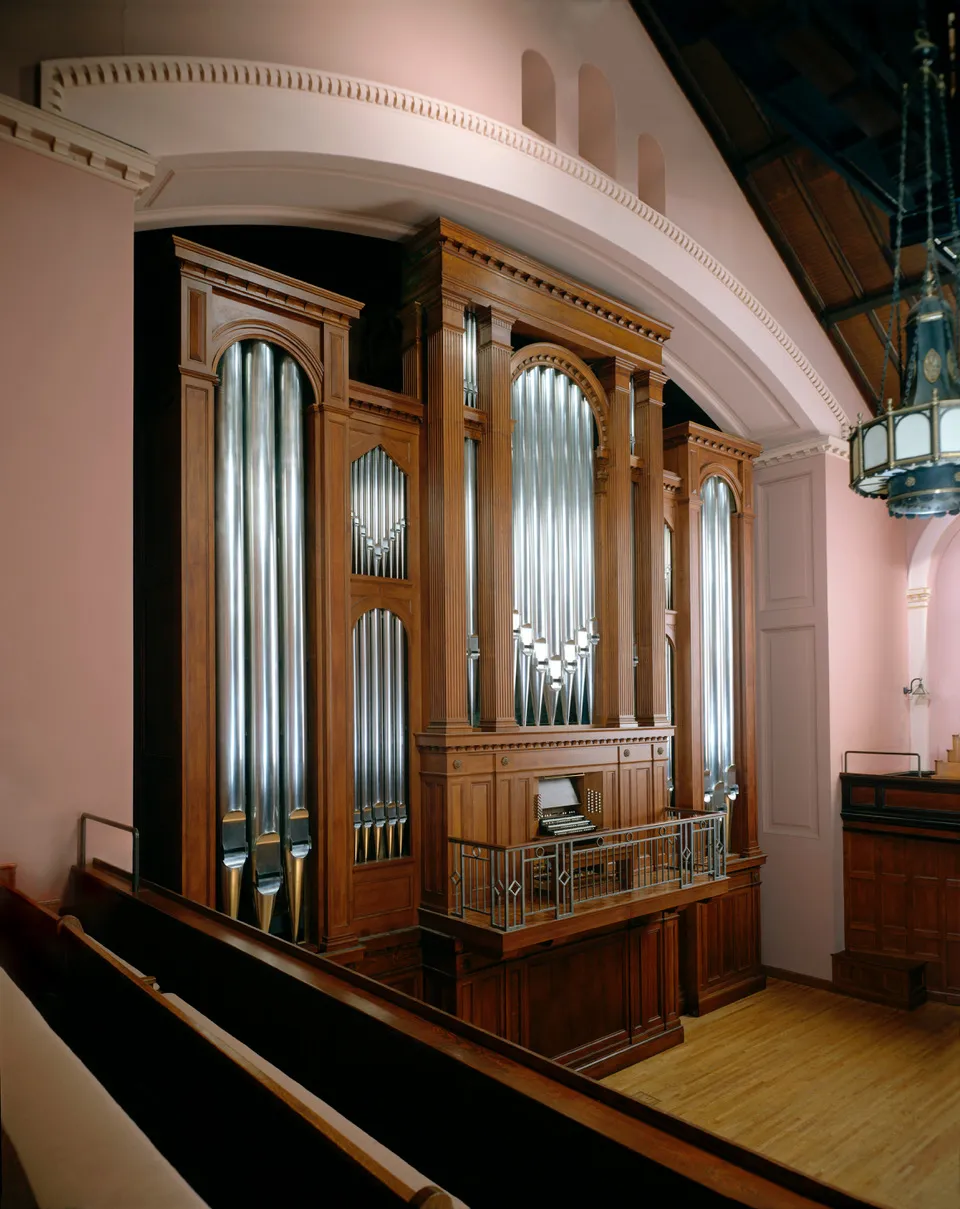
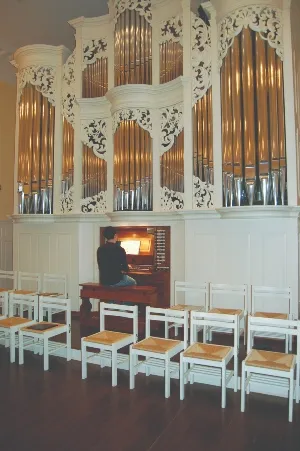
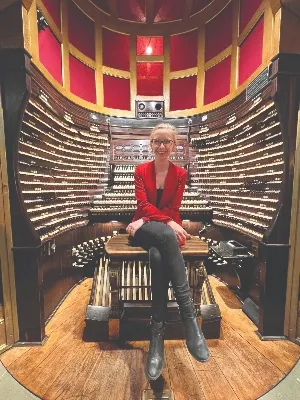
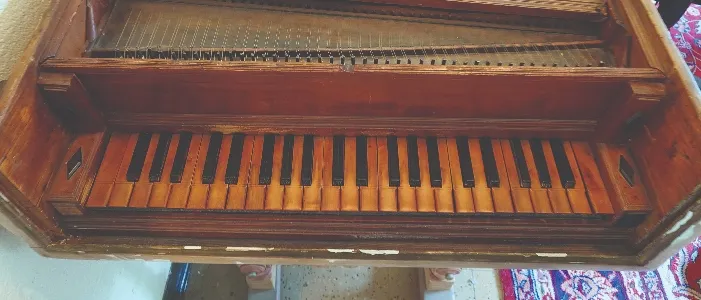
Luchese’s dream was realized January 7–15, 2026, in the Organ Hall at Arizona State University, Tempe, which houses two instruments—an organ built by Paul Fritts in 1991 and inspired by Dutch and German Baroque models, and a historic Italian organ built by Domenico Traeri in 1742. The 250-year difference between the construction dates of the instruments added another dimension to the experience of time. As the Goldman Endowed Professor of Organ, I was able to secure the hall for the entire 192-hour period, which was continuously livestreamed to listeners around the world, making this the longest live performance on record.
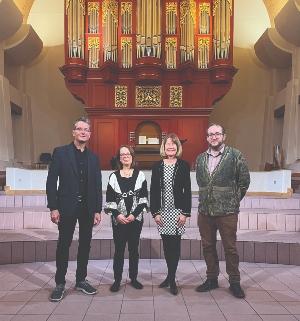
Joining me for six-hour shifts each of the eight days were Christopher Anderson (Southern Methodist University), Diane Luchese (Towson University), and Alexander Meszler (Luther College; DMA ASU 2020).15 In order to have the maximum live attendance at the beginning and end of the performance, we decided to begin at noon on January 7, with Luchese opening the performance with a forty-three-minute rest, and end at noon on January 15, with Anderson releasing the last note, while Meszler turned off the organ. In this way, each of the work’s eight sections began at noon and finished at noon the following day, with the performers taking the following shifts for the eight days: Luchese (noon to 6:00 p.m.); Meszler (6:00 p.m. to midnight); Marshall (midnight to 6:00 a.m.); Anderson (6:00 a.m. to noon).
Cage’s score for Organ2/ASLSP is written in proportional notation so that the first interpretative choice is the total time for the performance. Luchese meticulously worked out the proportions for each movement to be played during a twenty-four-hour time period, and all four organists played from her score. While the composer notated specific notes on staves, this is just a starting point, as he wrote no dynamics or registration indications. This leaves the interpreters free to use the organ however they wish.
There are many ways to realize the pitches indicated by Cage. The composer has indicated specific intervals, such as the minor second or the tritone, that create beating effects caused by interference between sound waves with slightly different frequencies. But the interpreter(s) can enhance or minimize the sonic effects through the stops chosen and how they are engaged. The collaboration between the four colleagues provided much time to experiment with Cage’s notated textures. We used key weights and sandbags (for the pedals) in order to maintain the long note durations. This left us free to explore the winding and acoustical properties of both instruments in the ASU Organ Hall—the Fritts (Kellner tuning) at the front and the Traeri (quarter-comma meantone) at the back. The possibilities were endless.
Luchese exploited the unique characteristics of the Fritts and Traeri organs by including references to earlier and present times, using both conventional/idiomatic registrations and unusual/modern stop combinations, as well as differing attacks and releases. The characters of the movements also influenced her decisions. Because the sparse fifth movement struck her as mystical, she considered the opening sonority as a “call to prayer,” making it clamorous (like trumpet fanfares, cathedral bells, and shofars) before using a serene 8′ principal for the perfect fifth interval that followed. The dense, voluminous character of the seventh movement led her to pay homage to Ligeti’s Volumina, by similarly starting the movement by turning on the blower of the Traeri organ, with stops and key weights activated ahead. At the end of the second sonority of day seven, she cut off the blower of the Traeri before moving to the Fritts to explore various densities there. Because the last movement began with the only instance of a repeated sonority, Luchese used both organs in antiphonal fashion.16
Each of the organists for the performance at Arizona State University developed their own approach to shaping the music they played. Some of us tried to keep the sense of time progressing slowly by walking very slowly in an almost ceremonial way. I would sometimes let the vibrations guide my body into swaying and stretching motions. Meszler had the idea of lighting an eight-day candle when Luchese began the piece, and this miraculously stayed burning until Luchese blew it out as the last note was lifted.
Sometimes the score led us to incorporate extramusical aspects. During my shift on day six, I held open before me Cage’s Lecture on Nothing17 and tried to reflect the indentations of the lines by my position at the sides and in front of the Fritts organ; during the last section of the work on day eight, Anderson brought out a knife and chopping board and began cutting mushrooms that he scattered on the ledge behind the organ, reflecting Cage’s study of mycology.
By expanding the time during which we played Cage’s score, we became aware of what Jonathan Kramer called “vertical time,” attention to the extended present, the constant unfolding of sound without reference to the past or future.18 While one might expect organ sound to be dull and static when sustained for long periods without change, this was not our experience. In the ASU performance we observed cycles of beating between the intervals Cage wrote as well as between the registers chosen on each organ. We all experienced unexpected acoustical phenomena, including the ways in which the two organs interacted with each other across the hall. While each performer had their own approach to registration, we did not go into the performance with a hard-and-fast scheme, but rather let our sonic experience guide us for how long a registration should be held and when to move on. Since most changes between players involved “inheriting” a registration from the preceding organist, we would begin each session stimulated by new ideas in interpreting Cage’s score.
A creative technique that we explored was partial winding, pulling a stop only partially so that no pipe in the register receives full winding. Sometimes, this created regular oscillations that resulted from the beating between different frequencies, as well as layered oscillations from beating in different registers, and the occasional winding of a pipe more fully so that it seems to sing out at random moments. Some of the effects were surprising. I felt like whales were calling to me in one section of the piece; at another, high-pitched birdlike tones emerged from the instrument. The way the wind is altered when moving through the organ’s windchests is staggeringly complex. Seeking out these effects kept me in the present and fully engaged with the soundscapes I discovered for the piece.
In his notes after day two, Christopher Anderson explained this engagement:
Sound is a matter of discovery, not of creation. The creation part is given ahead of time, whatever your theology. The Judeo-Christian origin story claims that the creation was spoken into existence, as in Genesis 1, verse 3: “And God said: ‘Let there be light.”’ This suggests that sound supplies the conditions for sight and the space presupposed by it. . . . So sound is arguably at the bottom of absolutely everything. With ASLSP this is for sure: if you discover a sound you love, you can capture it for a time in the wild, but you can’t take it home in captivity. You have to release it again into the wild. There’s a slow and even painful or emotional leave-taking (as in Mahler’s Ninth Symphony). The reassuring thing is that the sound is still there once it gets released. Maybe someone will find it again someday. Gratitude for time spent. . . .
But just think of all the sounds we’ll never hear.19
Because Anderson ended each section of the work and Luchese followed with the beginning of the next section, both performed extended rests, the longest being almost three hours between the ending of movement two and the first sounding notes of movement three. All of the performers had periods of silence within their sections of the piece, and this became an important element in our interpretations. Normally a rest serves a rhetorical or rhythmic function, to highlight the sounding music through the contrast of silence in one or more parts. But at the lengthy timescale with which we performed Organ2/ASLSP, this connection with the sounding part of the piece would be lost. (We had to include a note on the program as well as on the livestream that perhaps listeners would enter or leave the performance during an extended rest; this didn’t mean that the performance was over!) Again, Cage informs us: “Try as we may to make a silence, we cannot. . . . Until I die there will be sounds. And they will continue following my death. One need not fear about the future of music.”20
Perhaps Cage’s reassurance that there will always be music is his most important message. Linked to this is an awareness of the interconnectedness of time and space. Surrounded by listeners, both in the ASU Organ Hall and online from around the world, the organists performing Organ2/ASLSP felt comfort in the timelessness of sound. I believe our performance was especially impactful in a culture where we are frantically trying to keep up, bombarded every minute with aural and visual stimuli. Our experience was like being in a sound temple, providing a much-needed balm and helping to focus our attention on the eternal present. After his performance of the work in Amsterdam in May 2018, Hans Fidom wrote, “So this is my dream: that whoever was present in, and is reading this now, may feel inspired and start rethinking alongside me how to cope with Cage—and again and again—and make the process never stop—.”21 When we “pass the time” with Cage, we become part of a vital legacy, imparting his sense of wonder and discovery to ourselves and our listeners.
Notes
1. John Cage, Silence: Lectures and Writings (Wesleyan University Press, 1961),
page 93.
2. David Nicholls, John Cage (University of Illinois Press, 2007).
3. The piece circulated in manuscript form before it was first published in 1960. John Cage, 4′33′′: for any instrument or combination of instruments (Henmar Press, 1960).
4. William Duckworth, Talking Music/Conversations with John Cage, Philip Glass, Laurie Anderson, and Five Generations of American Experimental Composers (Schirmer Books, 1995). Interview with John Cage, page 14.
5. Ibid.
6. John Cage, ASLSP: for piano or organ solo (Henmar Press, 1985). Thomas Moore was the coordinator of the University of Maryland International Piano Festival and Competition at the time. He writes about the commission and Cage’s remarks concerning the piece on his website: http://thomasmoore.info/john-cages-aslsp/, accessed March 6, 2026.
7. Hans Fidom, “Coping with Cage: On Organ2/ASLSP, listening, and music-making,”
ASAP/Journal 4/3 (September 2019), pages 496–502. https://doi.org/10.1353/asa.2019.0049.
8. John Cage, Organ2/ASLSP (Henmar Press, 1987).
9. Diane Luchese, “John Cage’s Organ2/ASLSP: Stretching Time and Savoring Sound as Slowly as Possible,” SONUS: A Journal of Investigations into Global Musical Possibilities 39/1 (Fall 2018), page 12.
10. Email communication to the author from Hans Fidom, March 14, 2026.
11. Ros Weis, “Meszler completes 24-hour performance,” Driftless Journal 5/12 (March 21, 2023), page 2. https://issuu.com/driftlessmultimedia/docs/dj_03212023_full.
12. Fidom, page 497.
13. Email communication to the author from Alexander Meszler, March 15, 2026.
14. Luchese, page 13.
15. I want to thank my dedicated colleagues Diane Luchese, Alexander Meszler, and Christopher Anderson for sharing this musical marathon. We’ll never hear organ sound the same way again!
16. Email communication to the author from Diane Luchese, March 16, 2026.
17. The complete text is found in Silence: Lectures and Writings (Wesleyan University Press, 1961), pages 109–126.
18. Jonathan Kramer, The Time of Music (Schirmer Books, 1988), page 375.
19. Email communication to the author from Christopher Anderson, March 16, 2026.
20. John Cage, “Experimental Music,” in Silence: Lectures and Writings (Wesleyan University Press, 1961), page 8. These remarks follow Cage’s account of experiencing the anechoic chamber at Harvard University. Even in a space with no reverberation, one hears a high and a low sound, the internal vibrations of the nervous and circulatory systems.
21. Fidom, page 501.