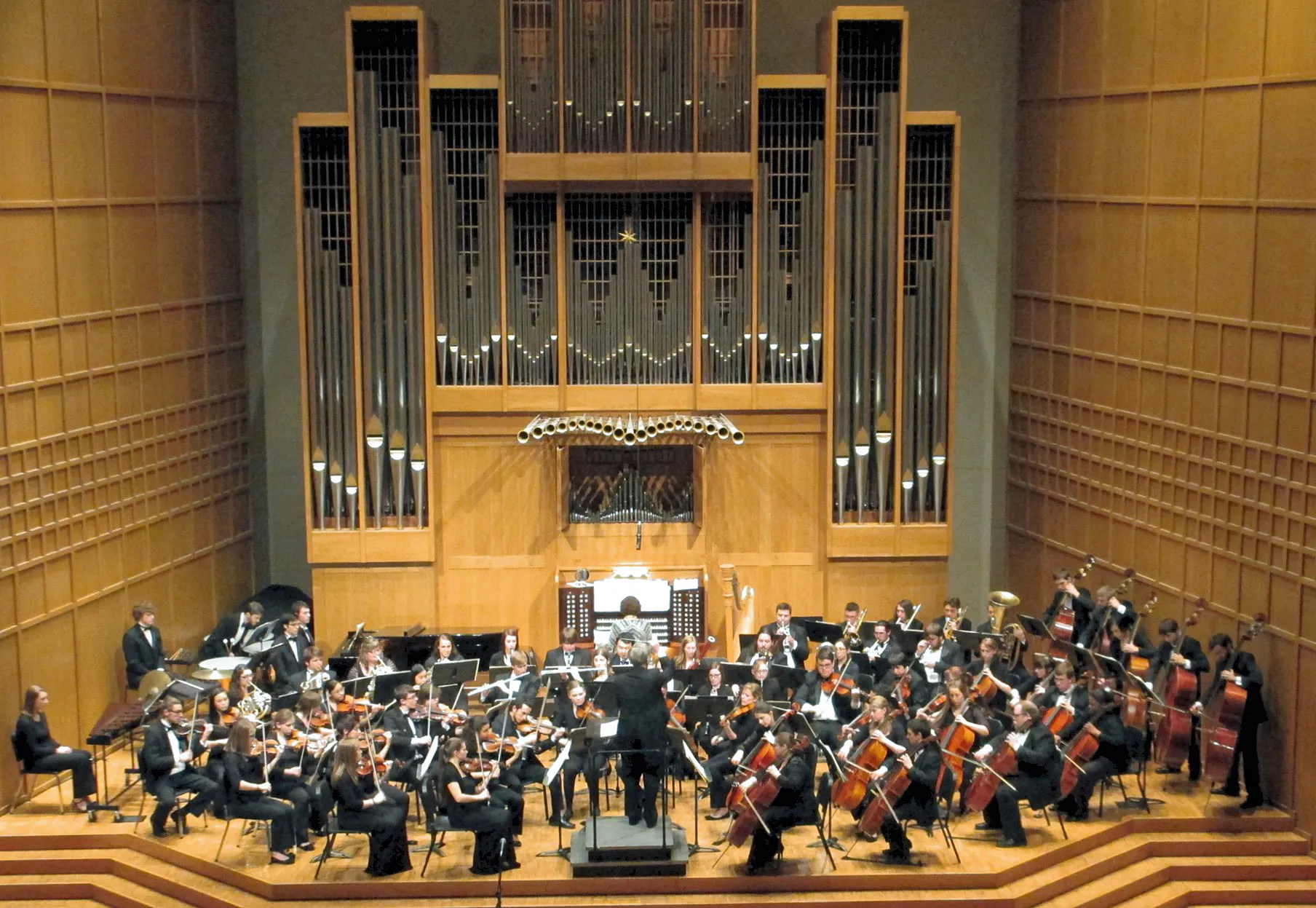
Cover feature: Wichita State University
Wichita State University, Wichita, Kansas

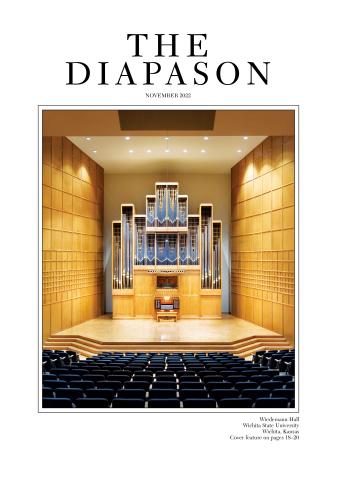
Wichita State University, Wichita, Kansas
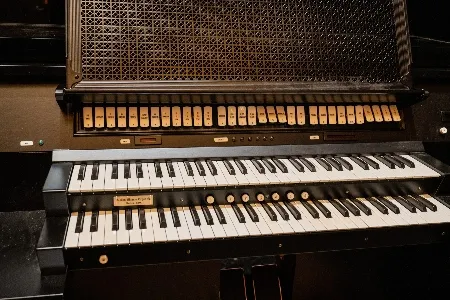
The twenty-two-rank electro-pneumatic-action pipe organ designed and built by the Aeolian-Skinner Organ Co. of Boston, Massachusetts, for the Metropolitan Opera House in New York City and installed there in 1966 was taken out for a long-needed thorough rejuvenation over the summer by the Schantz Organ Company of Orrville, Ohio. The unique instrument with two manuals and 1,289 pipes in twelve voices and twenty-two ranks was whisked away from Lincoln Center to Ohio last April after undergirding that season’s final performance of Tosca.
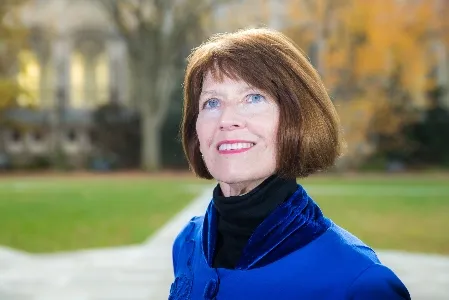
This interview took place February 19, 2022, at the Blue Palmetto Café on the campus of Bok Tower Gardens, Lake Wales, Florida. Pamela Ruiter-Feenstra was studying with Geert D’hollander and playing four concerts at Bok Tower during the week of February 14–19, 2022. I conducted this interview before Pamela had a meeting with Geert. The conversation ended a little early as we heard the bells chiming in the background, which reminded us that it was time for her meeting.
I have Pamela Ruiter-Feenstra with me today. She is a carillonist in Ann Arbor, Michigan.
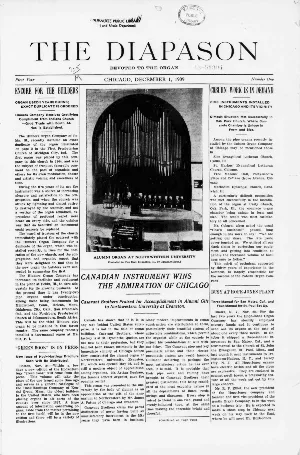
On December 1, 1909, Siegfried Emanuel Gruenstein published the first issue of The Diapason in Chicago, Illinois. That seminal publication totaled eight pages, but it was the historic start to one of the world’s oldest continually published journals about the organ and church music, along with interests in harpsichord and carillon, as well.
Playing slowly
I ended last month’s column with an anecdote that I suggested would lead nicely into what I wanted to write about this month:
Delbert Disselhorst, 81, of Iowa City, Iowa, died September 1. He was born November 3, 1940, in Keokuk, Iowa, and attended public schools in Hamilton, Illinois. He enrolled at the University of Illinois where he graduated as a Bronze Tablet Scholar in 1962. Disselhorst was awarded a Fulbright scholarship for study with Helmut Walcha in Frankfurt, Germany. He returned to the United States in 1964 and earned a Master of Music degree in organ from the University of Illinois the following year.