Cover Feature: New Schlueter organ for Valdosta
A. E. Schlueter Pipe Organ Company, Lithonia, Georgia; First Baptist Church, Valdosta, Georgia
They say a picture is worth a thousand words . . .
On September 27, 2024, Valdosta, Georgia, found itself in the direct path of Hurricane Helene; it was still a Category 4 storm when it moved through this community. With sustained winds over 100 m.p.h. and gusts much higher, in its destructive wake there were two million cubic yards of debris that had to be cleaned up. Anyone who has ever been through an area ravaged by hurricanes and the tornadoes they spawn understands the sheer devastation they exact on the communities they impact—it is often total and complete.
Driving to the scene, I witnessed destruction everywhere. No matter where I turned, the area was dominated by ripped-up houses and buildings, fallen trees, downed electrical lines, and closed roads too numerous to count. The detritus of people’s lives was scattered and strewn by the winds onto the ground and into the trees that were still standing. Debris was piled up higher than six feet. A virtual moonscape was created by the sheer scope of tarps covering the wounded roofs and their inhabitants—loss everywhere.
As you may have surmised by now, the First Baptist Church of Valdosta was not spared. Numerous places on the church campus were flooded, and roofs were penetrated.
The path of destruction outside the church foreshadowed what I would find inside. In the sanctuary, the pipe organ was severely damaged when portions of the brick building structure at the rear of the church were compromised, and thousands of pounds of brick rained down on the lower roof over the organ chamber, which collapsed inward.
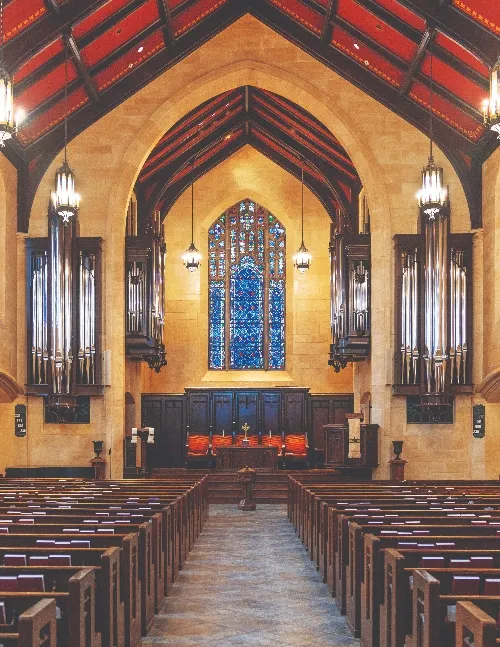
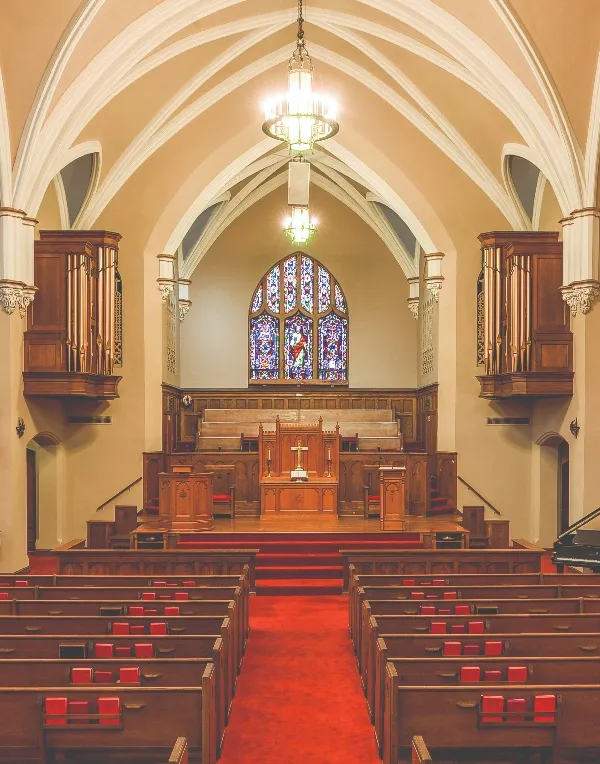
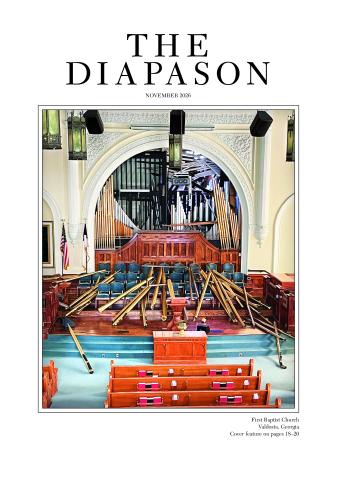
The picture on the cover of this publication gives a sense of what I experienced when I walked into the sanctuary, but it cannot begin to fully capture the heartbreak and sea of emotions experienced by being in this church. As a house of worship at the center of people’s lives, it is the spiritual home of generations of many of this town’s residents for baptisms, weddings, Easters, Christmases, funerals, and many other celebrations and events.
This is a church and an instrument I have known for years. We have been the service company of record and have tuned this instrument frequently. The pipe organ was built by the Schantz Organ Company in 1991. It was a very nice service instrument that had served the congregation well. It sat behind the remnants of the original organ façade and case, which was built nearly 100 years earlier by Henry Pilcher’s Sons. Inside the sanctuary, I was left surrounded by a panorama of sights and smells, and a silence broken only by the constant drip of water. It produced a visceral effect on my soul, surrounded by the amount of damage and loss.
The initial focus of the damage to the organ was concentrated in the Choir division. Almost all of the pipework in this division was flattened into a tangle of metal and shards. The expression shades were blown out with significant force through the Great and Pedal divisions and ultimately through the façade and casework. In this outward explosion of mass, the majority of the façade pipes were destroyed, and the oak case was heavily damaged. As the cascade of bricks and mortar continued its fall, the detritus went through the 16′ Principal with bricks driving a number of languids out of the pipes, while crushing others.
The storm was not done with its damage. With the roof opened up to the outside, rain poured through the rents in the church structure, and literally thousands of gallons went through the organ. All divisions of the organ were affected—none of the divisions escaped the water damage.
I began the task of documentation, followed by an assessment that would eventually need to be followed by a plan. Initially, it was very hard to see a path forward with so much damage.
We immediately worked with the church to try to remove portions of the organ out of harm’s way for its protection. The Great, Swell, and Pedal had some damage from falling brick, ceiling structure, and debris, but the majority of the damage was from water.
There was the impending threat of the damaged walls and ceilings collapsing and threatening to completely destroy the organ. The portions of the damaged organ structure, expression boxes, and internal walls were holding up the collapsed ceiling and rear chamber wall. It was like a deck of cards that could fall asunder with the removal of a single critical card. At this juncture, we did not know the degree of damage to much of the organ because it was too difficult to safely access the internal workings of the instrument.
We developed a plan to minimize danger in the removal of some of the pipework from the organ. We did this by leaving the majority of the chassis in place, with it wedged into the collapsed ceiling, and limited the scope of our movements to specific places in the organ. Wearing the requisite personal protection equipment of hard hats, eye protection, steel-toe boots, and fluorescent vests, we assembled to salvage what we could of this instrument. I took the lead in the organ chambers to keep my staff as much out of harm’s way as possible. There was very real danger so we hurriedly passed pipes out of the organ and packed them into trays outside of the likely fall area in case there was an additional roof collapse. There were portions of the organ we could not safely access, and portions of the pipes and chassis that had to be left until the damaged sections of the church could be stabilized and the ceiling and wall structure secured with additional supports.
On our second removal trip, with the damaged portions of the church shored up, we started to remove the chassis. This was months later, and what we found astounded us. When we cracked the first bottom board screws to access the bottom of the windchests, gallons and gallons of water flowed out. The reservoirs and their related windlines likewise were found to hold large amounts of water.
The entire organ chassis, with its pipes, console, façade, and case, along with other innumerable parts, was brought to our shop to be cleaned and evaluated. The damage to the main windchests, expression motors, tremolos, and the winding system was severe. We cleaned the portions of the organ that would be restorable and worked toward the development of a plan.
So what did we have to work with to rebuild this instrument? How would the “phoenix” arise? Or more accurately, could it arise? These were our questions of primacy alongside so many others. Yes, I well understand the contrary nature of the phoenix reference of fire to ash before rebirth, juxtaposed against the destruction of water.
In the clear light of day, we found about two-thirds of the pipework in part or whole was restorable, we had a console that could be rebuilt, a blowing plant that was undamaged, and casework from the original pipe organ that could be restored. We had identified the path towards restoration and renewal.
In going through the pipework, much of its design and scaling followed the precepts of what we might do in our own shop. Not identical, but not so far out of step, and it was the work of a builder we respected. I have often counseled churches that if we look at the pipe organ as an entity, the most valuable portion of the organ is the pipework. Windchests, consoles, chassis, and control systems need rebuilding with age, but it has long been the case that well-built pipework with appropriate materials, scales, cutups, and mouth widths can transcend time and continue to serve as playing entities in other builders’ work. This act of stewardship is not just about saving resources, but often it is also about saving the art of the pipemaker/builder. These aren’t just old pipes, but they are part of the lasting body of work left to us by E. M. Skinner, Aeolian-Skinner, Möller, Hook, Pilcher, Kilgen, Kimball, or, as in this case, Schantz.
Because the Choir division pipework and the entire organ chassis was destroyed, it was allowable that the redesign of the organ could be a relatively blank slate. I made a conscious decision to move some of the extant resources into differing homes in the Great, Swell, and Choir. I recast the organ with an 8′-centered accompaniment core, additional reeds, strings and celestes, solo voices, and color. These changes divisionally, along with new pipework, allowed me the freedom to construct a fundamentally new specification and stoplist.
The new organ specification is centered around American eclecticism and its ability to take part in many forms of music. The role of this instrument is first and foremost to support choral and congregational singing. Secondarily, this church serves as a community gathering place for music and the arts. The new stoplist was designed for a wider body of repertoire from many periods and national schools.
In the creation of art, I have always believed that personal altruism is important. On many of our projects, we have included some additional resources and gifts to couple our dollars with the church’s. This project was no different; we were proud to include the Great 4′ Rohrflote, Choir 8′ Krummhorn, and the 8′ Tromba solo voice as gifts from the Schlueter family to the church. These stops add another dimension to the instrument in its service music role.
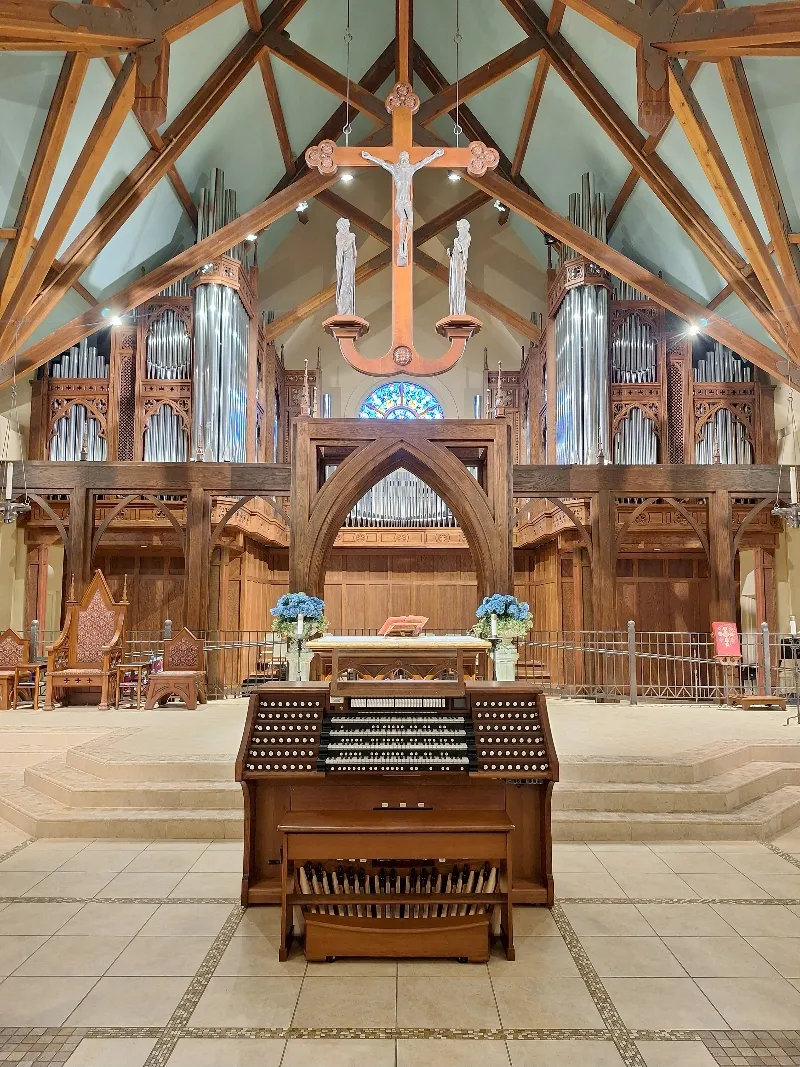
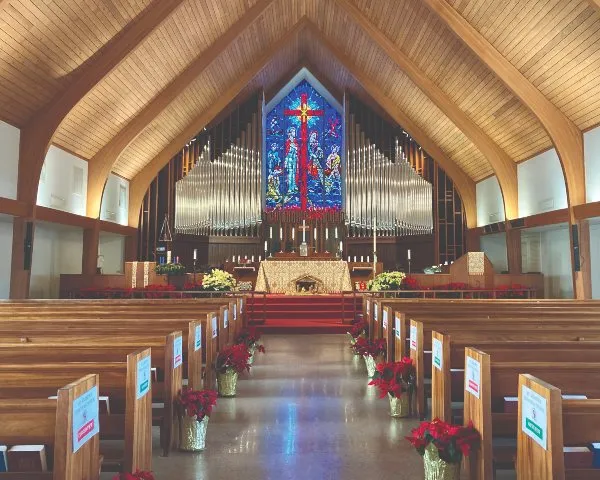
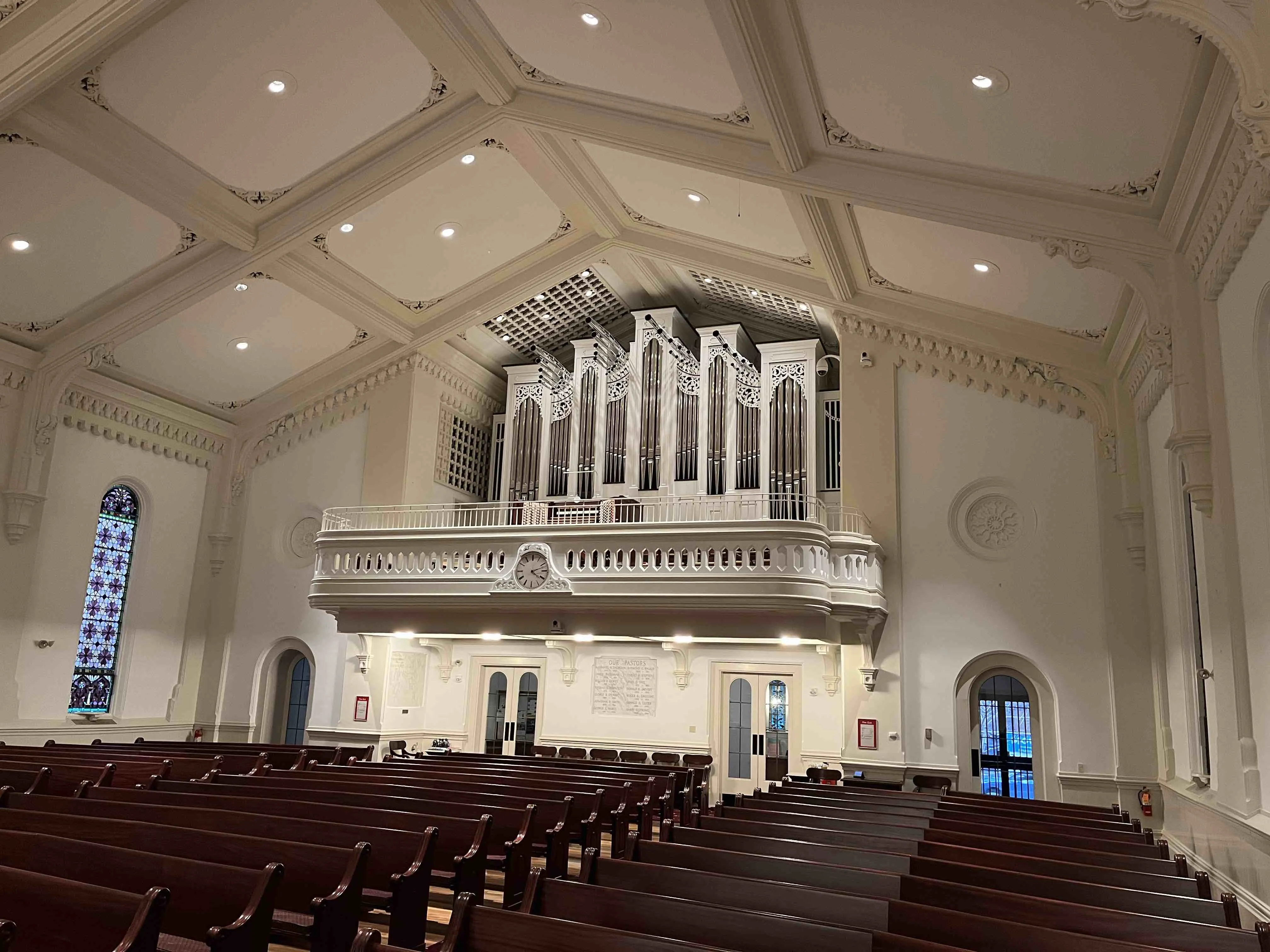
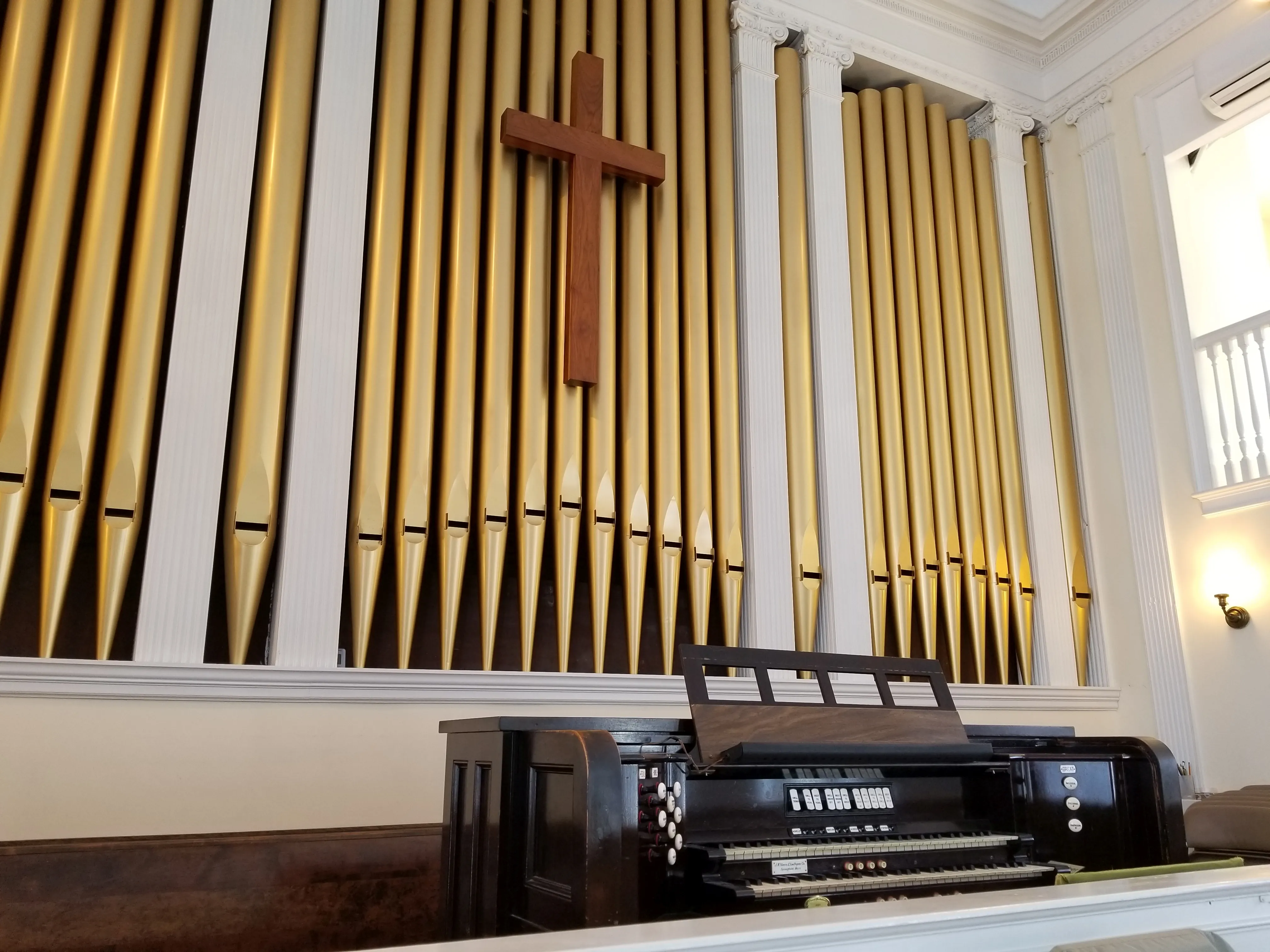
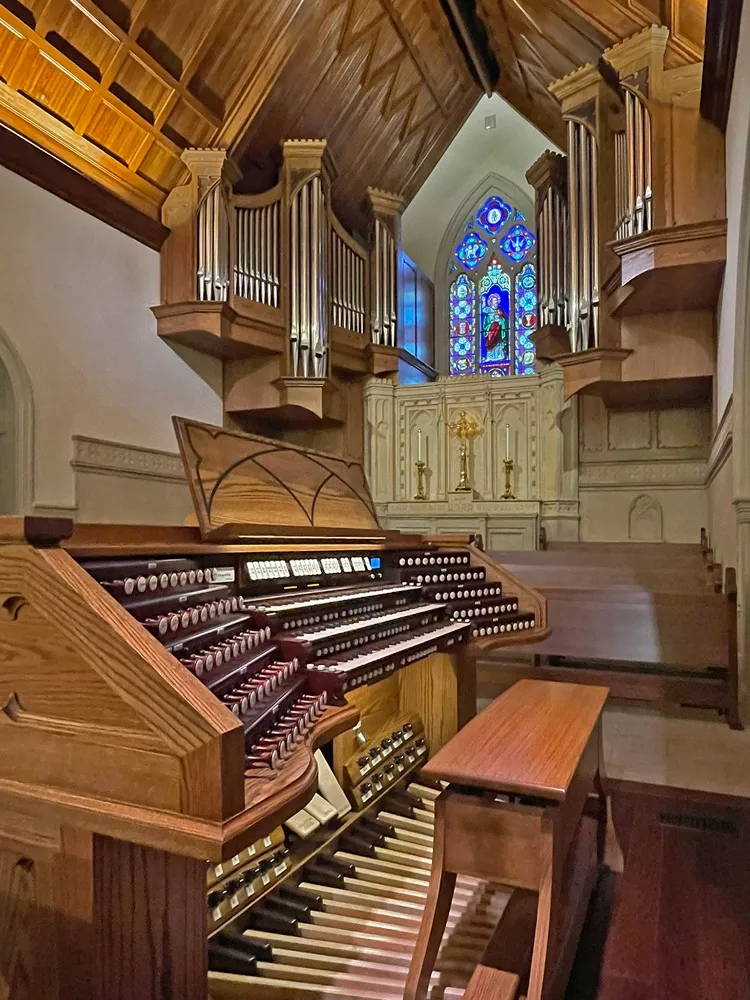
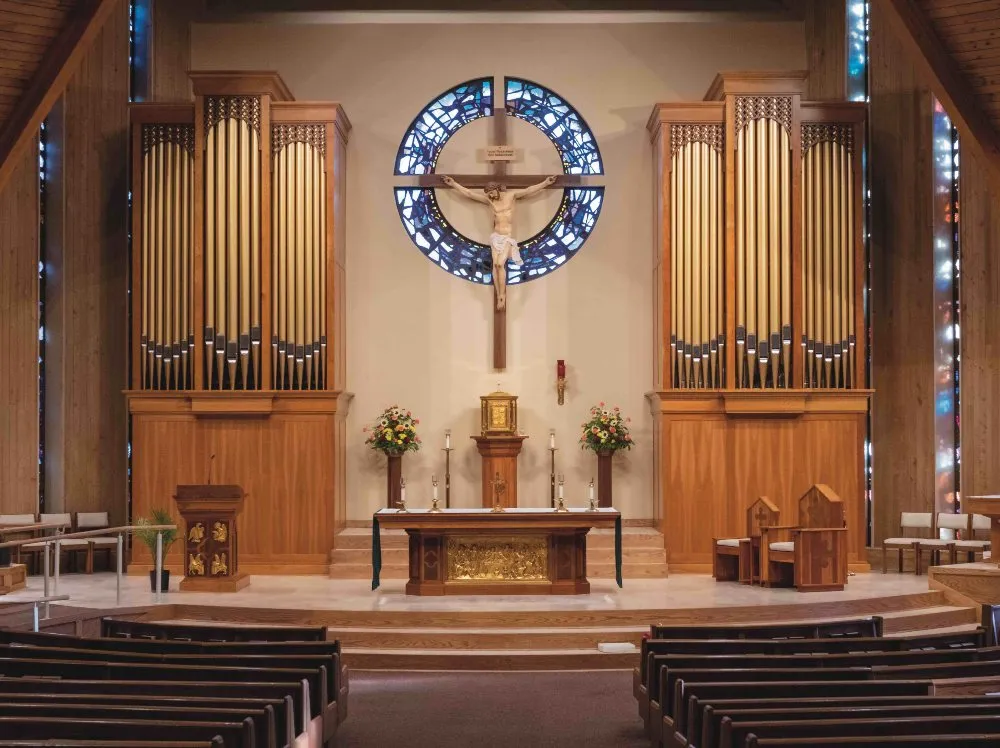
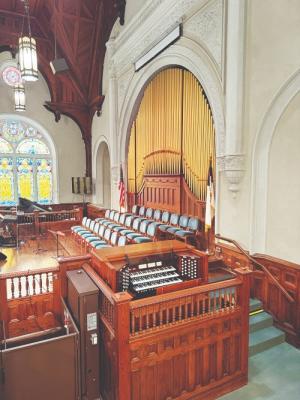
While the vintage organ case was damaged, its patina of age in its joinery and finish was not lost—it was not damaged beyond repair and restoration. The casework was stripped down to bare wood, moldings recreated, holes patched and filled, boards replaced and then carefully refinished to bring out the natural umber of the wood. The pipes in the façade were too damaged to be restored, so new pipes were made for the façade. These were painted gold in keeping with their original design and appearance. This careful restoration process preserved the backdrop for the front of the church that the congregation had known for over 100 years.
The organ chassis/layout is entirely new. We built new electro-pneumatic slider and unit windchests for the instrument. The organ resources are placed on a common thermocline to promote tuning stability as well as balanced distribution of tone.
The winding system utilizes traditional dual, curtain-valve, ribbed regulators with springs and weights. The manual wind pressures in the instrument are moderate and run from 3¾ inches to 4½ inches with the solo reed voice on 7 inches.
The tremolos are of the inertia type using off-centered weights and driven by a motor. In support of other genres, we have designed a dual-speed function on the tremolos to allow for gospel music, when this is called for.
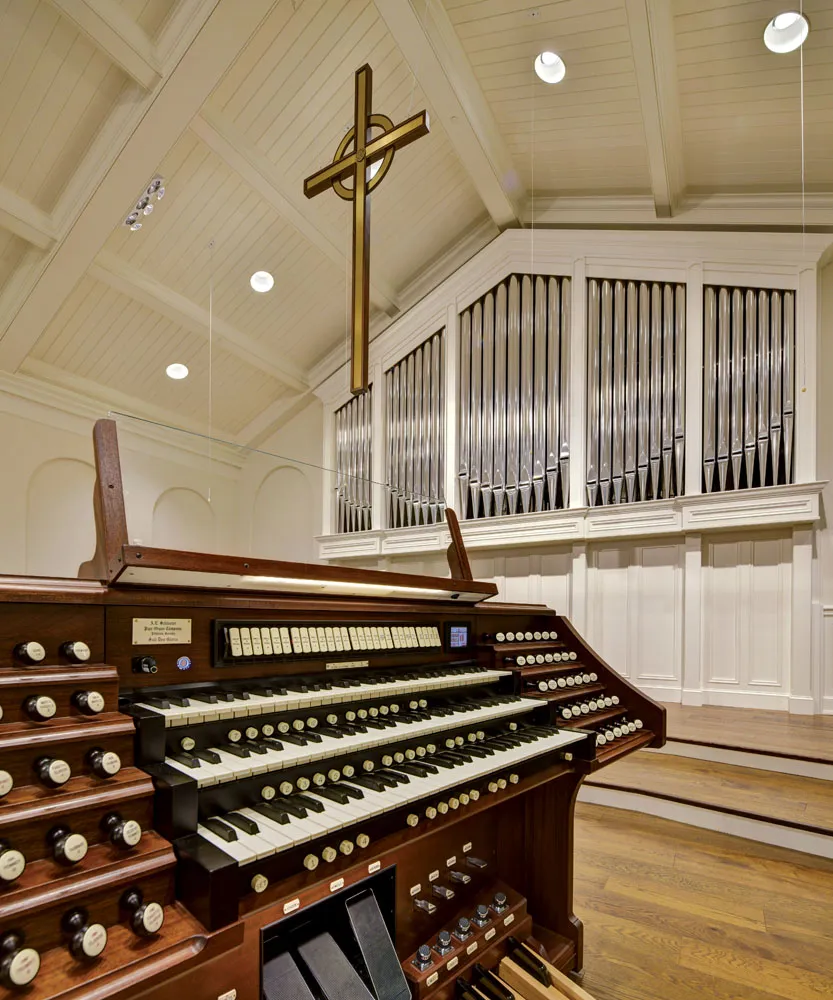
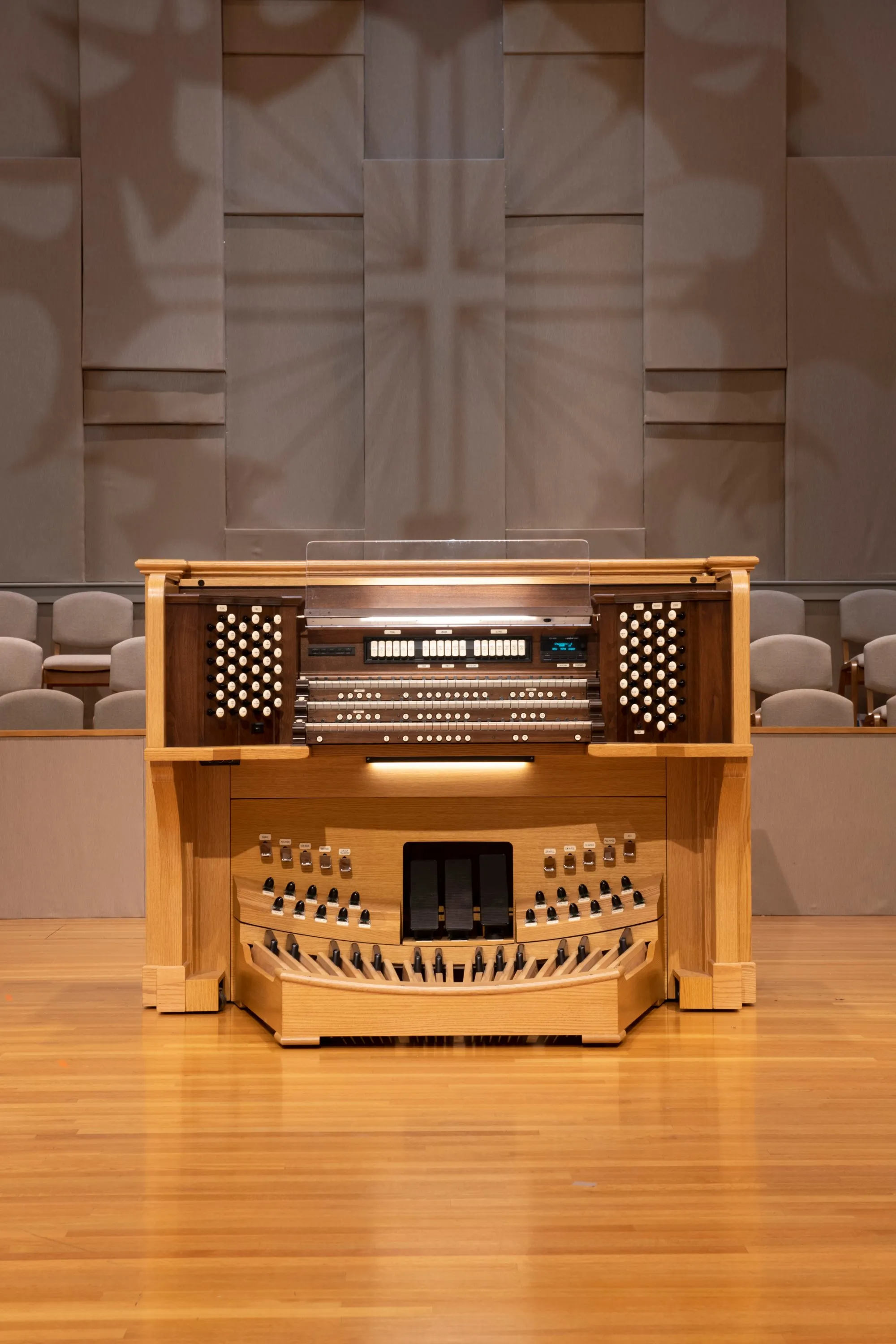
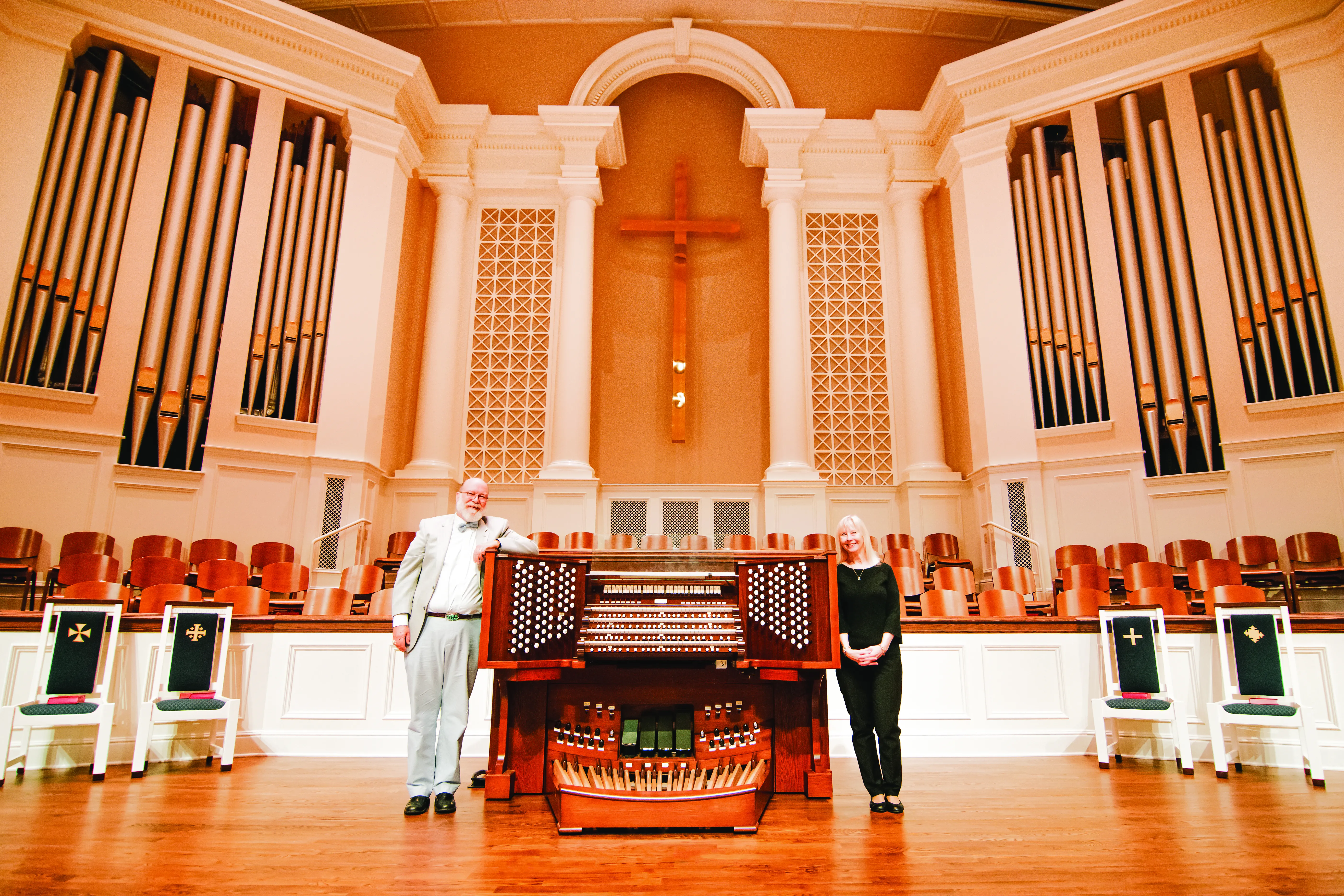
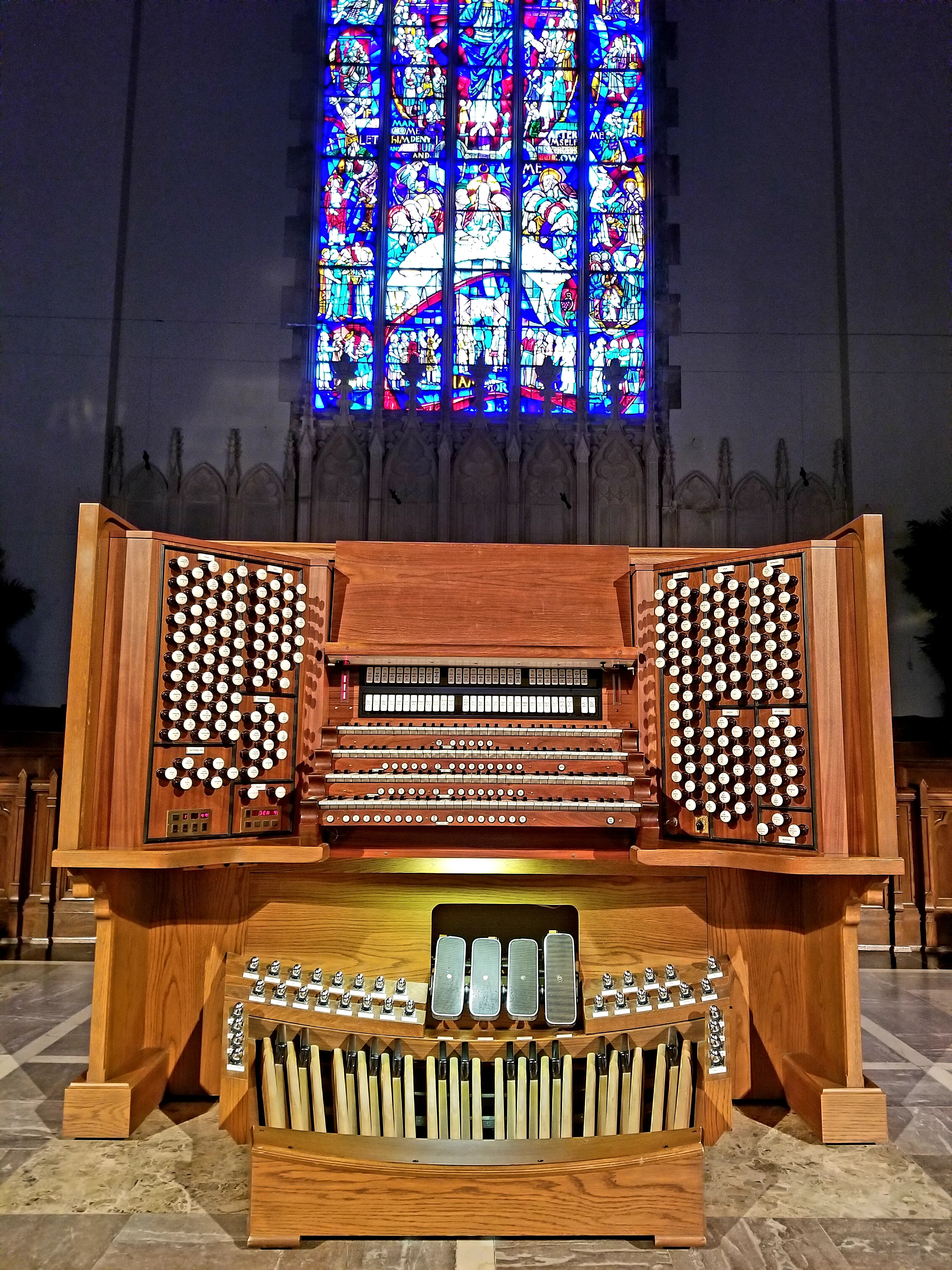
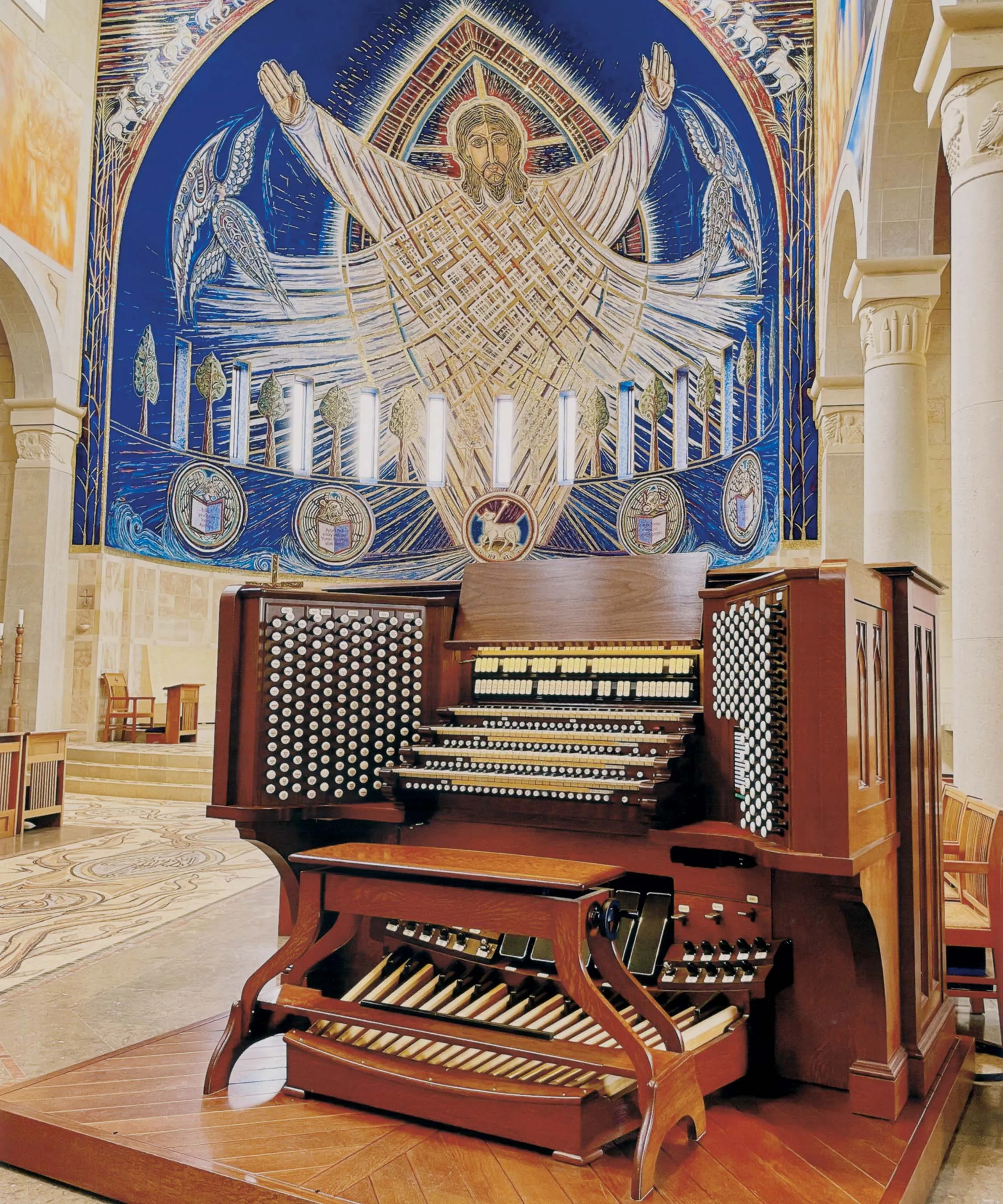
Despite getting wet, the console was restorable. The relay and control system was damaged, but was easily remedied with its replacement. The console was repaneled on the interior, the exterior shell refinished, and the playing surfaces restored. We expanded the piston complement as part of our work. Along with its rebuilding, we included a number of additional features that have become de rigueur in organ building and renovation. The performer will find multiple levels of memory, transposers, pedal divide, programmable crescendo, programmable sforzando, MIDI, playback/record, USB drive, and a number of other features. These are addressed through a touch screen that places all of the features in one location on the console.
This year, the Schlueter firm completed new instruments for West Point Military Academy at Most Holy Trinity Catholic Chapel (III/24) in West Point, New York; Our Lady of Assumption Catholic Church in Brookhaven, Georgia (IV/65) [this organ was dedicated May 13, 2025, and was the cover feature of the September 2025 issue]; and now, this instrument for First Baptist Church in Valdosta, Georgia.
This recent work in 2026 is notable because of the changes in the Schlueter firm. While I have been working with my father, Arthur E. Schlueter, Jr., for over 36 years and providing the artistic and tonal direction of the firm, in early 2026, after a reorganization of the firm, I purchased the company from him. The work of this year begins the new inaugural chapter in our firm’s history with the ongoing support of our firm’s warranties, completion of all of our jobs in progress, and the ongoing maintenance and satisfaction of relationships with our vendors. We continue to add to our order books and are grateful for our many friends and supporters.
I want to thank the Valdosta First Baptist staff and members who supported us and have been the “phoenix” in their community. As always, our work would not be possible without our talented, dedicated staff. They work tirelessly to take our words, specifications, and drawings and turn them into wood, metal, and music.
Please do not hesitate to call or write if our firm can be of service to your church. Feel free to contact me at [email protected], visit our website pipe-organ.com or write us at P. O. Box 838, Lithonia, Georgia 30058.
How can we help you?
Laborare est orare—Soli Deo Gloria!
—Arthur Schlueter III, President
A. E. Schlueter Pipe Organ Company
Builder’s website: pipe-organ.com/
Church website: www.fbcvaldosta.org/
Photo credit: Arthur Schlueter III, unless indicated otherwise
GREAT (Manual II)
8′ Diapason (ext, Pedal) 17 pipes
8′ Principal 61 pipes
8′ Bourdon (metal) 61 pipes
4′ Octave 61 pipes
4′ Rohrflote* 61 pipes
2′ Fifteenth 61 pipes
IV Mixture 244 pipes
16′ Hautbois (Swell)
8′ Trompette (Swell)
8′ Krummhorn (Choir)
8′ Bombarde (Choir)
SWELL (Manual III, enclosed)
16′ Bourdon (ext) 12 pipes
8′ Bourdon 61 pipes
8′ Viole De Gambe 61 pipes
8′ Viole Celeste (TC) 49 pipes
8′ Muted Violes II (digital)
4′ Principal 61 pipes
4′ Nachthorn 61 pipes
2′ Flageolet (ext) 12 pipes
II Sesquialtera (TC) 49 pipes (draws 2-2⁄3′ from Choir)
IV Plein Jeu 244 pipes
16′ Hautbois (digital ext)
8′ Trompette 61 pipes
8′ Hautbois 61 pipes
4′ Clairon (ext) 12 pipes
8′ Bombarde (Choir, non-coupling)
Tremulant
Swell 16
Unison Off
Swell 4
CHOIR (Manual I, enclosed)
16′ Flauto Dolce (digital)
8′ Holz Gedeckt (wood) 61 pipes
8′ Erzahler 61 pipes
8′ Erzahler Celeste (TC) 49 pipes
4′ Principal 61 pipes
4′ Flute Conique 61 pipes
4′ Unda Maris II (digital)
2-2⁄3′ Nasat (TC) 49 pipes
2′ Octave 61 pipes
1-3⁄5′ Terz (TC) 49 pipes
1-1⁄3′ Quint 61 pipes
16′ Krummhorn (TC, ext)
8′ Krummhorn* 61 pipes
Tremulant
8′ Bombarde (non-coupling)* 61 pipes
Choir 16
Unison Off
Choir 4
PEDAL
32′ Untersatz (digital ext)
16′ Principal (digital ext)
16′ Subbass 32 pipes
16′ Bourdon (Swell)
8′ Octave 32 pipes
8′ Subbass (ext) 12 pipes
4′ Choral Bass (ext) 12 pipes
16′ Contre Trompette (ext Sw) 12 pipes
16′ Hautbois (Swell)
8′ Trompette (Swell)
4′ Clarion (Swell)
Percussions
Chimes (Great, digital in Choir)
Harp (Choir, digital in Choir)
Zimbelstern (multiple bells)
Interdivisional Couplers
Great to Pedal 8
Great to Pedal 4
Swell to Pedal 8
Swell to Pedal 4
Choir to Pedal 8
Choir to Pedal 4
Swell to Great 16
Swell to Great 8
Swell to Great 4
Choir to Great 16
Choir to Great 8
Choir to Great 4
Swell to Choir 16
Swell to Choir 8
Swell to Choir 4
MIDI
Playback/Record
MIDI on Pedal
MIDI on Great
MIDI on Swell
MIDI on Choir
* gift from Schlueter family
51 stops, 34 ranks, 2,045 pipes
3 digital stops plus 7 pipe extensions and 3 percussions