Cover Feature: Lewtak, Chapel by the Sea
Lewtak Pipe Organ Builders, Mocksville, North Carolina
Chapel by the Sea, Clearwater, Florida
Twenty-five years of listening
When I established our firm at the turn of the millennium, my ambitions were shaped by youth and enthusiasm. Like many builders at the beginning of their journey, I imagined that significance would be measured in size, prominence, and visibility. Experience has since taught me otherwise. The true importance of an organ lies not in its scale or pedigree, but in the depth of its relationship with the community it serves and the role it plays in daily worship.
From the beginning, our work has been grounded in traditional mechanical principles—most notably pallet-and-slider windchests—reflecting my European training and a lifelong belief in their musical integrity. At the same time, no instrument has ever left our shop without carrying something new: a refinement, an improvement, or a hard-won lesson learned through experimentation. Progress, for us, has never been optional. Over these twenty-five years, many components have been rebuilt more than once in pursuit of better mechanics and, above all, more compelling musical results.
Yet technique alone is never the goal. Sound remains central to everything we do. Organ tone, to my ear, is an expressive language—capable of strength and tenderness, grandeur and intimacy. At its best, it neither dominates nor decorates, but supports the liturgy with quiet authority, breathing naturally with the space and the people within it. Each instrument must find its own voice, shaped by architecture, acoustics, and worship practice. There is no single “Lewtak sound,” only a consistent commitment to honesty, balance, and musical purpose.
As I reflect on this quarter century, the Chapel by the Sea organ stands as a distilled expression of that journey: restrained, intentional, and deeply rooted in service. It represents a shift from early ambition toward a more considered understanding of what endures. To be entrusted with building instruments that will speak for generations remains both a privilege and a responsibility—one for which I am profoundly grateful.
—Tom Lewtak
From the consultant
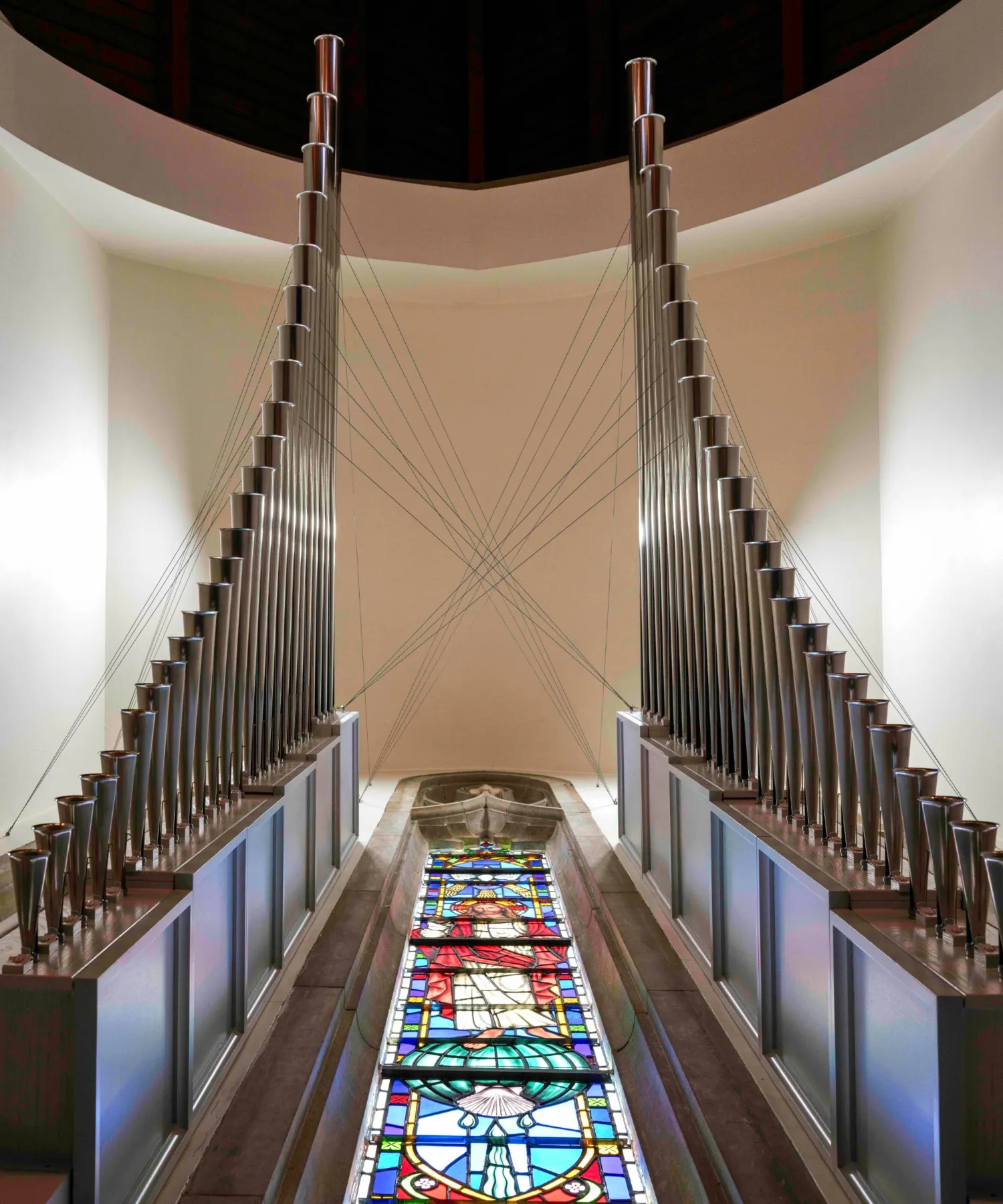
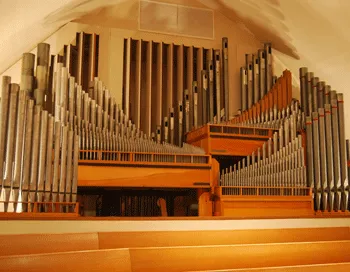
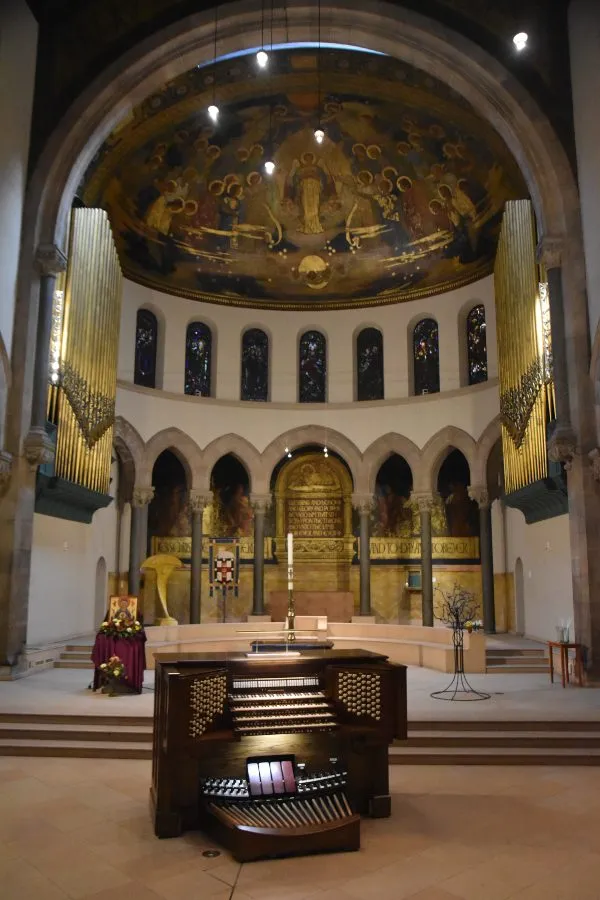
Chapel by the Sea was founded as an interdenominational faith community in 1949. Known for their fine worship and music tradition, the congregation resolved to contract for a worthy pipe organ despite the trials of the coronavirus pandemic. Eager to preserve and renew, the parish sought to locate and procure a used instrument. Randall Dyer & Associates Opus 59 was purchased from a dissolving Kentucky congregation. The opportunity to continue the ministry of another faith community resonated with the congregation. Upon procurement, Lewtak Pipe Organ Builders in Mocksville, North Carolina, was commissioned to remove the instrument from its original home and craft a newly encased instrument utilizing the existing pipework and chimes.
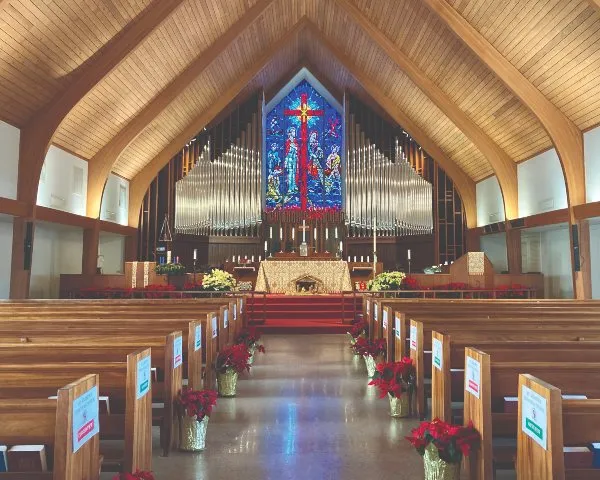
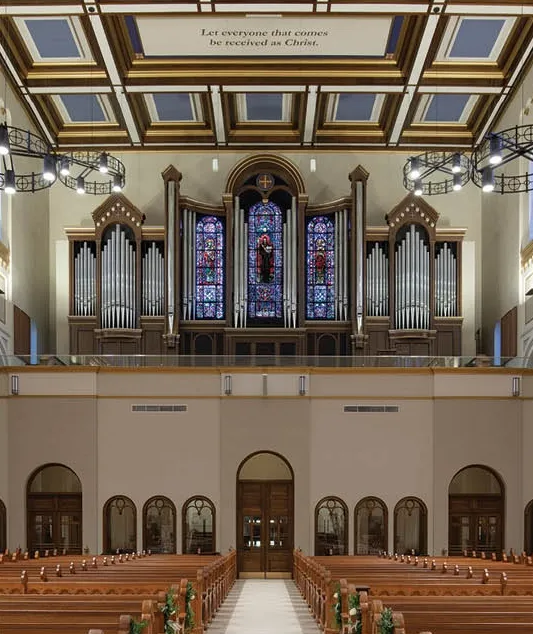
Tomasz Lewtak began to design an instrument inspired by the community it would serve. The Chapel folk set about the task of enhancing their Spanish Mediterranean style sanctuary. The chancel ceiling was raised four inches, wall surfaces thickened, mechanical systems rerouted, and reflective flooring laid to improve the overall acoustic. State-of-the-art lighting and audio visual technologies enhance the worship experience. The original stained glass collection was refurbished, enhanced, and expanded by Statesville Stained Glass Restoration and Preservation of North Carolina with funding by the Richard O. Jacobson Foundation.
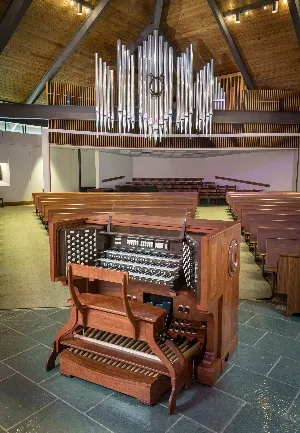
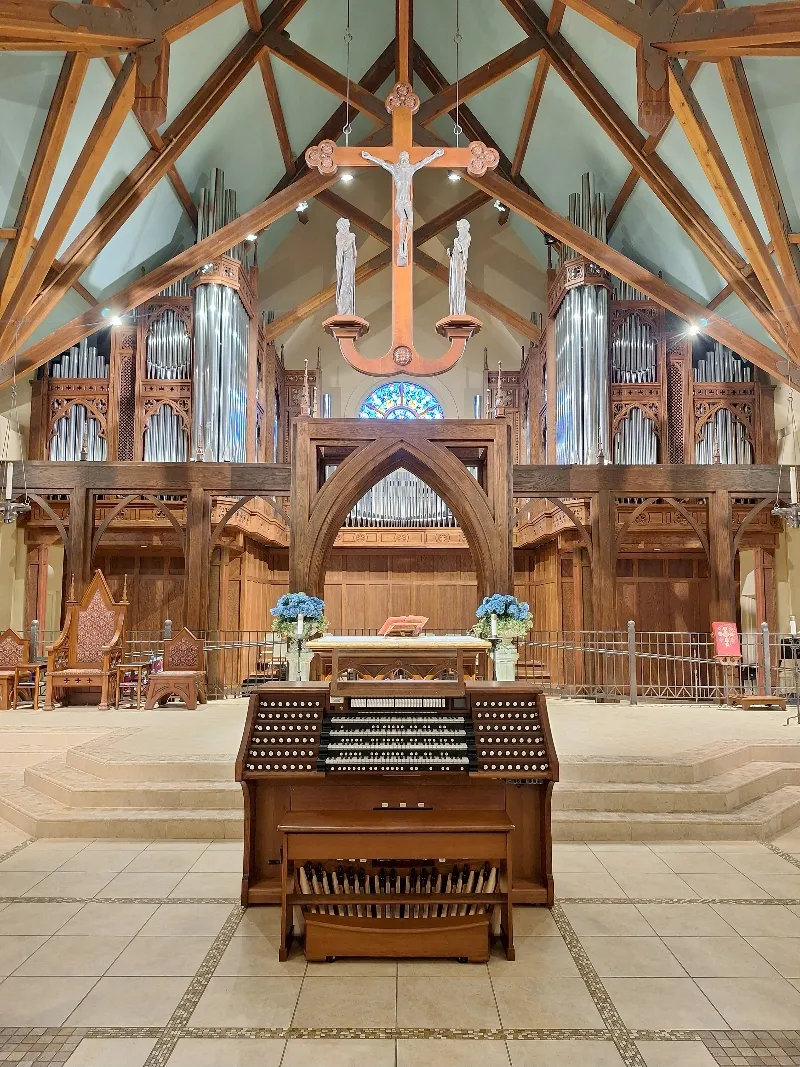
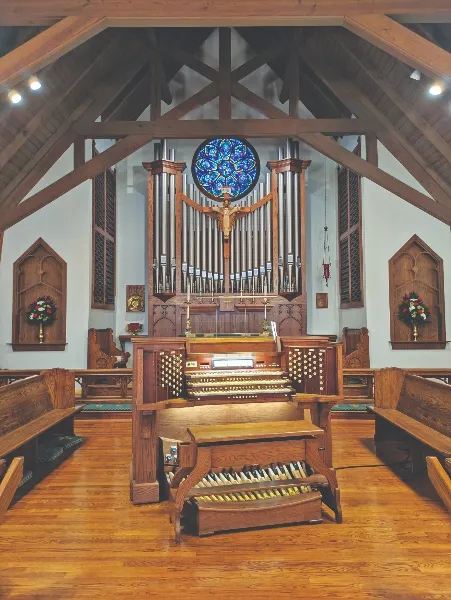
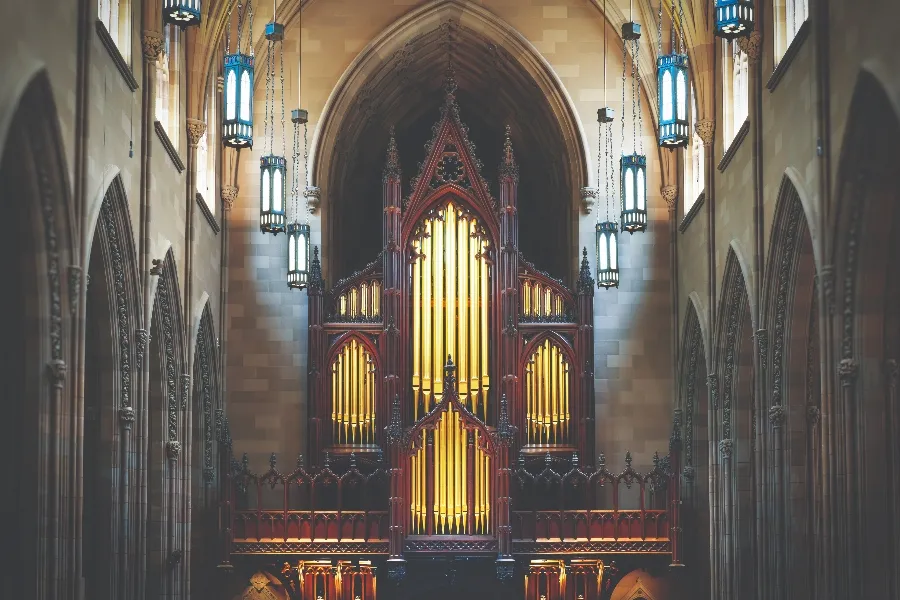
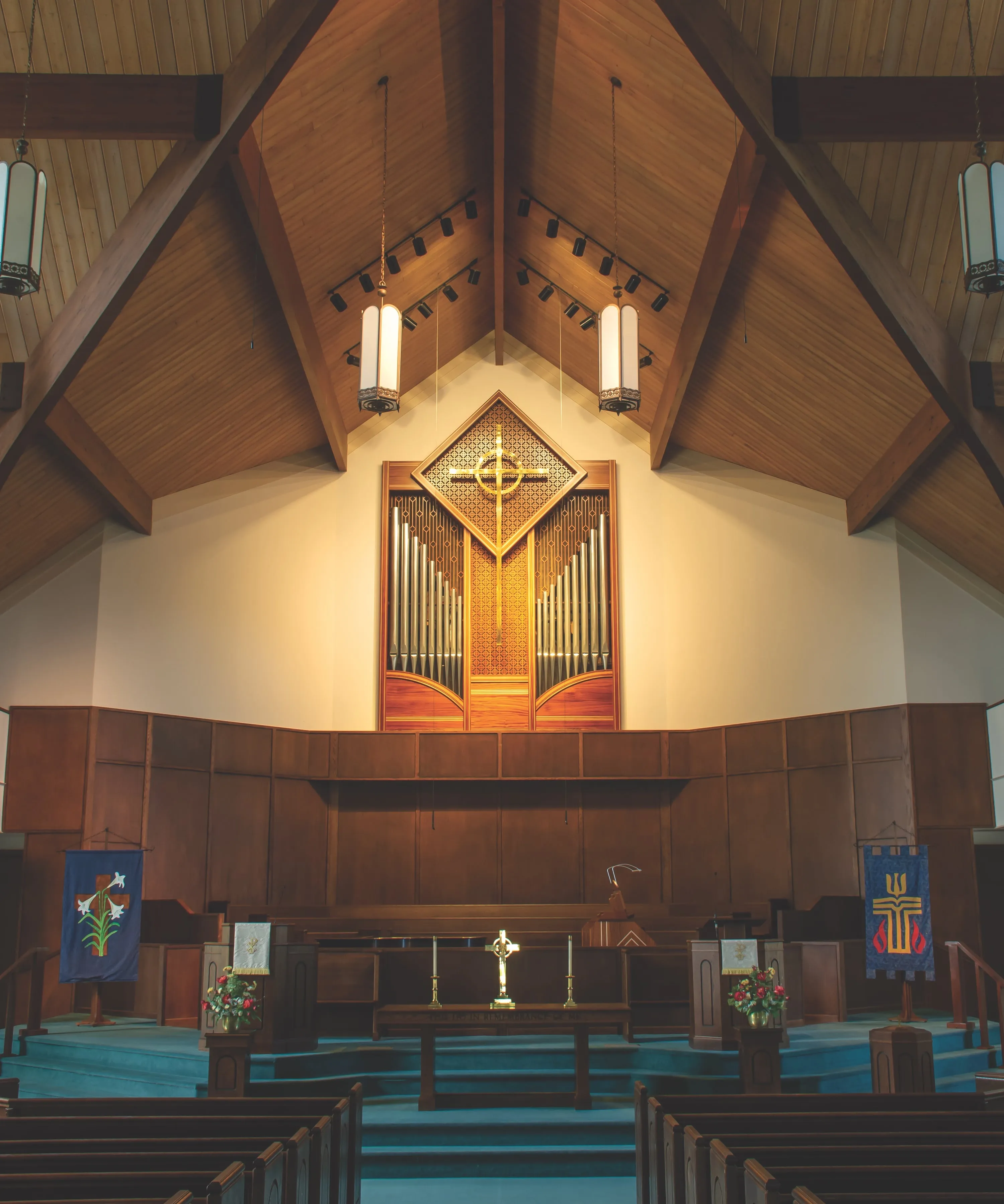
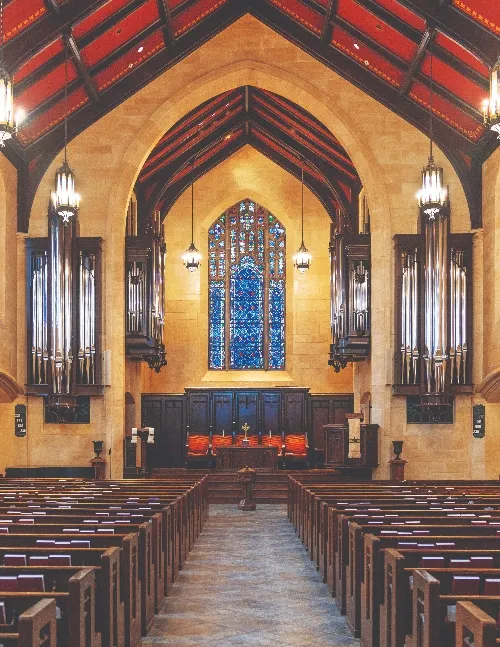
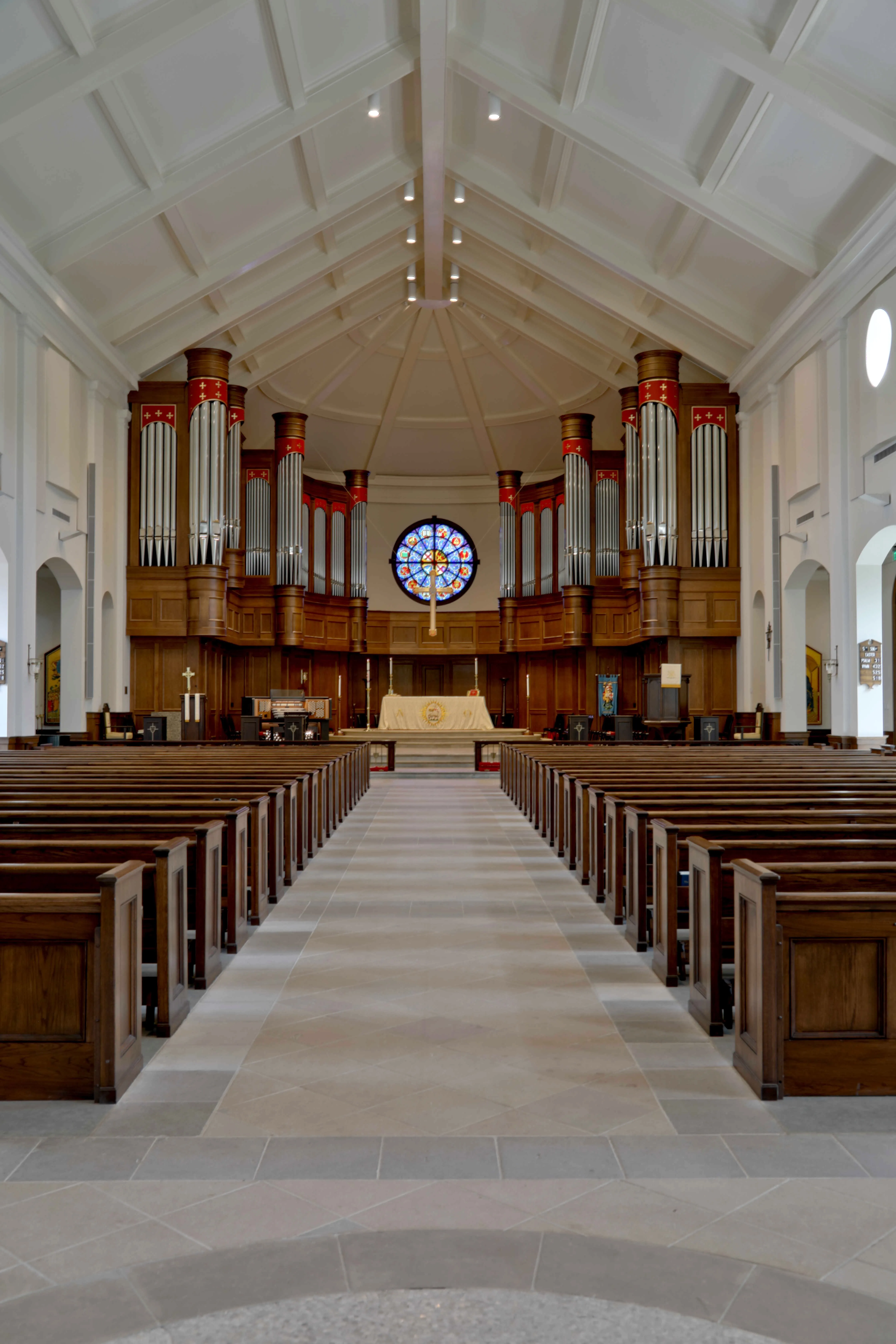
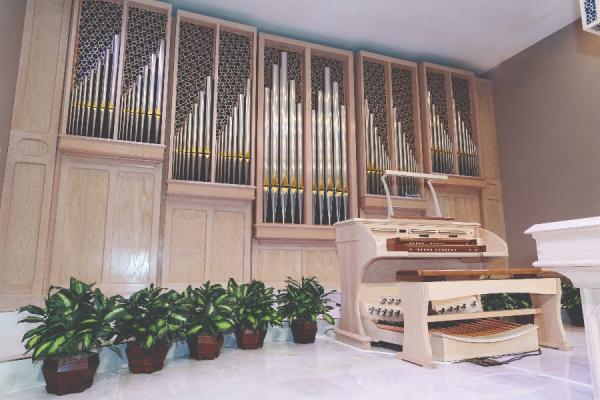
Enclosed in two manual divisions and pedal, the organ is focused by a case crafted of quarter-sawn red oak, the Principal façade gilded in 24-carat gold leaf. The color and finish were inspired by the Florida coastline. Artisans utilized lye to create a white hue reminiscent of sand. The pipe shades, with their varying circular patterns and blue accents, pay homage to the clear Gulf waters. The chancel is made complete with a central cross and furnishings designed and crafted in the Lewtak wood shop.
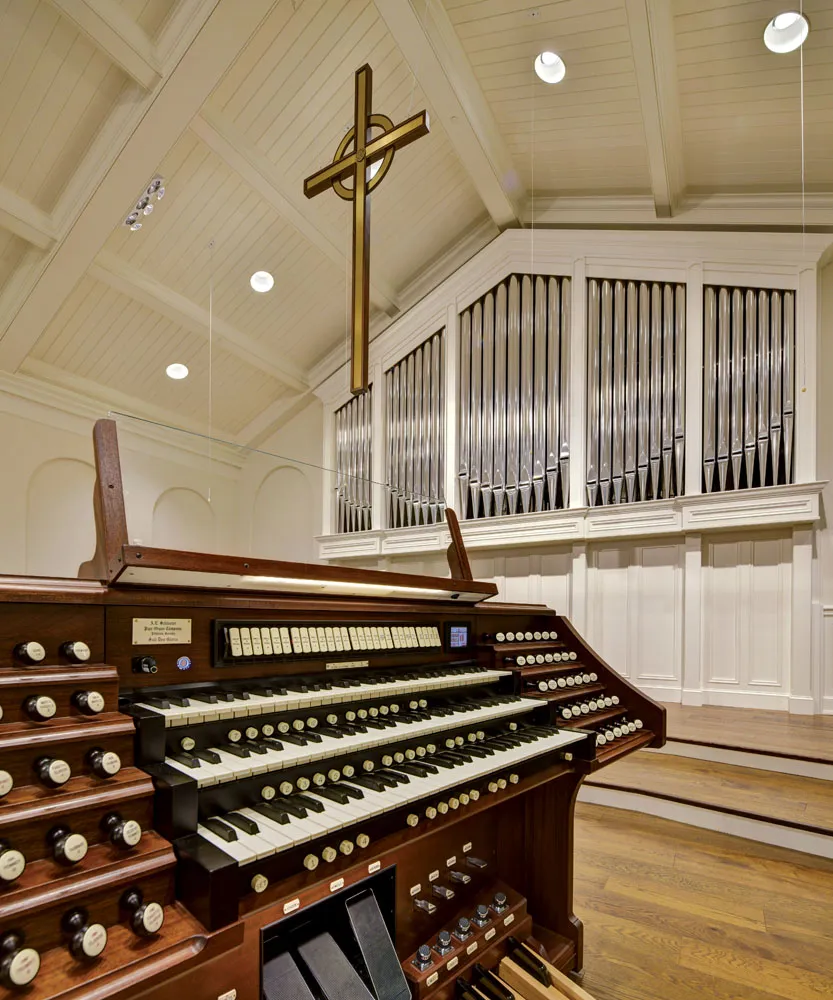
Space constraints became a friend to limited tonal resources recycled, rescaled, and voiced to sing a broad repertoire. Silver principals, chiffy flutes, undulating strings, a second warm celeste, colorful mutations, a pungent trumpet, and an orchestral reed comprise its cohesive voice. Sightlines are maintained by a stoptab console of minimum height and width. The incredibly flexible instrument incorporates the usual manual and pedal compass, couplers, and an expansive control system by Matters, Inc.
The sanctuary is now complete with a beautifully refined instrument capable of leading a vibrant singing congregation, accompanying a well-trained choir, celebrating festive occasions and mourning in quiet reflection. Lewtak Pipe Organ Builders was founded in 2000. The resounding of the organ Easter Sunday 2025 was befitting of the Lewtak Silver Jubilee. Concert organist Jeremy Filsell performed the dedicatory concert January 25, 2026, to a capacity crowd with critical acclaim.
The Lewtak philosophy, rooted in respect for tradition without imitation, respect for craftsmanship without complacency, and respect for innovation without novelty for its own sake has been realized in the resolve of a small, thriving congregation. The Florida Gulf is a vast wonder. The Chapel by the Sea and its Lewtak pipe organ are pearls on the pristine Clearwater Beach.
—Timothy Belk administers the ministry of Peace Memorial Presbyterian Church of Clearwater, Florida, and is adjunct faculty at Saint Petersburg College.
Builder’s website: www.lewtak.com
Church website: www.chapelbythesea.net
Photo credit: Kacper Lewtak
GREAT (manual I, enclosed)
8′ Principal (façade left)
8′ Gedackt
8′ Dulciana
8′ Unda Maris (TC)
4′ Octave
4′ Koppelflöte
2 2⁄3′ Quinte (TC)
2′ Super Octave
1 3⁄5′ Terz (TC)
Mixture III–IV–III
8′ Oboe
Tremolo
Chimes
SWELL (manual II, enclosed)
16′ Bourdon (ext 8′ Rohr)
8′ Rohrflöte
8′ Viola di Gamba
8′ Viola Celeste (TC)
8′ Dulciana (Gt)
8′ Unda Maris (Gt)
4′ Gemshorn
2′ Gemshorn (ext)
Sesquialtera II (TC, fr. Gt)
16′ Bombarde (ext 8′ Trumpet)
8′ Trumpet
Tremolo
PEDAL
16′ Subbass
16′ Rohrbass (Sw)
10 2⁄3′ Lieblich Quinte (fr. Sw)
8′ Octavbass (ext 4′ Principal)
8′ Rohrflöte (Sw)
4′ Principal (façade right)
16′ Bombarde (Sw)
8′ Trumpet (Sw)
4′ Schalmey (Gt Oboe)
Couplers
Swell to Gt 16
Swell to Gt 8
Swell to 4
Swell to Swell 16
Swell to Swell 4
Great to Pedal
Great to Pedal 4
Swell to Pedal
Swell to Pedal 4
31 stops, 20 ranks, 1,047 pipes