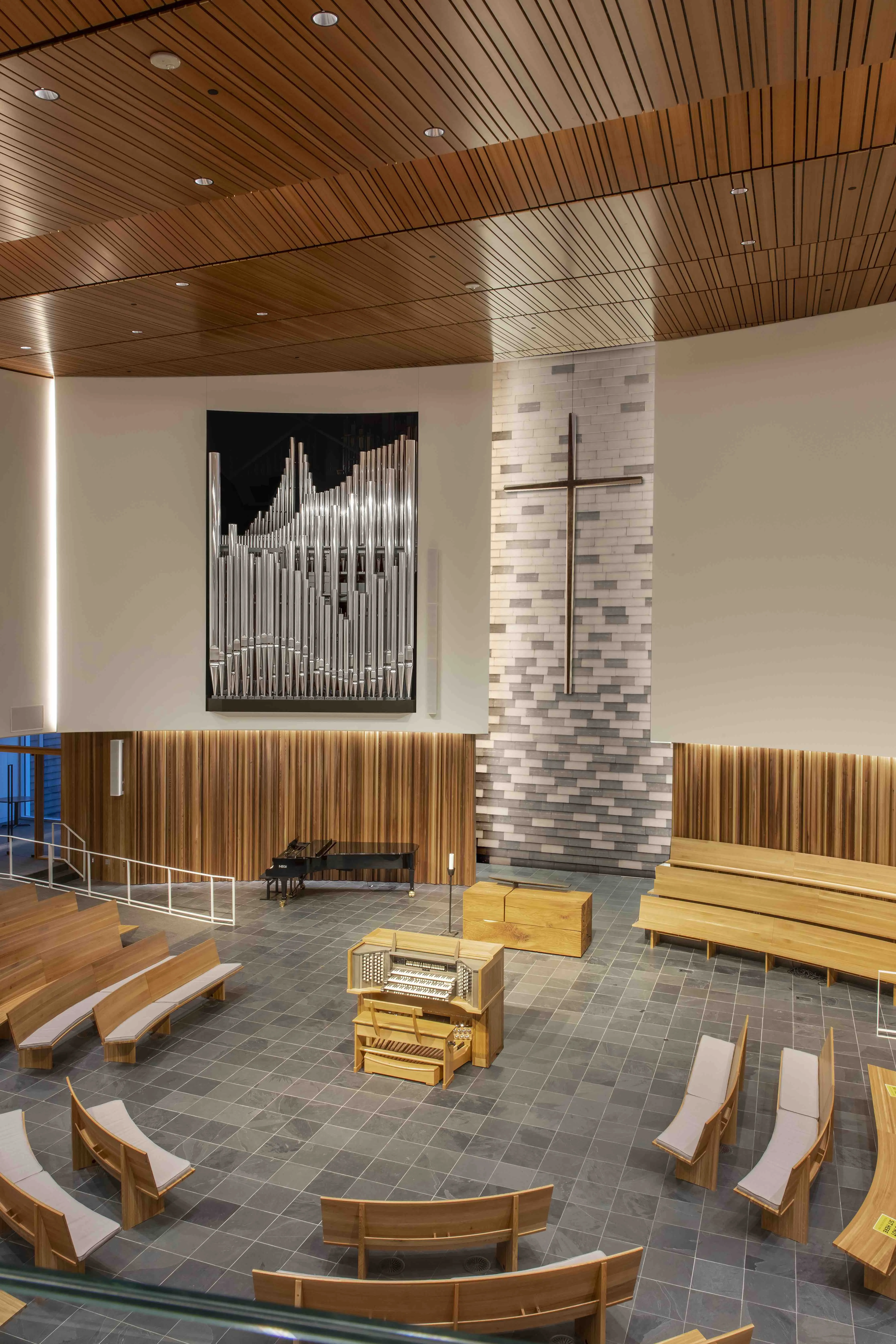
Buzard Pipe Organ Builders Cover Feature
Buzard Pipe Organ Builders, Champaign, Illinois; Countryside Community Church, Omaha, Nebraska
Opus 47, completed November 2020
From the builder

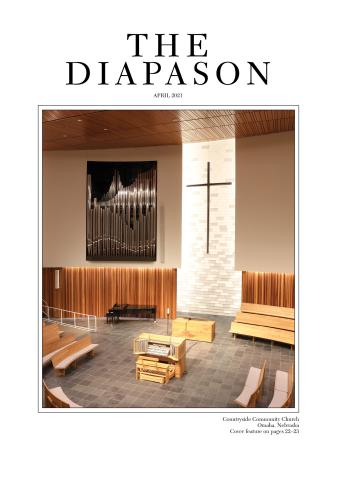
Buzard Pipe Organ Builders, Champaign, Illinois; Countryside Community Church, Omaha, Nebraska
Opus 47, completed November 2020
From the builder
Editor’s note: the information in this article was delivered as a lecture for the Ernest M. Skinner Sesquicentennial Conference on April 25, 2016, in Evanston, Illinois. The conference was sponsored by the Chicago, North Shore, and Fox Valley Chapters of the American Guild of Organists, the Chicago-Midwest Chapter of the Organ Historical Society, the Music Institute of Chicago, and The Diapason.
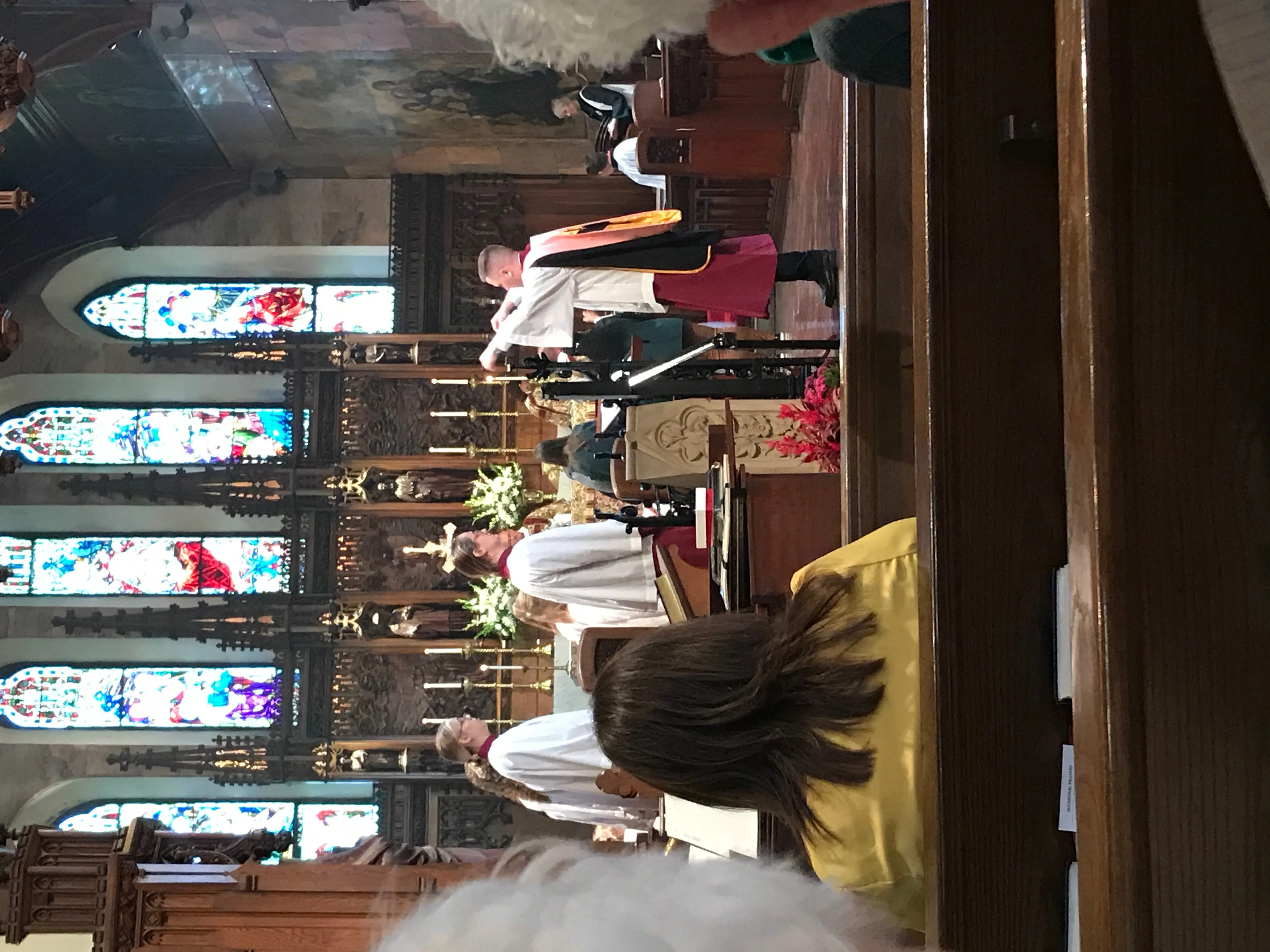
Photo caption: John C. Hughes conducts at the Cathedral Church of Saint Paul, Fond du Lac, Wisconsin.
Many church choirs perform with organ accompaniment; however, they typically rehearse with a different instrument (piano) in a different space (choir room). Although this situation may be necessary due to scheduling conflicts in the sanctuary, the limitations of the piano and the challenges of changing acoustics bear significant musical costs. These factors not only hinder each performance, but they also impede the long-term development of a choral program.
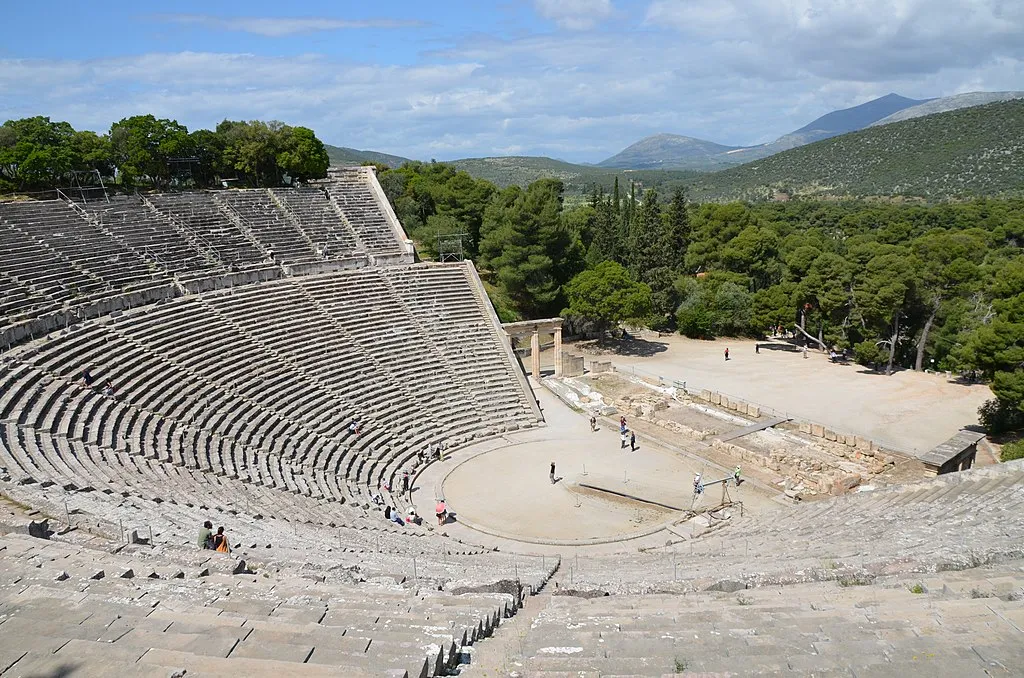
Photo caption: The amphitheater at Epidaurus (photo credit: Carole Raddato, used through the Creative Commons Attribution-Share Alike 2.0 Generic license)
Last month, as I was finishing up the column recounting my youthful discovery of the playing of Alfred Brendel and discussing some of the effects of that discovery on my life and work, it occurred to me that my affinity for Brendel was something that came about utterly at random. I alluded to this briefly at the end of the column, but I have continued to muse about it.